Description
CD3/CD70: A pivotal dual-target axis for redirecting T cell immunity against aggressive malignancies.
- Gene Information: CD3 forms the essential T cell receptor signaling complex. CD70, a member of the tumor necrosis factor superfamily, is the natural ligand for CD27. Together, they represent a highly rational pairing for linking cytotoxic T cells directly to tumors.
- Protein Expression: CD3 is universally expressed on mature T lymphocytes. Crucially, CD70 exhibits highly restricted expression on healthy tissues but is significantly overexpressed across various hematological and solid tumors. This distinct differential expression profile minimizes off-target toxicity.
- Signaling Pathway: Crosslinking CD3 initiates robust primary TCR phosphorylation cascades, driving massive T cell activation. Concurrently, targeting CD70 flags the tumor for destruction and interrupts endogenous CD70-CD27 signaling, a pathway tumors often exploit for proliferation and immune evasion.
- Therapeutic Engagement: The CD3/CD70 axis is a premier target for bispecific T-cell engagers (TCEs) and CAR-T therapies. These constructs physically bridge CD3+ T cells to CD70+ malignant cells, inducing localized immune synapse formation, granzyme release, and potent, highly specific tumor eradication.
Targeting strategy
CD3EDG
- The chimeric human CD3EDG was expressed, while mouse Cd3edg were knocked out in B-hCD3EDG/hCD70 mice.
CD70
- The exons 1-3 of mouse Cd70 gene that encode the extracellular domain were replaced by human CD70 exons 1-3 in B-hCD3EDG/hCD70 mice.
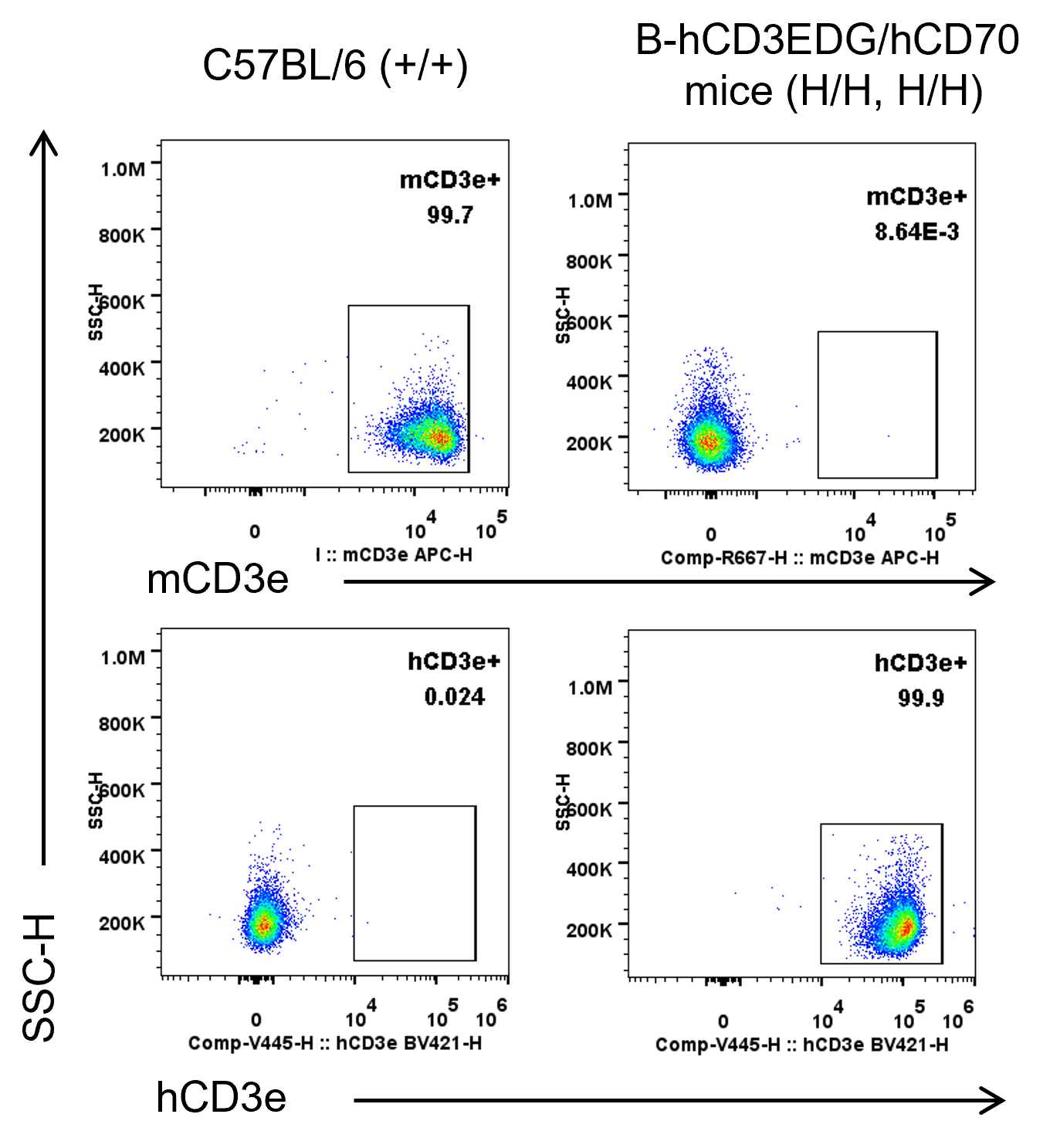
CD3E Protein Expression in Spleen
- Mouse CD3E was detected on mTCRβ+ T cells populations in wild-type C57BL/6 mice, but not in B-hCD3EDG/hCD70 mice.
- Human CD3E was detected on mTCRβ+ T cells populations in B-hCD3EDG/hCD70 mice, but not in wild-type C57BL/6 mice.
Mouse and human CD3E expression analysis in splenocytes. Splenocytes were collected from wild-type C57BL/6 mice and homozygous B-hCD3EDG/hCD70 mice (female, 8-week-old, n = 3), and analyzed by flow cytometry using species-specific anti- human CD3E antibodies (BD Horizon, 562426) and anti-mouse CD3E antibody (Biolegend, 100312 ).
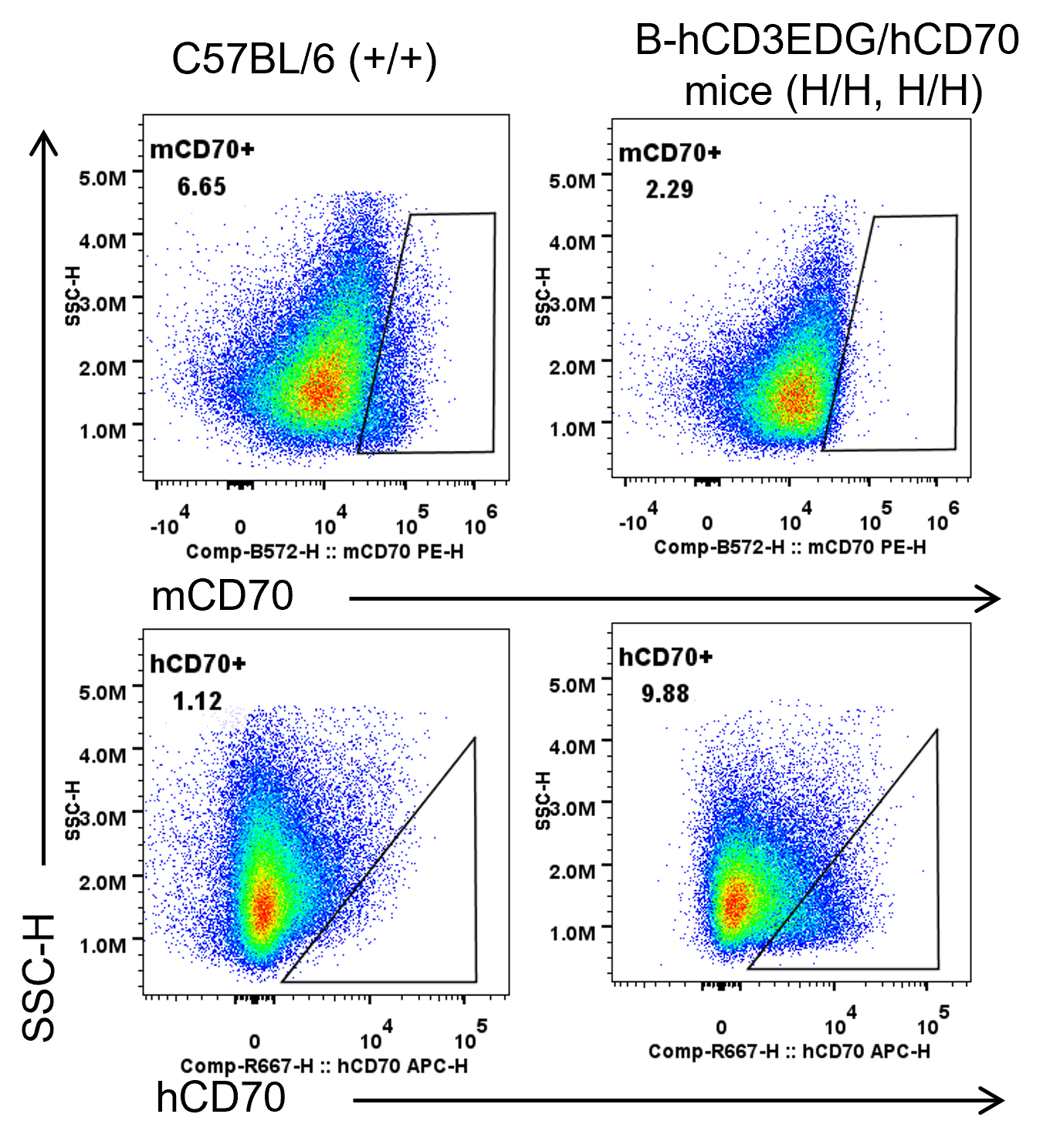
CD70 Protein Expression in BMDC
- Mouse CD70 was detected on BMDC cells populations in wild-type C57BL/6 mice, but not in B-hCD3EDG/hCD70 mice.
- Human CD70 was detected on BMDC cells populations in B-hCD3EDG/hCD70 mice, but not in wild-type C57BL/6 mice.
Mouse and human CD70 expression analysis in BMDC. BMDCs were collected from wild-type C57BL/6 mice (+/+) and B-hCD3EDG(v2)/hCD70 mice (H/H, H/H) (female, n=3, 8-week-old), and analyzed by flow cytometry using species-specific anti-mouse CD70 antibody (Biolegend, 104605) and anti-human CD70 antibody (Biolegend, 355110).
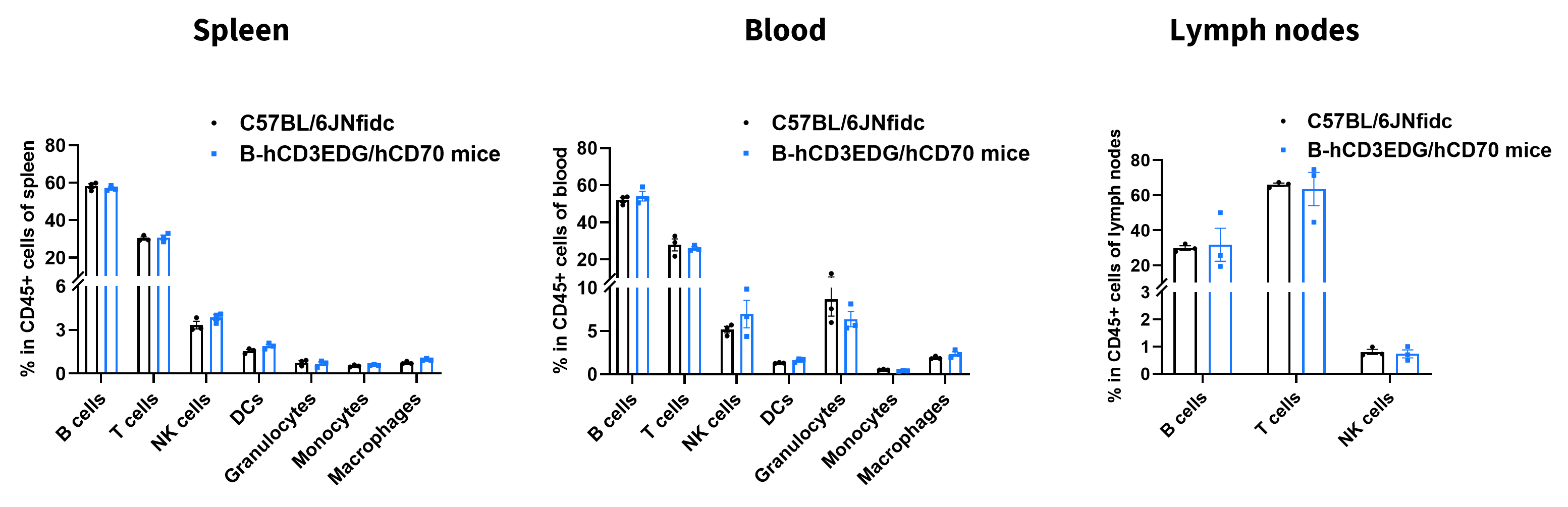
Analysis of Leukocyte Subpopulations
- The percentages of T cells, B cells, NK cells, DCs, granulocytes, monocytes, and macrophages in homozygous B-hCD3EDG/hCD70 mice are similar to those in C57BL/6 mice.
- Humanization of CD3EDG and CD70 does not affect normal immune cell development or distribution.
Analysis of leukocyte subpopulations by flow cytometry in immune organs and blood. Splenocytes, peripheral blood, and lymph nodes were isolated from female C57BL/6 and B-hCD3EDG/hCD70 mice (female, 8-week-old, n = 3). Single live cells were gated on the CD45⁺ population and analyzed by flow cytometry as indicated. Values are expressed as mean ± SEM.
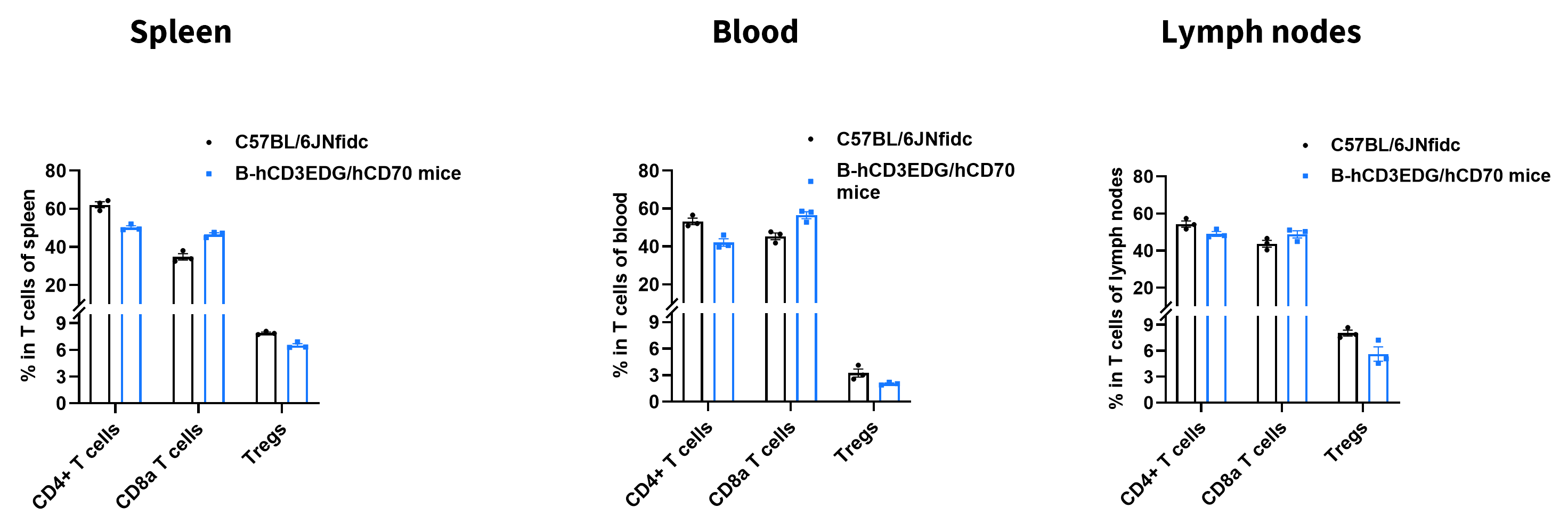
Analysis of T Cell Subpopulations
- The proportions of CD4⁺ T cells, CD8⁺ T cells, and Tregs in homozygous B-hCD3EDG/hCD70 mice are similar to those in C57BL/6 mice.
- Humanization of CD3EDG and CD70 does not affect normal T cell development, differentiation or distribution.
Analysis of T-cell subpopulations by flow cytometry in immune organs and blood. Splenocytes, peripheral blood, and lymph nodes were isolated from female C57BL/6 and B-hCD3EDG/hCD70 mice (female, 8-week-old, n = 3). Single live cells were gated on the TCR+ T-cell population and analyzed by flow cytometry as indicated. Values are expressed as mean ± SEM.
* When publishing results obtained using this animal model, please acknowledge the source as follows: The animal model [B-hCD3EDG/hCD70 mice] (Cat# 112768) was purchased from Biocytogen.