on this page
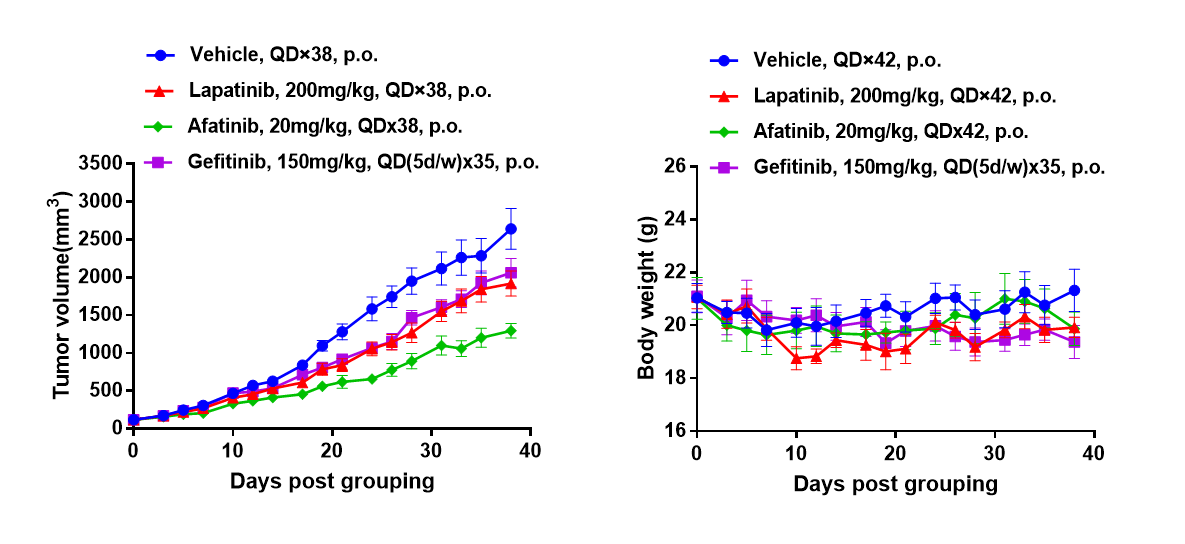
Antitumor activity of Drugs target EGFR in B-NDG mice. (A) Molecular targeted small-molecule anti-cancer drugs slightly inhibited tumor growth of BP0062 in B-NDG mice. PDX model of BP0062 was subcutaneously implanted into B-NDG mice (female, 6 week-old, n=6). Mice were grouped when tumor volume reached approximately 100 mm³, at which time they were treated with different targeted drugs and schedules indicated in panel. (B) Body weight changes during treatment. As shown in panel A, Molecular targeted small-molecule anti-cancer drugs were efficacious, demonstrating that PDX model of BP0062 can be used to establish tumor model and provide a powerful preclinical pancreatic tumor model with EGFR positive cells. Values are expressed as mean ± SEM.
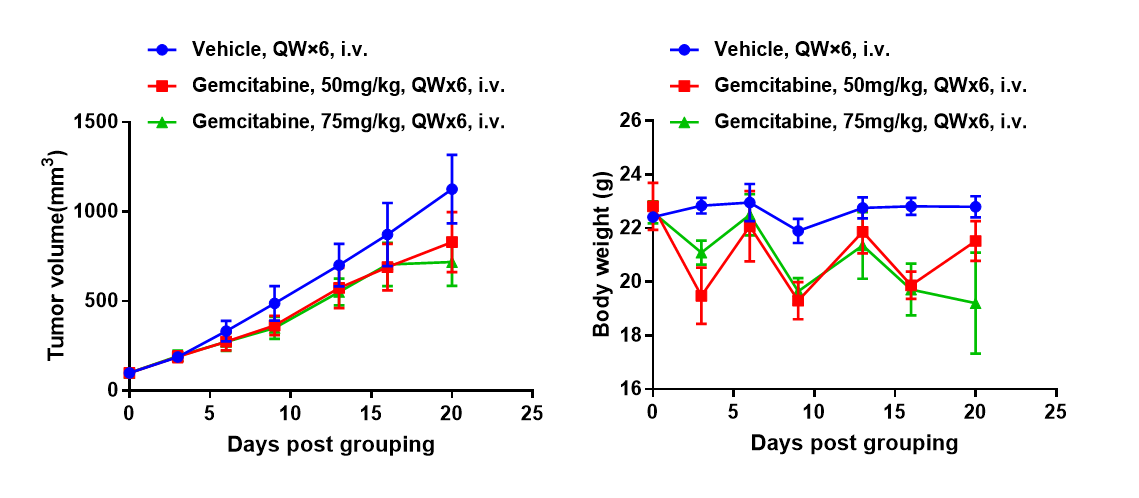
Antitumor activity of gemcitabine in B-NDG mice. (A) Gemcitabine slightly inhibited tumor growth of BP0062 in B-NDG mice. PDX model of BP0062 was subcutaneously implanted into B-NDG mice (female, 6 week-old, n=6). Mice were grouped when tumor volume reached approximately 100 mm³, at which time they were treated with different targeted drugs and schedules indicated in panel. (B) Body weight changes during treatment. Values are expressed as mean ± SEM.
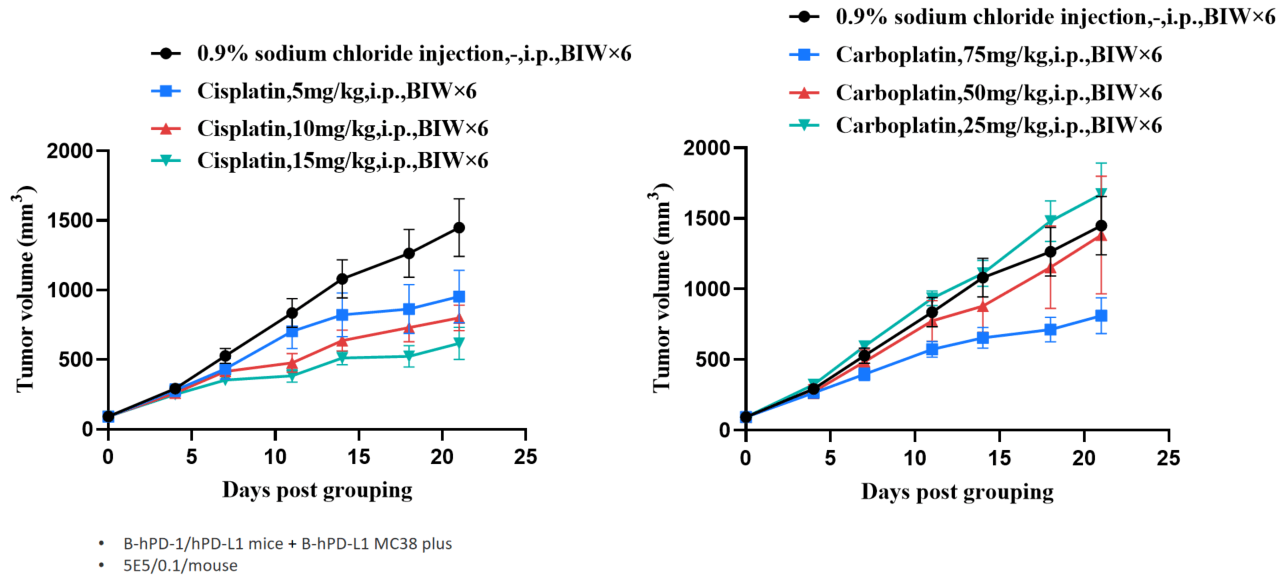
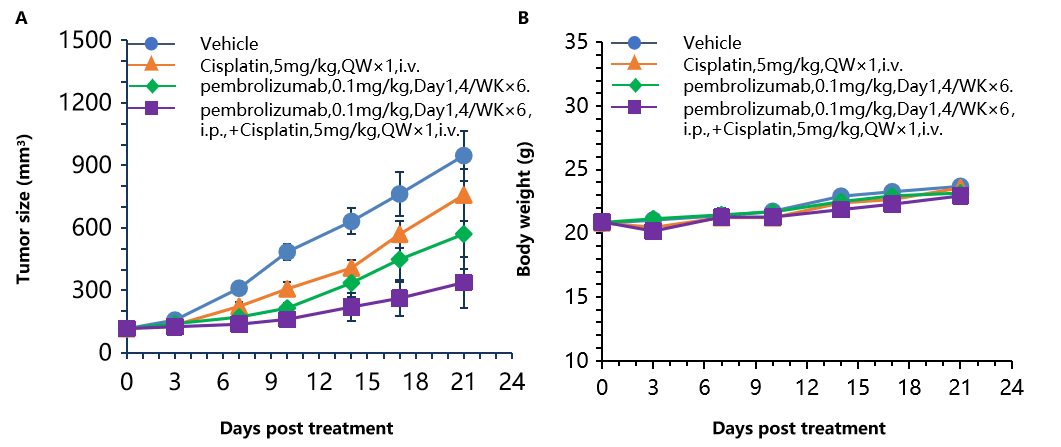
Antitumor activity of anti-human PD-1 antibody combined with cisplatin in B-hPD-1 mice. (A) Anti-human PD-1 antibody combined with cisplatin inhibited MC38-hPD-L1 tumor growth in B-hPD-1 mice. Murine colon cancer MC38-hPD-L1 cells (5×10⁵) were subcutaneously implanted into homozygous B-hPD-1 mice (female, 5-8 week-old, n=8). Mice were grouped when tumor volume reached approximately 150±50 mm³, at which time they were treated with anti-human PD-1 antibodies and cisplatin with doses and schedules indicated in panel. (B) Body weight changes during treatment. As shown in panel A, combination of anti-hPD-1 antibody and the chemotherapy drug cisplatin shows more efficaciously inhibitory effects than individual groups, demonstrating that the B-hPD-1 mice provide a powerful preclinical model for in vivo evaluating combination therapy efficacy of anti-human PD-1 antibodies and chemotherapy drugs. Values are expressed as mean ± SEM.
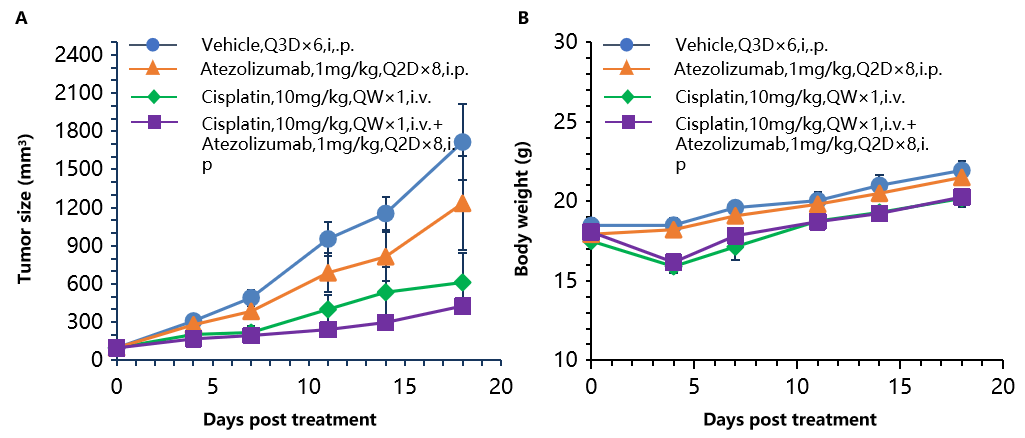
Antitumor activity of anti-human PD-L1 antibody (Atezolizumab) combined with cisplatin in B-hPD-1 mice. (A) Anti-human PD-L1 antibody combined with cisplatin inhibited MC38-hPD-L1 tumor growth in B-hPD-1 mice. Murine colon cancer MC38-hPD-L1 cells (5×10⁵) were subcutaneously implanted into homozygous B-hPD-1 mice (female, 5-8 week-old, n=8). Mice were grouped when tumor volume reached approximately 150±50 mm³, at which time they were treated with anti-human PD-L1 antibody and cisplatin with doses and schedules indicated in panel. (B) Body weight changes during treatment. As shown in panel A, combination of anti-hPD-L1 antibody and the chemotherapy drug cisplatin shows more efficaciously inhibitory effects than individual groups, demonstrating that the B-hPD-1 mice provide a powerful preclinical model for in vivo evaluating combination therapy efficacy of anti-human PD-L1 antibodies and chemotherapy drugs. Values are expressed as mean ± SEM.
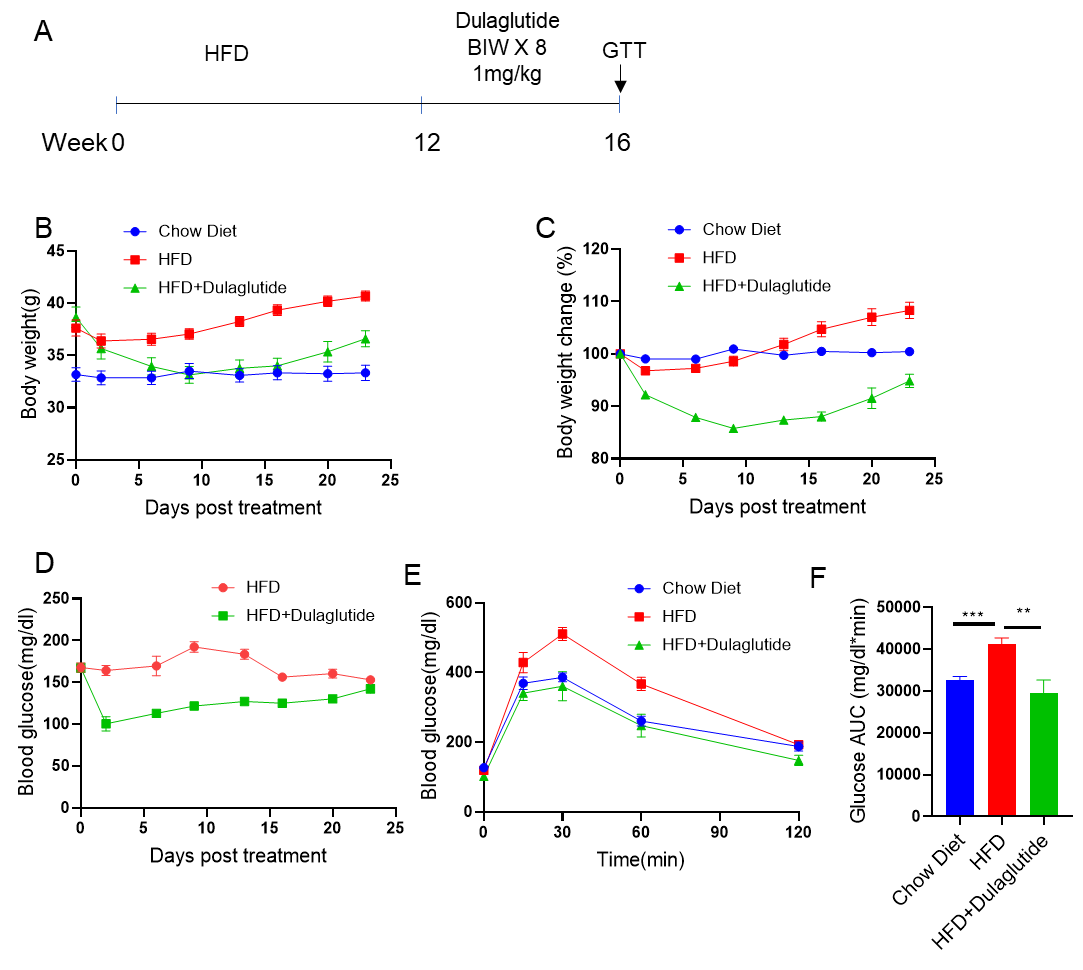
C57BL/6 mice were fed with high-fat diet (60 kcal% Fat) for 12 weeks to induce obesity. Dulaglutide (in house) was subcutaneous injection twice per week for 4 weeks after grouping. (B,C) Body weight, (D,E) blood glucose, and (F) glucose tolerance test results were shown above. (n=5 mice per group). Values are expressed as mean ± SEM. *** p<0.001, ** p<0.01. (n=8 mice per group)
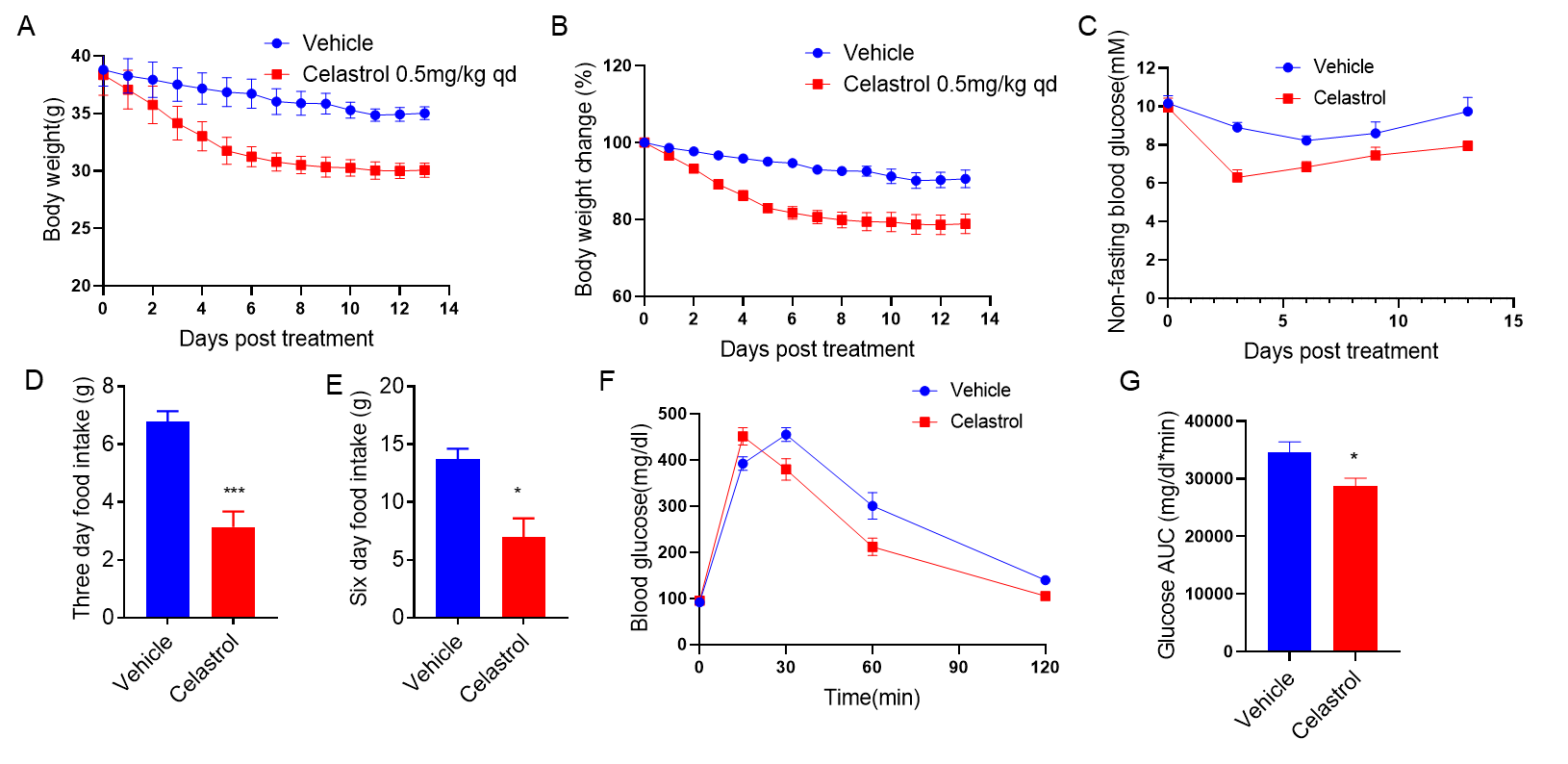
C57BL/6 mice were fed with high-fat diet (60 kcal% Fat) for 12 weeks to induce obesity. Then mice were i.p. injected Vehicle or Celastrol (0.5mg/kg) once daily for 14 days. (A,B) Body weight, (C) blood glucose, (D,E) food intake and (F,G) glucose tolerance test results were shown above. Values are expressed as mean ± SEM. *** p<0.001. (n=5 mice per group)