Assets

TCR Assets

TCR-based therapeutics demonstrate significant advantages and promising prospects. Compared to CAR-T, TCR-T cells can recognize intracellular antigens, exhibit superior infiltration into solid tumors, and show a lower incidence of cytokine release syndrome (CRS). TCR protein drugs further overcome the limitations of cell-based therapies, offering advantages such as lower costs, simpler production processes, and enhanced safety profiles, enabling the extension of TCR therapies to a wider range of therapeutic areas. In addition, soluble TCR can also be used in TCE therapies.
  • 10+
    TCR ASSETS
  • 450+
    ANTIBOTY ASSET PARTNERSHIPS

on this page

  • Advantages of the RenTCR™ Platform for Fully Human TCR Discovery
  • Off-the-Shelf TCR Library Powered by the RenTCR™ Platform

Webinars

View All

    Posters

    View All

      Advantages of the RenTCR™ Platform for Fully Human TCR Discovery

      • Streamlined Screening Workflow:  The platform enables rapid identification and acquisition of natural TCRs with high specificity and reactivity.
      • Superior In Vivo & In Vitro Activity: The platform enables the identification and selection of TCRs with potent antitumor activity in both in vitro and in vivo studies, outperforming human donor-derived TCRs.
      • Broad, Ready-to-Use TCR Libraries: The platform facilitates the creation of off-the-shelf TCR libraries with broad HLA haplotype coverage to streamline subsequent development.
      • Significant Cost Advantage: The platform reduces costs compared with human donor-based TCR discovery methods.
      • Extended Platform Utility: The platform is also applicable for novel target and epitope discovery.
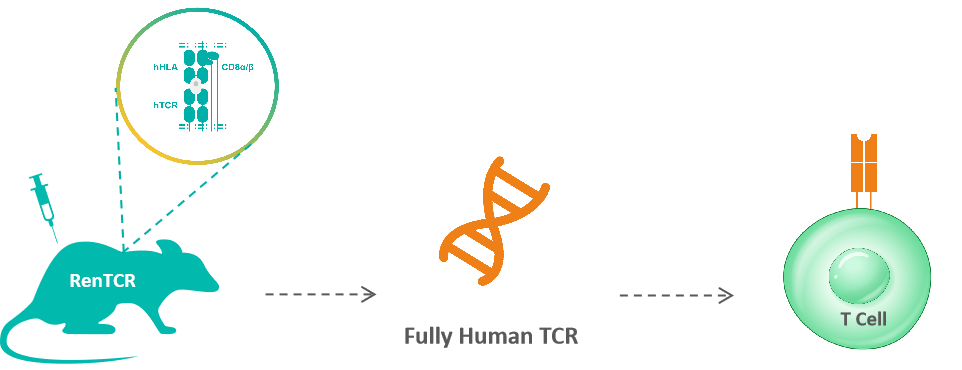
      Biocytogen's TCR Platform img

      Off-the-Shelf TCR Library Powered by the RenTCR™ Platform

      Target Type of Antigen HLA Immunization TCR Discovery & Sequencing In Vitro Function Verification Epitope Identification Specificity Verification In Vivo Function Evaluation
      MAGEA4/8 CTA HLA-A2.1
      MAGEA4 CTA HLA-A24.2
      PRAME CTA HLA-A2.1
      PRAME CTA HLA-A24.2
      NY-ESO-1 CTA HLA-A2.1
      MAGEA1 CTA HLA-A2.1
      MAGEA10 CTA HLA-A2.1
      KRAS G12V TSA HLA-A11.1
      KRAS G12D TSA HLA-A11.1
      HPV16 E6 Virus HLA-A24.2
      HPV16 E7 Virus HLA-A2.1
      MAGEC2 CTA HLA-A24.2
      COL6A3 TAA HLA-A2.1
      CTA: Cancer-testis Antigen
      Case Study I: Fully Human, HLA-A*02:01-Restricted TCR Targeting MAGEA1 Derived from HLA-A0201 RenTCR™ Mice
      HLA-A2.1/MAGEA1 Specific TCRs Transduced Human T cells Induced Killing and IFN-γ Production
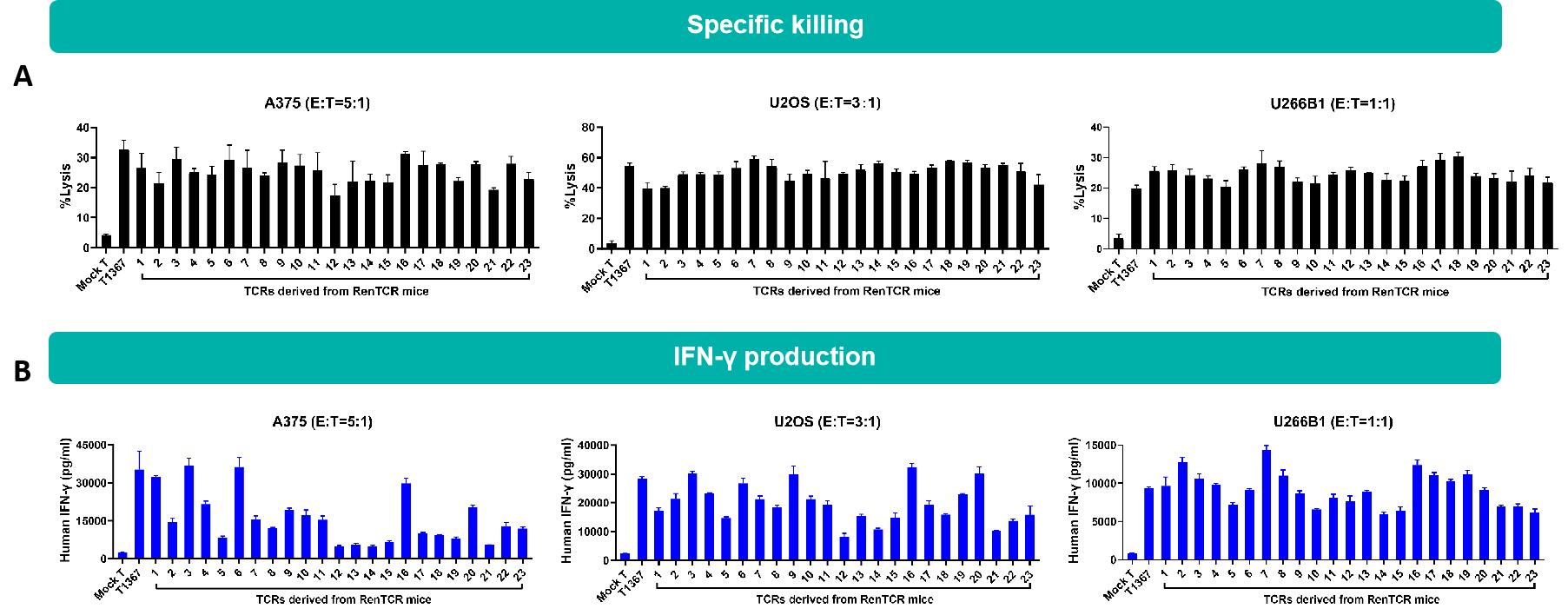
      HLA-A2.1/MAGEA1 Specific TCRs Transduced Human T cells Induced Killing and IFN-γ Production img
      Most MAGEA1-HLA-A2.1 specific TCRs transduced human T cells showed killing and IFN-γ production in MAGEA1-HLA-A2.1 positive cell lines A375, U2OS, and U266B1.
      RenTCR™ platform-derived TCRs exhibit higher peptide sensitivity than human donor-derived TCRs
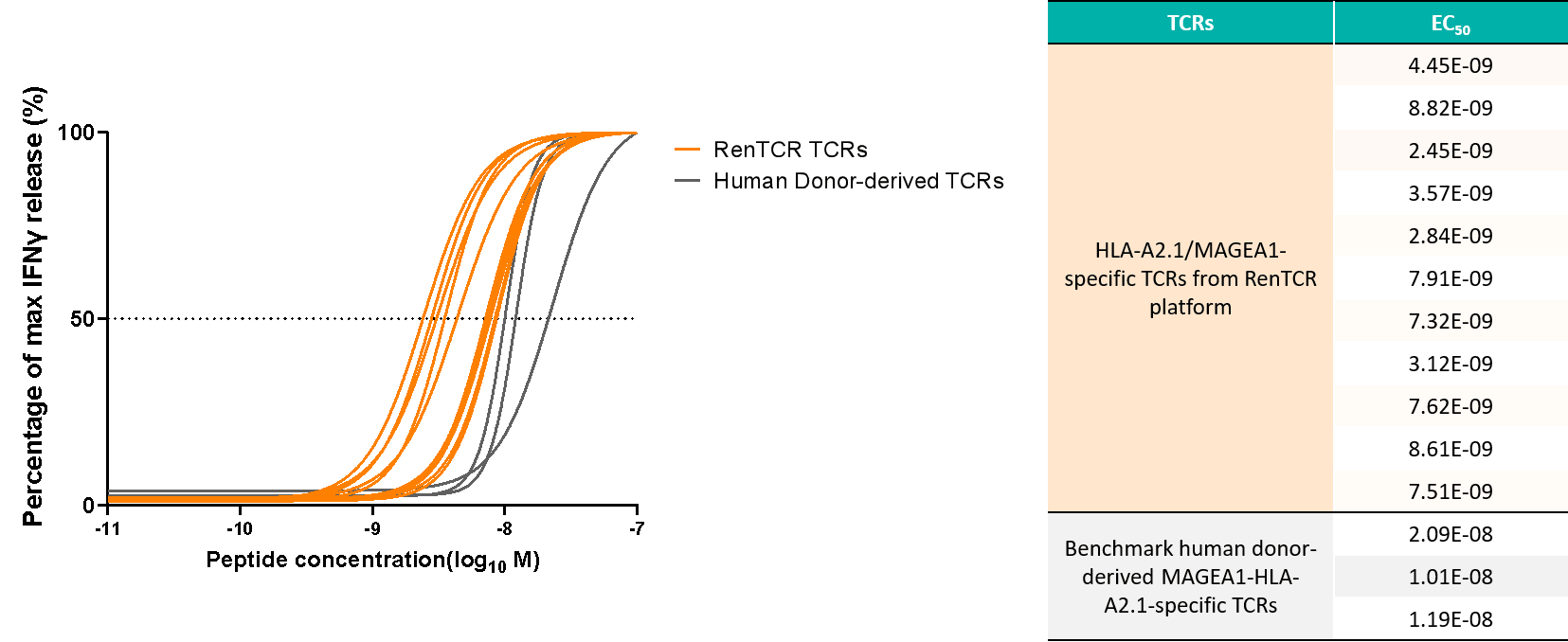
      RenTCR™ platform-derived TCRs exhibit higher peptide sensitivity than human donor-derived TCRs img
      IFN-γ production by TCR-transduced human T cells in response to stimulation with MAGEA1 peptide-loaded T2 cells. Human donor-derived TCRs include those in clinical development or reported in the literature. Data are normalized to maximum IFN-γ release and fitted to a four-parameter logistic model.
      Candidate TCRs Demonstrated No Off-target Reactivity
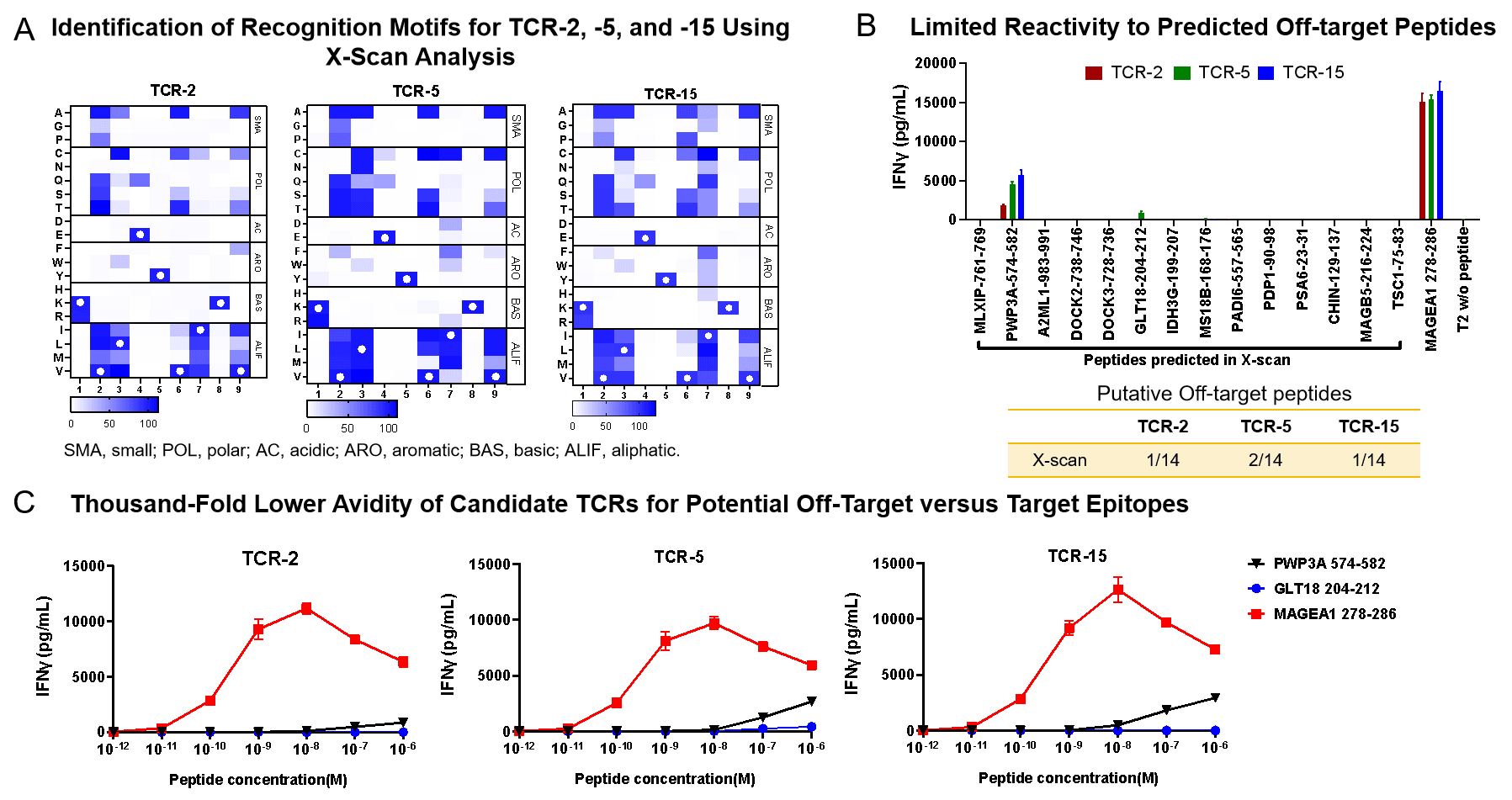
      Candidate TCRs Demonstrated No Off-target Reactivity img 1 Candidate TCRs Demonstrated No Off-target Reactivity img 2
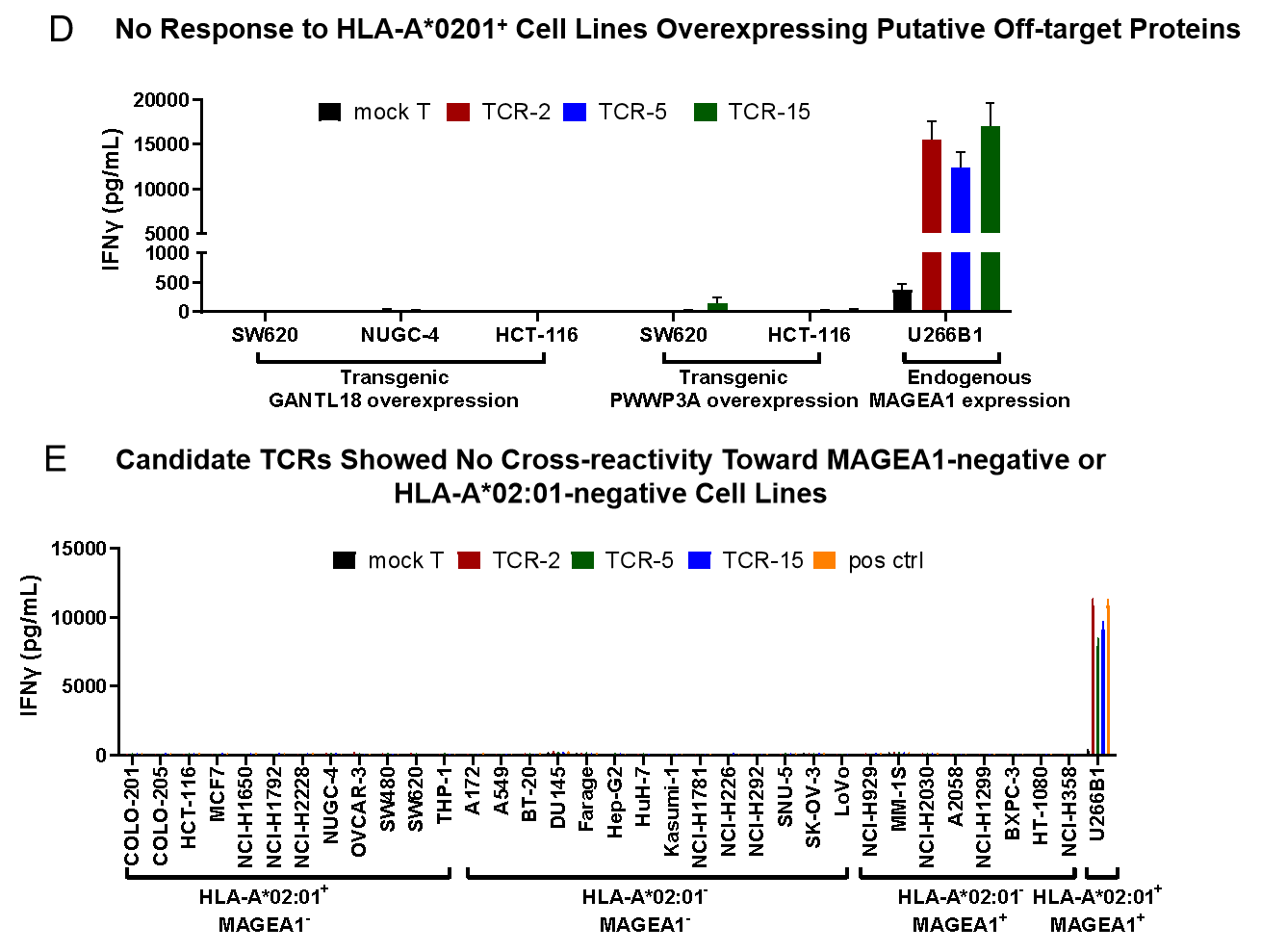
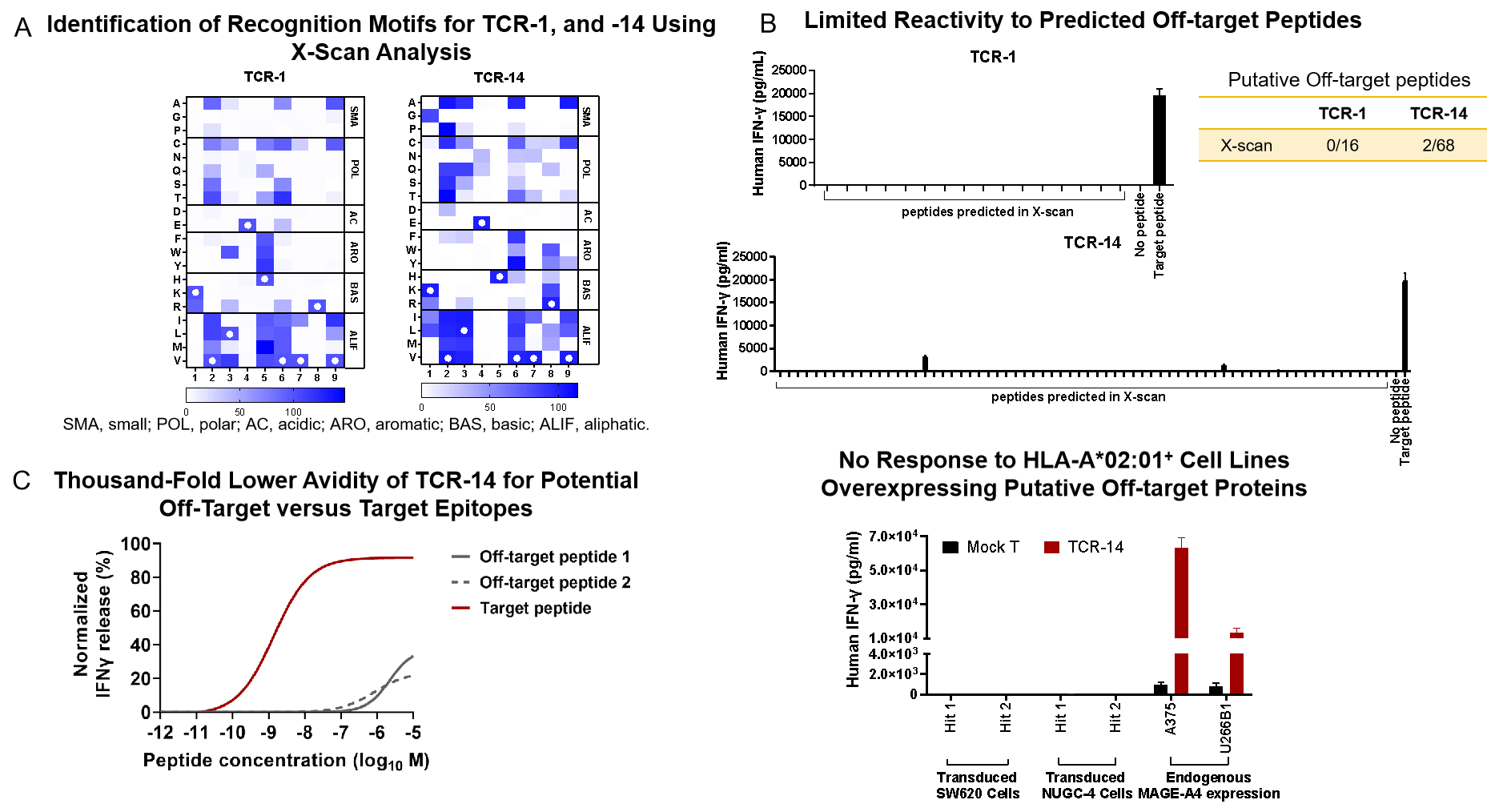
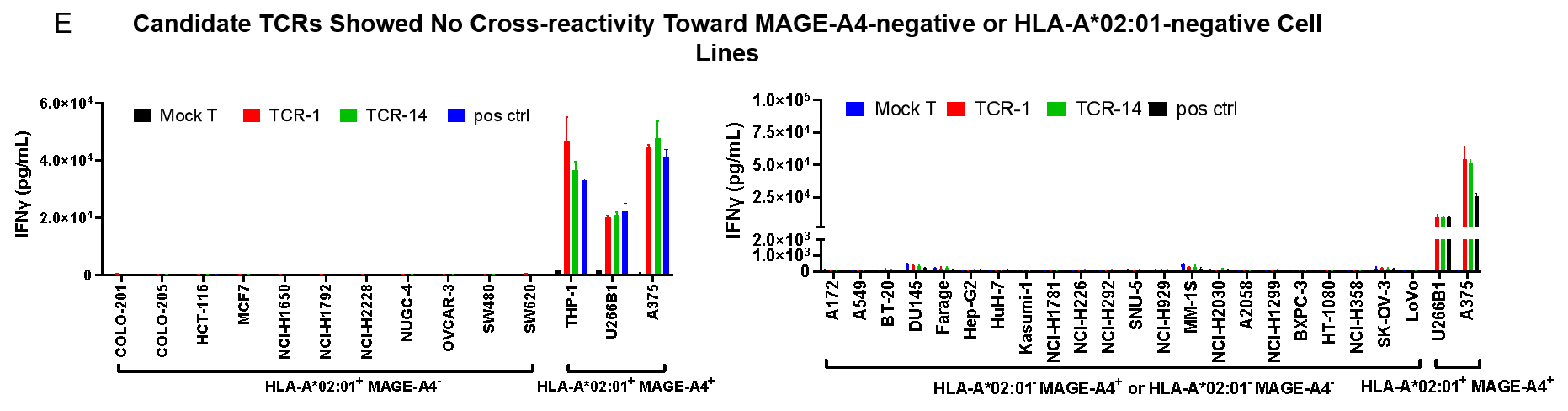
      (A) IFN-γ production by TCR-T cells was measured after stimulation with T2 cells loaded with peptides from a mutational cross-reactivity (X-scan) library. Heat maps show recognition motifs (threshold: 5% relative IFN-γ), which were used to screen a human proteome database. (B) Only peptides with predicted HLA-A*02:01 binding, as identified by X-scan, were retained for further analysis. T2 cells loaded with these peptide pools (10⁻⁶ M each) were used to stimulate TCR-T cells, and recognition was assessed via IFN-γ ELISA. (C) Recognized off-target peptides were validated in dose-response assays. (D) TCR-T cells were co-cultured with tumor cell lines overexpressing the genes encoding the putative off-target proteins (E:T=5:1, 18h). (E) TCR-T cells were co-cultured with HLA-A*02:01⁺/MAGEA1⁻, HLA-A*02:01-/MAGEA1⁻ or HLA-A*02:01⁻/MAGEA1+ cell lines (E:T=1.5:1) for 18h. TCR molecule tested in clinical-stage served as the positive control (pos ctrl). IFN-γ secretion of experiments was quantified by ELISA.
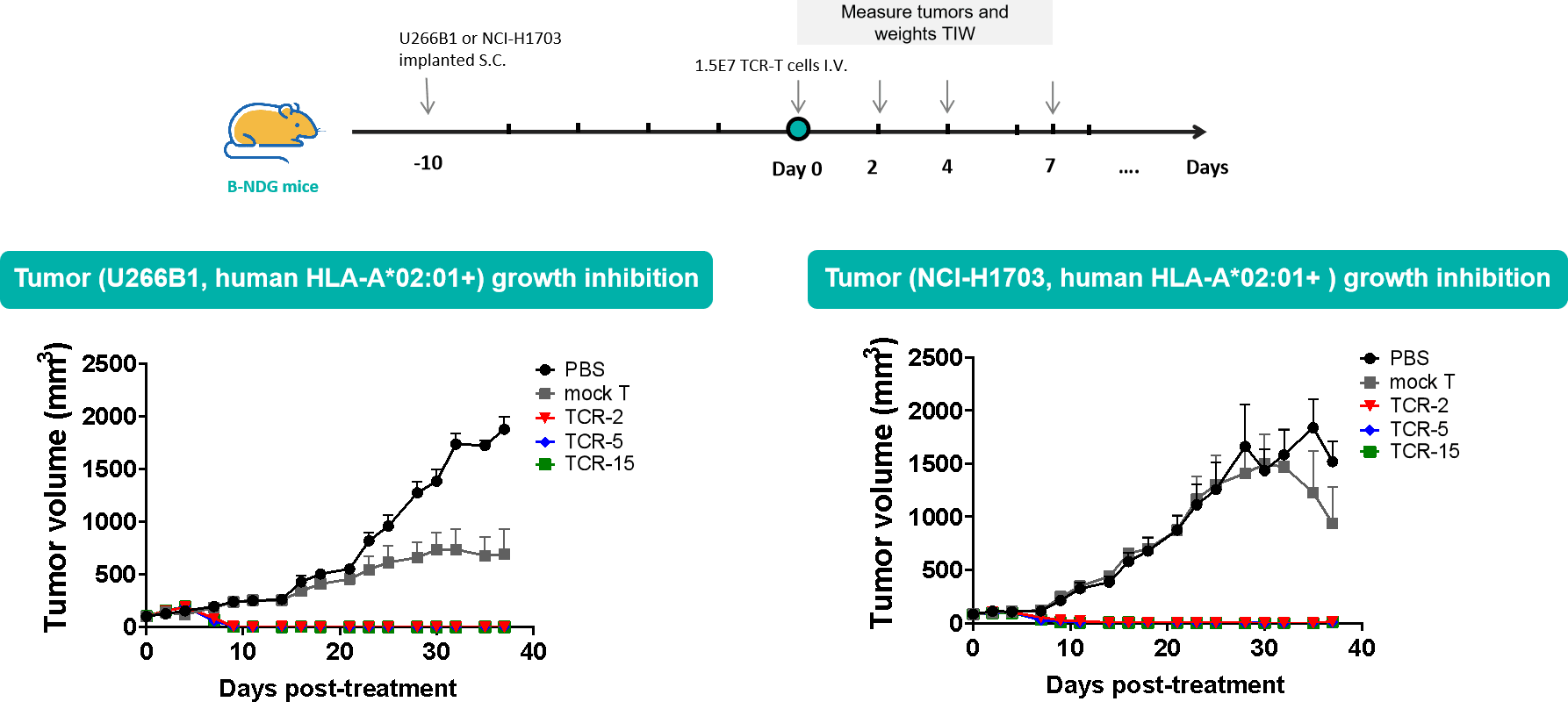
      HLA-A2.1/MAGEA1-Specific TCRs Suppress Tumor Growth In Vivo
      HLA-A2.1/MAGEA1-Specific TCRs Suppress Tumor Growth In Vivo img
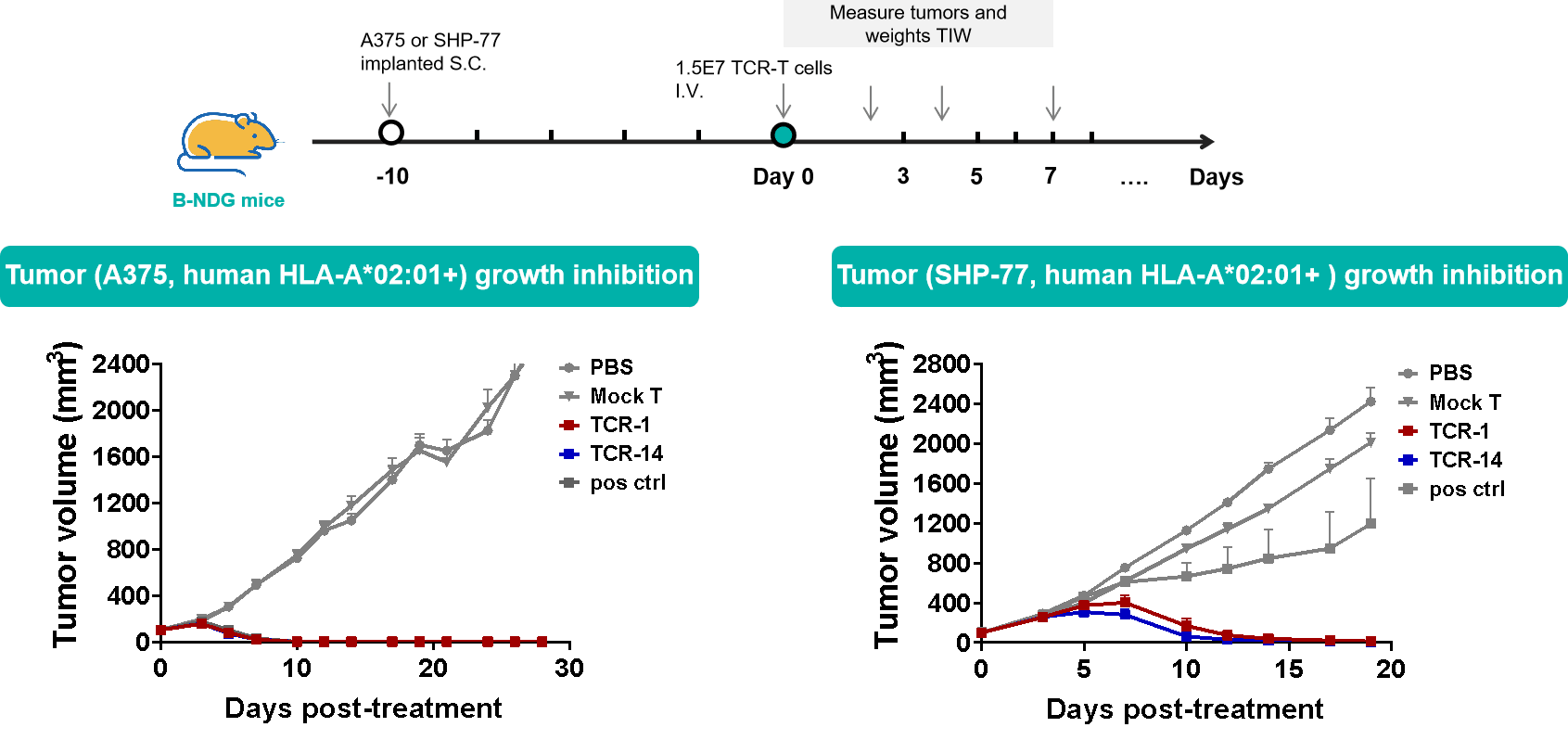
      NDG immunodeficient mice were implanted with human HLA-A*02:01+ tumor cell lines U266B1 and NCI-H1703, both of which endogenously express MAGEA1. Once the tumors reached 100 mm3, T cells expressing MAGEA1-specific TCRs or mock T cells were administered (n = 6 mice/group). S.C.: subcutaneous injection; I.V.: intravenous injection; TIW: three times a week.