Ophthalmology Model Introduction
Based on the statistics released by the WHO, approximately 2.2 billion individuals across the globe experience vision impairment. Among the middle-aged to elderly demographic, there are roughly 1.09 billion estimated cases of presbyopia. Consequently, the need for assessment through the utilization of mouse models is on the rise.
Biocytogen has developed a series of humanized and disease mouse models on Age-related Macular Degeneration (AMD), Retinitis Pigmentosa, and etc. These models possess remarkable utility and can be effectively employed in the research and analysis of ophthalmic diseases.
In Vivo Technique: Special Techniques
Dosing Routes:
- Sub retina/choroid injection (BBC)
- Intravitreous injection
- ICV (Cerebra-ventricular) injection/cannulation for slow delivery
- Intracisternal injection/cannulation for continuing micro delivery
- Bone injection
- Intra-trachea lung instillation
- Portal vein injection
- Neonatal facial vein injection (newborn)
- Intrafetal injection
- Intra-articular injection
- Intra-spinal cord injection (L4/L5/L6)
- Vascular cannulation for long-term access and delivery
Tissue/organ Collection:
- Corneal sampling
- Lens sampling
- Room water sampling
- BALF collection
- CSF (Cerebrospinal fluid) collection
- Mesenteric lymphatic fluid collection
- Thyroid collection
- Prostate collection
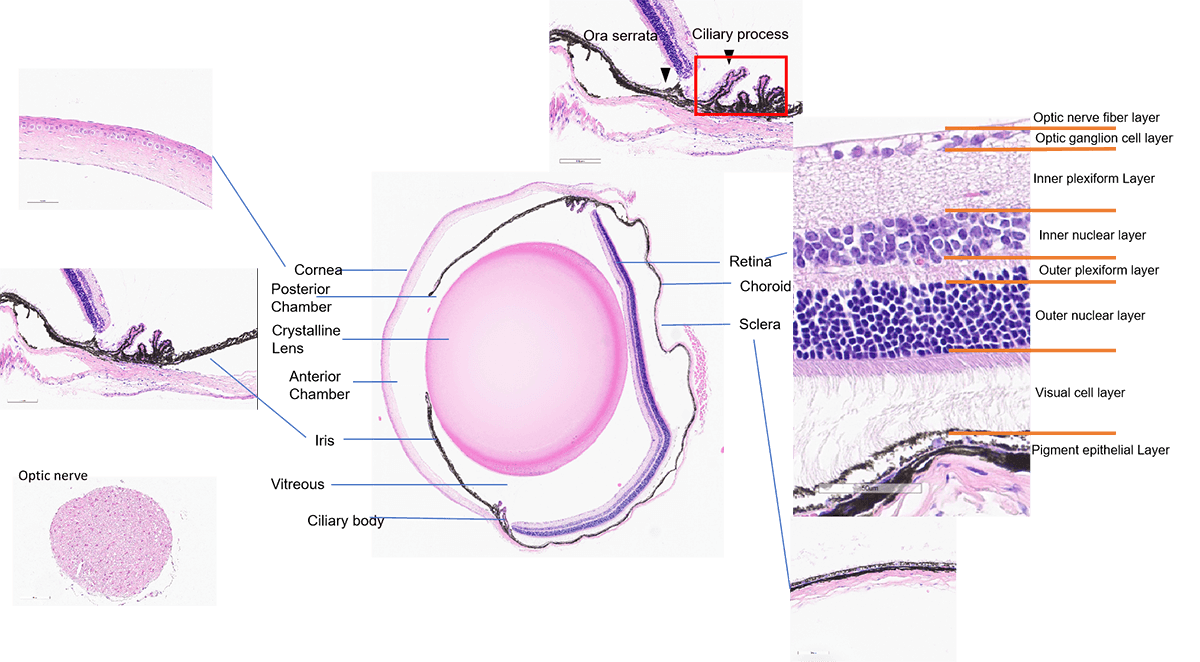
H&E Staining of Mouse Eye
Viral Gene Therapy (AAV)
-
Ocular indication
- Sub-retinal and intravitreal injection (IVT)
- Aqueous, Vitreous and retina sample collection
-
CNS indication
- ICV and intra-nucleus injection
- Brain compartment dissection, CSF collection
- Hematological indications
- Tumor models
- Inflammatry diseases
- Gene and protein expression (PoE)
- Biodistribution
- Lead selection
- Histopathology for tox evaluation
Ophthalmology Related Models