Description
GLP1R: A key regulator of metabolic homeostasis and its therapeutic intervention in obesity and diabetes
- Gene Information: The glucagon-like peptide 1 receptor (GLP1R) gene encodes a G protein-coupled receptor (GPCR) belonging to the class B glucagon receptor subfamily.
- Protein Expression: GLP1R is a cell surface protein widely expressed in the brain, small intestine, heart, and lungs.
- Signaling Pathway: By binding to endogenous GLP-1 and GLP-1 analogs, GLP1R plays a pivotal role in driving the signaling cascades that govern insulin secretion.
- Therapeutic Method: Glucagon-like peptide-1 receptor agonists (GLP-1RAs) represent a novel class of anti-diabetic agents that lower blood glucose and promote weight loss by activating the GLP-1R. Mechanistically, they stimulate insulin secretion, inhibit glucagon release, slow gastric emptying, and decrease food intake through central appetite suppression.
GIPR: A key regulator of metabolic homeostasis and its therapeutic intervention in obesity and diabetes
- Gene Information: Glucose‐dependent insulinotropic polypeptide receptor (GIPR) is a class B G protein‐coupled receptor (GPCR) that plays a central role in mediating the metabolic actions of its cognate ligand, glucose‐dependent insulinotropic polypeptide (GIP).
- Protein Expression: GIPR exhibits prominent expression in pancreatic β-cells, with detectable expression also observed in the gastrointestinal tract, adipose tissue, and brain.
- Signaling Pathway: GIP signaling alters energy metabolism by regulating central NPY release, disrupting the AKT-mTOR pathway to decrease muscle fat oxidation, and exacerbating postprandial adipose inflammation and ectopic fat deposition.
- Therapeutic Method: GIPR serves as a versatile therapeutic target whose agonists stimulate its natural insulinotropic action for glycemic control, while its antagonists counteract its obesogenic and inflammatory effects to manage obesity.
GCGR: A key regulator of glucose homeostasis and its therapeutic intervention in diabetes and obesity
- Gene Information: The glucagon receptor, encoded by the GCGR gene, represents a pivotal member of the class B G-protein coupled receptor (GPCR) superfamily.
- Protein Expression: GCGR primarily mediates the metabolic actions of glucagon, with its highest expression in the liver and kidneys, alongside documented presence in the pancreas, heart, and other tissues.
- Signaling Pathway: Upon binding to GCGR, glucagon triggers intracellular signaling cascades, which stimulate adenylyl cyclase to elevate cyclic AMP (cAMP) levels. The subsequent activation of Protein Kinase A (PKA) induces the phosphorylation of key enzymes and transcription factors, accelerating hepatic glucose production through glycogenolysis and gluconeogenesis.
- Therapeutic Method: GCGR serves as a versatile therapeutic target whose agonists promote hepatic glucose output and lipolysis to counteract severe hypoglycemia, obesity, and MASH, while its antagonists inhibit hepatic glucose production to lower blood glucose levels for the management of type 2 and type 1 diabetes.
Targeting Strategy
GCGR
- The exons 2-14 of the mouse Gcgr gene that encode the full-length protein were replaced by human GCGR exons 2-14 in B-hGCGR mice. The human GCGR protein expression will be driven by the endogenous mouse Gcgr promoter, while mouse Gcgr gene transcription and translation will be disrupted.
GIPR
- The part of exon 2 to exon 14 of the mouse Gipr gene that encodes the whole molecule (ATG to STOP codon), including 3’UTR, were replaced by human GIPR CDS + human 3’UTR in B-hGIPR mice. The promoter and 5’UTR region of the mouse gene are retained. The human GIPR expression is driven by the endogenous mouse Gipr promoter, while the mouse Gipr gene transcription and translation will be disrupted.
GLP1R
- The full coding sequence of the human GLP1R gene was inserted into the mouse exon 1 of the Glp1r gene in B-hGLP1R mice. The human GLP1R protein expression will be driven by the endogenous mouse Glp1r promoter, while mouse Glp1r gene transcription and translation will be disrupted.
mRNA Expression Analysis
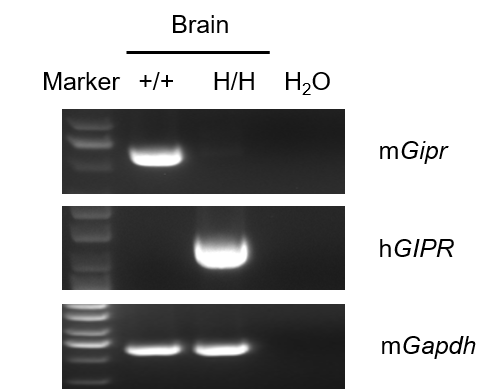
- Mouse Gipr was detected exclusively in wild-type C57BL/6JNifdc mice.
- Human GIPR was detected in homozygous B-hGCGR/hGIPR/hGLP1R mice but not in wild-type mice.
Strain-specific analysis of GIPR mRNA expression in wild-type C57BL/6JNifdc mice and B-hGCGR/hGIPR/hGLP1R mice by RT-PCR. Brain RNA was isolated from wildtype C57BL/6JNifdc mice (+/+) and homozygous B-hGCGR/hGIPR/hGLP1R mice (H/H, H/H, H/H), then cDNA libraries were synthesized by reverse transcription, followed by PCR with mouse or human GIPR primers. Mouse Gipr mRNA was detectable in wild-type mice but not in homozygous B-hGCGR/hGIPR/hGLP1R mice. Human GIPR mRNA was detectable only in homozygous B-hGCGR/hGIPR/hGLP1R mice, but not in wild-type mice.
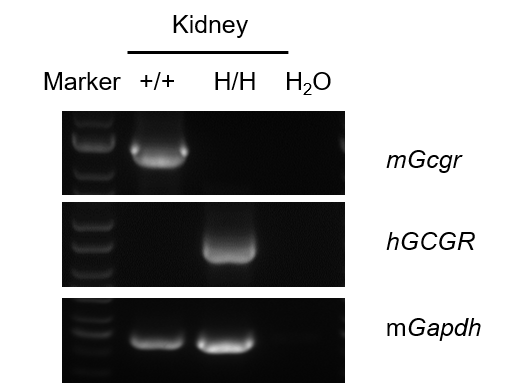
- Mouse Gcgr was detected exclusively in wild-type C57BL/6JNifdc mice.
- Human GCGR was detected in homozygous B-hGCGR/hGIPR/hGLP1R mice but not in wild-type mice.
Strain-specific analysis of GCGR mRNA expression in wild-type C57BL/6JNifdc mice and B-hGCGR/hGIPR/hGLP1R mice by RT-PCR. Kidney RNA was isolated from wildtype C57BL/6JNifdc mice (+/+) and homozygous B-hGCGR/hGIPR/hGLP1R mice (H/H, H/H, H/H), then cDNA libraries were synthesized by reverse transcription, followed by PCR with mouse and human GCGR primers. Mouse Gcgr mRNA was detectable in wild-type mice but not in homozygous B-hGCGR/hGIPR/hGLP1R mice. Human GCGR mRNA was detectable only in homozygous B-hGCGR/hGIPR/hGLP1R mice, but not in wild-type mice.
GLP1R Protein Expression Analysis
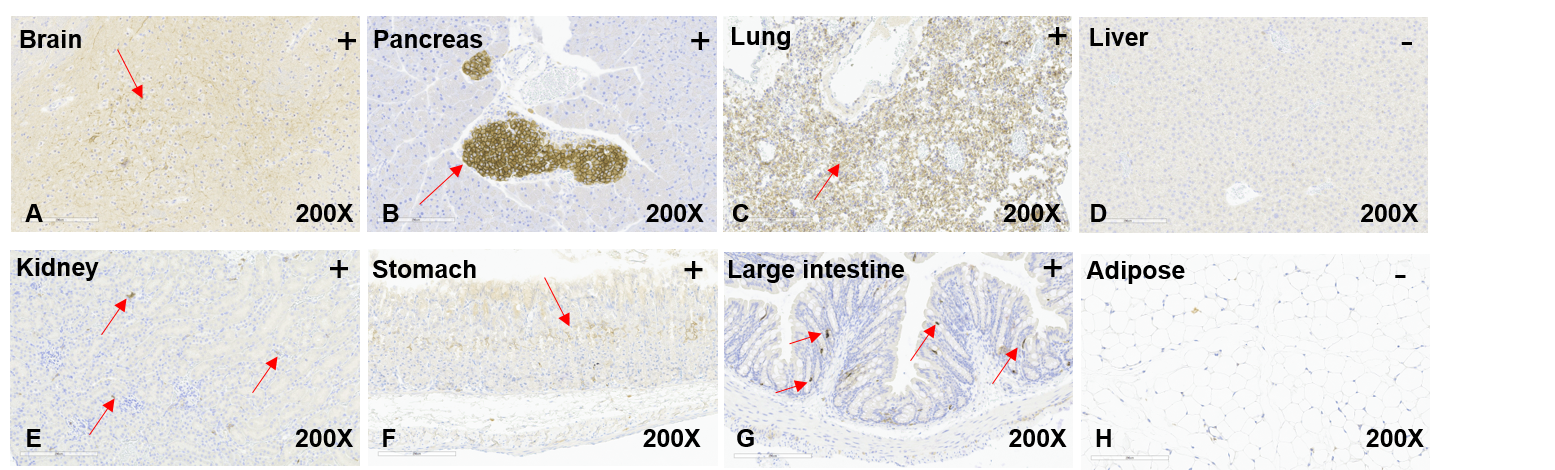
- Human GLP1R was detected in homozygous B-hGCGR/hGIPR/hGLP1R mice.
Human GLP1R expression in different tissues of B-hGCGR/hGIPR/hGLP1R mice by IHC. Tissues were stained with human-specific antibodies GLP1R (Anti-GLP1R antibody, abcam, ab254352). (A, B, C, E, F, G) The pancreas, brain, lung, kidney, stomach, and large intestine of B-hGCGR/hGIPR/hGLP1R mice showed human GLP1R-positive. (D, H) Liver and adipose of B-hGCGR/hGIPR/hGLP1R mice showed human GLP1R-negative. Original magnification ×200. Abbreviations: IHC, immunohistochemistry.
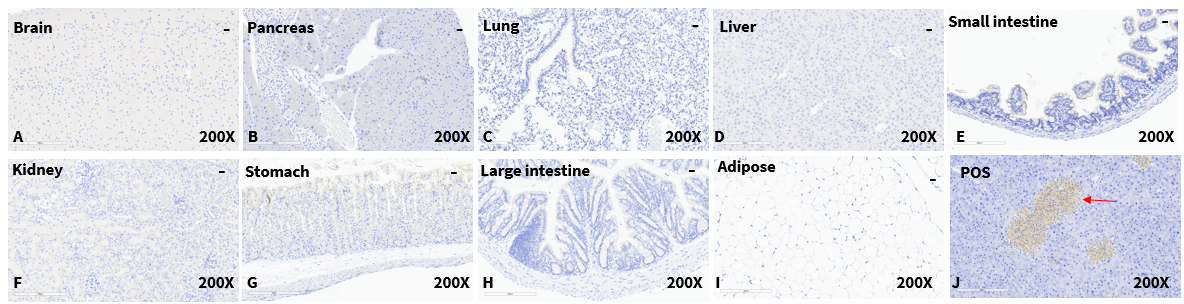
- Mouse GLP1R was not detectable in homozygous B-hGCGR/hGIPR/hGLP1R mice.
Mouse GLP1R expression in different tissues of B-hGLP1R mice by IHC. Tissues were stained with mouse-specific antibodies GLP1R (Anti-GLP-1R antibody, ab218532). (A-I) The pancreas, brain, lung, kidney, stomach, large intestine, small intestine, liver, and adipose tissue of B-hGCGR/hGIPR/hGLP1R mice showed mouse GLP1R-negative. (J) The pancreas of wild-type C57BL/6JNifdc mice showed mouse GLP1R positive. Original magnification ×200. Abbreviations: IHC, immunohistochemistry.
In Vivo Efficacy Study in HFD Induced B-hGCGR/hGIPR/hGLP1R Mice
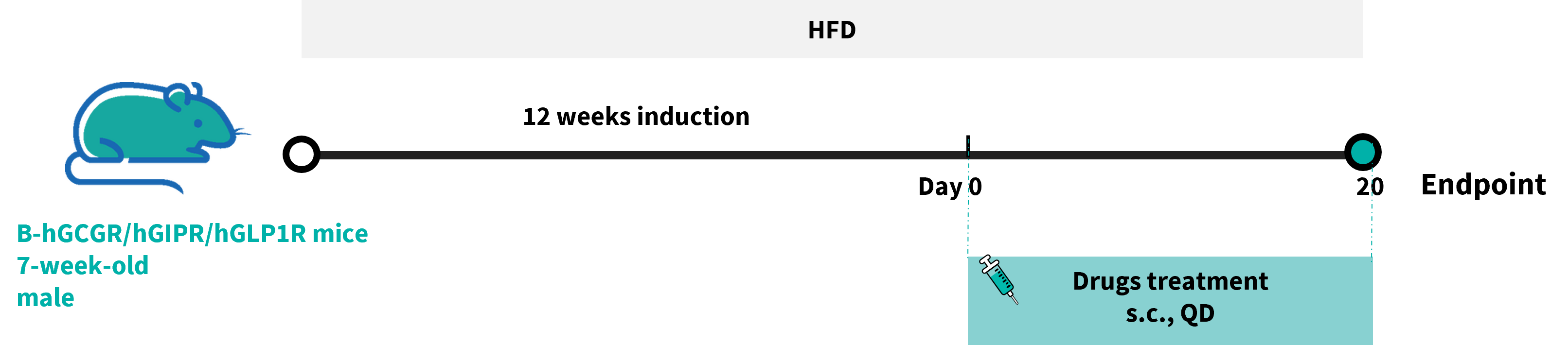
Efficacy study in HFD-induced B-hGCGR/hGIPR/hGLP1R mice. B-hGCGR/hGIPR/hGLP1R mice were fed with a high-fat diet (HFD) for 12 weeks to induce obesity. Drugs and the vehicle were administered to the mice individually.
Vehicle: 5% DMSO+ 10% Cremophor EL(BASF)+ 15% PEG400 + 70% 100 mM glycine-NaOH buffer (pH 10).
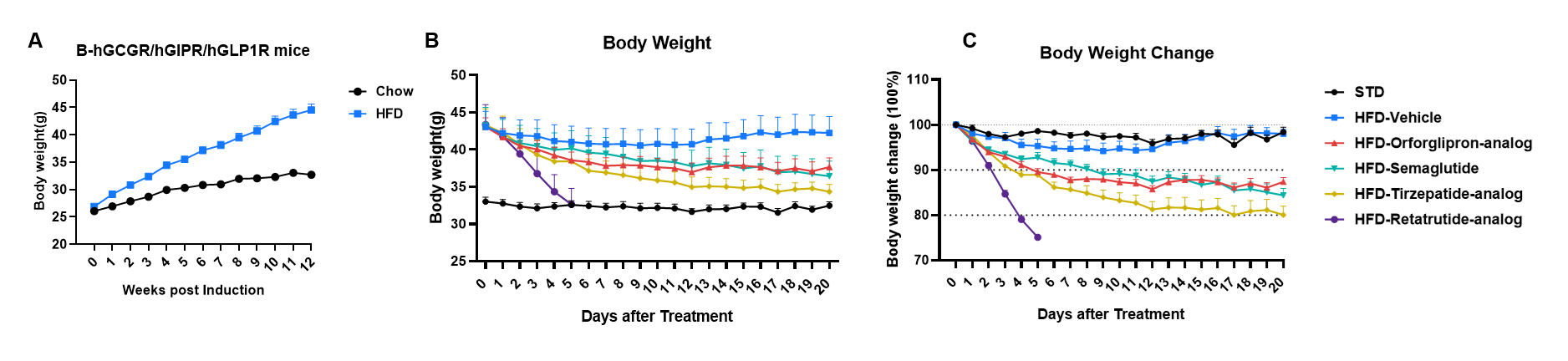
- Orforglipron, Semaglutide, Tirzepatide, and Retatrutide can reduce body weight in HFD B-hGCGR/hGIPR/hGLP1R mice.
Efficacy study in HFD-induced B-hGCGR/hGIPR/hGLP1R mice. B-hGCGR/hGIPR/hGLP1R mice were fed with a high-fat diet (HFD) for 12 weeks to induce obesity. Drugs and the vehicle were administered to the mice individually. (A) Body weight change after HFD induction. (B-C) Body weight change after treatment. Values are expressed as mean ± SEM.
Vehicle: 5% DMSO+ 10% Cremophor EL(BASF)+ 15% PEG400 + 70% 100 mM glycine-NaOH buffer (pH 10).
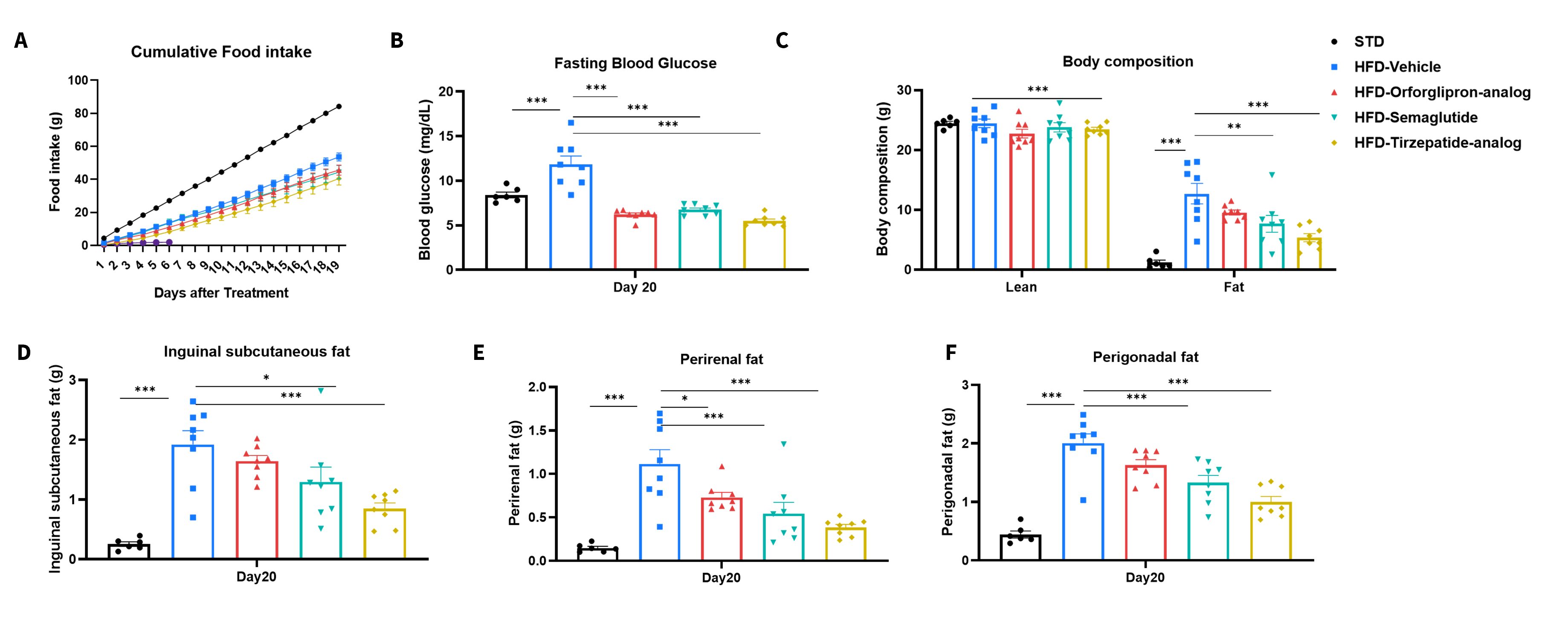
- Orforglipron, Semaglutide, and Tirzepatide can reduce food intake, blood glucose, and adipose tissue weight in HFD B-hGCGR/hGIPR/hGLP1R mice.
Efficacy study in HFD-induced B-hGCGR/hGIPR/hGLP1R mice. (A) Cumulative food intake after treatment. (B) 6 hours fasting blood glucose after treatment. (C) Fat mass and lean mass change were analyzed by the body composition analyzer. (D-F) Weight of white adipose tissue at the end of the treatment. Values are expressed as mean ± SEM. Analyzed by one way-ANOVA, *P<0.05,**P<0.01, ***P<0.001.
* When publishing results obtained using this animal model, please acknowledge the source as follows: The animal model [B-hGCGR/hGIPR/hGLP1R mice] (Cat# 113537) was purchased from Biocytogen.