mRNA expression analysis by RT-PCR
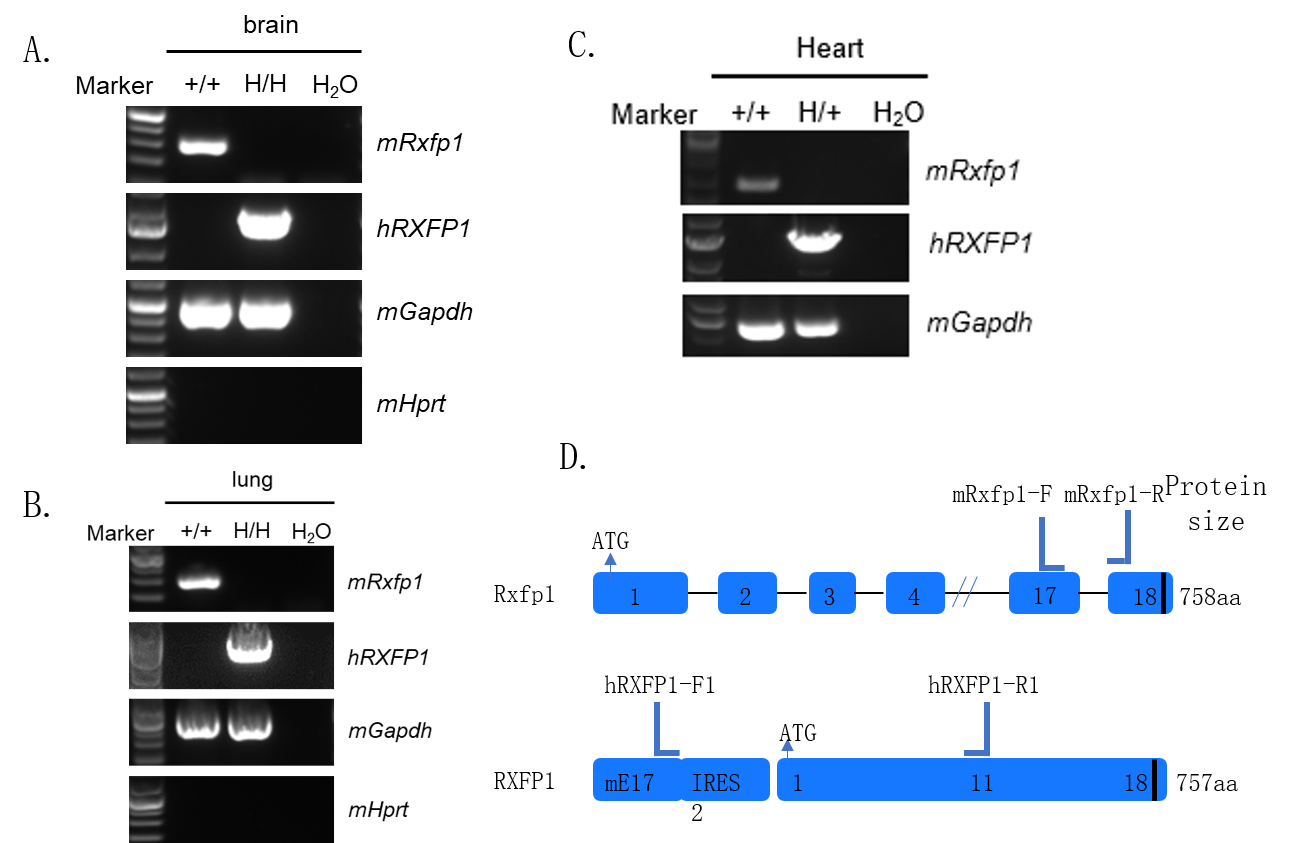
- Human RXFP1 mRNA was detectable only in homozygous B-hRXFP1 mice but not in wild-type mice.
Strain specific analysis of RXFP1 mRNA expression in wild-type C57BL/6 mice and B-hRXFP1 mice by RT-PCR. Brain(A), lung (B)and Heart(C) RNA were isolated from wild-type C57BL/6 mice (+/+) and homozygous B-hRXFP1 mice(H/H), then cDNA libraries were synthesized by reverse transcription, followed by PCR with mouse or human RXFP1 primers. Mouse Rxfp1 mRNA were detectable in wild-type C57BL/6 mice. Human RXFP1 mRNA was detectable only in homozygous B-hRXFP1 mice but not in wild-type mice.
mRNA expression analysis by q-PCR
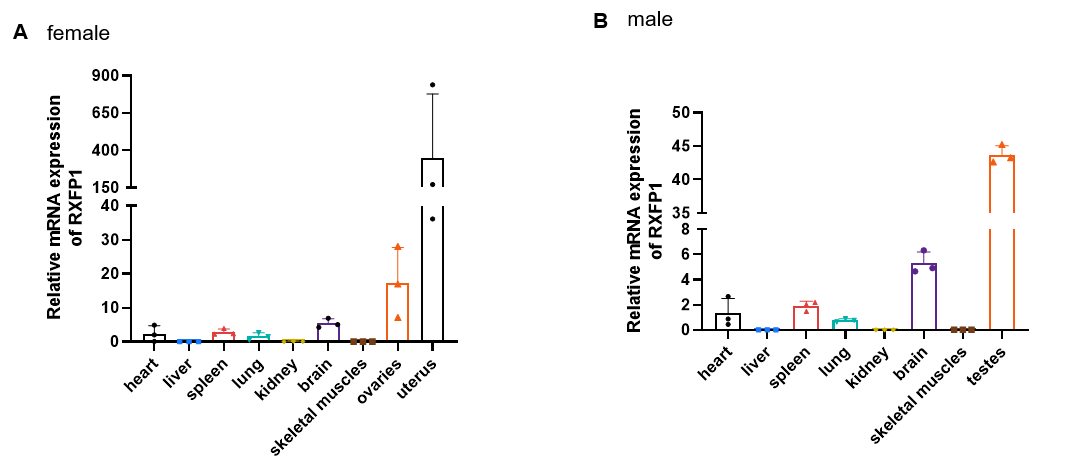
- Human RXFP1 mRNA was high expression in testis, Uterus, Ovaries and Brain.
Species specific analysis of human RXFP1 gene expression in homozygous B-hRXFP1 mice by RT-qPCR. Various tissue RNA were collected from homozygous B-hRXFP1 mice (H/H) (female, n=3, 7-week-old; male, n=3, 7-week-old). A. The mRNA expression of human RXFP1 in homozygous female B-hRXFP1 mice. B. The mRNA expression of human RXFP1 in homozygous male B-hRXFP1 mice.
RXFP1 Protein Expression
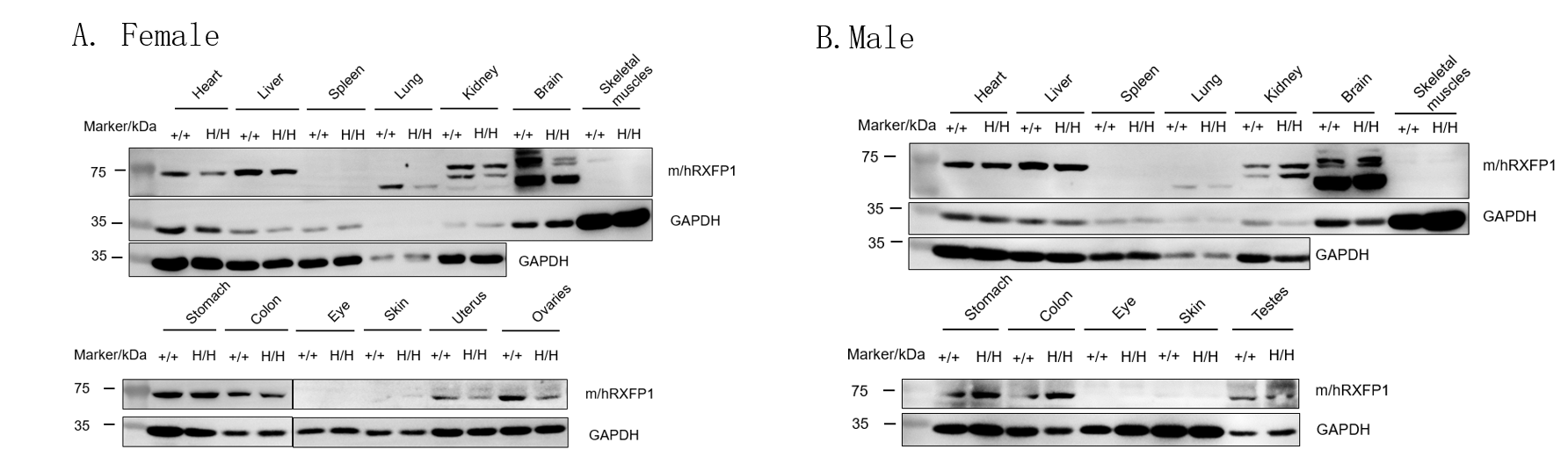
- Human and mouse RXFP1 were expressed in heart, liver, lung, Kidney, Brain, Stomach , Colon, Uterus, Ovaries and testis.
Western blot analysis of RXFP1 protein expression in wild-type C57BL/6JNifdc mice and homozygous B-hRXFP1 mice. Various tissue lysates were collected from female(A) and male(B),wild-type C57BL/6JNifdc mice (+/+) (1♂1♀, 7-week-old) and homozygous B-hRXFP1 mice (H/H) (1♂1♀, 7-week-old), and then analyzed by western blot with recombinantly Anti-LGR7 antibody (GeneTex, GTX108186, the antibody was cross-reactive between human and mouse). 40 μg total proteins were loaded for western blotting analysis.
Hematology Analysis
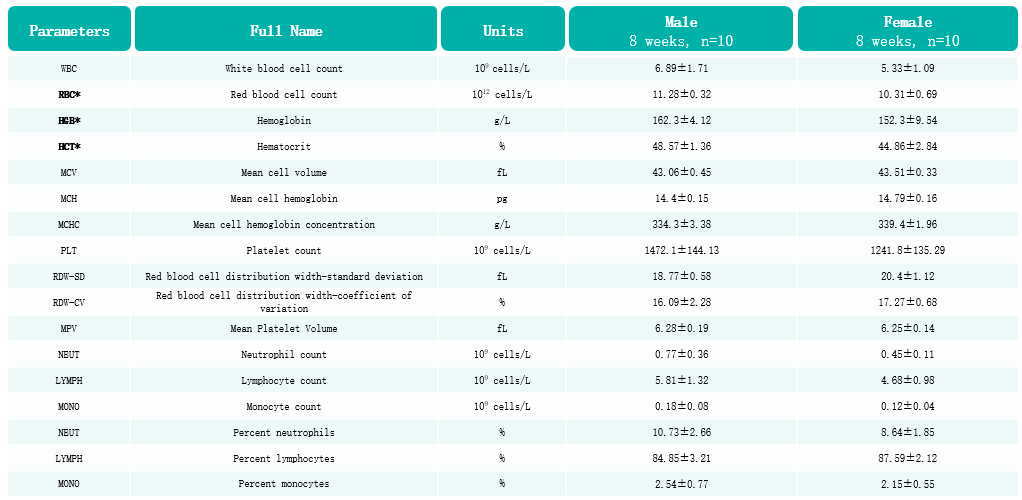
- Most indicators showed no significant differences compared with wild-type mice. However, three parameters including RBC, HGB and HCT were slightly decreased in female mice compared with wild-type , suggesting that female animals may develop mild anemia.
Values are expressed as mean ± SD.
Blood Biochemical Analysis
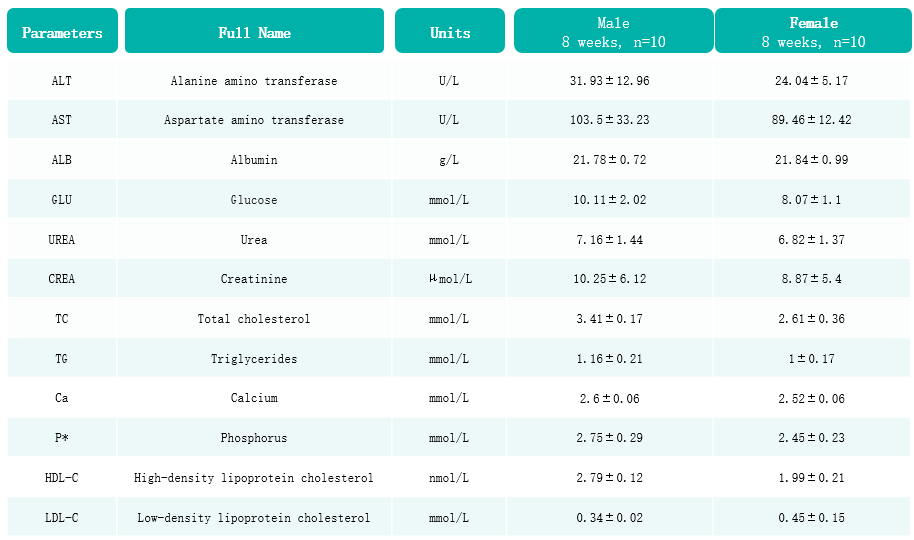
- Most indicators showed no significant differences compared with wild-type mice.
Values are expressed as mean ± SD.
Gross Organ Anatomy (Female)
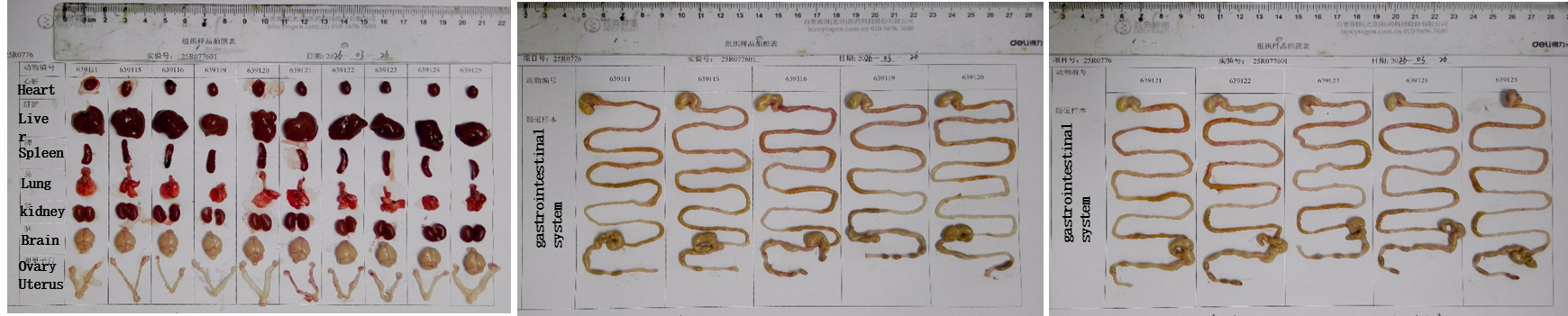
- No abnormalities were observed.
Organs of female B-hRXFP1 mice (8-week-old, n = 10).
Gross Organ Anatomy (Male)
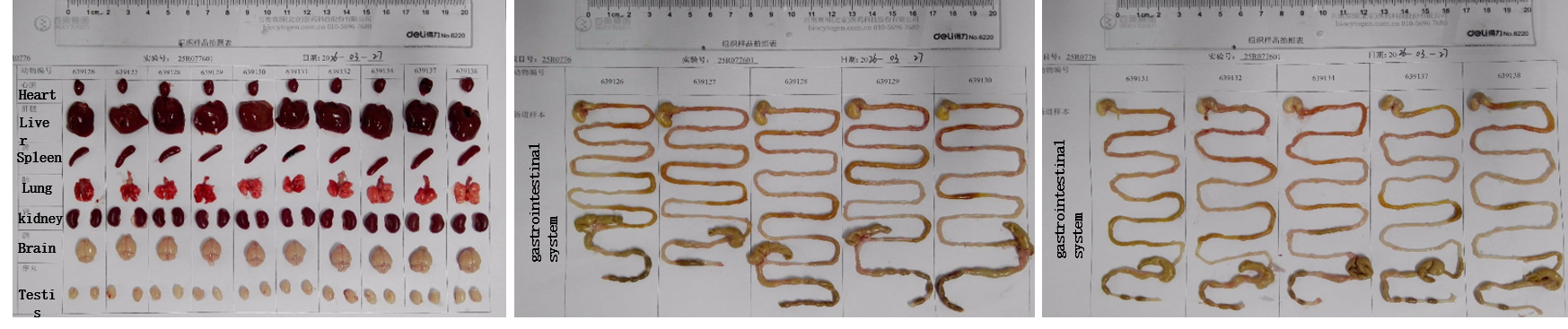
- No abnormalities were observed.
Organs of male B-hRXFP1 mice (8-week-old, n = 10).
Organ Weight
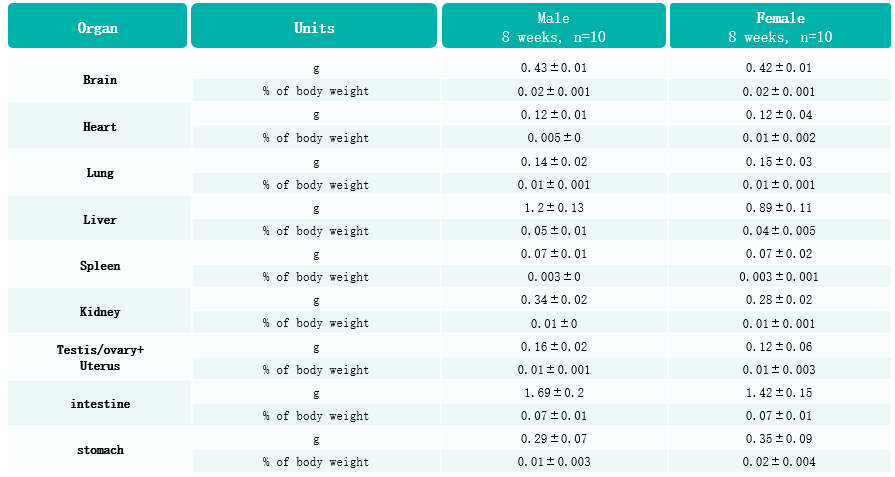
- No abnormalities were observed.
Average weights of major organs in B-hRXFP1 mice. Values are expressed as mean ± SD.
Histopathological Analysis
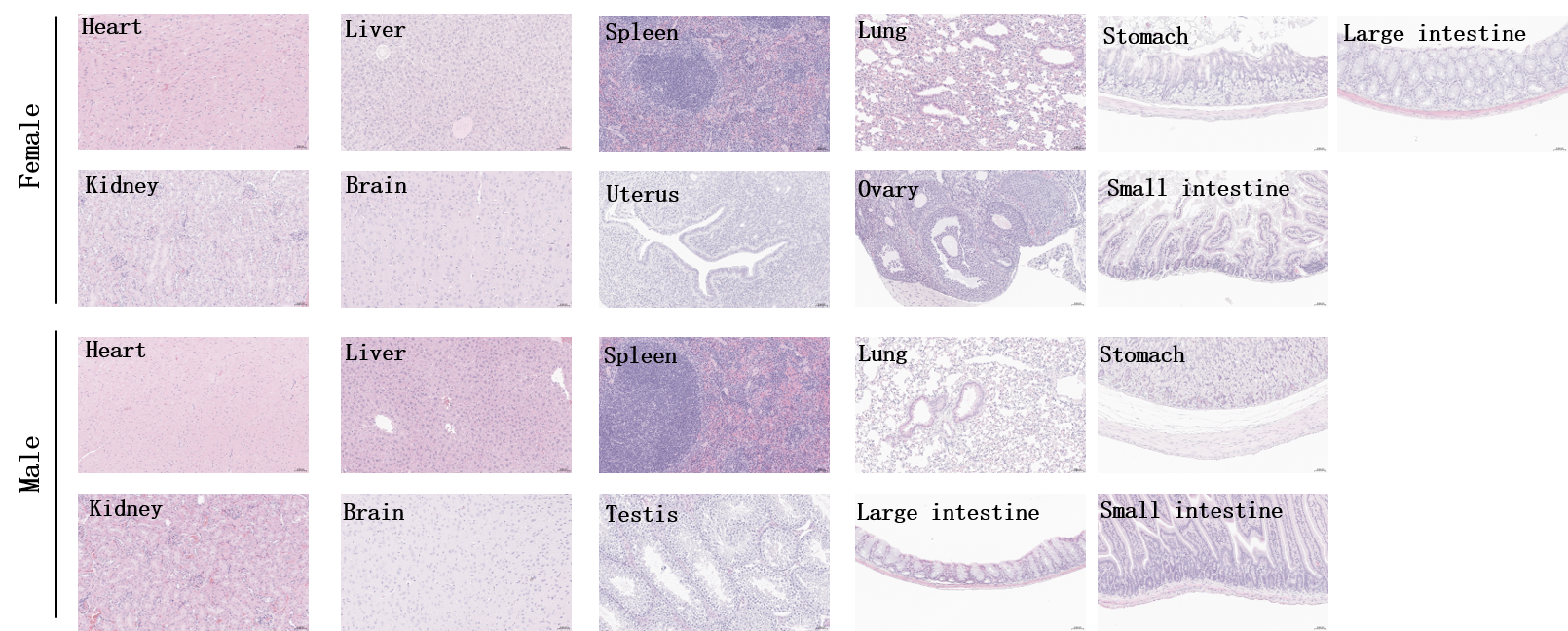
- No obvious abnormalities were observed in any organs examined (heart, liver, spleen, lung, kidney, brain, stomach, small intestine, Large intestine, ovary and testis).
Histopathological analysis of organs in B-hRXFP1 mice. Major organs from B-hRXFP1 mice were collected at 8 weeks of age and analyzed by H&E staining (male, n = 10; female, n = 10; 200x).
* When publishing results obtained using this animal model, please acknowledge the source as follows: The animal model [B-hRXFP1 mice] (Cat# 113095) was purchased from Biocytogen.