
C57BL/6N-Ms4a6dtm1(MS4A6A)Bcgen/Bcgen • 113036


Gene targeting strategy for B-hMS4A6A mice. The exons 2-7 of mouse Ms4a6d gene that encode the whole molecule, including 3’UTR were replaced by human counterparts in B-hMS4A6A mice. The promoter and 5’UTR region of the mouse gene were retained. The human MS4A6A expression was driven by endogenous mouse Ms4a6d promoter, while mouse Ms4a6d gene transcription and translation will be disrupted.

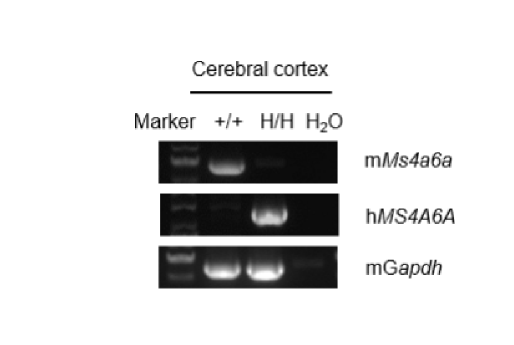
Strain-specific analysis of MS4A6A mRNA expression in wild-type C57BL/6 mice and homozygous B-hMS4A6A mice by RT-PCR. Cerebral cortex RNA was isolated from wild-type C57BL/6 mice (+/+) and homozygous B-hMS4A6A mice (H/H), and cDNA libraries were synthesized by reverse transcription, followed by PCR with species-specific mouse or human MS4A6A primers. Human MS4A6A mRNA was exclusively detectable in homozygous B-hMS4A6A mice but not in wild-type C57BL/6 mice.
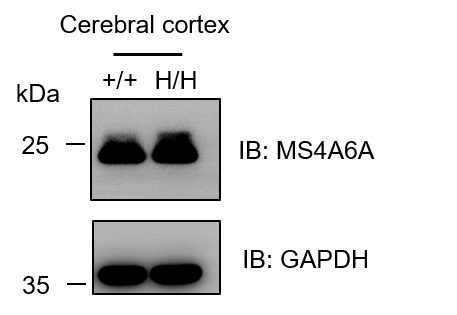
Western blot analysis of MS4A6A protein expression in homozygous B-hMS4A6A mice. Cerebral cortex lysates were collected from wild-type C57BL/6N mice (+/+) and homozygous B-hMS4A6A mice (H/H), and then analyzed by western blot with anti-MS4A6A antibody (abcam, ab189983). 40 μg total proteins were loaded for western blotting analysis. MS4A6A was detectable in cerebral cortex of both wild-type C57BL/6N mice and homozygous B-hMS4A6A mice due to the cross-reactivity of antibody.
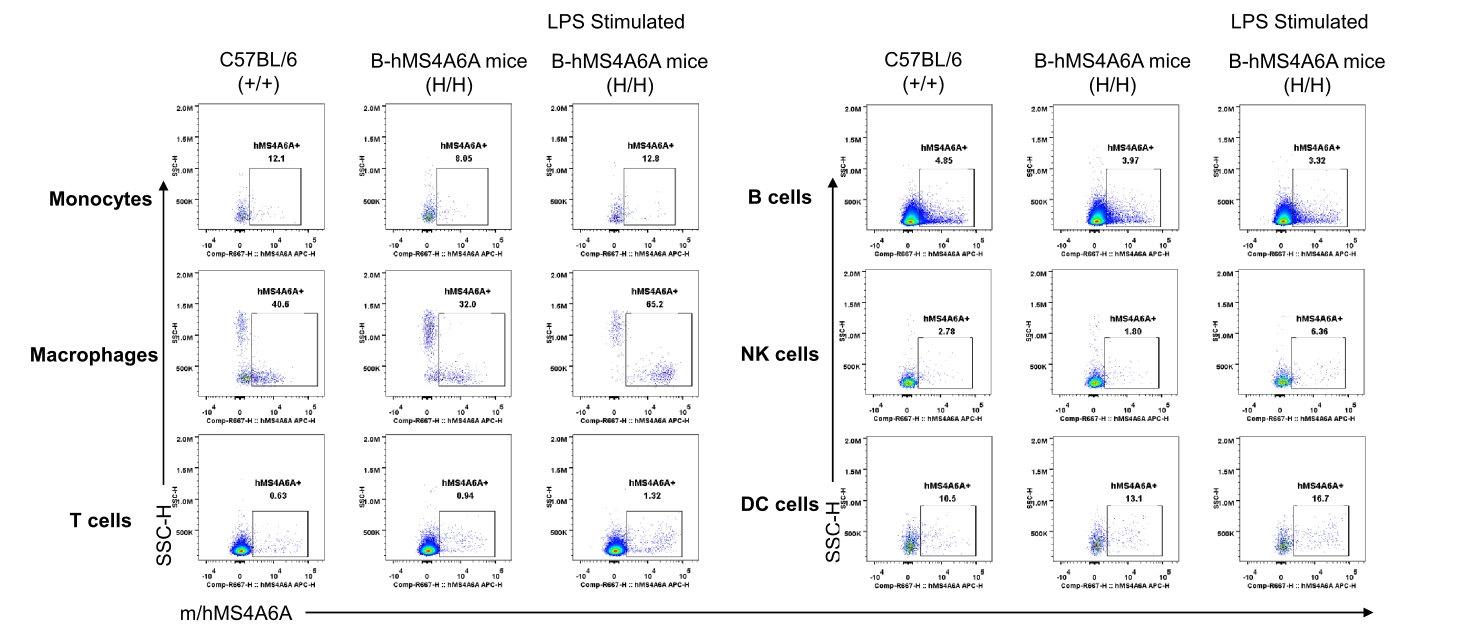
MS4A6A expression analysis in wild-type C57BL/6 mice and homozygous B-hMS4A6A mice by flow cytometry. Splenocytes were collected from wild-type C57BL/6 mice (+/+) and homozygous B-hMS4A6A mice (H/H) (male, n = 2). Mouse and human MS4A6A expression on monocytes, macrophages, T cells, B cells, NK cells, and dendritic cells (DCs) was analyzed by flow cytometry using an anti-MS4A6A antibody (Abnova, ABN-H00064231-MA02). MS4A6A was detectable on monocytes, macrophages, and DCs in the spleens of both homozygous B-hMS4A6A mice and wild-type C57BL/6 mice, as the antibody is cross-reactive for human and mouse MS4A6A.
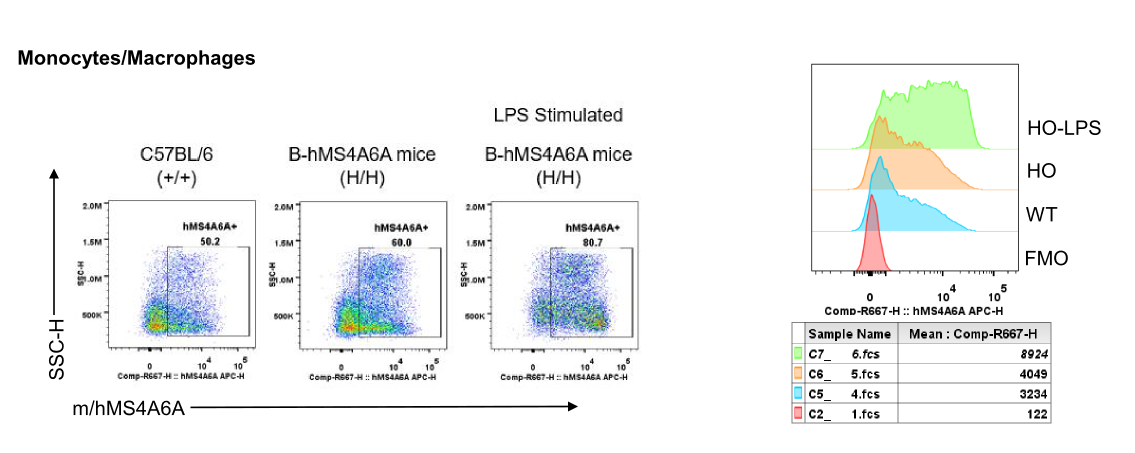
MS4A6A expression analysis in wild-type C57BL/6 mice and homozygous B-hMS4A6A mice by flow cytometry. Bone marrow cells were collected from wild-type C57BL/6 mice (+/+) and homozygous B-hMS4A6A mice (H/H) (male, n = 2). Mouse and human MS4A6A expression on monocytes and macrophages was analyzed by flow cytometry using an anti-MS4A6A antibody (Abnova, ABN-H00064231-MA02). MS4A6A was detectable on monocytes and macrophages in the bone marrow of both homozygous B-hMS4A6A mice and wild-type C57BL/6 mice, as the antibody is cross-reactive for human and mouse MS4A6A.