Description
TMPRSS11E: A pivotal transmembrane protease target for treating epithelial malignancies
- Gene Information: TMPRSS11E (transmembrane serine protease 11E, also known as DESC1) encodes a type II transmembrane serine protease (TTSP). It belongs to the HAT/DESC subfamily and plays essential roles in pericellular proteolysis, epithelial homeostasis, and cellular differentiation.
- Protein Expression: TMPRSS11E is predominantly expressed in normal epithelial tissues and is significantly overexpressed across various human cancers, particularly head and neck, esophageal, and cervical squamous cell carcinomas. This tumor-associated expression profile makes it a compelling therapeutic target.
- Signaling Pathway: TMPRSS11E cleaves specific extracellular matrix components and cell-surface substrates, activating downstream pathways such as PAR2 and EGFR. This proteolytic activity promotes extracellular matrix remodeling, cell proliferation, migration, and invasive tumor growth.
- Therapeutic Inhibition: TMPRSS11E is an attractive target for therapeutic monoclonal antibodies, antibody-drug conjugates (ADCs), and targeted protease inhibitors. Neutralizing its enzymatic activity or selectively delivering cytotoxic payloads holds significant promise for treating TMPRSS11E-overexpressing solid tumors.
Targeting Strategy
TMPRSS11E
- The exons 2 10 of mouse Tmprss11e gene that encode extracellular domain and 3’UTR were replaced by human counterparts in B hTMPRSS11E mice.
- The promoter , 5’UTR region, cytoplasmic domain & transmembrane of the mouse gene are retained. The human TMPRSS11E expression is driven by endogenous mouse Tmprss11e promoter, while mouse Tmprss11e gene transcription and translation will be disrupted.
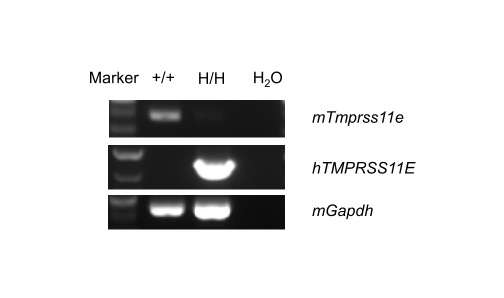
TMPRSS11E mRNA Expression Analysis by RT-PCR
Strain specific analysis of TMPRSS11E mRNA expression in wild-type C57BL/6JNifdc mice and homozygous B-hTMPRSS11E mice by RT-PCR. Cervix RNA was isolated from wild-type C57BL/6JNifdc mice (+/+) and homozygous B-hTMPRSS11E mice (H/H), then cDNA libraries were synthesized by reverse transcription, followed by PCR with mouse or human TMPRSS11E primers. Sequencing of the PCR products confirmed that the amplified sequences were consistent with database reference sequences.
* When publishing results obtained using this animal model, please acknowledge the source as follows: The animal model [B-hTMPRSS11E mice] (Cat# 113411) was purchased from Biocytogen.