Description
CD47: A potential molecular target in cardiovascular disease pathogenesis and therapeutic intervention
- Gene Information: Signal-regulatory protein alpha (SIRPA) is a protein-coding gene located on chromosome 20p13. It encodes a transmembrane receptor-type glycoprotein belonging to the immunoglobulin superfamily (IgSF). Cluster of differentiation 47 (CD47) is a protein-coding gene located on human chromosome 3q13.12. It encodes a heavily glycosylated, five-pass transmembrane protein that is a prominent member of the immunoglobulin superfamily (IgSF).
- Protein Expression: SIRPα is predominantly expressed on the surface of myeloid cells, stem cells and neurons. CD47 is also widely expressed in multiple tissue cells.
- Signaling Pathway: CD47 acts both as a receptor for the matricellular protein thrombospondin-1 (TSP-1) and as a ligand for signal-regulatory protein alpha (SIRPα), contributing to the pathogenesis of cardiovascular diseases (CVDs).
- Therapeutic Inhibition: Suppression of CD47 activity enhances angiogenesis and blood flow, restores macrophage phagocytosis, improves ischemic tissue survival, attenuates ischemia-reperfusion injury, and reverses atherosclerotic plaque formation, highlighting CD47 as a promising molecular target for treating CVDs.
Targeting strategy
SIRPA
- The exon 2 of mouse Sirpa gene that encodes the IgV domain was replaced by exon 2 of human SIRPA gene.
- The endogenous mouse promoter, 5′ UTR, and 3′ UTR regions are retained, allowing chimeric SIRPA expression to be driven by the native mouse Sirpa promoter, while endogenous mouse Sirpa transcription and translation are abolished.
CD47
- The exon 2 of mouse Cd47 gene that encodes the IgV domain was replaced by exon 2 of human CD47 gene.
- The endogenous mouse promoter, 5′ UTR, and 3′ UTR regions are retained, allowing chimeric CD47 expression to be driven by the native mouse Cd47 promoter, while endogenous mouse Cd47 transcription and translation are abolished.
APOE
- Exon 3 of the mouse Apoe gene was knocked out.
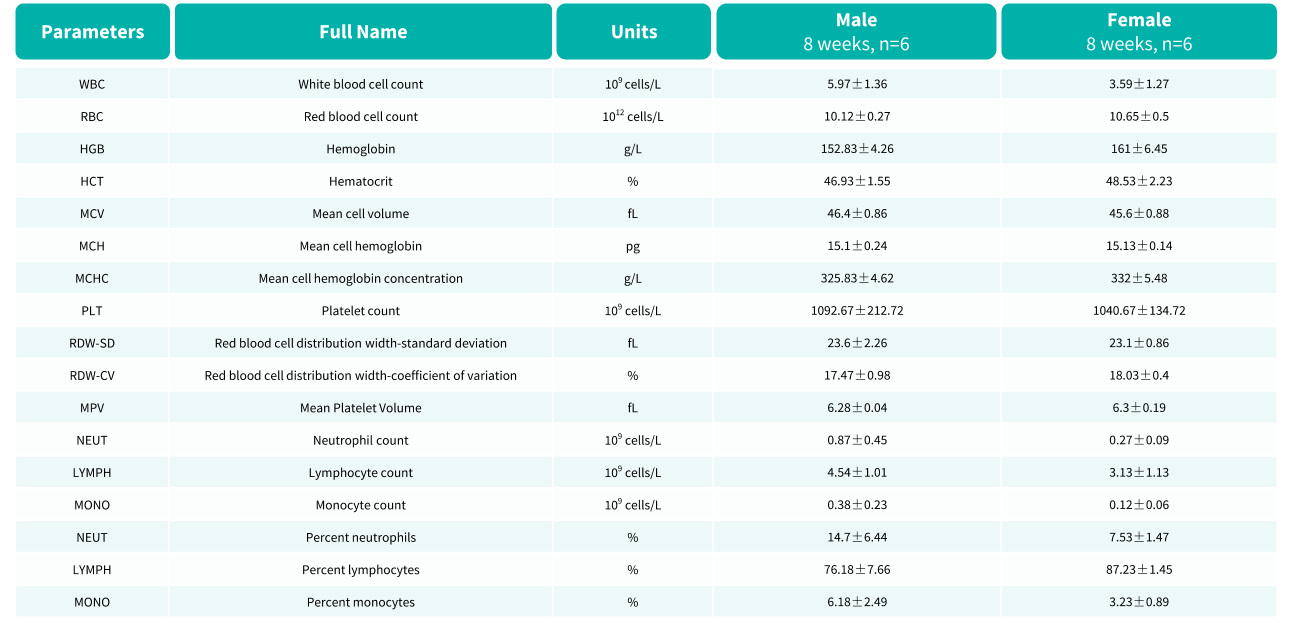
Hematology Analysis of B-hSIRPA/hCD47,Apoe KO mice
Complete blood count (CBC) of B-hSIRPA/hCD47,Apoe KO mice. Values are expressed as mean ± SD.
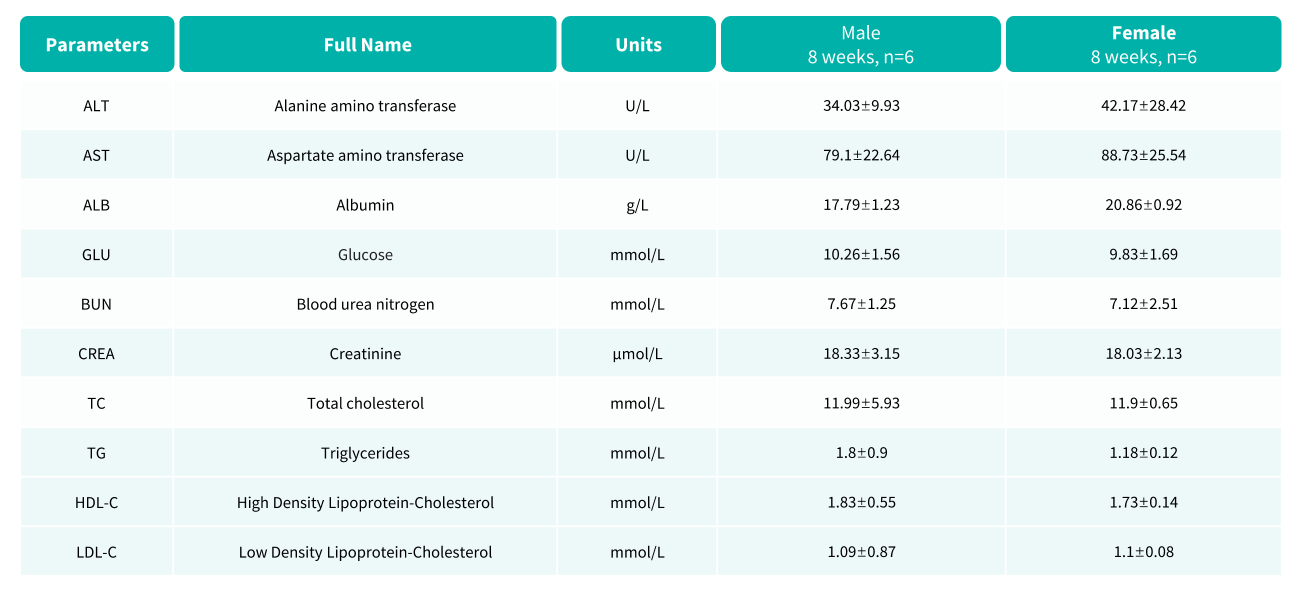
Blood Biochemical Analysis of B-hSIRPA/hCD47,Apoe KO mice
Blood biochemical parameters of B-hSIRPA/hCD47,Apoe KO mice are shown. Values are expressed as mean ± SD.
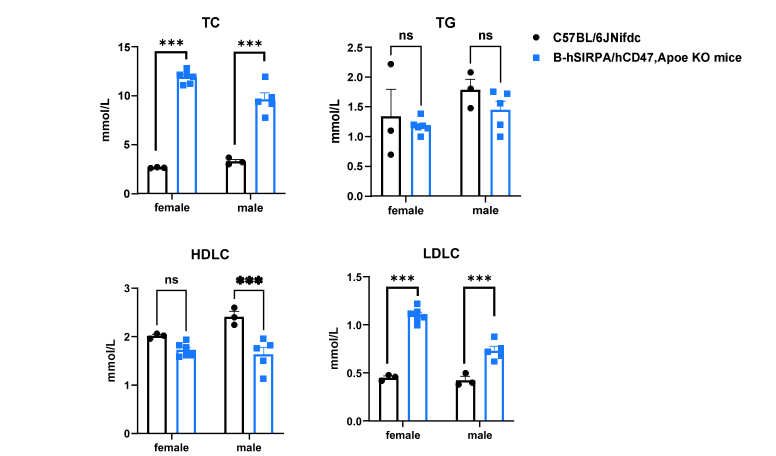
Blood Lipid Analysis of B-hSIRPA/hCD47,Apoe KO mice
Blood lipid parameters of B-hSIRPA/hCD47,Apoe KO mice are shown.
Serum concentrations of TG, TC, LDL-C, and HDL-C were analyzed in B-hSIRPA/hCD47,Apoe KO mice and wild-type C57BL/6JNifdc mice (8 weeks old).
TG, triglycerides; TC, total cholesterol; HDL-C, high-density lipoprotein cholesterol; LDL-C, low-density lipoprotein cholesterol; Values are expressed as mean ± SEM. Significance was determined by a two-way ANOVA test. ***P < 0.001.
* When publishing results obtained using this animal model, please acknowledge the source as follows: The animal model [B-hSIRPA/hCD47,Apoe KO mice] (Cat# 113182) was purchased from Biocytogen.