
C57BL/6-Cd3etm1(CD3E)Bcgen Cd3dtm1(CD3D)BcgenCd3gtm1(CD3G)Bcgen Tnfrsf9tm1(TNFRSF9)Bcgen/Bcgen • 112646
Key Advantages
Validation
Application
B-hCD3EDG/h4-1BB mice combine humanized CD3E, CD3D, and CD3G with humanized 4-1BB in a C57BL/6 background, enabling expression of human CD3 complex components and the human 4-1BB extracellular domain. This dual humanized design supports in vivo evaluation of T cell engager strategies that use CD3-mediated T cell activation together with 4-1BB costimulatory signaling. B-hCD3EDG/h4-1BB mice provide a translational platform for assessing CD3/4-1BB multispecific antibodies, tumor-localized T cell activation, and immuno-oncology efficacy studies.
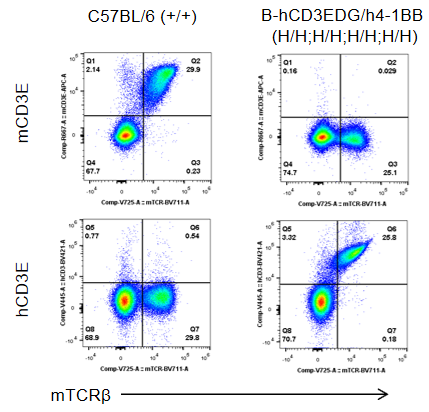
Mouse and human CD3E expression was analyzed in splenocytes by flow cytometry.
Splenocytes were collected from wild-type C57BL/6 mice and homozygous B-hCD3EDG/h4-1BB mice (male, 6-week-old, n=1). CD3E expression on T cells was analyzed using species-specific anti-CD3E antibodies, including anti-human CD3E antibody (BD Horizon, 562426) and anti-mouse CD3E antibody (BioLegend, 100312). Human CD3E signal was detected on T cell populations in B-hCD3EDG/h4-1BB mice, supporting CD3EDG humanization for T cell engager studies.
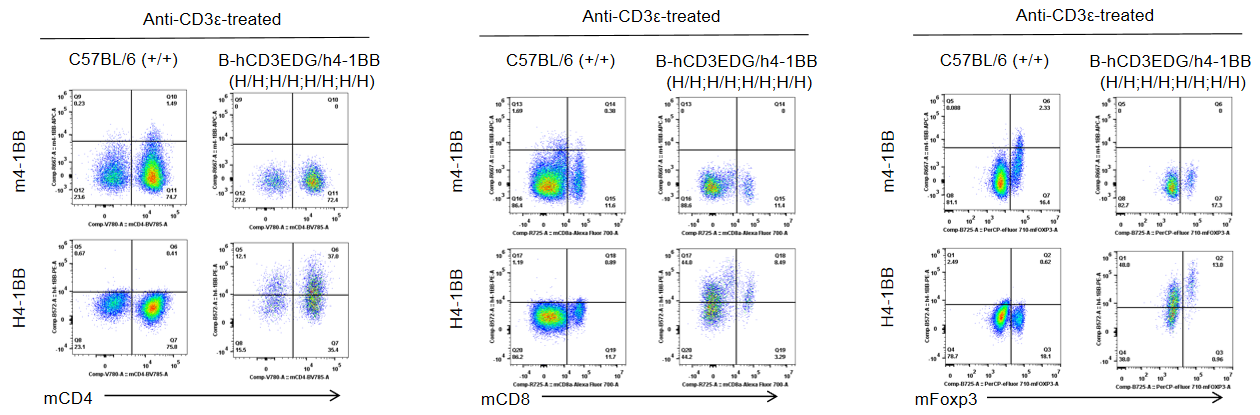
Mouse and human 4-1BB expression was analyzed in splenocytes by flow cytometry.
Splenocytes were collected from wild-type C57BL/6 mice and homozygous B-hCD3EDG/h4-1BB mice (male, 6-week-old, n=1) treated with anti-mouse/human CD3E antibody (7.5 μg/mouse, i.p., 24 h). 4-1BB expression on CD4+ T cells, CD8+ T cells, and Tregs was analyzed using species-specific anti-4-1BB antibodies. Human 4-1BB signal was detected in activated T cell populations from B-hCD3EDG/h4-1BB mice.
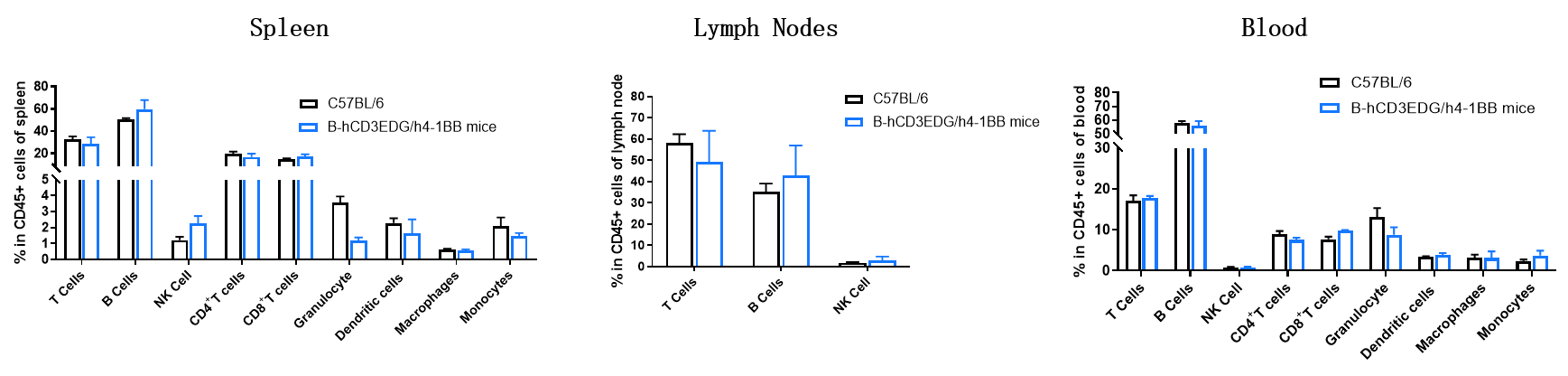
Leukocyte subpopulations were analyzed by flow cytometry in immune organs and blood.
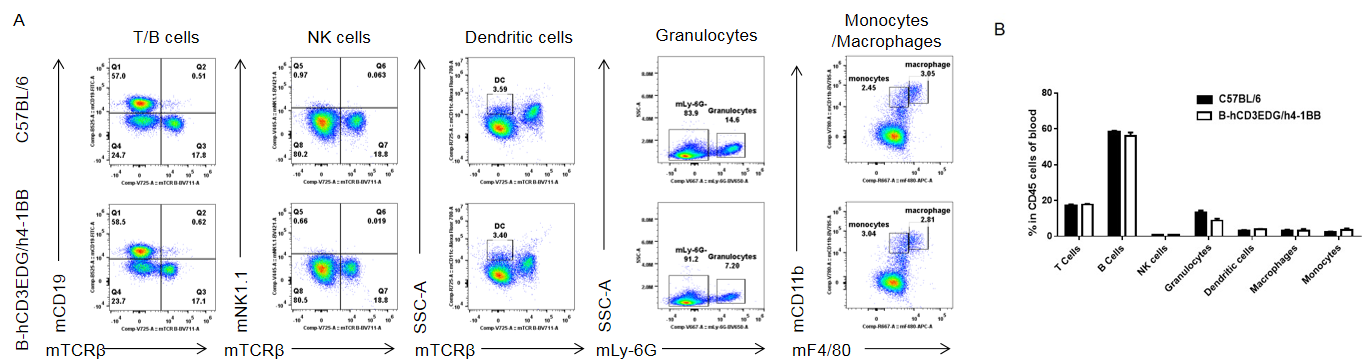
Splenocytes, lymph nodes, and peripheral blood were isolated from C57BL/6 mice and B-hCD3EDG/h4-1BB mice (male, 6-week-old, n=3). Single live cells were gated on the CD45+ population and analyzed by flow cytometry. Frequencies of T cells, B cells, NK cells, granulocytes, dendritic cells, monocytes, and macrophages in B-hCD3EDG/h4-1BB mice were similar to those in C57BL/6 mice. Values are expressed as mean ± SEM.
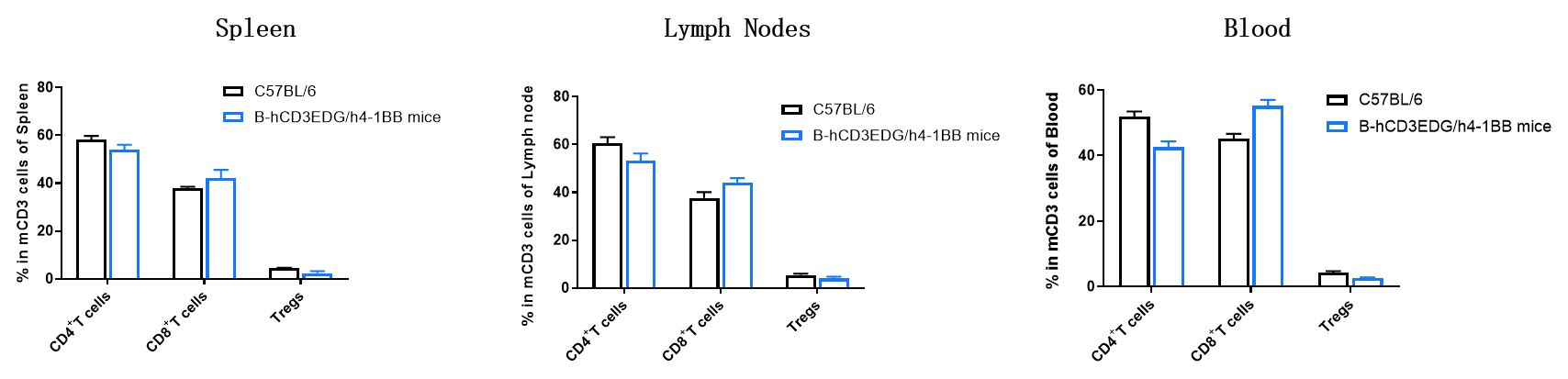
T cell subpopulations were analyzed by flow cytometry in immune organs and blood.
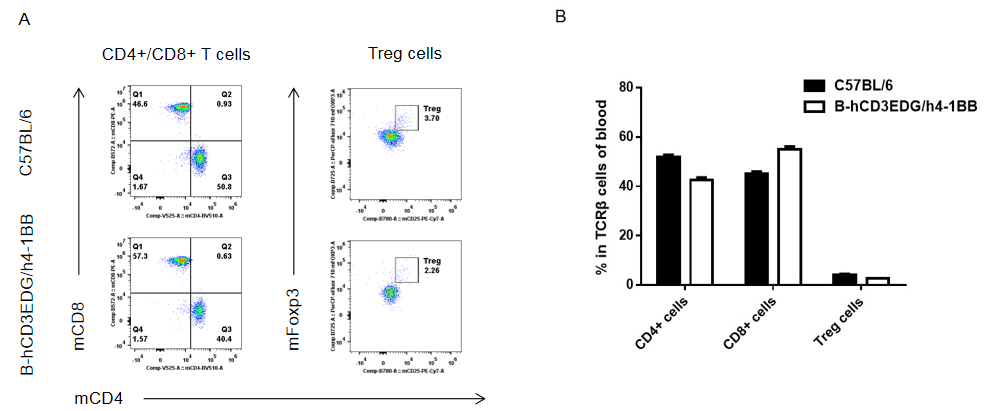
Splenocytes, lymph nodes, and peripheral blood were isolated from C57BL/6 mice and B-hCD3EDG/h4-1BB mice (male, 6-week-old, n=3). Single live cells were gated on the mTCRβ+ T cell population. CD4+ T cells, CD8+ T cells, and Tregs in B-hCD3EDG/h4-1BB mice were comparable to those in C57BL/6 mice. Values are expressed as mean ± SEM.
Blood leukocyte subpopulations were analyzed by FACS.
Blood cells were isolated from female C57BL/6 and B-hCD3EDG/h4-1BB mice (n=3, 6-week-old). Single live cells were gated on the CD45+ population. Percentages of T cells, B cells, NK cells, dendritic cells, granulocytes, monocytes, and macrophages in homozygous B-hCD3EDG/h4-1BB mice were similar to those in C57BL/6 controls. Values are expressed as mean ± SEM.
Blood T cell subpopulations were analyzed by FACS.
Blood cells were isolated from female C57BL/6 and B-hCD3EDG/h4-1BB mice (n=3, 6-week-old). Single live CD45+ cells were gated for the CD3 T cell population and analyzed for T cell subsets. Percentages of CD8+ T cells, CD4+ T cells, and Treg cells in homozygous B-hCD3EDG/h4-1BB mice were similar to those in C57BL/6 controls. Values are expressed as mean ± SEM.
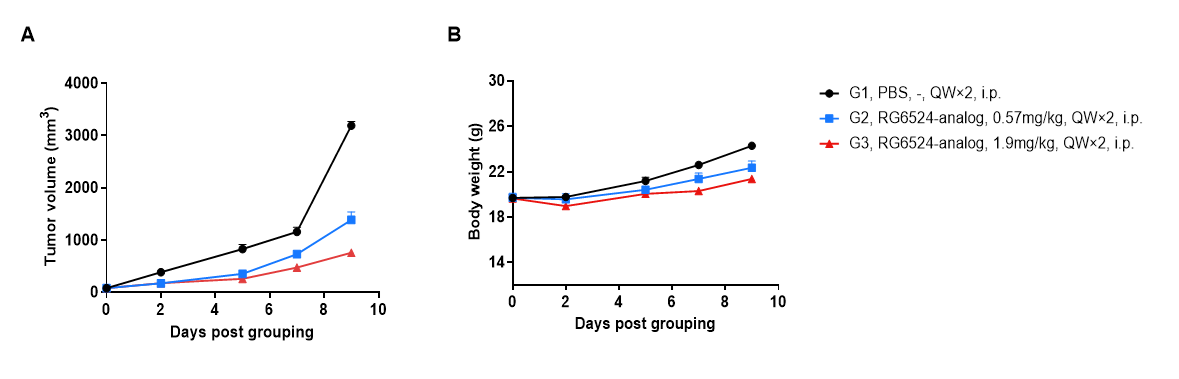
In vivo efficacy of an anti-human CD3/4-1BB/DLL3 tri-specific antibody was evaluated in B-hCD3EDG/h4-1BB mice.
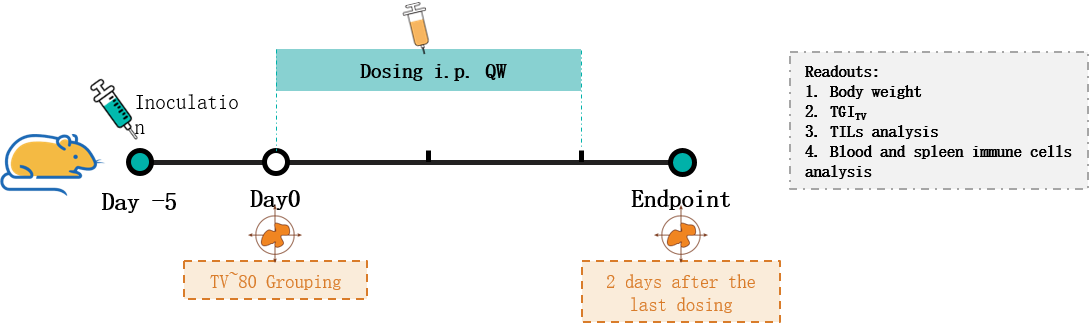
B-hDLL3 B16-F10 melanoma cells were implanted subcutaneously into homozygous B-hCD3EDG/h4-1BB mice (female, 7-week-old, n=5). When average tumor volume reached approximately 80 mm³, mice were randomized and treated with RG6524 analog (in-house) by intraperitoneal injection. RG6524 analog controlled tumor growth in a dose-dependent manner, while body weight was monitored during treatment. Values are expressed as mean ± SEM. The coverage of this tumor model is 60%.
Anti-tumor immune profiling was performed after RG6524-analog treatment in B-hCD3EDG/h4-1BB mice.
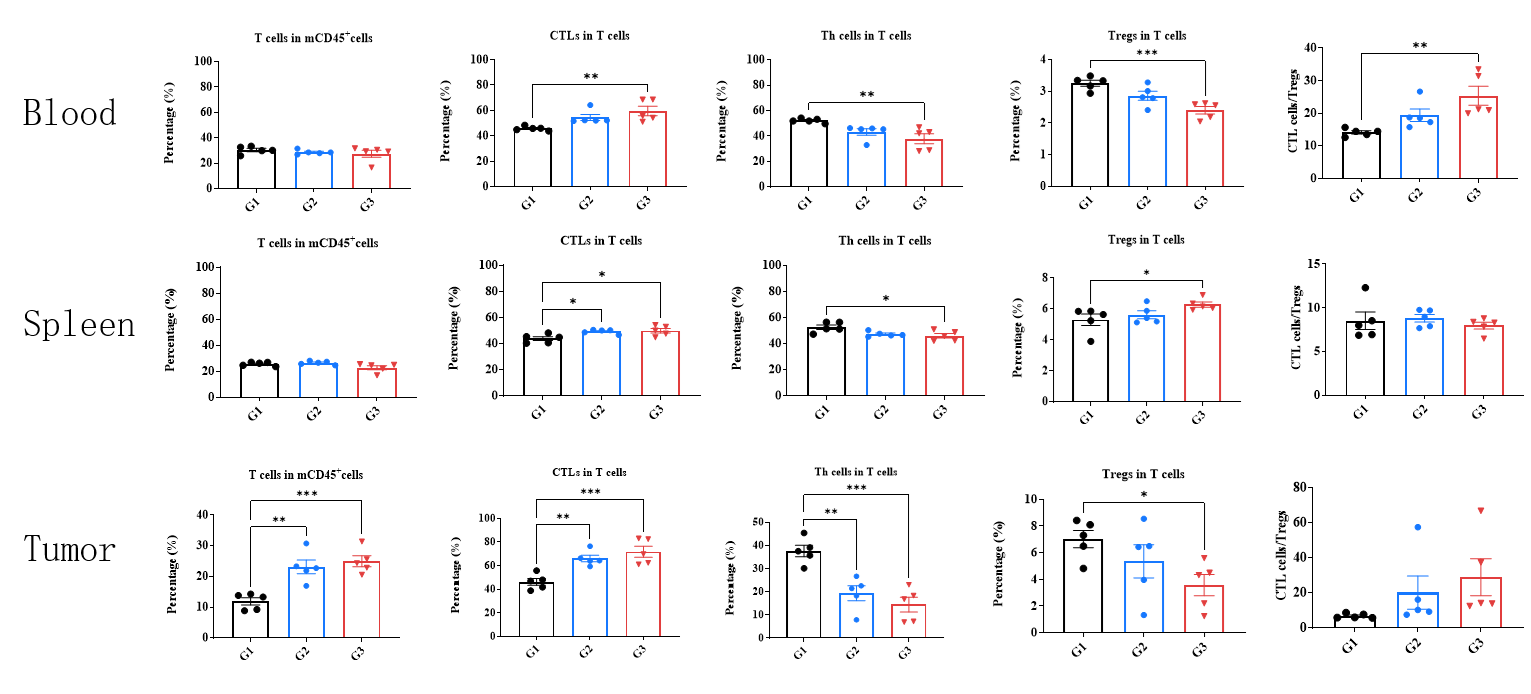
The proportions of CTL cells in blood, spleen, and tumor increased in the RG6524-analog treatment group. The proportions of Th cells in blood, spleen, and tumor decreased after treatment. CTL/Treg ratios in blood and tumor showed an increasing trend in the RG6524-analog group, while the spleen showed no clear trend. These immune-profile changes support mechanistic evaluation of CD3/4-1BB/DLL3 tri-specific antibody activity.
Anti-tumor immune profiling after RG6524-analog treatment in B-hCD3EDG/h4-1BB mice. The proportions of CTL cells in blood, spleen, and tumor increased after RG6524-analog treatment, while the proportions of Th cells in blood, spleen, and tumor decreased. CTL/Treg ratios in blood and tumor showed an increasing trend in the RG6524-analog treatment groups, whereas no clear trend was observed in the spleen.
Tumor T cell states were analyzed after RG6524-analog treatment.
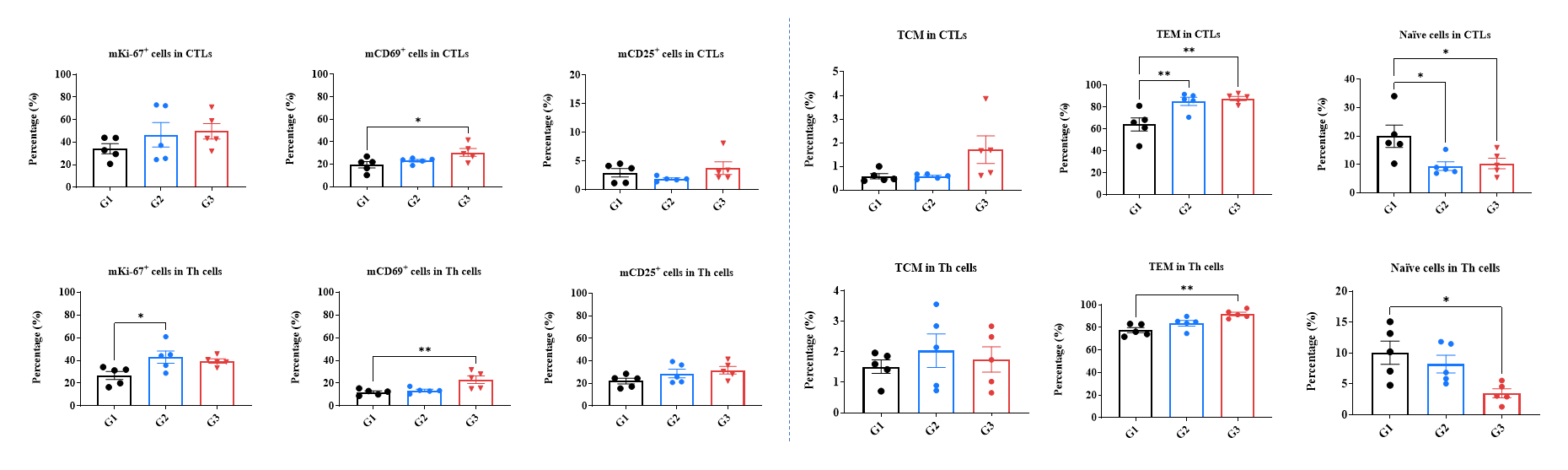
The proportions of mCD69+ CTL and Th cells in tumor were increased in the high-dose RG6524-analog treatment group. The proportions of TEM, CTL and Th cells in tumor were increased in the RG6524-analog treatment group, while naïve CTL and Th cell proportions were decreased. These data indicate increased activated and memory T cell subsets in the tumor microenvironment after RG6524-analog treatment.
Q1: What are B-hCD3EDG/h4-1BB mice?
B-hCD3EDG/h4-1BB mice are dual target-humanized mice carrying humanized CD3E/CD3D/CD3G and humanized 4-1BB in a C57BL/6 background for T cell engager and 4-1BB costimulation studies.
Q2: Why are CD3EDG and 4-1BB important for immuno-oncology research?
CD3EDG is part of the TCR/CD3 complex that mediates T cell activation, while 4-1BB provides costimulatory signaling that can enhance CD8+ T cell function, survival, and anti-tumor immunity.
Q3: How was target expression validated in B-hCD3EDG/h4-1BB mice?
Human CD3E expression was validated on T cells by flow cytometry, and human 4-1BB expression was validated on activated CD4+ T cells, CD8+ T cells, and Tregs after anti-CD3E stimulation.
Q4: Can B-hCD3EDG/h4-1BB mice be used for tri-specific antibody efficacy studies?
Yes. RG6524 analog, an anti-human CD3/4-1BB/DLL3 tri-specific antibody, controlled B-hDLL3 B16-F10 tumor growth in B-hCD3EDG/h4-1BB mice.
Q5: What are the main applications of B-hCD3EDG/h4-1BB mice?
Applications include CD3 T cell engager studies, 4-1BB agonist research, CD3/4-1BB/TAA multispecific antibody development, syngeneic tumor efficacy studies, and tumor immune-profile analysis.