C57BL/6-Tnfrsf9tm1(TNFRSF9)Bcgen/Bcgen • 110004
on this page

4-1BB: A key TNFR superfamily target for enhancing T cell activation in cancer immunotherapy.

4-1BB

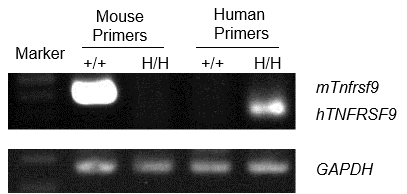
Strain specific analysis of 4-1BB mRNA expression in wild-type C57BL/6 mice and homozygous B-h4-1BB mice by RT-PCR. Spleen RNA was isolated from wild-type C57BL/6 mice (+/+) and homozygous B-h4-1BB mice (H/H), then cDNA libraries were synthesized by reverse transcription, followed by PCR with mouse or human 4-1BB primers.
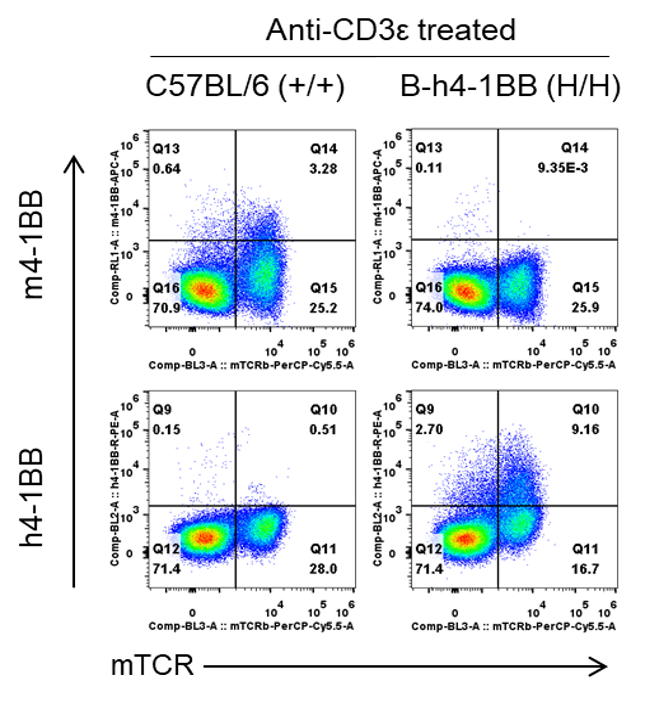
Strain specific 4-1BB protein expression analysis in C57BL/6 mice and homozygous B-h4-1BB mice by flow cytometry. Splenocytes were collected from wild type C57BL/6 mice (+/+) and homozygous B-h4-1BB mice (H/H) that stimulated with anti-CD3ε in vivo, and analyzed by flow cytometry with species-specific anti-4-1BB antibodies.
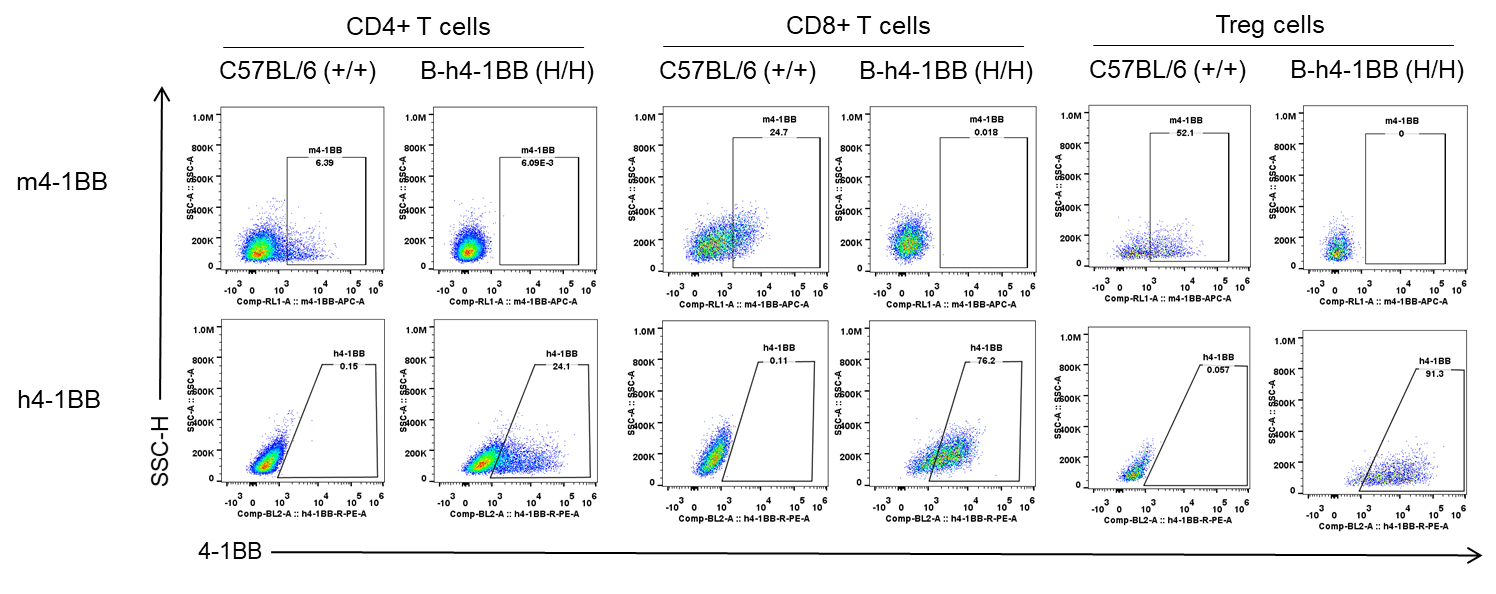
Mouse and human 4-1BB expression analysis in splenocytes. Splenocytes were collected from wild-type C57BL/6 mice and homozygous B-h4-1BB mice that stimulated with anti-CD3ε in vivo. 4-1BB expression on T cells, CD4+ T cells, CD8+ T cells and Tregs was analyzed by flow cytometry using species-specific anti-4-1BB antibodies.
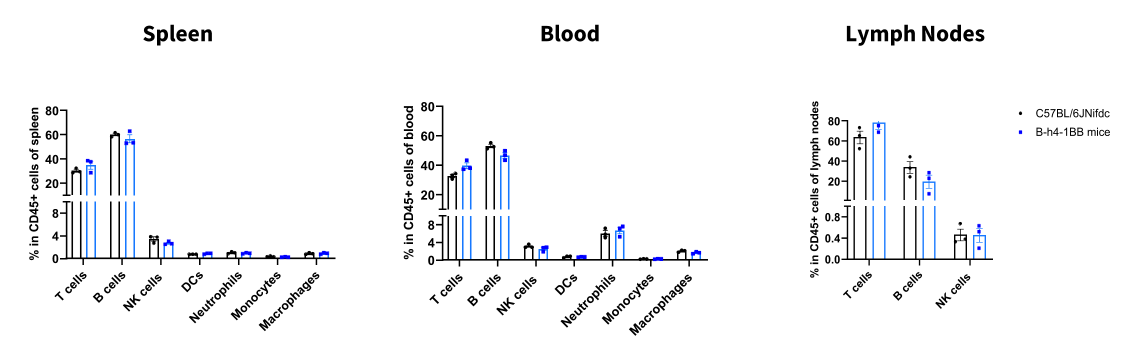
Analysis of leukocyte subpopulations by flow cytometry in immune organs and blood. Splenocytes, peripheral blood, and lymph nodes were isolated fromfemale C57BL/6JNifdc and B-h4-1BB mice (female, 9-week-old, n = 3). Single live cells were gated on the CD45⁺ population and analyzed by flow cytometry asindicated. Values are expressed as mean ± SEM.
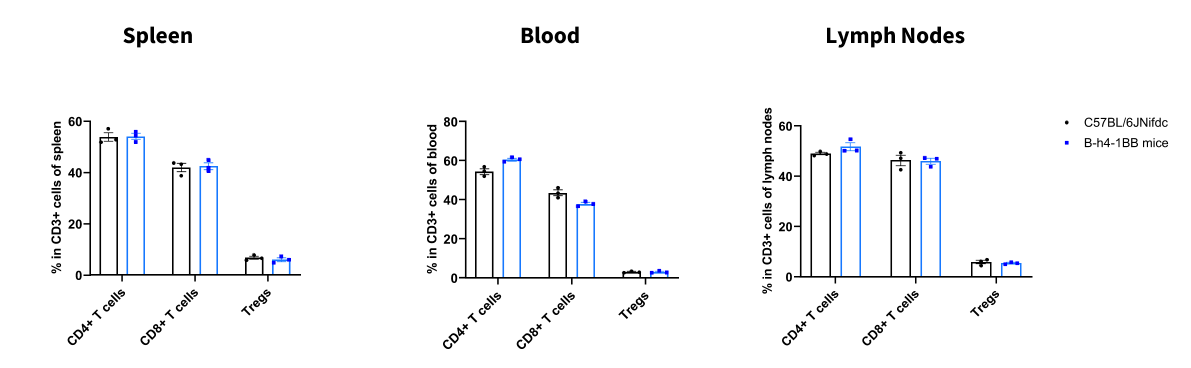
Analysis of T-cell subpopulations by flow cytometry in immune organs and blood. Splenocytes, peripheral blood, and lymph nodes were isolated fromfemale C57BL/6JNifdc and B-h4-1BB mice (female, 9-week-old, n = 3). Single live cells were gated on the T-cell population and analyzed by flow cytometry asindicated. Values are expressed as mean ± SEM.

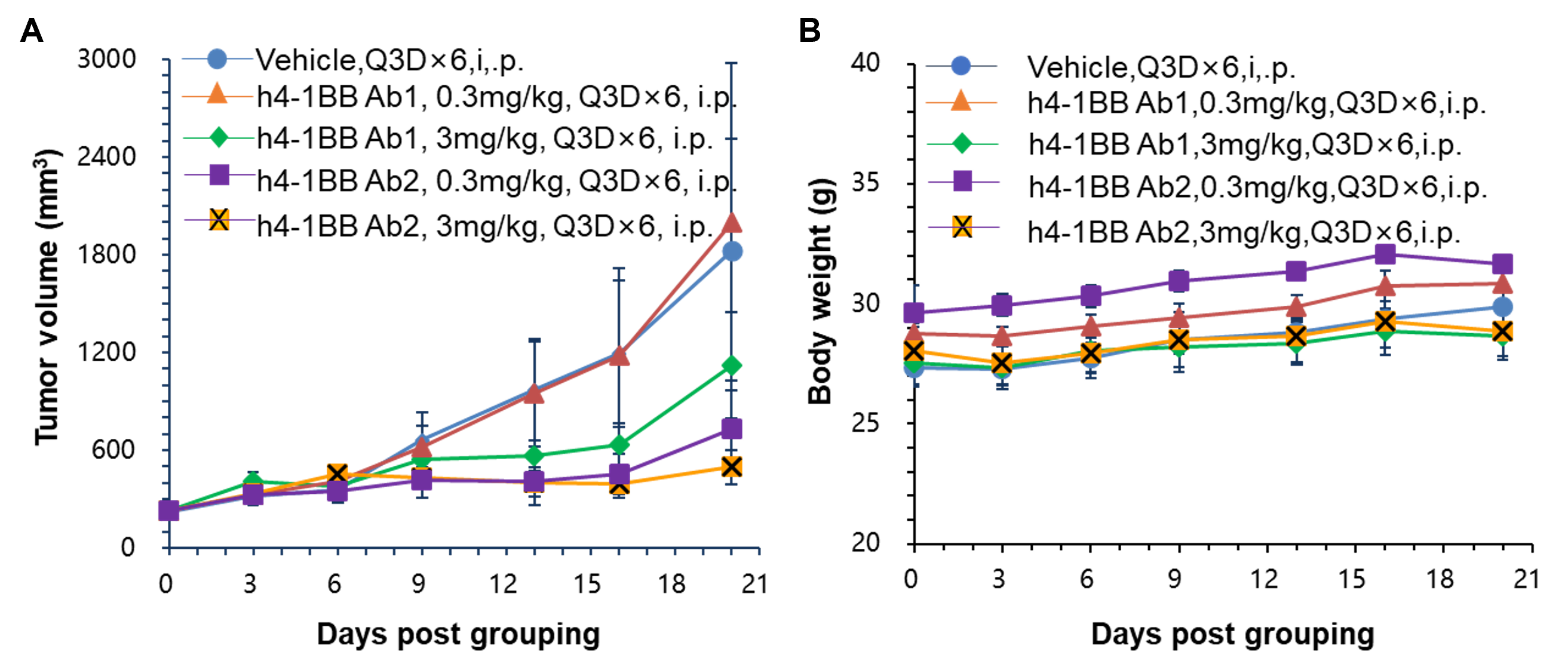
Efficacy of anti-human 4-1BB antibodies in B-h4-1BB mice. (A) Anti-human 4-1BB antibodies inhibited MC38 tumor growth in B-h4-1BB mice. Murine colon cancer MC38 cells were subcutaneously implanted into homozygous B-h4-1BB mice (female, 6-7 week-old, n=5). Mice were grouped when tumor volume reached approximately 100 mm3, at which time they were treated with two anti-human 4-1BB antibodies with doses and schedules indicated in panel. (B) Body weight changes during treatment. Values are expressed as mean ± SEM.
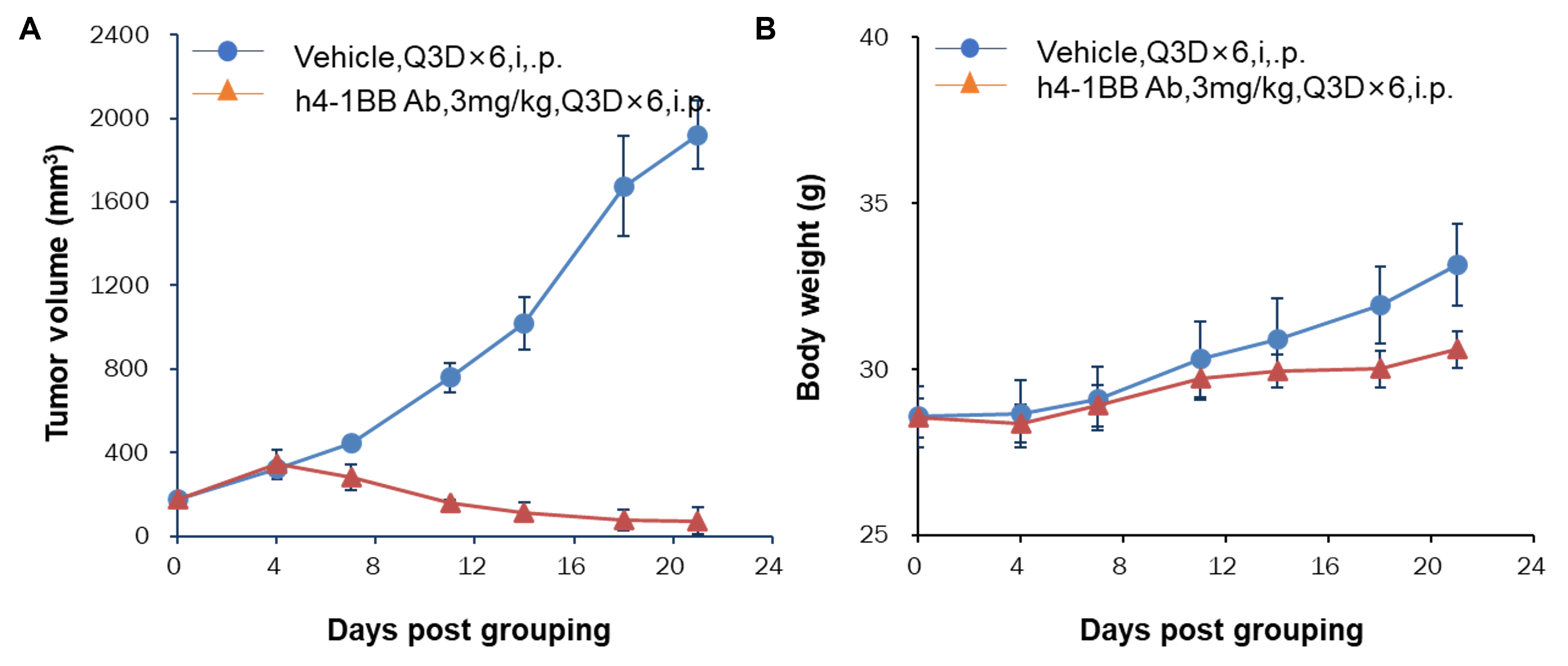
Efficacy of anti-human 4-1BB antibodies in B-h4-1BB mice. (A) Anti-human 4-1BB antibodies inhibited MC38 tumor growth in B-h4-1BB mice. Murine colon cancer MC38 cells were subcutaneously implanted into homozygous B-h4-1BB mice (male, 7-8 week-old, n=6). Mice were grouped when tumor volume reached approximately 100 mm3, at which time they were treated with an anti-human 4-1BB antibody with doses and schedules indicated in panel. (B) Body weight changes during treatment. Values are expressed as mean ± SEM.
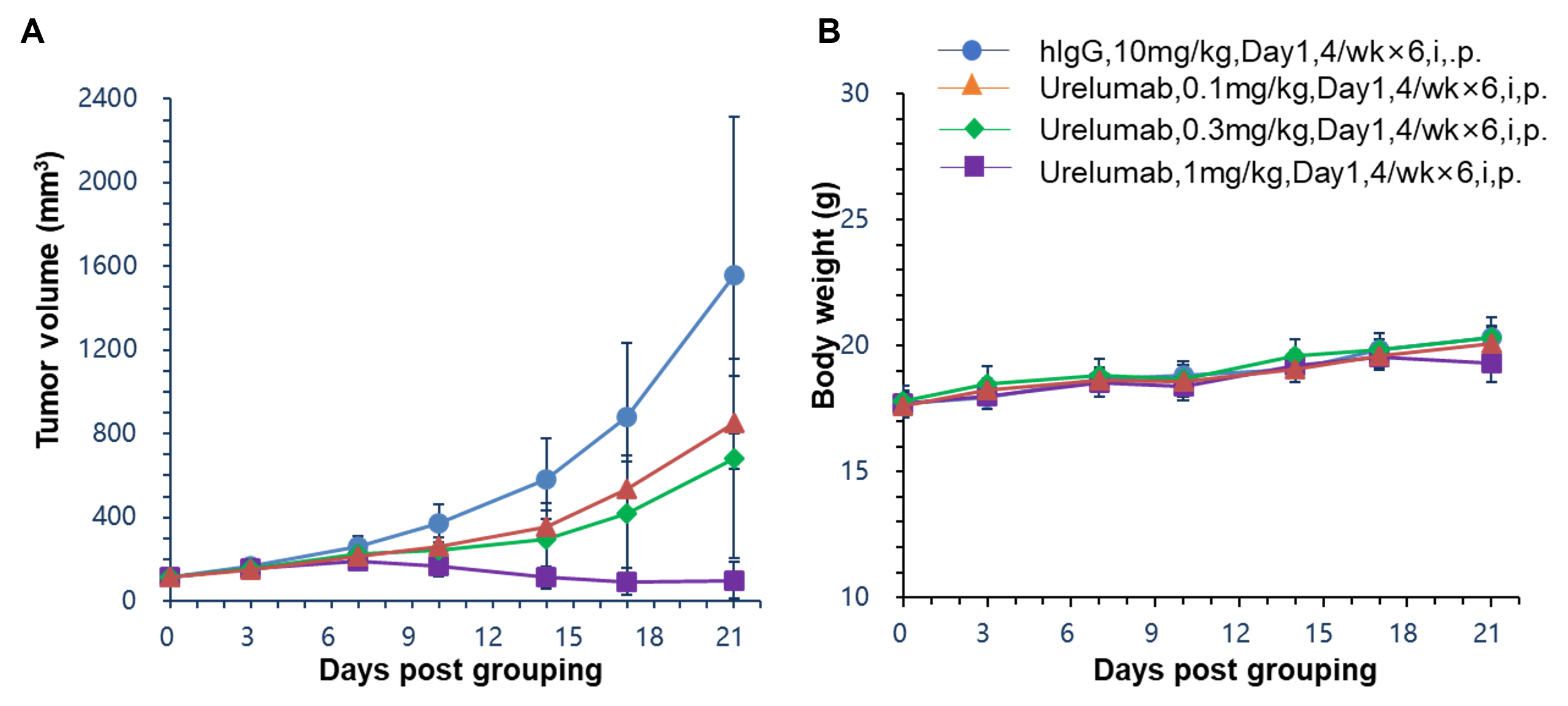
Efficacy of anti-human 4-1BB antibodies in B-h4-1BB mice. (A) Anti-human 4-1BB antibodies inhibited MC38 tumor growth in B-h4-1BB mice. Murine colon cancer MC38 cells were subcutaneously implanted into homozygous B-h4-1BB mice (female, 6-7 week-old, n=6). Mice were grouped when tumor volume reached approximately 100 mm3, at which time they were treated with anti-human 4-1BB antibody Urelumab (in house) with doses and schedules indicated in panel. (B) Body weight changes during treatment. Values are expressed as mean ± SEM.
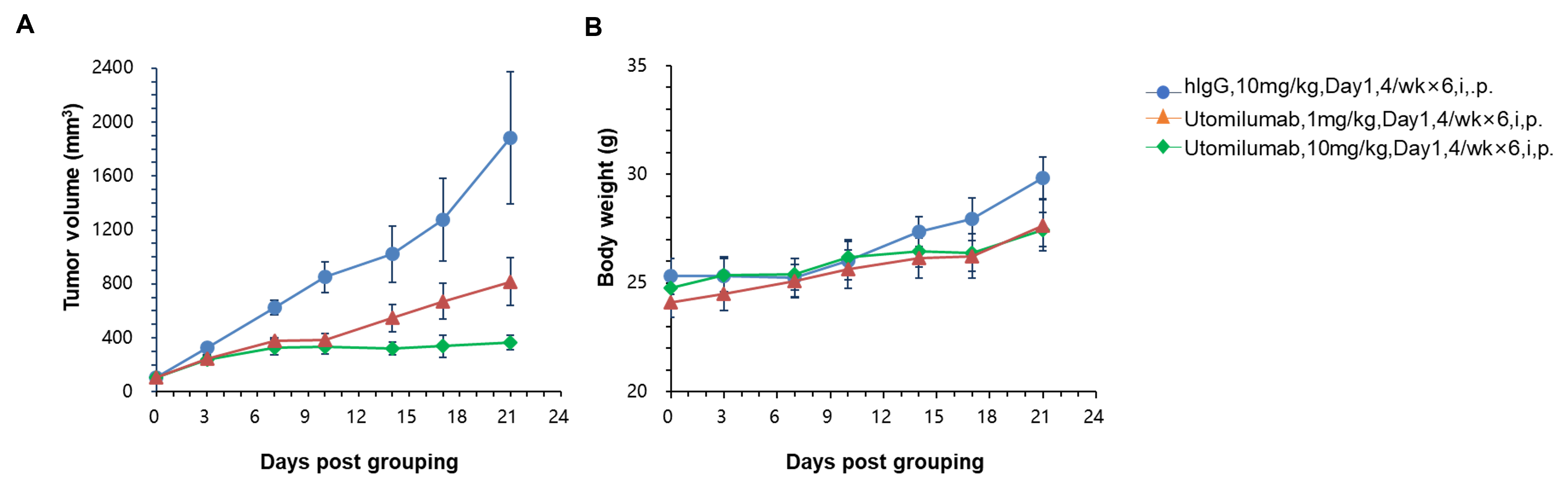
Efficacy of anti-human 4-1BB antibodies in B-h4-1BB mice. (A) Anti-human 4-1BB antibodies inhibited MC38 tumor growth in B-h4-1BB mice. Murine colon cancer MC38 cells were subcutaneously implanted into homozygous B-h4-1BB mice (female, 6-7 week-old, n=5). Mice were grouped when tumor volume reached approximately 100 mm3, at which time they were treated with anti-human 4-1BB antibody utomilumab (in house) with doses and schedules indicated in panel. (B) Body weight changes during treatment. Values are expressed as mean ± SEM.
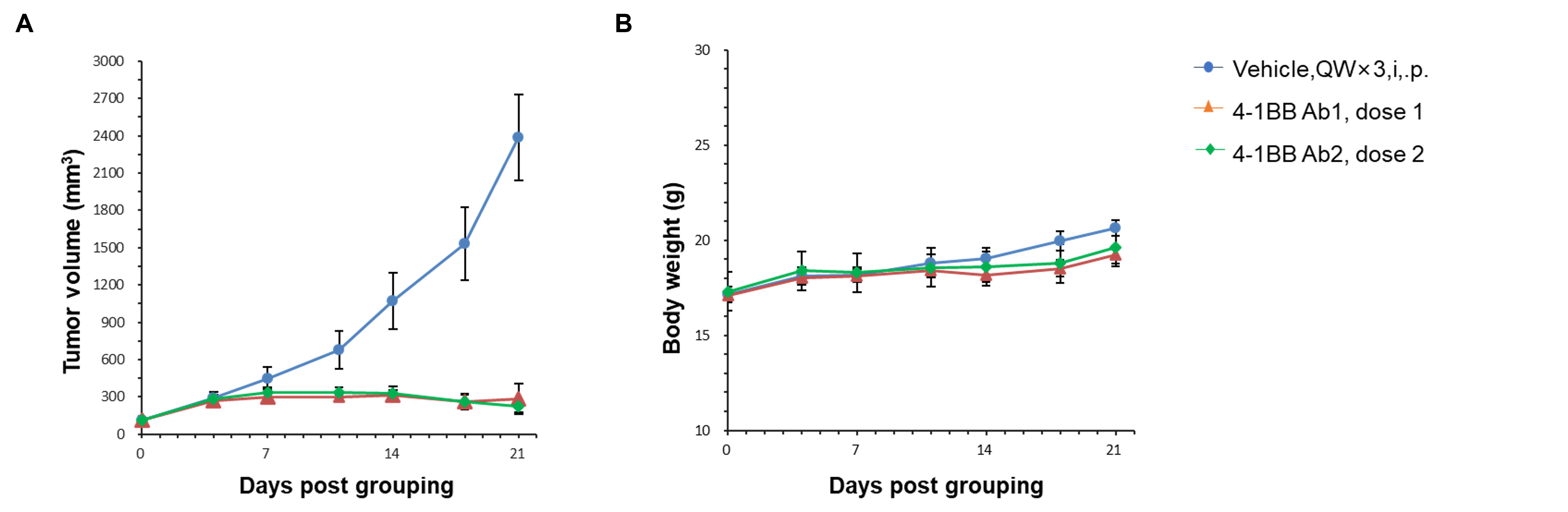
Efficacy of anti-human 4-1BB antibodies in B-h4-1BB mice. (A) Anti-human 4-1BB antibodies inhibited MC38 tumor growth in B-h4-1BB mice. Murine colon cancer MC38 cells were subcutaneously implanted into homozygous B-h4-1BB mice (female, 6-7 week-old, n=8). Mice were grouped when tumor volume reached approximately 100 mm3, at which time they were treated with two anti-human 4-1BB antibodies with doses and schedules indicated in panel. (B) Body weight changes during treatment. Values are expressed as mean ± SEM.
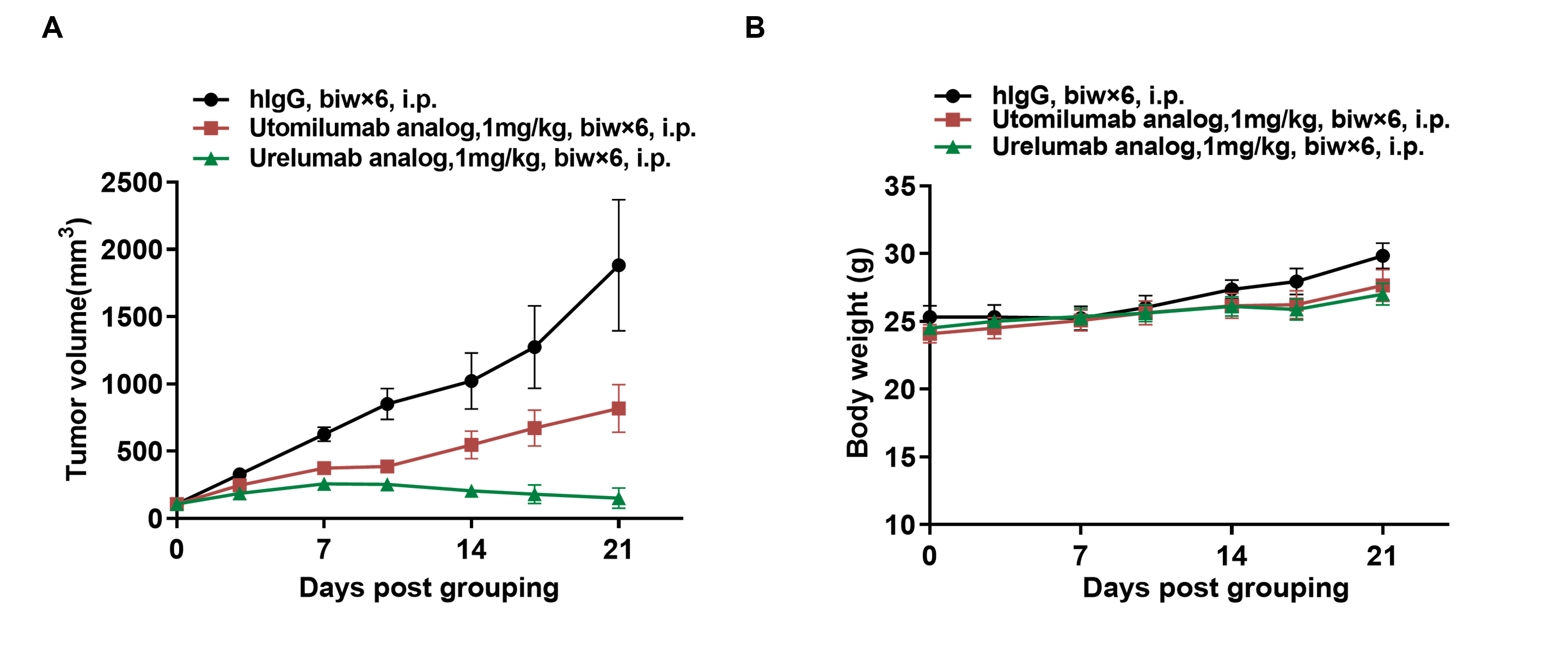
Efficacy of anti-human 4-1BB antibodies in B-h4-1BB mice. (A) Anti-human 4-1BB antibodies inhibited MC38 tumor growth in B-h4-1BB mice. Murine colon cancer MC38 cells were subcutaneously implanted into homozygous B-h4-1BB mice (female, 6-7 week-old, n=5). Mice were grouped when tumor volume reached approximately 100 mm3, at which time they were treated with anti-human 4-1BB antibody utomilumab (in house) or Urelumab (in house) with doses and schedules indicated in panel. (B) Body weight changes during treatment. Values are expressed as mean ± SEM.
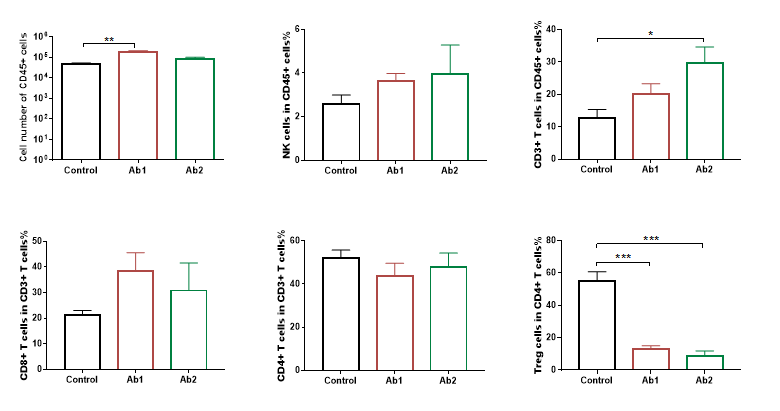
Analysis of tumor infiltrates lymphocytes(TILs) by FACS. Tumor cells were harvested at the endpoint of experiment (n=3). Flow cytometry analysis of the TILs were performed to assess cell number and proportion changes compared to the group with no anti-h4-1BB treated. CD45+ cells and CD3+ T cells were significantly increased when treated with anti-h4-1BB, while Treg cells were significantly reduced in the two groups treated with anti-h4-1BB compared to the control. Values are expressed as mean ± SEM.(*p<0.05, **p<0.01, ***p<0.001, ****p<0.0001)

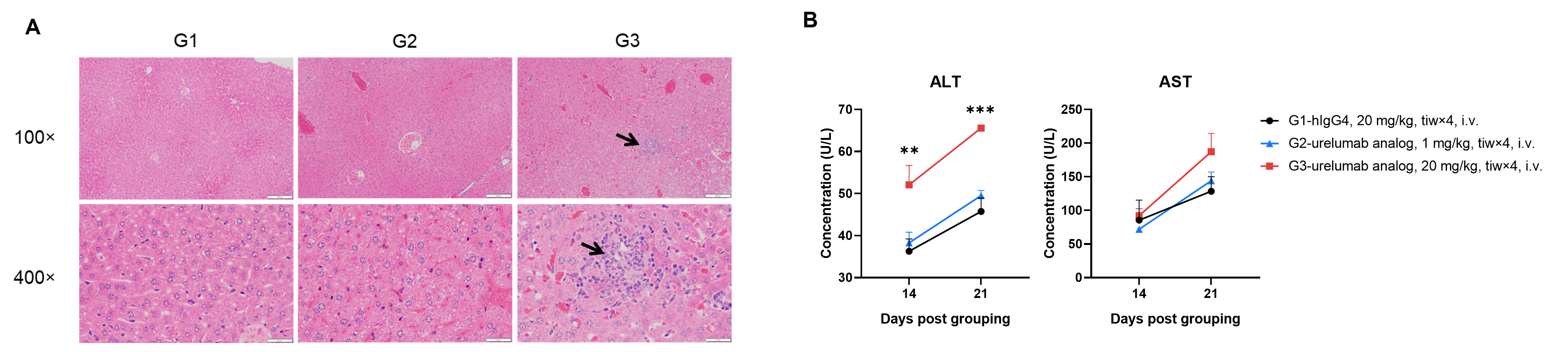
High-dose Urelumab analog (in-house) caused chronic inflammatory response in the liver of B-h4-1 BB mice. B-h4-1BB mice were divided into 3 groups and were treated with hIgG4 isotype antibody and Urelumab analog respectively. Blood were collected on days 14 and 21 after administration to measure the concentrations of ALT (B) and AST (B). On day 21, the mice were euthanized and liver tissues were taken for H&E staining (A). The results showed that in the high-dose group (G3, 20 mg/kg), 21 days after administration, there was a significant infiltration of inflammatory cells in the liver of B-h4-1 BB mice (A), and the ALT levels in the serum of B-h4-1 BB mice significantly increased on days 14 and 21 after administration, the AST level also showed an increasing trend 21 days after drug treatment (B). It is indicated that the high-dose Urelumab analog can cause significant liver toxicity in B-h4-1BB mice.