you may also like
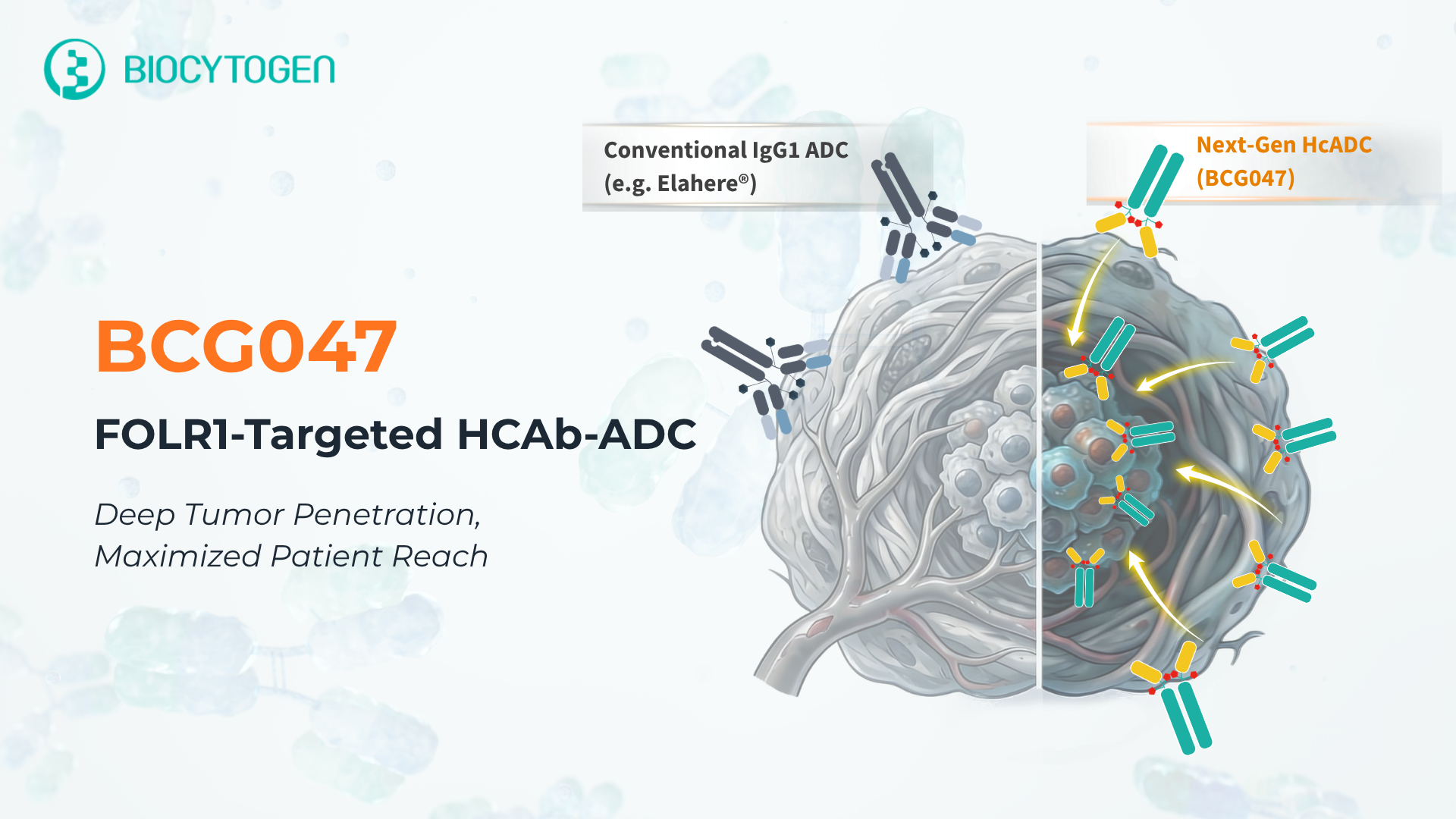
Folate receptor alpha (FOLR1) is a cell-surface protein that shuttles folate (vitamin B9) into cells to fuel DNA synthesis and rapid division. While its expression is highly restricted in healthy tissues, it is pathologically overexpressed in over 80% of epithelial ovarian cancers and significant subsets of lung and breast cancers. This creates a powerful "therapeutic window": by exploiting the cancer cell's addiction to folate, FOLR1 can serve as a specific entry point to deliver toxic payloads directly to the tumor while sparing normal cells.
Despite the promise of FOLR1, first-generation therapies like Elahere (mirvetuximab soravtansine) face a fundamental physical hurdle: molecular bulk. Standard IgG ADCs are large molecules that often bind only to the tumor's periphery, failing to penetrate dense tumor cores.
This creates two critical gaps in patient care:
While competitors are upgrading their payloads to be more potent, they are still trapping those drugs inside the same oversized delivery vehicles. Even after FOLR1-targeted therapy, most patients still rely on chemotherapy, bevacizumab, PARP inhibitors, immunotherapy, or clinical trials—highlighting a major unmet need for next-generation targeted delivery platforms with broader efficacy and durability.
This leaves a critical "white space" for therapies that can:
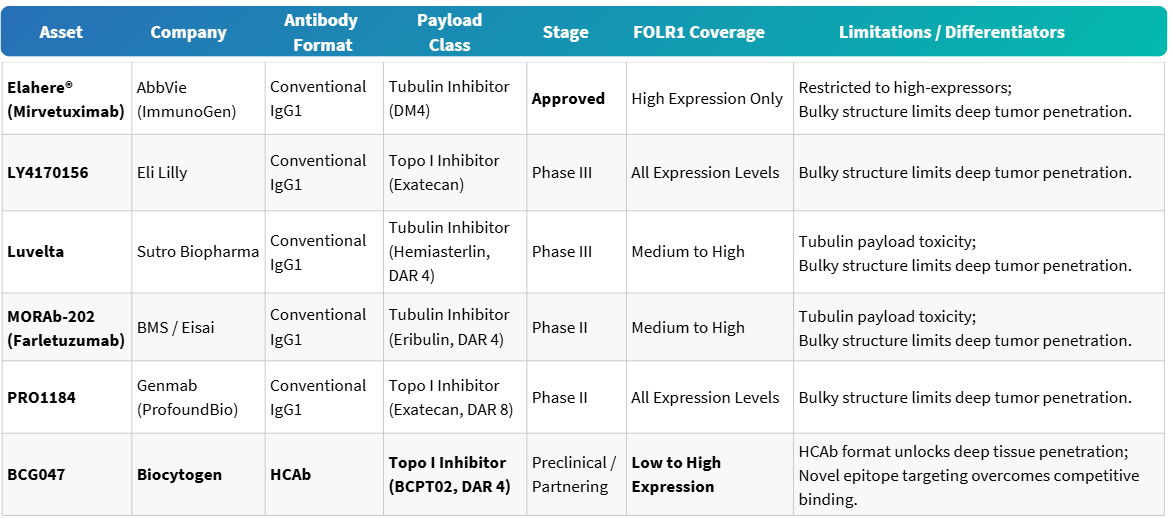
Competitive Landscape of FOLR1-Targeted Antibodies
BCG047 is uniquely positioned to capture this market. Our asset integrates the intrinsic advantages of heavy-chain-only antibodies (HCAb) with our proprietary payload/linker for next-generation FOLR1-targeted ADC development. Unlike competitors who focus solely on drug chemistry, BCG047 shrinks the delivery vehicle itself. By reducing the physical footprint of the ADC, it enables deeper tumor penetration—ensuring the payload reaches the cells that drive recurrence and significantly expanding the treatable patient population.
The global ADC market is projected to reach $30–$36 billion by 2030. While first-generation FOLR1-targeted therapies are restricted to 'high-expressors'—leaving nearly 60% of patients ineligible—BCG047 is engineered to target the full FOLR1 expression spectrum. By extending clinical efficacy to historically underserved FOLR1-low tumors across ovarian, lung, and endometrial cancers, BCG047 is positioned to lead the projected $7–$9 billion FOLR1-targeted market. This 'expression-agnostic' approach simplifies the treatment paradigm, removes diagnostic bottlenecks, and accelerates global adoption as a new standard of care.
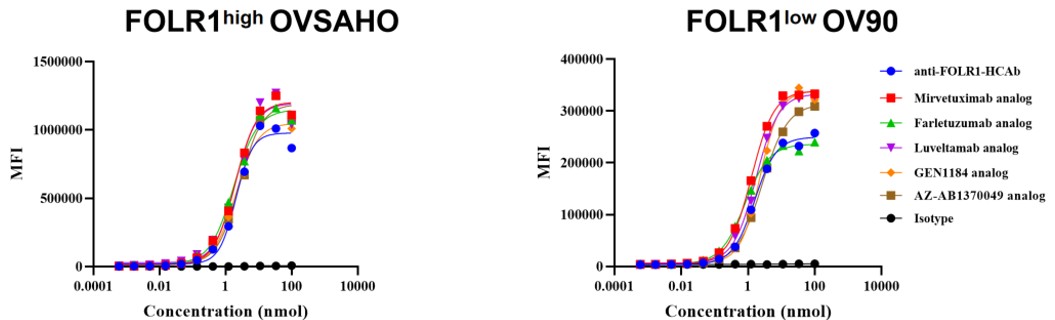
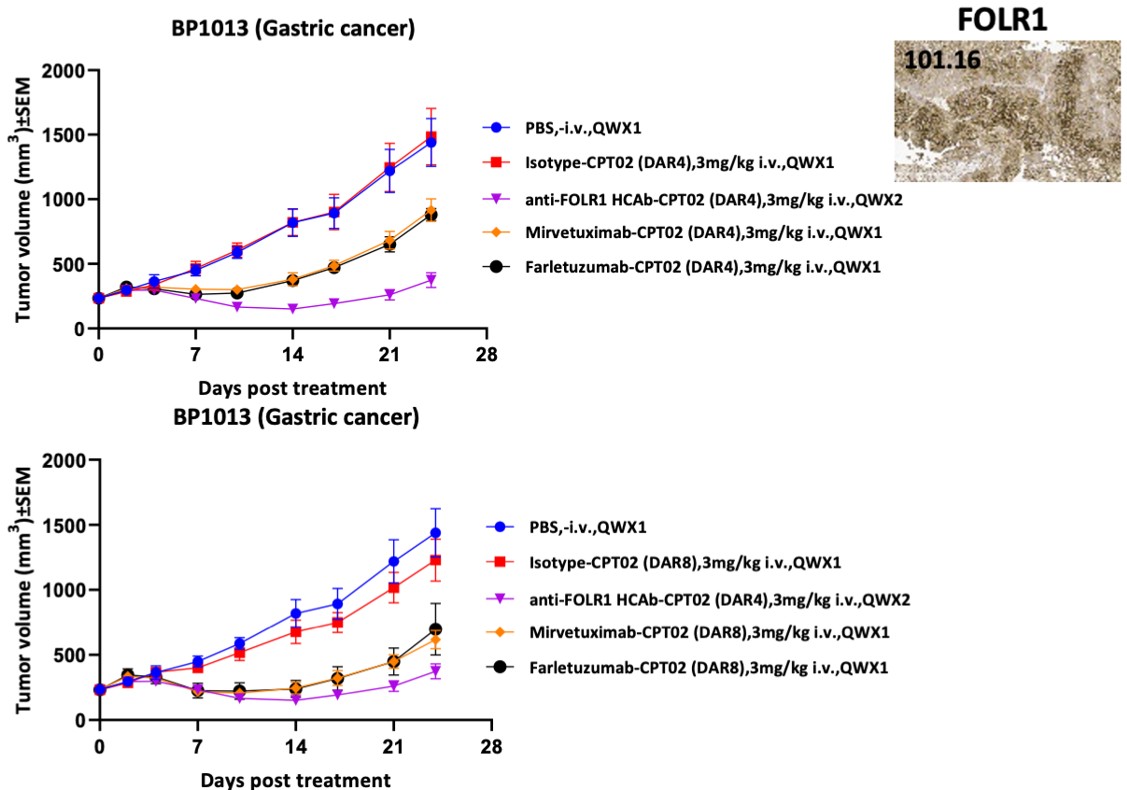
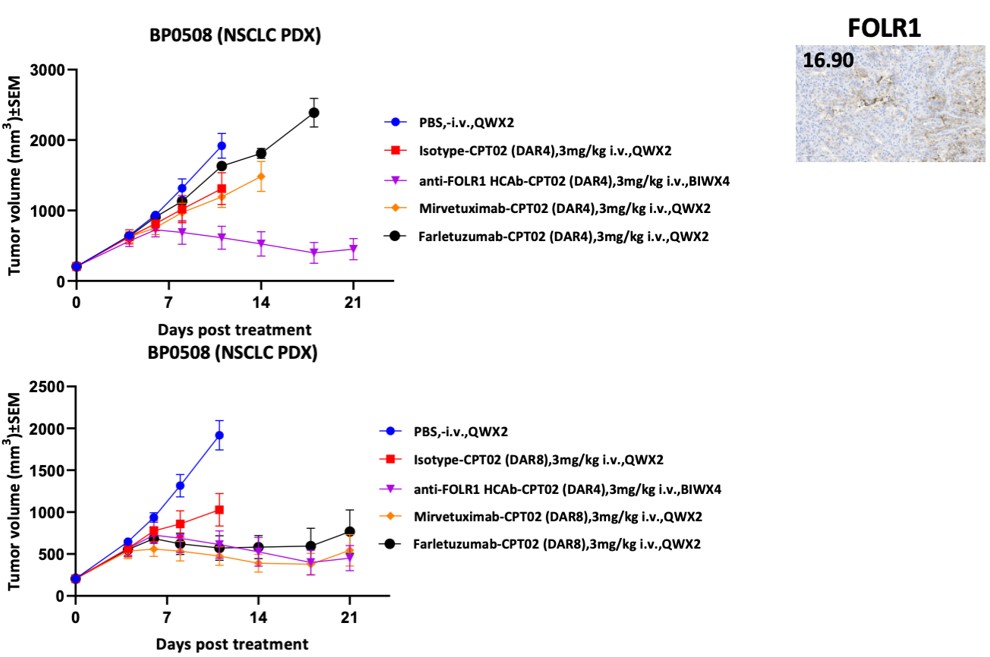
BCG047 represents a differentiated, fully human FOLR1 HCAb-ADC with strong biological rationale, compelling preclinical data, and significant partnering potential. 👉 Contact us today to access the full data package or learn more about partnering opportunities with Biocytogen!
Folate receptor alpha (FOLR1) is a highly clinically validated tumor-associated antigen that is heavily overexpressed in epithelial malignancies, such as ovarian, lung, and breast cancers. Because it exhibits very limited distribution in normal, healthy tissues, it provides a highly attractive target for precision solid tumor therapeutics with significant commercial potential.
First-generation FOLR1 therapies, such as Elahere (mirvetuximab), typically require a high threshold of FOLR1 expression (>75%) to be effective. Furthermore, traditional ADCs utilize a bulky conventional IgG1 antibody format that struggles to physically penetrate dense solid tumors, severely limiting their efficacy in low-FOLR1 tumor microenvironments.
BCG047 stands out by shrinking the delivery vehicle itself. Unlike conventional ADCs that use bulky IgG1 formats, BCG047 is built on a compact, fully human heavy-chain-only antibody (HCAb) structure derived from the RenNano® platform. This streamlined physical footprint unlocks deep tissue penetration, allowing the therapy to reach the hypoxic tumor core that standard ADCs cannot access. Furthermore, BCG047 targets a novel epitope, helping overcome competitive binding challenges in the crowded FOLR1 landscape.
The primary therapeutic advantage of BCG047 is its ability to effectively treat both FOLR1-high and FOLR1-low tumors, significantly expanding the reachable patient population. To optimize safety and efficacy, BCG047 utilizes the proprietary BLD1102 platform to deliver a highly potent Topo I inhibitor payload (BCPT02, DAR=4) via a hydrophilic cleavable linker. This optimized chemistry drives robust in vivo antitumor activity. Notably, BCG047 demonstrates significant efficacy across the full spectrum of FOLR1 expression, including robust activity in FOLR1-low tumors where conventional FOLR1 ADCs typically fail.