you may also like

    Preclinical Platforms for ADC Success: Humanized Models, CDX/PDX, and Pharmacology

    Preclinical Platforms for ADC Success: Humanized Models, CDX/PDX, and Pharmacology

    September 24, 2025
    Share on:

    Antibody–drug conjugates (ADCs) represent a transformative therapeutic approach that combines the precision of antibodies with the potent cytotoxicity of small-molecule drugs. By selectively targeting tumor-associated antigens (TAAs), ADCs deliver “guided missile”–like strikes against cancer cells, achieving powerful anti-tumor activity while sparing healthy tissue. 

    By mid-2025, the ADC market has surged to ~USD 10 billion, with 400+ new assets, 15 FDA approvals, and notable product launches such as Emrelis (NSCLC) and Datroway (HR-positive, HER2-negative breast cancer). Major deals are fueling the momentum—among them Boehringer Ingelheim’s $1.3B license agreement with Synaffix and Roche’s >$1B partnership with Innovent. On the innovation front, advances in drug-to-antibody ratios (DARs), bispecific formats, and novel linker chemistries are broadening the therapeutic horizon, though manufacturing scalability and complexity remain pressing challenges.

    Beyond their standalone potential, ADCs are increasingly being combined with immuno-oncology (I/O) agents such as PD-1/PD-L1 and CTLA-4 inhibitors. These dual strategies not only amplify direct tumor killing but also reshape the tumor microenvironment—unlocking more durable and synergistic responses. Together, such approaches are reshaping the future of multimodal cancer therapy (Lv et al. 2025).


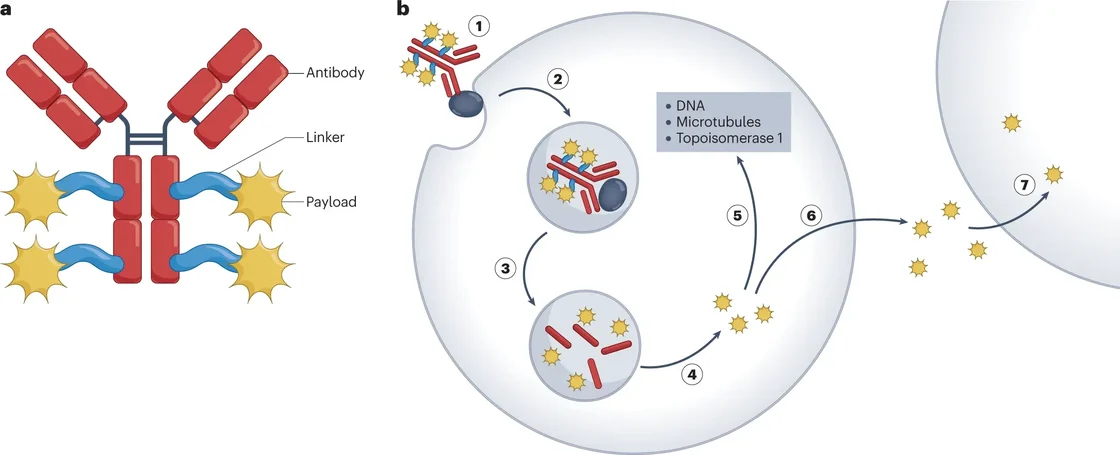
    Structure and MOA of Conventional ADCs (Dumontet et al. 2023)


    Yet, the continued advancement of ADC innovation hinges on robust, predictive preclinical models. Translationally relevant in vitro systems and animal models are indispensable for evaluating efficacy, safety, mechanisms of action, resistance, and combination strategies—ensuring a smoother path from discovery to clinical application.

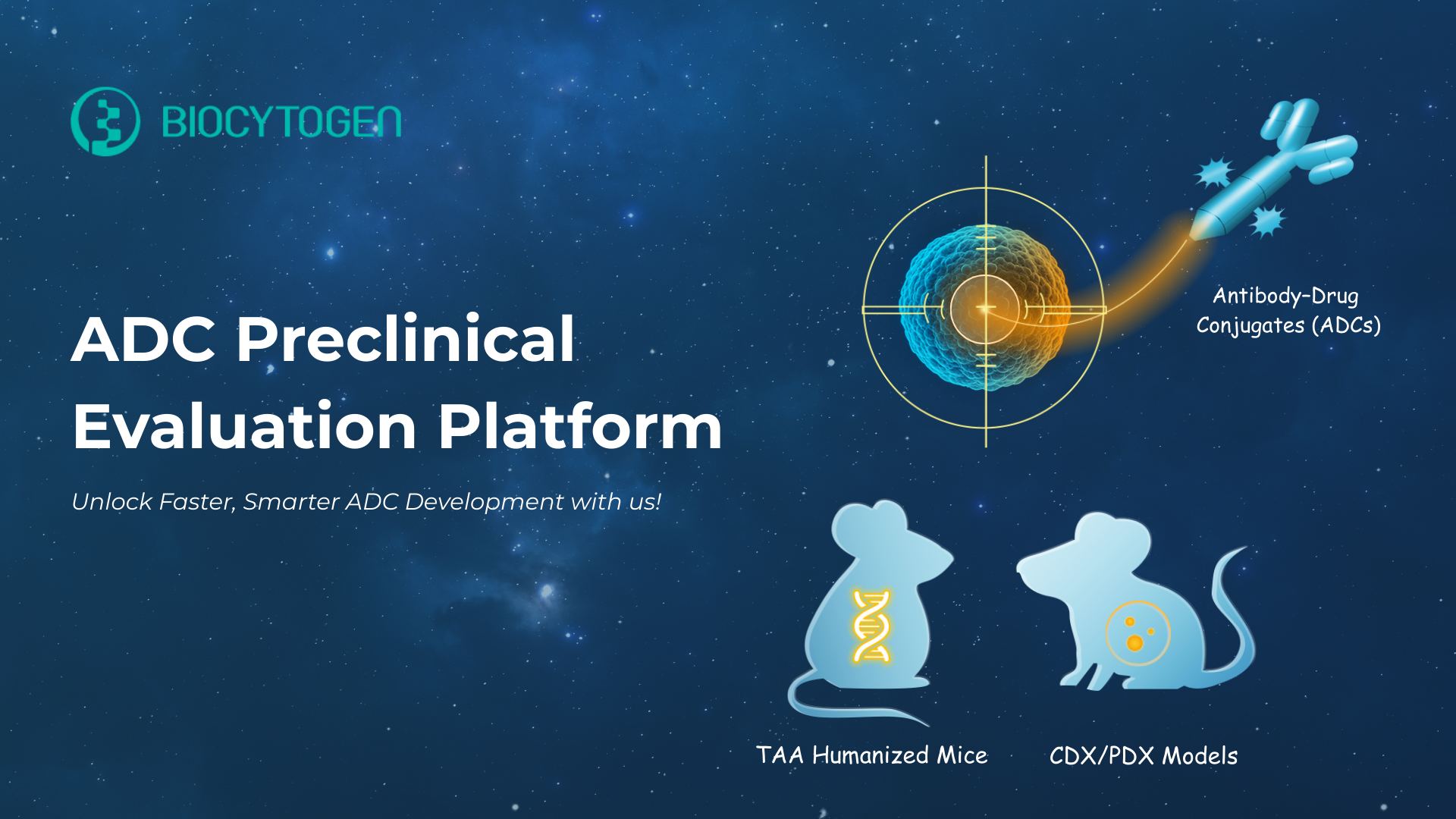
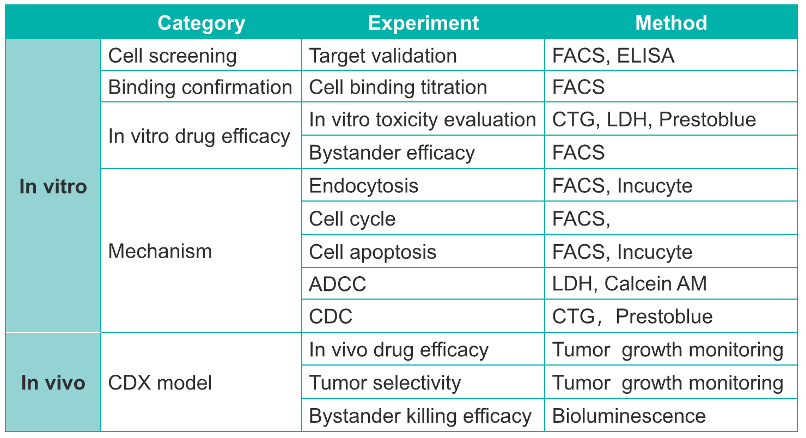
    To meet these critical needs, Biocytogen has developed a state-of-the-art ADC preclinical evaluation platform that seamlessly integrates both in vivo and in vitro systems. This comprehensive platform enables comprehensive assessment of: 

    • Efficacy: Determining tumor-specific therapeutic performance in relevant disease models.
    • Mechanism of action (MOA): Elucidating how ADCs engage TAAs, internalize, and induce cytotoxic effects.
    • Functional outcomes: Evaluating pharmacodynamics, off-target activity, and therapeutic durability.

    Biocytogen's ADC Preclinical Evaluation Platform

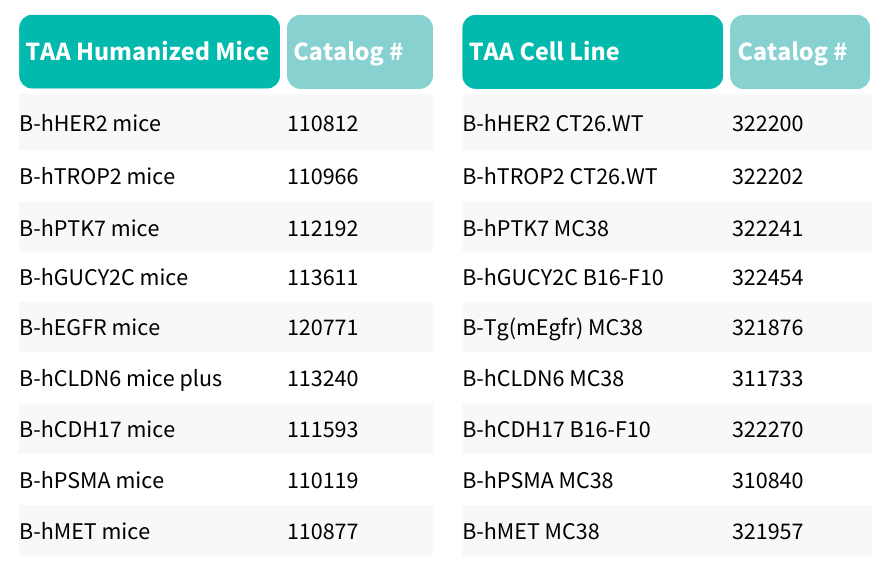
    Popular TAA Humanized Mice and Cell Lines (Partial List) 


    Case Study: Efficacy Evaluation of HER2 ADC

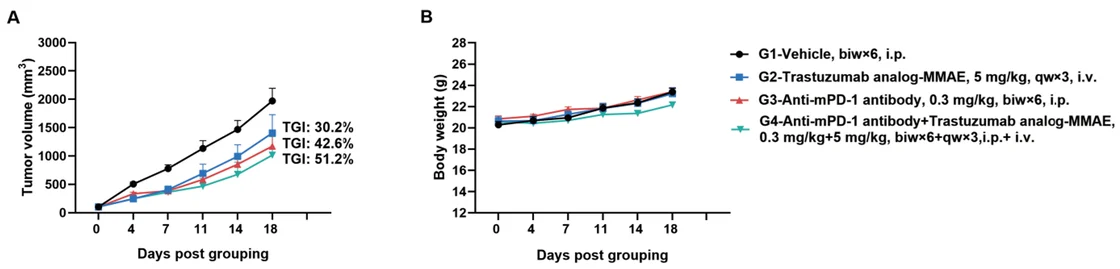
    Antitumor Activity of Anti-HER2 ADC (Trastuzumab Analog-MMAE) in HER2 Humanized Mice

    Anti-HER2 ADC (Trastuzumab Analog-MMAE) shows dose-dependent tumor growth inhibition in HER2 Humanized miceThe in-house Trastuzumab analog-MMAE effectively controlled tumor growth in a dose-dependent manner, demonstrating that B-hHER2 mice provide a robust preclinical model for in vivo evaluation of anti-human HER2 antibodies. Mean ± SEM.

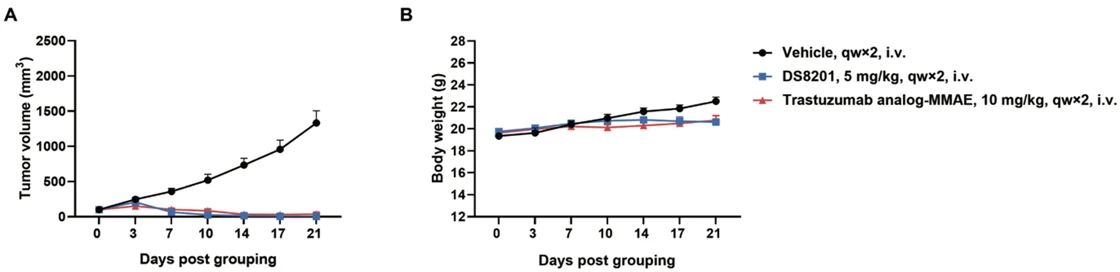
    Antitumor Activity of Anti-HER2 ADCs in 4-1BB/HER2 Humanized Mice

    Anti-HER2 ADCs demonstrate tumor growth inhibition in 4-1BB/HER2 humanized miceBoth anti-human HER2 ADCs (DS8201 and Trastuzumab Analog-MMAE) effectively controlled tumor growth in B-h4-1BB/hHER2 mice, showing that the B-hHER2 MC38 plus model provides a robust preclinical system for in vivo evaluation of anti-human HER2 ADCs. Mean ± SEM.

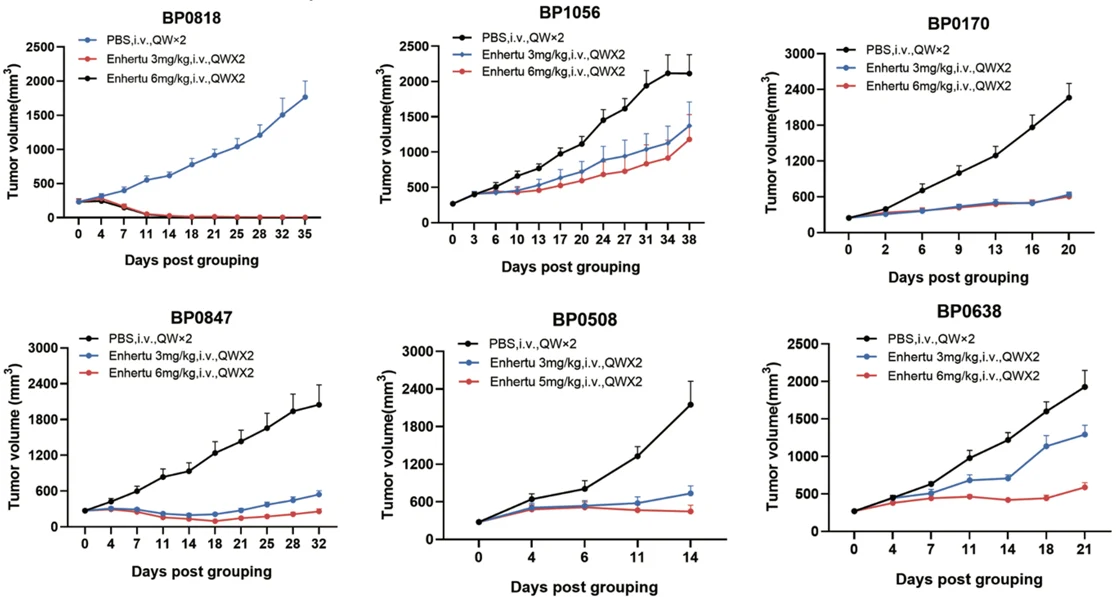
    Antitumor Activity of Anti-HER2 ADC in PDX Model

    Anti-HER2 ADC (DS8201) suppresses tumor growth in PDX models. Human tumor tissues were subcutaneously implanted into B-NDG mice and treated intravenously with anti-human HER2 ADC DS8201 (Daiichi Sankyo). The treatment effectively inhibited tumor growth, highlighting B-NDG mice as a robust preclinical tool for evaluating HER2-targeted ADCs in PDX models. Mean ± SEM.

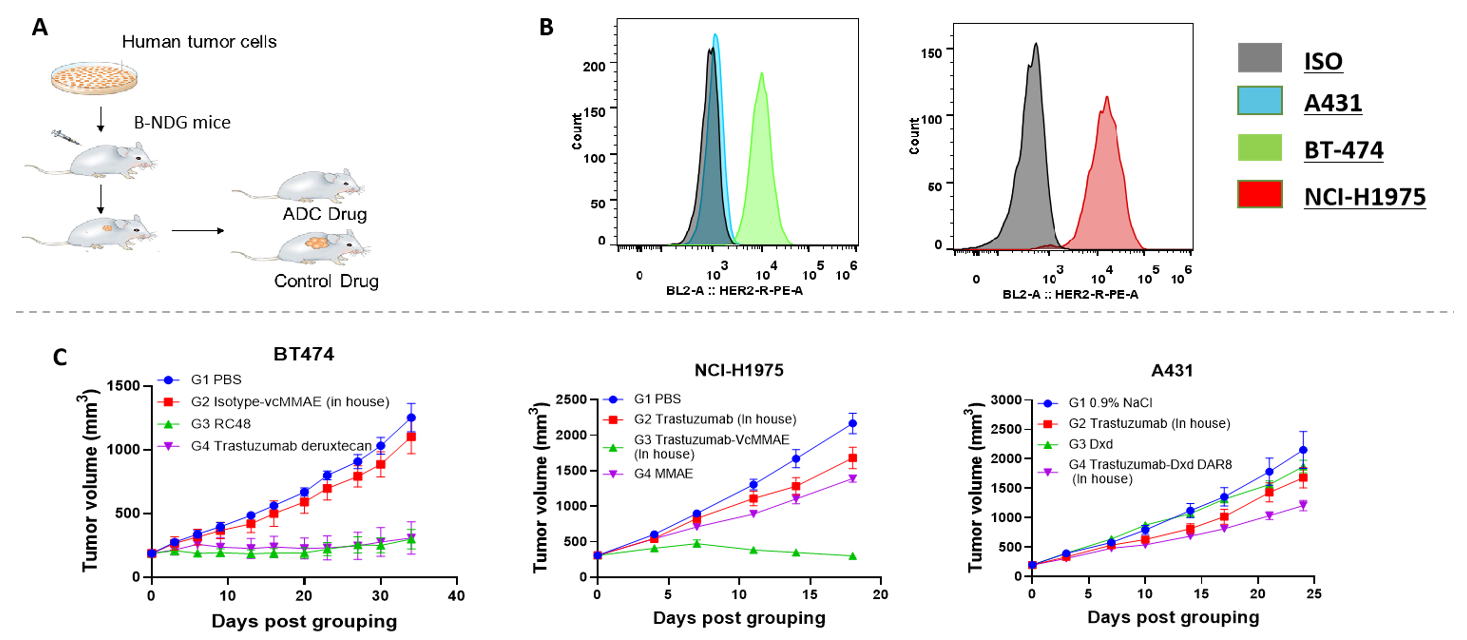
    Antitumor Activity of Anti-HER2 ADC in CDX Model

    CDX models with high HER2 expression show strong tumor responses, while low-HER2 models derive limited benefit

    HER2-targeting ADC efficacy evaluation in CDX models with varying HER2 expression using B-NDG Mice.

    HER2-targeting ADC efficacy evaluation in CDX models with varying HER2 expression using B-NDG Mice. (A) Diagram of CDX model setup and ADC treatment strategy in B-NDG mice; (B) HER2 expression levels in A431, BT-474, and NCI-H1975 cell lines; (C) Efficacy of HER2-targeting ADCs in vivo. BT-474 and NCI-H1975 (high HER2) responded well to treatment, while A431 (low HER2) showed limited response. B-NDG mice provide a robust platform for preclinical evaluation of human ADC therapies. Mean ± SEM.


    Explore How Biocytogen’s Preclinical Platform Accelerates Your ADC Development!


    Reference:

    Lv, Yahui, et al. "Mechanism of action and future perspectives of ADCs in combination with immune checkpoint inhibitors for solid tumors." Clinical and Experimental Medicine 25.1 (2025): 139.

    Dumontet, Charles, et al. "Antibody–drug conjugates come of age in oncology." Nature reviews Drug discovery 22.8 (2023): 641-661.


    FAQs

    Q1. What are antibody–drug conjugates (ADCs) and how do they work?

    ADCs are targeted cancer therapies that link antibodies to cytotoxic drugs. By binding to tumor-associated antigens (TAAs), ADCs deliver potent “guided missile”–like strikes to tumor cells, minimizing damage to healthy tissue while maximizing anti-tumor activity.

    Q2. Why are ADCs often combined with immune-oncology (I/O) agents?

    Combining ADCs with I/O agents such as PD-1/PD-L1 or CTLA-4 inhibitors enhances cancer treatment by pairing direct tumor killing with immune system activation. This dual strategy can reshape the tumor microenvironment and deliver more durable, synergistic anti-tumor responses.

    Q3. What challenges remain in ADC development?

    Despite rapid progress, ADCs face hurdles such as complex manufacturing, scalability issues, and off-target toxicities. Predictive preclinical models and robust biomarker strategies are essential to address these challenges and ensure successful clinical translation.

    Q4. Why are HER2-targeting ADCs significant in oncology?

    HER2-targeting ADCs, such as T-DM1 (trastuzumab emtansine) and DS-8201 (trastuzumab deruxtecan), have received FDA approval and are now widely used, demonstrating strong efficacy in HER2-positive cancers. Preclinical studies using Biocytogen’s HER2 humanized mice and PDX/CDX models confirm dose-dependent tumor inhibition, validating HER2 as a robust therapeutic target and supporting biomarker-driven patient selection.

    Q5. How does Biocytogen support ADC development? 

    Biocytogen provides a state-of-the-art ADC preclinical evaluation platform that integrates both in vivo and in vitro models. This platform enables comprehensive assessment of efficacy, mechanism of action, pharmacodynamics, and therapeutic durability. It includes humanized mouse models as well as CDX (cell-derived xenograft) and PDX (patient-derived xenograft) models using immunodeficient B-NDG mice, which offer robust systems for evaluating tumor-specific responses and accelerating ADC development toward clinical translation.