
you may also like

    Breaking the Ceiling: Remodeling the Inflammatory Network with Next-Gen Multispecific Models

    Breaking the Ceiling: Remodeling the Inflammatory Network with Next-Gen Multispecific Models

    April 23, 2026
    Share on:

    Chronic inflammatory diseases represent a massive global health challenge. Asthma affects approximately 262 million people globally—roughly 1 in 31 people. Meanwhile, atopic dermatitis (AD) impacts over 230 million people worldwide, meaning about 1 in 33 individuals currently live with the condition.

    Historically, treatment relied on broad immunosuppression, particularly corticosteroids—effective, but blunt tools that suppress the entire immune system and carry significant safety liabilities. Over the past decade, the field has shifted toward a pathway-driven paradigm. Targeted biologics now act more like a scalpel, selectively inhibiting key mediators such as IL-4/IL-13, IL-5, IgE, and TSLP to control inflammation with improved safety profiles.

    However, clinical experience has revealed a clear limitation: a ceiling effect in single-node targeting. The Th2 (T-helper 2) inflammatory network is highly redundant and adaptive, and inhibition of one node often leads to compensatory activation of parallel pathways. As a result, even highly successful biologics such as dupilumab leave a subset of patients with incomplete or suboptimal responses, particularly in moderate-to-severe disease.


    The Solution: Targeting the Th2 Inflammatory Network in Asthma & AD

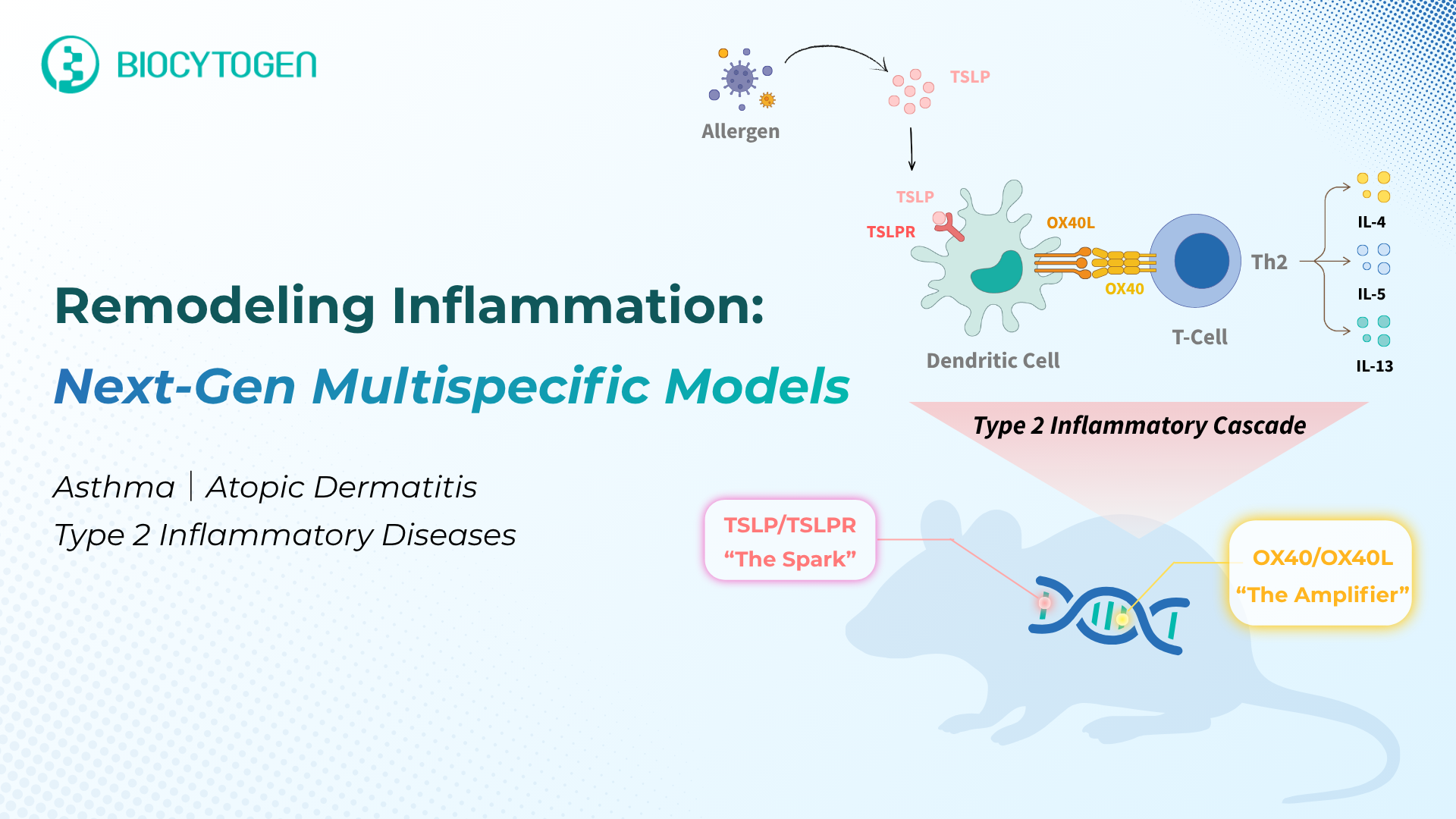
    The Th2 inflammatory network is not linear—it is a dynamic, self-reinforcing system. In AD and asthma, epithelial injury triggers release of alarmins such as TSLP, IL-25, and IL-33, which activate dendritic cells and initiate Th2 polarization. This drives downstream effector pathways mediated by IL-4, IL-5, and IL-13, resulting in IgE production, eosinophilia, barrier dysfunction, and airway hyperresponsiveness.

    This cascade is anchored by two sequential control nodes:

    • TSLP (The Spark & Upstream Trigger): Allergen-induced epithelial injury triggers TSLP release, activating dendritic cells and initiating type 2 immune response.
    • OX40/OX40L (The Core Amplifier): TSLP-primed dendritic cells upregulate OX40L, which engages OX40 on T cells to drive expansion, survival, and memory of pathogenic Th2 cell differentiation—triggering downstream inflammatory responses.

    While emerging therapies targeting TSLP or downstream cytokines have improved outcomes, single-axis intervention remains insufficient in established disease, where both upstream initiation and T-cell persistence contribute to chronic inflammation.

    In contrast, dual blockade of TSLP and OX40/OX40L directly targets both disease ignition and immune amplification, reducing pathway redundancy and enabling deeper, more durable immune reset.


    Bridging the Gap: Biocytogen's TSLP/OX40 Dual-Axis Humanized Mouse Model

    Realizing the full potential of combination strategies requires preclinical systems that faithfully recapitulate human immune network complexity. However, conventional models are limited by species differences in TSLP and OX40 biology, and single-humanized systems fail to capture coordinated multi-axis immune interactions.

    To address this, Biocytogen has developed the B-hTSLP/hTSLPR plus/hOX40/hOX40L humanized mice (Catalog No. 113916), enabling simultaneous evaluation of upstream and T-cell–mediated inflammatory axes within a single in vivo system. Our model provides:

    • Integrated assessment of upstream and downstream Type 2 inflammatory pathways
    • Evaluation of dual-target and bispecific biologics in asthma and AD
    • Translationally meaningful pharmacodynamic and efficacy readouts


    To validate its translational value, an OVA-induced airway inflammation (asthma-like) model was established in humanized TSLP/OX40 mouse model. Combination targeting of human TSLP (SHR-1905), IL-13 (lebrikizumab), and OX40L (amlitelimab) demonstrated clear gains in therapeutic depth:

    1. Enhanced Inflammatory Cell Reduction in Asthma: 

    Combination regimens significantly reduced CD45⁺ inflammatory cells and eosinophils in bronchoalveolar lavage fluid (BALF) compared to PBS controls—demonstrating the model’s ability to resolve incremental efficacy across combination strategies.
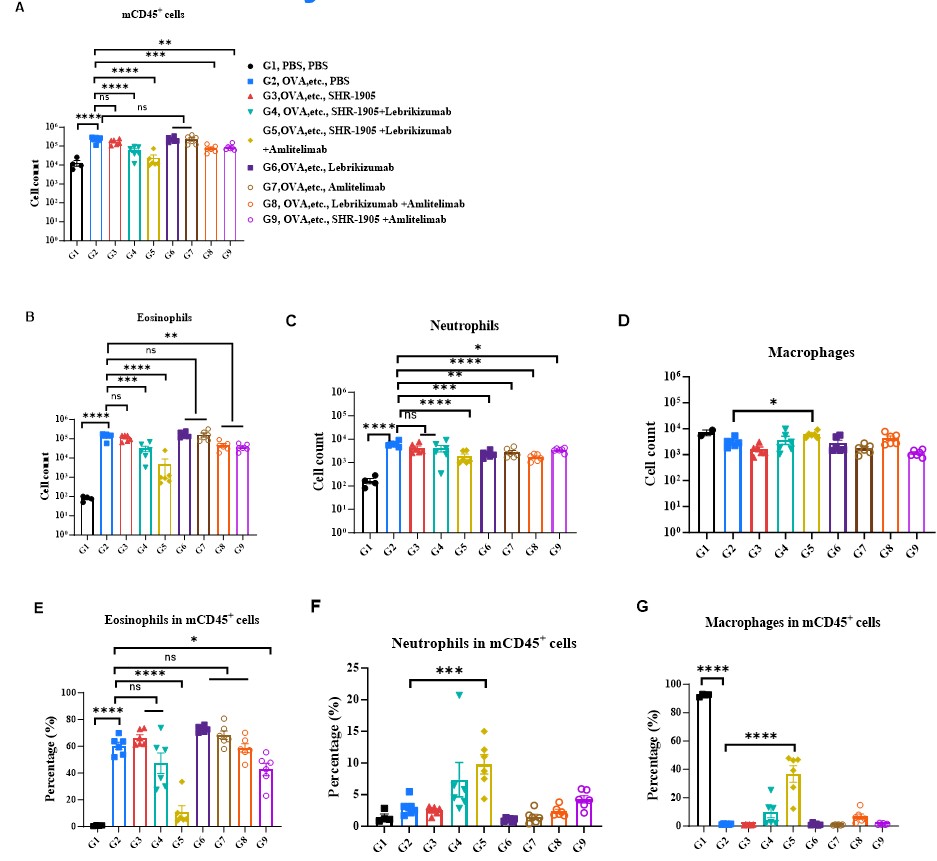
     

    In vivo efficacy of anti-human TSLP, IL13, OX40L antibody treated B-hTSLP.hTSLPR plus.hOX40.hOX40L mice
     
    Triple-pathway blockade (anti-TSLP, IL-13, and OX40L) maximizes suppression of airway inflammation in OVA-induced B-hTSLP/hTSLPR plus/hOX40/hOX40L humanized mice. BALF analysis shows that the triple combination (G5) achieved the greatest therapeutic depth, markedly reducing (A) total CD45⁺ leukocytes and (B) eosinophils versus the OVA control group (G2). This intensified Th2 blockade also reduced (E) eosinophil proportions, with a relative shift toward (F) neutrophil and (G) macrophage populations—suggesting broad remodeling of the inflammatory milieu.
     

    2. Superior IgE Biomarker and Type 2 Immune Suppression:

    Mice treated with combination therapies showed markedly lower total serum IgE levels, reflecting robust suppression of systemic type 2 immune activation.
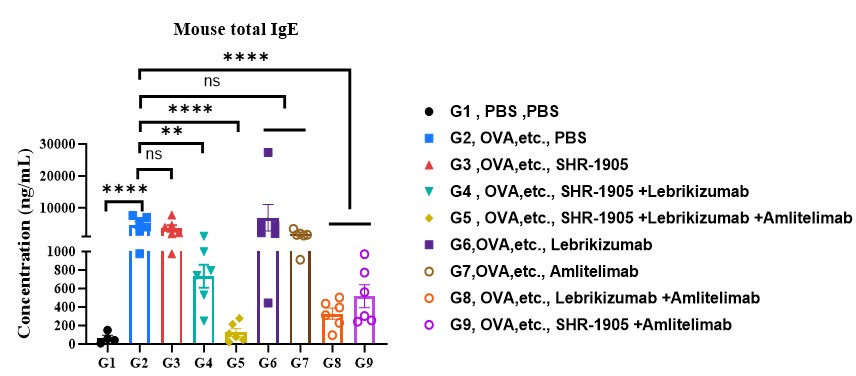
     
    Reduced biomarker IgE release in treated B-hTSLP.hTSLPR plus.hOX40.hOX40L mice
     

    Superior reduction of systemic IgE via triple-pathway blockade in OVA-induced B-hTSLP/hTSLPR plus/hOX40/hOX40L humanized mice. The triple combination (G5) achieved near-complete normalization of serum IgE, significantly outperforming monotherapies and double combinations. This pronounced reduction in IgE—a central biomarker of allergic sensitization—supports enhanced control of B-cell–mediated responses and overall Th2 signaling.
     

    3. Improved Lung Tissue Protection and Reduced Airway Remodeling:

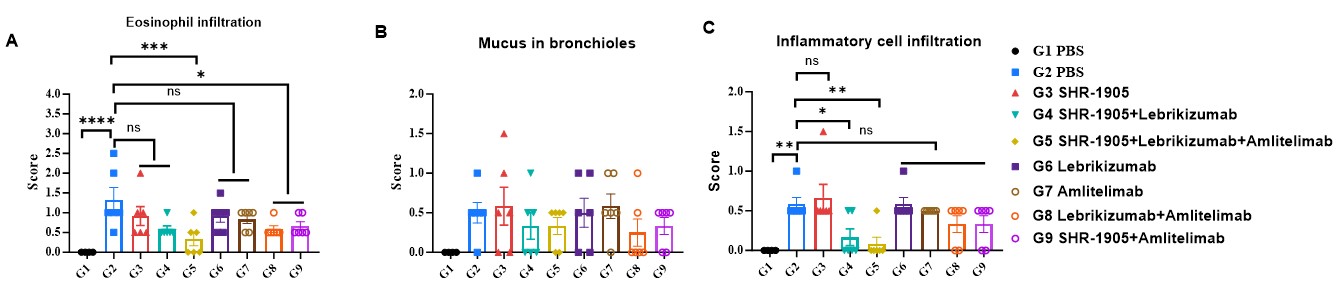
    Combination groups exhibited reduced lung inflammatory infiltration and mucus hypersecretion, indicating improved preservation of airway structure and function and recapitulating key features of therapeutic response observed in asthma.
     
    Lower lung inflammation and mucus secretion in treated B-hTSLP.hTSLPR plus.hOX40.hOX40L mice
     
    Triple therapy mitigates lung inflammation and mucus production in OVA-induced B-hTSLP/hTSLPR plus/hOX40/hOX40L humanized mice. Compared to the OVA-induced disease group (G2), triple blockade (G5) significantly reduced (A) eosinophil infiltration and (C) total inflammatory cell infiltration in lung tissue based on histopathological analysis. In addition, G5 showed a trend toward the lowest (B) bronchiolar mucus secretion scores, a key contributor to airway obstruction. These findings demonstrate that simultaneous inhibition of TSLP, IL-13, and OX40L effectively prevents tissue-level pathology and airway remodeling.


    Toward Disease Modification in Asthma & AD, Not Just Symptom Control:

    Although current biologics can effectively reduce inflammatory signaling, many patients continue to experience persistent disease activity and long-term tissue remodeling, including airway structural changes and mucus hypersecretion. This highlights a critical gap between immune suppression and true disease modification.

    Biocytogen’s B-hTSLP/hTSLPR plus/hOX40/hOX40L humanized mouse model addresses this gap through a uniquely versatile design that recapitulates both immune modulation and tissue-level pathology. In addition to accurately modeling reduced inflammatory responses, it also enables evaluation of tissue protection, airway remodeling, and structural pathogenic improvement—dimensions often missing in conventional or single-axis preclinical models.

    This platform provides a more comprehensive translational framework for developing next-generation therapeutics aimed at both immune control and disease modification.

    👉 Contact us for model inplementation, study design and more.


    Frequently Asked Questions (FAQ): TSLP/OX40 Type 2 Inflammatory Pathway

    1. Is targeting TSLP alone enough to control atopic dermatitis and asthma?

    Blocking TSLP (thymic stromal lymphopoietin) helps suppress the initiation of type 2 (Th2) inflammation, but it is often not sufficient for full disease control. The Th2 pathway is highly redundant—other epithelial alarmins like IL-25 and IL-33 can continue activating dendritic cells even when TSLP is inhibited. In addition, once Th2 cells are established, they sustain inflammation through OX40/OX40L co-stimulation and cytokines such as IL-4, IL-5, and IL-13, driving IgE production, eosinophilia, and chronic tissue inflammation. As a result, TSLP-targeted therapies tend to work best in early-stage disease, while dual-target approaches (e.g., TSLP plus OX40) can provide more complete and durable suppression by blocking both immune initiation and amplification.

    2. What’s the role of TSLP in Th2 inflammation?

    TSLP (Thymic Stromal Lymphopoietin) acts as the upstream trigger of type 2 immunity. When epithelial cells in the skin or airway are exposed to barrier disruption, pathogens, or allergens, they rapidly release TSLP. This alarmin directly acts on dendritic cells to drive their activation, effectively switching on the downstream Th2 inflammatory cascade.

    3. How does the OX40/OX40L pathway contribute to chronic inflammation?

    The OX40/OX40L pathway functions as the core amplifier of pathogenic T-cell responses. After dendritic cells are activated by upstream signals like TSLP, they upregulate OX40L expression. When these cells migrate to lymph nodes, OX40L binds to OX40 on naïve T cells, providing a critical "second signal" that drives the T cells to fully activate, proliferate, and differentiate into inflammation-sustaining Th2 cells.

    4. Why is co-blocking TSLP and OX40/OX40L a promising strategy for inflammatory diseases?

    Simultaneous targeting of TSLP and OX40/OX40L intervenes at both the source of the immune alarm (the TSLP "ignition switch") and the core amplification axis of T-cell activation (the OX40 "fuel booster"). This dual-target strategy helps overcome the limitations of single-cytokine blockade by reducing pathway compensation and more effectively restoring immune balance for durable disease control.

    5. How dose Biocytogen's TSLP/OX40 target humanized mouse model considered strategically differentiated in the market?

    Most preclinical models are limited to either immune readouts or single-pathway biology. Biocytogen’s model is strategically differentiated because it enables end-to-end disease modeling, from immune initiation to structural tissue outcomes. This makes it uniquely suited for evaluating next-generation therapies aimed at true disease modification rather than symptom suppression alone.