you may also like
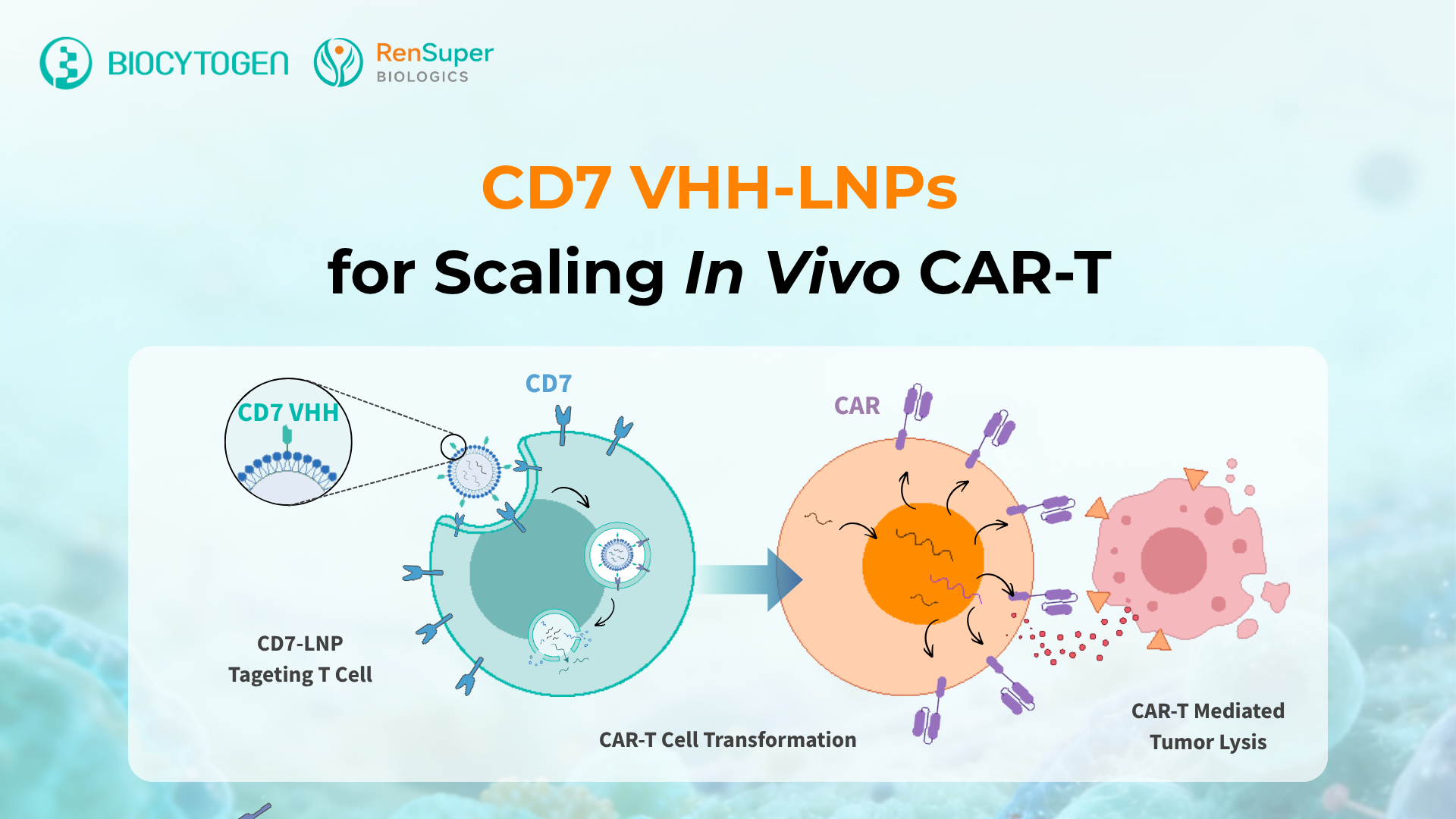
Ex vivo CAR-T therapies have transformed cancer treatment, but manufacturing remains slow, complex, and costly. This has accelerated the shift toward in vivo CAR-T engineering, where CAR expression is induced directly inside the patient using mRNA-loaded lipid nanoparticles (LNPs).
As delivery efficiency and cell specificity become critical determinants of therapeutic success, antibody-conjugated LNPs (Ab-LNPs) are emerging as a leading platform for targeted immune-cell engineering. By combining antibody-guided specificity with scalable nucleic acid delivery, Ab-LNPs offer a powerful strategy for precise in vivo CAR-T generation.
A critical question remains: which targeting strategy can enable efficient and selective delivery of mRNA-LNPs to circulating T cells?
Efficient in vivo CAR-T delivery depends on accurate tissue and T-cell targeting, minimal off-target uptake, and strong intracellular delivery. Leveraging T-cell surface receptors as biological entry points for LNP guidance, CD7 stands out as a superior “GPS” for directing LNP systems to T cells.
Also known as GP40 or LEU-9, CD7 is a transmembrane glycoprotein broadly expressed on T cells and NK cells. Its high-density and stable surface expression make it an attractive biological “docking receptor” for Ab-LNP targeting.
Recent work (Zeng et al., 2026) demonstrates that CD7 significantly outperforms classical T-cell receptor targets such as CD3, CD4, and CD8 in mRNA delivery efficiency.
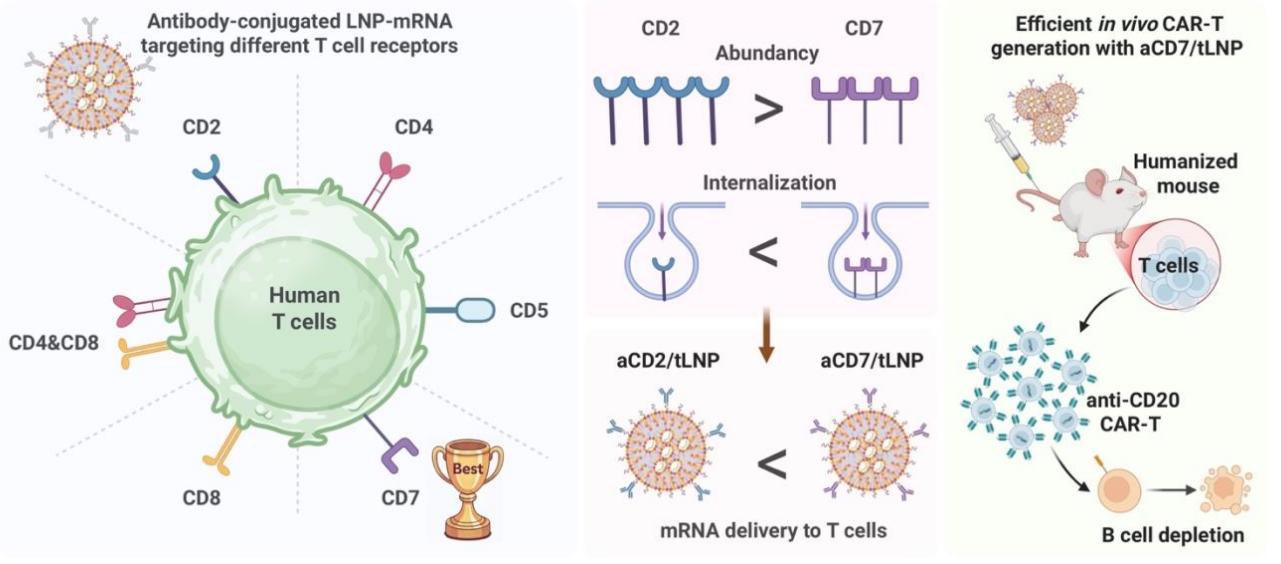
CD7 as the most effective and precise receptor for guiding mRNA-LNP delivery in in vivo CAR-T engineering (Zeng et al., 2026).
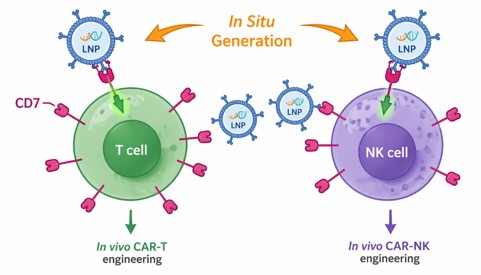
Together, these properties position CD7 as a strategic gateway for next-generation in vivo immune-cell engineering.
While CD7 provides an ideal biological target, the success of Ab-LNP systems also depends on the quality and architecture of the targeting binder. This is where fully human VHH antibodies (single-domain antibodies) offer a decisive advantage over conventional scFvs.
These features make VHHs highly attractive targeting ligands for precision mRNA delivery systems.
Through our proprietary RenMice® fully human antibody platforms, Biocytogen has established a robust pipeline supporting next-generation in vivo therapeutic design. This expertise is further reinforced by our collaboration with Merck KGaA, Darmstadt, Germany, focused on advancing antibody-LNP delivery systems for nucleic acid therapeutics.
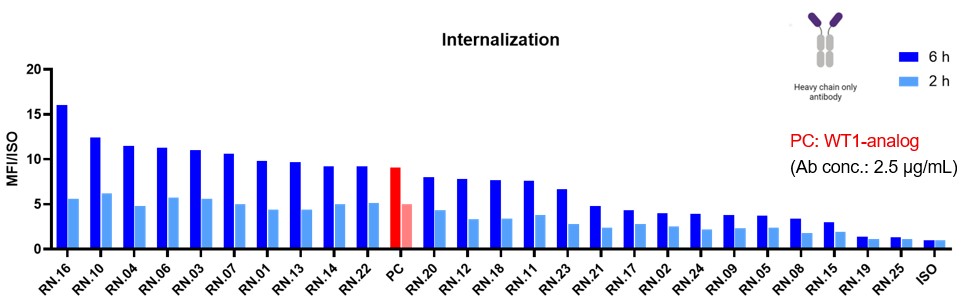
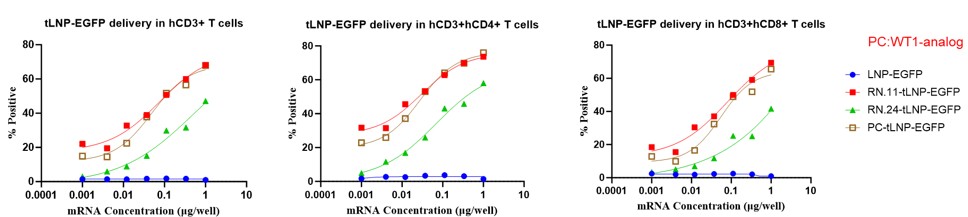
Using the RenNano® platform, we generated a panel of fully human heavy-chain-only antibodies (HCAbs) against CD7, optimized for early-stage screening in mRNA delivery applications.
A key advantage of the HCAb-to-VHH workflow is modularity. From validated full-length HCAbs, ultra-compact VHH domains can be isolated without compromising target specificity or internalization behavior.
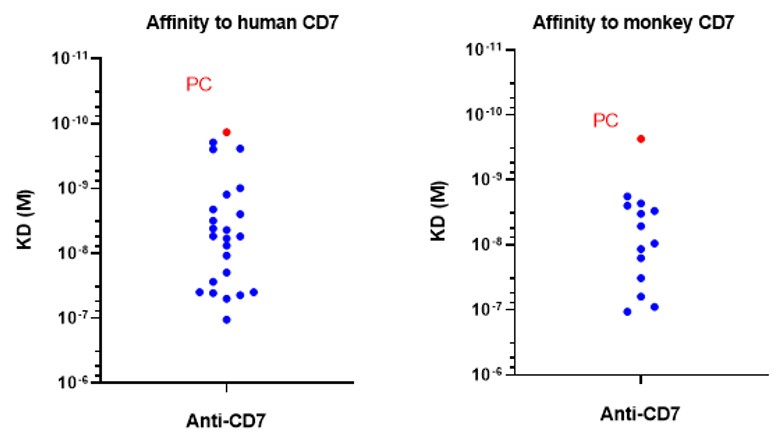
CD7 HCAbs Demonstrated High Binding Affinity and Cross-Reactivity for Human and Monkey CD7.
As in vivo CAR-T therapies continue to advance, precise and scalable T-cell targeting technologies will play a critical role in enabling safer and more effective cell engineering strategies. Fully human VHH antibodies combined with advanced Ab-LNP engineering approaches offer a promising foundation for next-generation targeted nucleic acid delivery.
If you are advancing in vivo CAR-T or targeted-LNP (tLNP) programs, we invite you to connect with our scientific team to access detailed datasets, evaluate CD7-targeting candidates, or explore co-development opportunities!
In vivo CAR-T therapy is an emerging approach that engineers a patient’s immune cells directly inside the body, eliminating the need for complex ex vivo cell manufacturing. Instead of isolating and modifying T cells outside the patient, targeted delivery systems such as antibody-conjugated lipid nanoparticles (Ab-LNPs) deliver CAR-encoding mRNA directly to immune cells in circulation.
CD7 is highly expressed on both T cells and NK cells and undergoes rapid receptor-mediated internalization, making it an ideal target for mRNA-LNP delivery. Compared with other T-cell receptors such as CD3, CD4, and CD8, CD7 enables efficient uptake into both resting and activated T cells and supports broad immune-cell accessibility for in vivo CAR-T engineering.
Antibody-conjugated lipid nanoparticles (Ab-LNPs) are targeted delivery systems that combine the payload capacity of lipid nanoparticles with the cell specificity of antibodies. By attaching antibodies or VHHs to the LNP surface, Ab-LNPs can selectively direct mRNA payloads to specific immune-cell receptors such as CD7, improving delivery precision and reducing off-target uptake.
VHH antibodies are small, single-domain antibody fragments that offer several advantages for Ab-LNP engineering. Their compact size improves access to challenging epitopes, while their small genetic footprint preserves payload capacity within LNP systems. Fully human VHHs also lack Fc regions, which may help reduce immune clearance and improve delivery efficiency in vivo.
CD7-targeted Ab-LNPs may enable scalable, off-the-shelf generation of CAR-T and CAR-NK cells directly in patients. Because CD7 is broadly expressed on immune effector cells, these systems could support dual-cell reprogramming, stronger anti-tumor activity, and improved resistance to tumor antigen escape—potentially enhancing the durability and accessibility of next-generation cancer immunotherapies.