you may also like
While recent FDA approvals for ADCs like Enhertu have reshaped oncology, the industry is hitting a critical plateau: resistance and recurrence. Emerging clinical evidence reveals that single-payload ADCs often struggle to eliminate diverse tumor clones. When a portion of the tumor escapes, the hope for a durable response vanishes. This clinical "escape act" is primarily driven by two formidable hurdles: acquired payload resistance and antigen heterogeneity.
At Biocytogen, we are tackling these challenges head-on with next-generation strategies designed to overcome tumor complexity and redefine the future of ADC therapy.
Conventional single-payload ADCs are inherently vulnerable to resistance. Because their antitumor activity relies on a single cytotoxic mechanism, tumor cells that adapt can rapidly render the payload ineffective.
To overcome this resistance, Biocytogen is advancing a “Dual-Strike Strategy.” By conjugating two complementary payloads (e.g., the microtubule inhibitor MMAE and the DNA-damaging TOP1 inhibitor BCPT02) to a single antibody, we enable a multi-dimensional attack on tumor cells. This approach offers several key advantages:
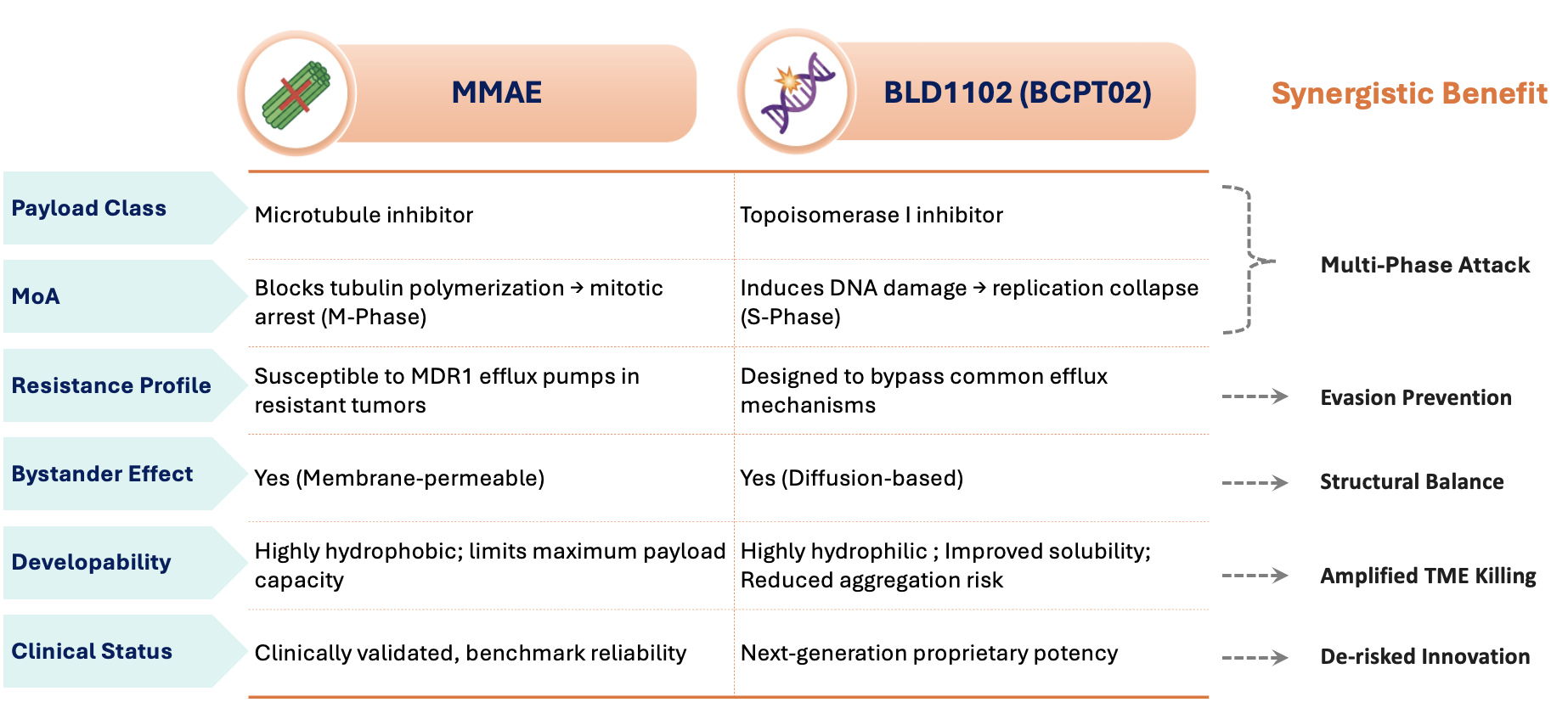
Payload Characteristics and Their Synergistic Benefits When Combined.
Dual-payload Trastuzumab (anti-HER2) ADC demonstrates preserved HER2 binding, excellent stability and superior antitumor efficacy in vivo.
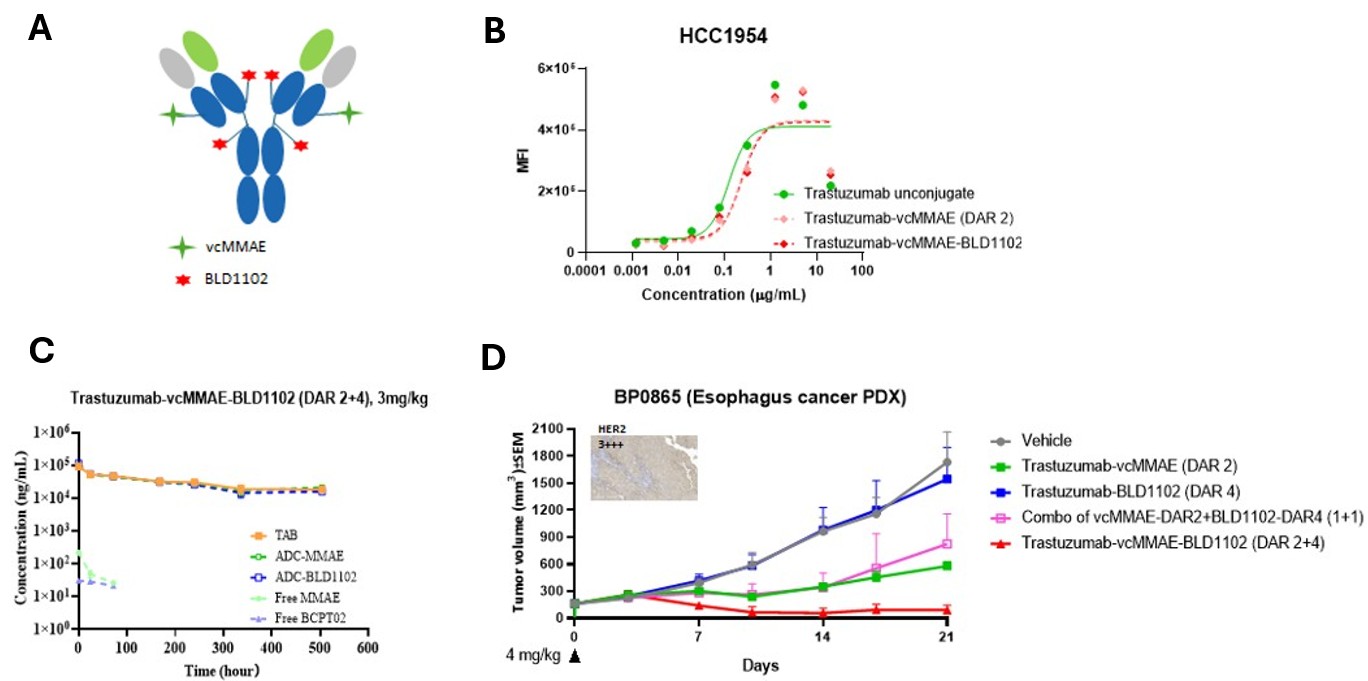
(A) Trastuzumab is conjugated with two cytotoxic payloads: vcMMAE (DAR=2) and BLD1102 (linker+BCPT02, DAR=4). (B) The dual-payload ADC retains HER2 binding comparable to unconjugated trastuzumab and single-payload ADC in cells. (C) Favorable pharmacokinetics with sustained ADC exposure. (D) In a HER2 esophageal PDX model, the dual-payload ADC achieves superior tumor growth inhibition (red line) compared with single-payload ADCs or their combination.
Even when payload resistance is addressed, tumor antigen diversity remains a major obstacle. Single-target therapies often leave behind tumor cells with variable antigen expression, allowing the cancer to survive and recur.
To address tumor heterogeneity at the antigen level, Biocytogen employs a dual-targeting approach that simultaneously engages Integrin β6 (ITGB6) and B7-H3.
Why ITGB6 and B7-H3 are high-value therapeutic targets:
ITGB6
B7-H3
Combining both targets makes strategic sense for several reasons:
By incorporating ITGB6 alongside B7-H3, Biocytogen enhances biological breadth while securing a clear positioning advantage in an increasingly crowded ADC landscape.
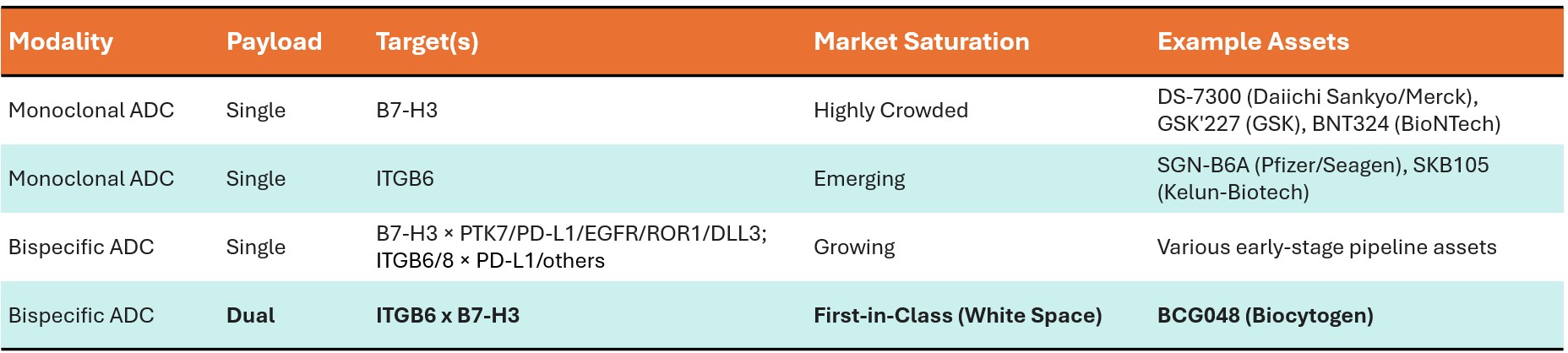
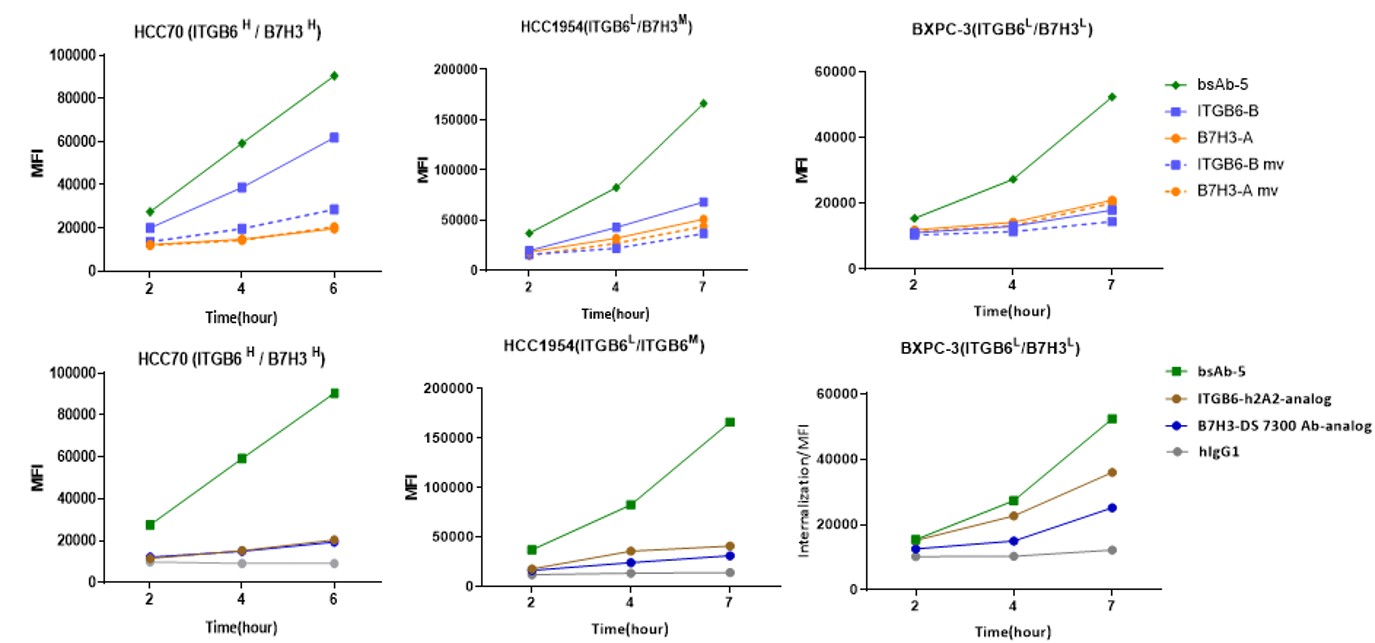
Figure 1: BCG048 (bsAb-5) showed synergistic effects and enhanced internalization across all tumor cell lines, independent of ITGB6 and B7-H3 expression levels.
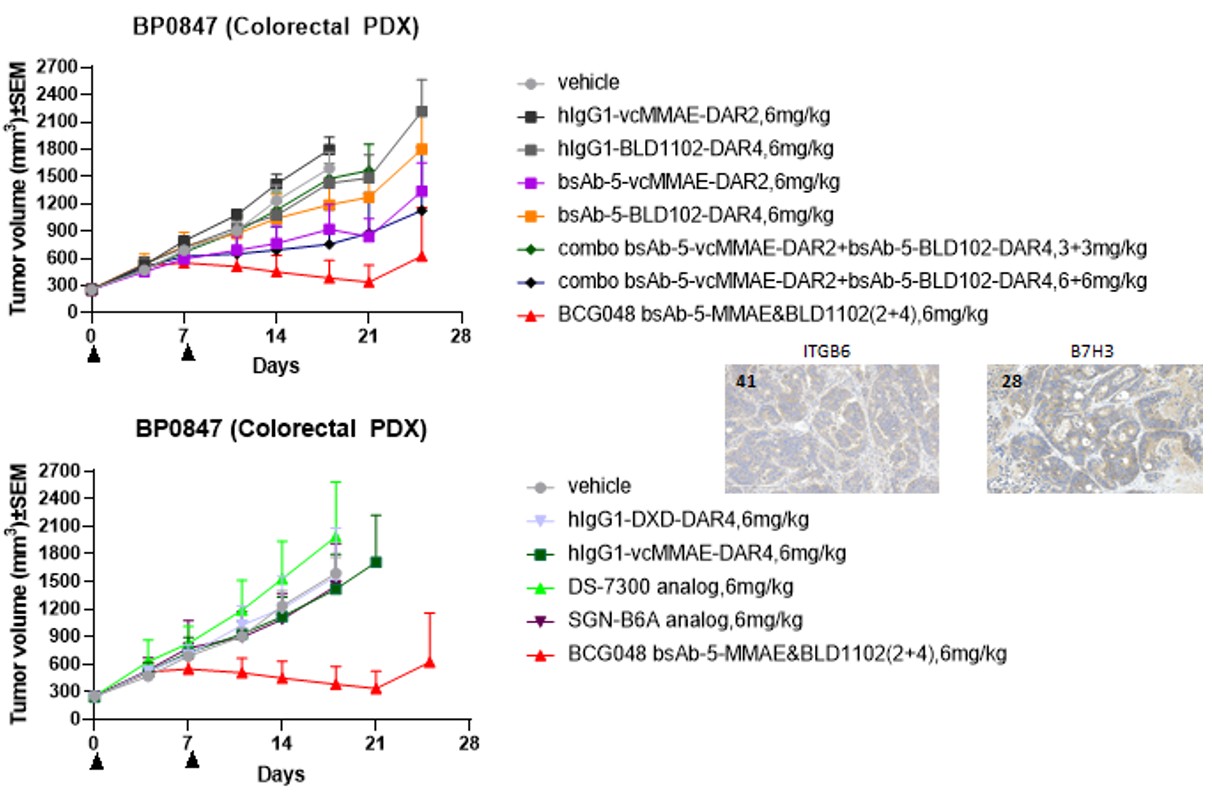
Figure 2: BCG048 showed superior antitumor efficacy with dual-payload (red line) versus single-payload ADCs (top) and outperformed benchmark ADCs (bottom) in the colorectal PDX model.
BCG048 represents a differentiated, first-in-class dual-target, dual-payload ADC with compelling preclinical validation and strong IP protection. We welcome strategic partnerships to accelerate clinical development and unlock its full potential for patients with high unmet need in solid tumors. 👉 Contact us today!
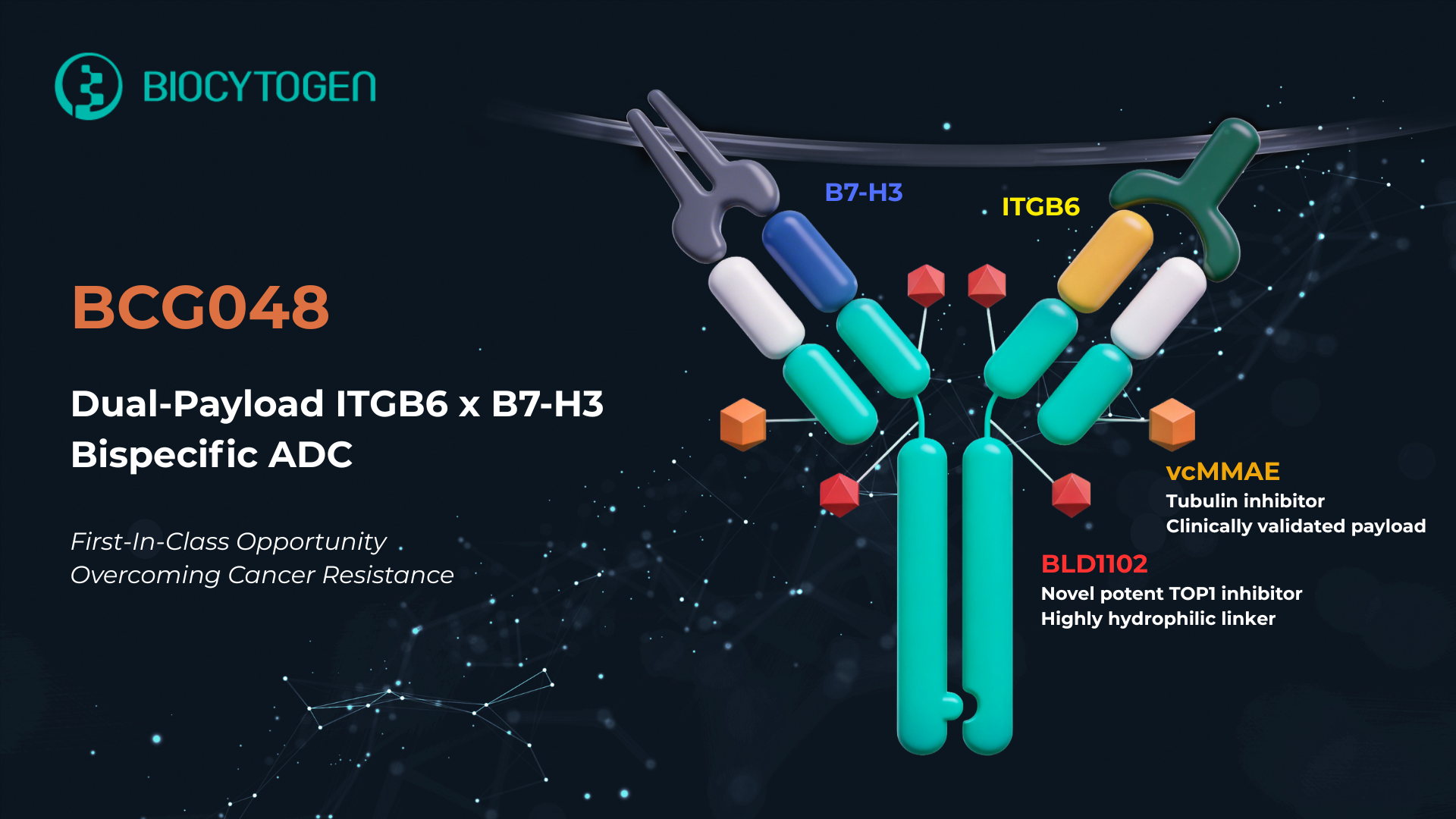
BCG048 is designed as a first-in-class dual-payload bispecific antibody-drug conjugate (bsAD2C) asset. While clinical evidence shows that single-payload ADCs often fail to eliminate all tumor clones, BCG048 addresses tumor heterogeneity by simultaneously targeting two overexpressed solid tumor antigens: ITGB6 and B7-H3. Furthermore, it delivers two complementary cytotoxic payloads to provide a multi-dimensional attack, allowing it to outperform benchmark ADC comparators in vivo.
A dual-payload ADC overcomes treatment resistance through a "Dual-Strike Strategy" that conjugates two complementary toxins onto a single antibody to deliver a multi-dimensional attack. This design ensures that even if some cells are naturally resistant to one toxin, the second "mechanistically distinct" toxin can still kill them. Additionally, it prevents resistance by maintaining anti-tumor activity even if the tumor becomes resistant to one of the payload mechanisms, ultimately delivering synergistic potency and higher efficacy than co-administering separate treatments.
Targeting both ITGB6 and B7-H3 provides a strategic advantage through complementary biology, pairing ITGB6's role in tumor invasion and immune exclusion with B7-H3's immune checkpoint suppression. This dual targeting reduces antigen escape to cover tumor heterogeneity and offers enhanced selectivity since both targets show low expression in normal tissues. Additionally, while B7-H3 is a highly competitive target in the industry, adding ITGB6 provides mechanistic uniqueness and a strong positioning advantage.
The BCG048 bsAD2C utilizes a unique combination of two distinct payloads to enable complementary mechanisms of action. It pairs vcMMAE, a validated microtubule inhibitor with DAR=2, with BCPT02, a proprietary TOP1 inhibitor with DAR=4. Notably, this proprietary BCPT02 payload is highly potent and demonstrates greater cytotoxic activity than standard DXd (an exatecan derivative).
A major challenge in developing bispecific antibodies is the complex manufacturing process. The RenLite® platform significantly improves bispecific ADC manufacturing by utilizing a fully human common light chain backbone. This innovative structural design effectively eliminates chain mispairing, which ensures seamless assembly and greatly simplifies the overall manufacturing process.