you may also like
Over the past two decades, small nucleic acid therapeutics — such as antisense oligonucleotides (ASOs) and small interfering RNAs (siRNAs) — have transformed treatment strategies for rare, cardiovascular, and metabolic diseases. A landmark moment came in 2018 with the approval of Patisiran, the first siRNA drug, which silences transthyretin (TTR) to treat hereditary transthyretin amyloidosis with polyneuropathy (hATTR-PN) and was shown to improve neurological function. In 2021, the FDA approved Inclisiran, a PCSK9-targeting siRNA that lowers LDL-cholesterol with convenient twice-yearly dosing, offering a new paradigm in long-term lipid management. More recently in 2025, APOC3-targeting ASOs have reported positive Phase III results, demonstrating significant triglyceride reduction and paving the way for a new therapeutic option in hypertriglyceridemia.
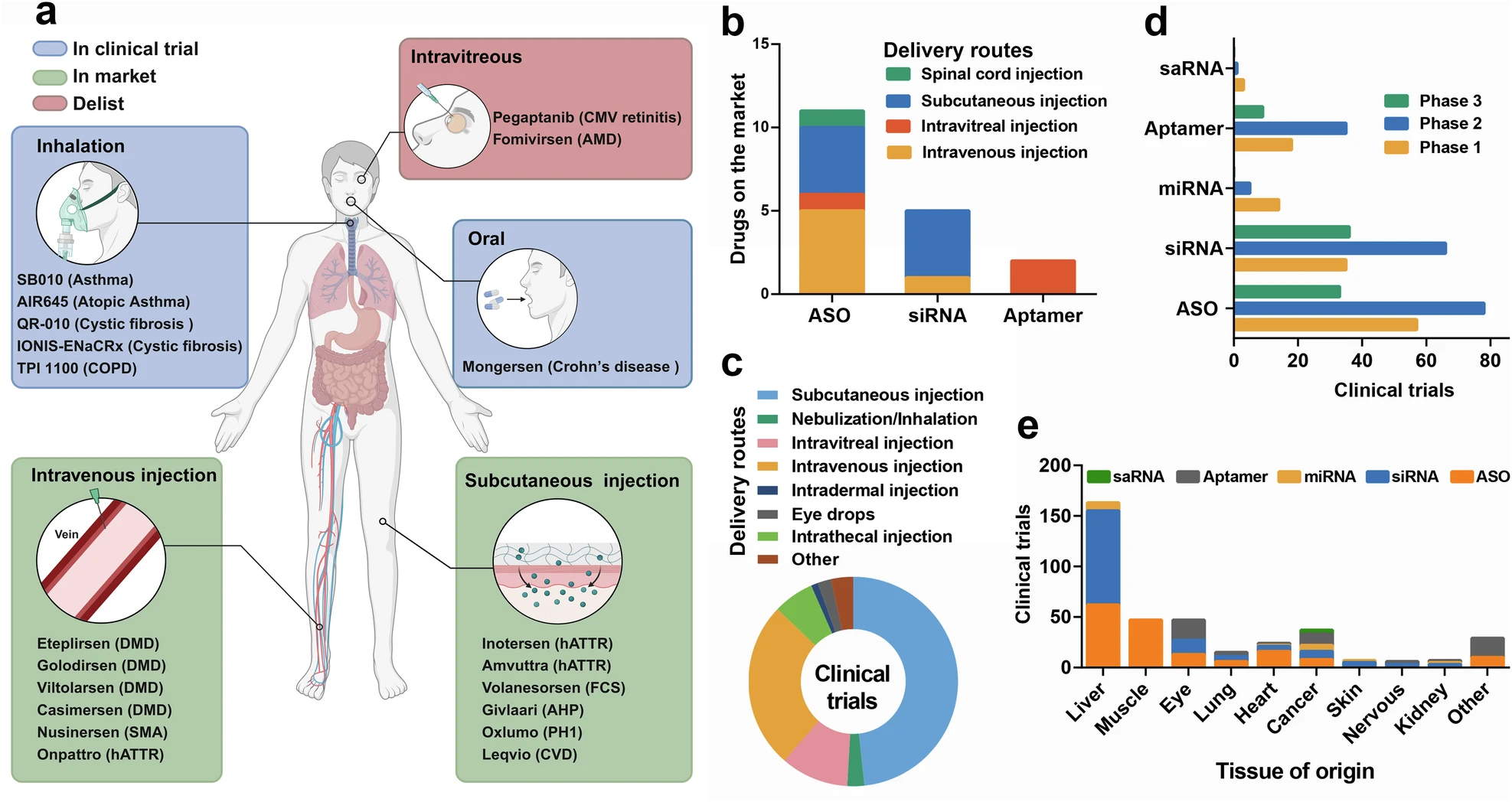
Small nucleic acid drugs used in clinical trials (Liu et al. 2025)
Yet, despite these advances, residual risk remains for many patients. In cardiovascular disease, for example, statins and PCSK9 inhibitors effectively lower LDL-C, yet coronary heart disease (CHD) events still occur. Likewise, triglyceride reduction alone has not been sufficient to eliminate cardiovascular risk. These challenges remind us that complex diseases rarely stem from a single pathway. Instead, multiple mechanisms interact to influence disease progression. This recognition is driving the next wave of therapeutic innovation—dual-target small nucleic acid therapeutics. By silencing two validated disease drivers at the same time, these therapies are designed to deliver additive—or even synergistic—benefits that single-target approaches cannot match.
Genetic studies provide compelling support for this strategy:
LDL-C + blood pressure: Mendelian randomization shows individuals with combined reductions had up to ~75-80% lower CHD risk (Ference et al. 2019).
APOC3 + PCSK9: In the UK Biobank, carriers of both protective alleles had 10% lower CHD risk than carriers of either alone (Wang et al. 2025).
This genetic validation underscores the opportunity: dual-targeting can close residual risk gaps, reduce adaptive resistance, and deliver more durable responses than single-target drugs.
1. Cardiovascular Disease
Launched in September 2025, Corsera Health is advancing a once-yearly siRNA therapy targeting PCSK9 and angiotensinogen (AGT) to simultaneously lower LDL-C and blood pressure — two of the most important modifiable risk factors for ASCVD.
In 2024, Arrowhead reported preclinical success with PCSK9 + APOC3 dual siRNAs, reducing cholesterol and triglycerides by ~50% in non-human primates with effects lasting weeks.
Also in September 2025, Mabwell Bioscience partnered with Kalexo Bio in a $1B deal to advance 2MW7141, a dual-target siRNA for hyperlipidemia and prevention of ASCVD.
2. Inflammation & Respiratory Diseases
At ATS 2025 conference, Arrowhead presented preclinical data on a dual siRNA approach targeting IL33 and TSLP, delivered via its TRiM™ pulmonary platform. This strategy achieved stronger suppression of airway inflammation in asthma and COPD models compared with single-target agents (Yuan et al. 2025).
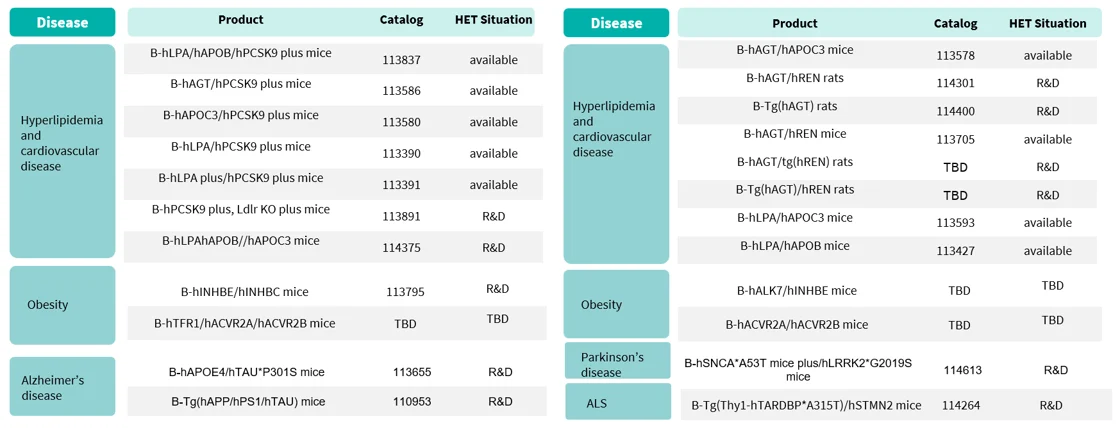
Robust preclinical validation is critical for advancing dual-target RNA therapies. Biocytogen offers over 1,100 humanized mouse models, including multi-target models ideally suited for dual-target approaches, such as:
Our advanced models and comprehensive platform enable faster and more robust validation, as well as smoother translation of dual-target RNA therapies to the clinic.
Biocytogen Models for Dual-Target Nucleic Acid Therapeutics (Selected Examples) |
 |
Case Study: Inhibitory Efficiency of Nucleic Acid Drugs Targeting LPA and PCSK9 in LPA/APOB/PCSK9 Humanized Mice |
|
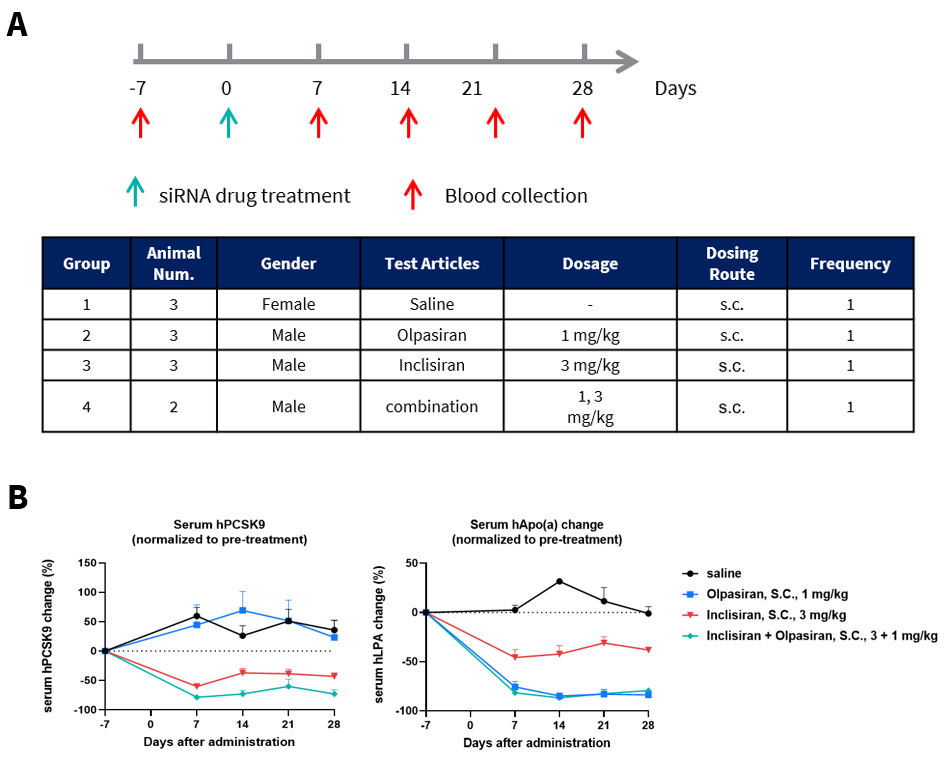 |
The inhibitory efficiency of nucleic acid drugs against human LPA and PCSK9 in B-hLPA/hAPOB/hPCSK9 mice plus. Mice (6 weeks old, n=2–3 per group) received saline, Olpasiran (1 mg/kg), Inclisiran (3 mg/kg), or a combination via subcutaneous injection. Serum was collected to measure Apo(a) and PCSK9 levels. (A) Experimental design and dosing schedule. (B) Percentage changes in serum human PCSK9 and Apo(a) relative to baseline. Mean ± SEM.
Outlook: The Next FrontierSmall nucleic acid therapeutics are entering the dual-target era, much like antibodies evolved from monoclonals to bispecifics. Advances in chemical modification, GalNAc conjugation, and LNP delivery are accelerating this shift, supported by an iterative bench–clinic–bench cycle that rapidly integrates clinical insights (Sun et al. 2024). While challenges remain—efficient delivery, regulatory complexity, and biological trade-offs (target interactions may create unintended shifts)—the opportunities are still profound. Dual-target siRNAs could enable once-yearly cardiovascular prevention, close residual risk gaps, and expand pipelines in oncology, neurodegeneration, and rare disease. These advances mark the beginning of a new therapeutic paradigm that brings us closer to more comprehensive and durable solutions for complex diseases.
Frequently Asked Questions (FAQ) on Dual-Target Nucleic Acid Therapeutics1. What are small nucleic acid therapeutics? 2. What are the key milestones in siRNA and ASO drug development? 3. Why do patients remain at residual cardiovascular risk despite these therapies? 4. What are dual-target nucleic acid therapeutics? 5. How is Biocytogen supporting dual-target drug development?
Reference: Liu, Mohan, et al. "Landscape of small nucleic acid therapeutics: moving from the bench to the clinic as next-generation medicines." Signal Transduction and Targeted Therapy 10.1 (2025): 73. Ference, Brian A., et al. "Association of genetic variants related to combined exposure to lower low-density lipoproteins and lower systolic blood pressure with lifetime risk of cardiovascular disease." Jama 322.14 (2019): 1381-1391. Wang, Wenxiu, et al. "Joint Associations of APOC3 and LDL-C–Lowering Variants With the Risk of Coronary Heart Disease." JAMA cardiology 10.5 (2025): 463-472. Corsera Health. Corsera Health Launches to Extend Healthspan by Predicting and Preventing Cardiovascular Disease. 2 Sept. 2025, corserahealth.com/assets/pdfs/Corsera_Health_250902_FINAL.pdf. Sun, Xiaoyi, et al. "Nucleic acid drugs: recent progress and future perspectives." Signal transduction and targeted therapy 9.1 (2024): 316. |