
you may also like

    From Challenge to Opportunity: Safer EpCAM Targeting Through HER3×EpCAM Bispecific ADC Strategy

    From Challenge to Opportunity: Safer EpCAM Targeting Through HER3×EpCAM Bispecific ADC Strategy

    June 25, 2026
    Share on:

    HER3 and EpCAM are two of the most promising, yet historically elusive, targets in oncology. HER3 is broadly expressed across multiple epithelial tumors and has been implicated in tumor progression, metastasis, and resistance to targeted therapies.1-3 EpCAM is highly expressed in a wide range of epithelial malignancies and is associated with tumor proliferation and poor prognosis.4

    Importantly, HER3 and EpCAM exhibit clinically relevant co-expression across major epithelial malignancies—including colorectal, non-small cell lung (NSCLC), breast, pancreatic, and gastric cancers (Figure 1). Together, these indications represent an immense, multi-billion-dollar therapeutic market.

    Yet, despite this massive clinical potential, both HER3 and EpCAM remain underexploited therapeutic targets. While HER3-directed therapies have advanced clinically, significant unmet need remains across epithelial cancers, and EpCAM-targeted ADCs have yet to demonstrate broad clinical success.5,6
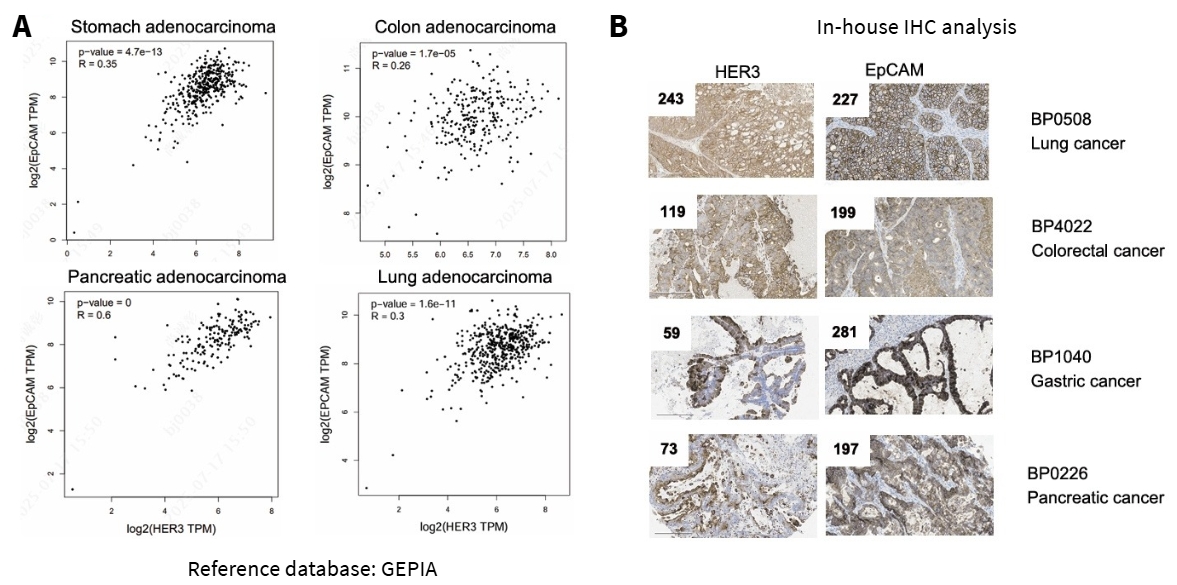
    Co-expression of HER3 and EpCAM in multiple major cancer types.

    Figure 1. Co-expression of HER3 and EpCAM in multiple major cancer types. (In-house analysis)


    High Potential, High Hurdles: Single-Target Limitations

    While both HER3 and EpCAM are highly overexpressed on cancer cells, standalone ADCs against these targets have historically struggled. The clinical landscape is currently defined by a few key benchmarks, but they face significant roadblocks:

    • The EpCAM Toxicity Hurdle: Single-target EpCAM ADCs, such as the clinical benchmarks CX-2051 and CX-2043, have been severely restricted by dose-limiting gastrointestinal toxicity and pancreatitis. Because EpCAM is also expressed on normal epithelial tissues, targeting it with a traditional monovalent ADC often leads to a narrow therapeutic window and unacceptable safety profiles.4,5
    • The HER3 Delivery Hurdle: On the other hand, single-target HER3 assets, such as the clinical benchmark Patritumab (Patritumab deruxtecan), frequently battle suboptimal internalization efficiency. They struggle to pull the drug inside the cancer cell quickly enough, severely limiting payload delivery and overall efficacy.
       

    Strategic Target Selection: Why HER3 Instead of HER2?

    While HER2 is one of the most famous targets in oncology, it is also one of the most crowded, dominated by entrenched standard-of-care drugs like Enhertu and Herceptin. HER3, part of the same receptor family, presents a massive, underexplored "blue ocean" for bispecific ADCs with three key advantages:

    1. Significant White Space Opportunity: Unlike the highly saturated HER2 landscape, HER3 remains a relatively underdeveloped therapeutic space with limited approved treatment options and substantial room for differentiation.6 Cracking this target offers first-in-class potential without competing against established standard-of-care drugs.
    2. Destroying the Tumor’s Backup System: When cancers are treated with standard therapies (like EGFR or HER2 blockers), they frequently upregulate HER3 to bypass the blockade and survive. HER3 has been identified as a critical mediator of adaptive resistance across multiple tumor types.2,7 By targeting HER3 directly with an ADC, developers may be able to destroy the tumor’s backup survival system and address tumor resistance.
    3. A Broader Patient Population: While HER2 overexpression is largely confined to specific subsets of breast and gastric cancers, HER3 is broadly expressed across a much wider range of epithelial malignancies—including colorectal, non-small cell lung, pancreatic, gastric, and breast cancers.1-3
     

    The Bispecific Solution: HER3 x EpCAM Bispecific ADC

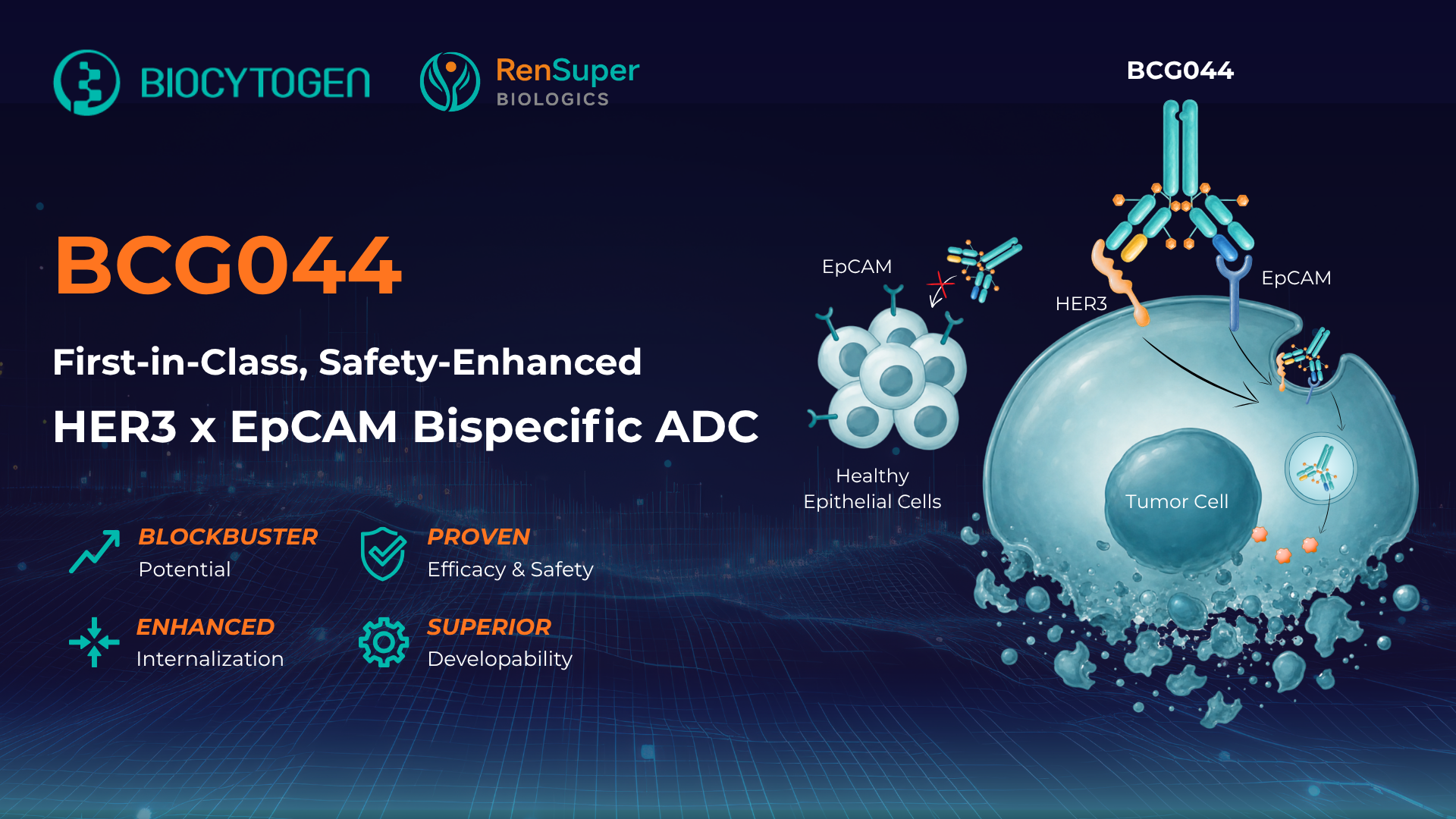
    To bridge the gap between high efficacy and clinical safety, Biocytogen has developed BCG044— a novel, fully human common light chain HER3 × EpCAM bispecific ADC (bsADC).

    BCG044 is conjugated to our proprietary topoisomerase I (TOP1) inhibitor linker-payload, BLD1102. By utilizing a "dual-key" cooperative binding mechanism, BCG044 selectively targets cells expressing both antigens. Dual-targeting strategies have emerged as a promising approach to improve tumor selectivity while reducing toxicity associated with single-antigen targeting.8 This strategy expands the therapeutic window by mitigating historical EpCAM-associated toxicities while enhancing payload delivery into tumors.


    Why BCG044: The Competitive Edge

    ► First-in-Class Blockbuster Potential

    By targeting two highly expressed tumor antigens with limited therapeutic options and substantial unmet clinical need, BCG044 is uniquely positioned to capture massive, underserved patient populations across CRC, NSCLC, and breast cancers.

    ► Synergy-Driven Tumor Selectivity

    BCG044 requires simultaneous engagement of HER3 and EpCAM to trigger rapid internalization. This cooperative avidity minimizes interactions with single-antigen normal tissues—effectively bypassing historical EpCAM toxicities while driving fast, efficient internalization in dual-positive tumor cells.

    ► Improved Safety & Tolerability

    In EpCAM-humanized mouse models, a cross-reactive surrogate of BCG044 demonstrated markedly improved tolerability and reduced systemic toxicity, compared with both parental EpCAM-targeting constructs and leading clinical benchmarks.

    ► RenLite®-Enabled Developability

    Built on our proprietary common light chain RenLite® platform utilizing a knobs-into-holes (KIH) design, BCG044 effectively eliminates the chain-mispairing issues that historically challenge bispecific manufacturing. This ensures favorable physicochemical properties and seamless downstream scale-up.
     

    BCG044 Preclinical Highlights:

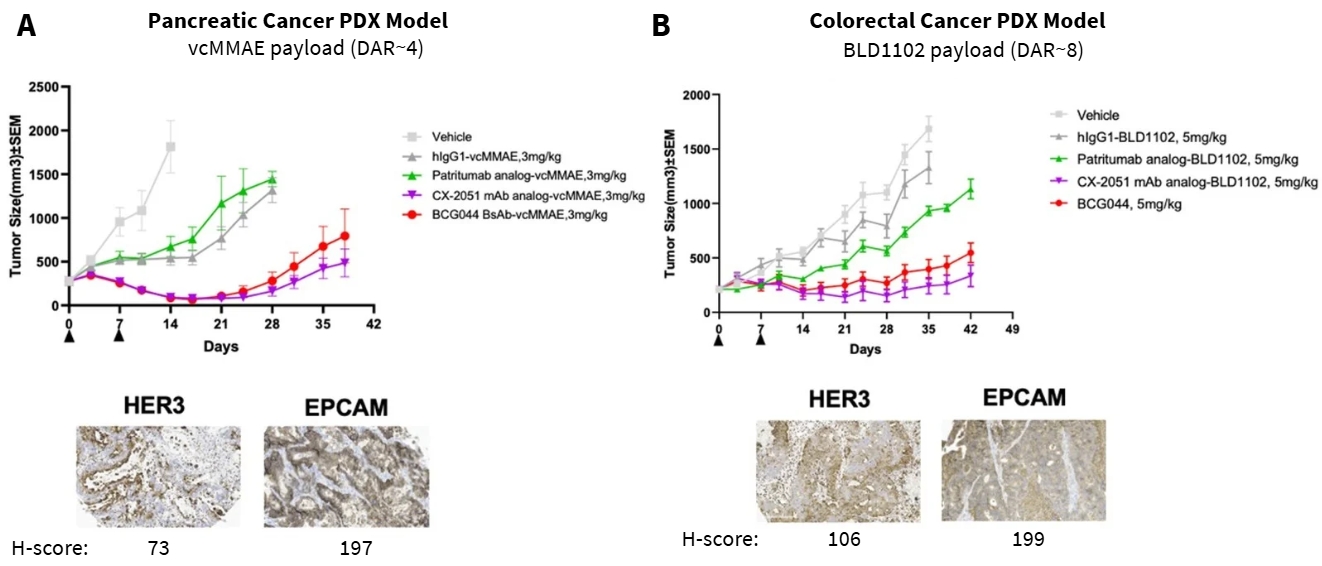
    • Superior Antitumor Efficacy: BCG044 (in red) demonstrated exceptional antitumor activity in multiple cancer PDX models, similar to or outperforming both EpCAM- (CX-2051) and HER3 (Patritumab)-targeting ADC clinical benchmarks (Figure 2).


    Figure 2. In vivo antitumor efficacy of BCG044 across pancreatic and colorectal cancer PDX models. (All vcMMAE-ADCs with DAR~4; BLD1102-ADCs with DAR~8)
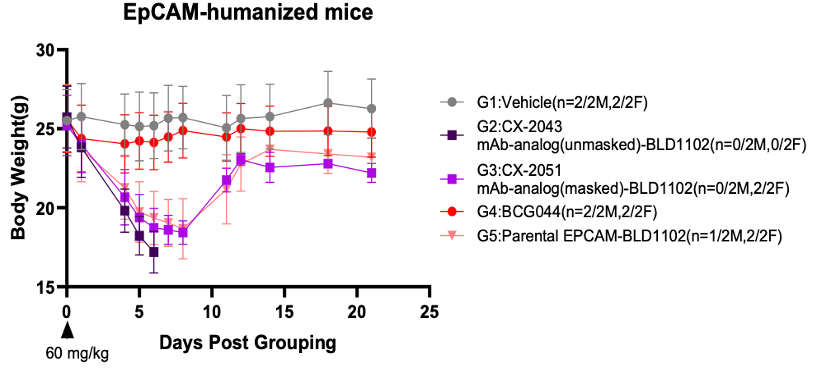
     

    • Markedly Improved Safety and Tolerability: EpCAM-humanized mice treated with the BCG044 surrogate (G4, red) maintained stable body weight, significantly outperforming clinical benchmarks (G2=CX-2043, G3=CX-2051) and suggesting a superior safety & tolerability profile (Figure 3).


    BCG044 stable body weight suggesting reduced EpCAM-associated toxicity in EpCAM humanized mice.

    Figure 3. Enhanced in vivo safety and tolerability in EpCAM-humanized mice. (BCG044 dose: 60 mg/kg)


    Download the poster for full data package of BCG044: Here


    Partnering Opportunity

    By targeting two highly expressed tumor antigens with limited therapeutic options and substantial unmet clinical need, BCG044 offers first-in-class, blockbuster potential to capture highly unmet patient populations. With its optimized safety profile, robust efficacy against clinical benchmarks, and clean manufacturability, BCG044 represents a highly optimized asset ready to redefine treatment paradigms for epithelial tumors.

    [Contact us] for licensing, co-development, and partnership opportunities!


    Frequently Asked Questions (FAQs): HER3 x EpCAM Bispecific ADC

    1. What makes BCG044 a strategic breakthrough, and why target HER3 and EpCAM?

    BCG044 solves the specific clinical and manufacturing hurdles that have historically sidelined these high-value targets, offering partners a true first-in-class opportunity:

    • Why these targets? HER3 and EpCAM are broadly co-expressed across major epithelial tumors, and up-regulation of HER3 drives tumor resistance to standard-of-care therapies. Despite strong biological rationale and broad tumor expression, both HER3 and EpCAM remain relatively underexploited therapeutic opportunities, representing large patient populations with ongoing unmet need.
    • Why this asset? BCG044’s "dual-key" mechanism solves historical single-target failures. By requiring simultaneous binding, it spares healthy tissue from EpCAM-associated toxicity while solving HER3's poor cellular internalization, rapidly and precisely delivering the payload into the tumor.
    • Why our platform? Built on Biocytogen’s proprietary RenLite® common light chain platform, BCG044 eliminates the chain-mispairing issues that commonly halt bispecifics, ensuring highly favorable physicochemical properties and seamless clinical scale-up.

    2. What has limited the development of EpCAM-targeted therapies?

    Although EpCAM is broadly expressed across many epithelial cancers, its expression on normal epithelial tissues has historically complicated therapeutic development. Several EpCAM-targeted approaches have encountered challenges related to therapeutic window, gastrointestinal toxicity, and on-target/off-tumor effects, highlighting the need for improved targeting strategies.

    3. Are there any approved targeted therapies for HER3?

    Although HER3 has emerged as an important therapeutic target and multiple HER3-directed programs have advanced clinically, challenges related to efficacy, resistance mechanisms, and patient selection continue to leave substantial unmet need across HER3-positive tumors. HER3 is a known driver of tumor metastasis and treatment resistance, single-target HER3 ADCs frequently battle suboptimal internalization efficiency, limiting their ability to drop payloads into the cell. Furthermore, leading single-target HER3 candidates have recently faced major clinical and regulatory setbacks (such as failing to improve overall survival), leaving this massive patient population without a targeted option.

    4. How does BCG044 overcome the limitations of single-target ADCs?

    BCG044 overcomes single-target hurdles through synergy-driven tumor selectivity. By requiring both HER3 and EpCAM to bind effectively, the bispecific ADC avoids interacting with healthy single-antigen tissues, successfully bypassing EpCAM-associated toxicity. Simultaneously, this dual-engagement triggers rapid cellular internalization, solving the delivery issues that have historically plagued HER3-only assets.

    5. What types of cancer is BCG044 designed to treat?

    BCG044 is designed to target major epithelial malignancies where HER3 and EpCAM are broadly co-expressed. This includes massive, underserved patient populations in colorectal cancer (CRC), non-small cell lung cancer (NSCLC), breast cancer, pancreatic cancer, and gastric cancer.


    More Resources:

    References:

    1. Mishra R, Patel H, Alanazi S, et al. HER3 signaling and targeted therapy in cancer. Oncology Reviews. 2018. https://doi.org/10.4081/oncol.2018.355
    2. Ocana A, Vera-Badillo FE, Seruga B, et al. HER3 overexpression and survival in solid tumors: a meta-analysis. JNCI. 2013. https://doi.org/10.1093/jnci/djt122
    3. Baselga J, Swain SM. Novel anticancer targets: revisiting ERBB2 and discovering ERBB3. Nature Reviews Cancer. 2009. https://doi.org/10.1038/nrc2656
    4. Trzpis M, McLaughlin PMJ, de Leij LMFH, Harmsen MC. Epithelial Cell Adhesion Molecule: more than a carcinoma marker. Journal of Pathology. 2007. https://doi.org/10.2353/ajpath.2007.070152
    5. Dogbey D, et al. EpCAM-targeting cancer immunotherapies: Evidence from clinical studies and the way forward. Tumor Discovery. 2025. https://doi.org/10.36922/td.4926
    6. HERTHENA-Lung01 Investigators. Patritumab deruxtecan clinical development program. Journal of Clinical Oncology. 2024. https://doi.org/10.1200/JCO.23.01476
    7. Sergina NV, et al. Escape from HER-family tyrosine kinase inhibitor therapy by the kinase-inactive HER3. Nature. 2007. https://doi.org/10.1038/nature05474
    8. Labrijn AF, Janmaat ML, Reichert JM, Parren PWHI. Bispecific antibodies: a mechanistic review of the pipeline. Nature Reviews Drug Discovery. 2019. https://doi.org/10.1038/s41573-019-0028-1