you may also like
T-cell engagers (TCEs) are redefining immunotherapy by directing T cells to precisely eliminate tumor or immune targets. With multiple global approvals—including the FDA’s 2024 approval of Tarlatamab-dlle (DLL3×CD3) for lung cancer—this therapeutic class continues to gain momentum. Once limited to hematologic malignancies, TCEs are now advancing into solid tumor and autoimmune disease indications, underscoring the need for advanced in vivo preclinical models to ensure translational success.
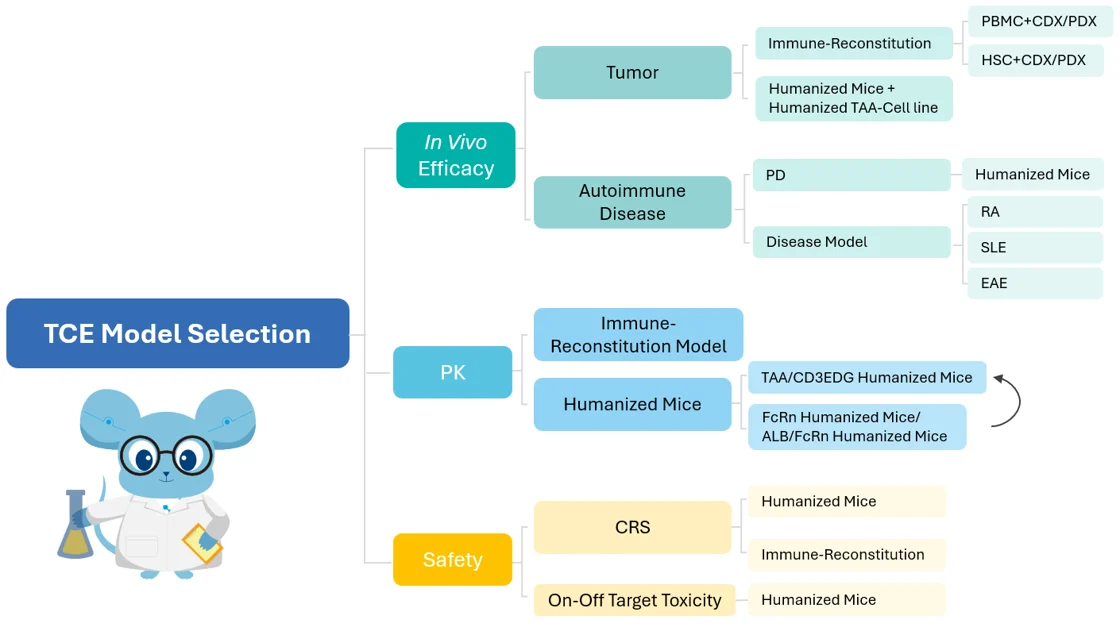
Accurate model selection is the foundation of translational success—driving better outcomes in pharmacology, safety, and regulatory advancement of TCEs. At Biocytogen, we offer a comprehensive portfolio of preclinical models to support TCE discovery and evaluation:
Watch Our Webinar on TCE Model Selection |
 |
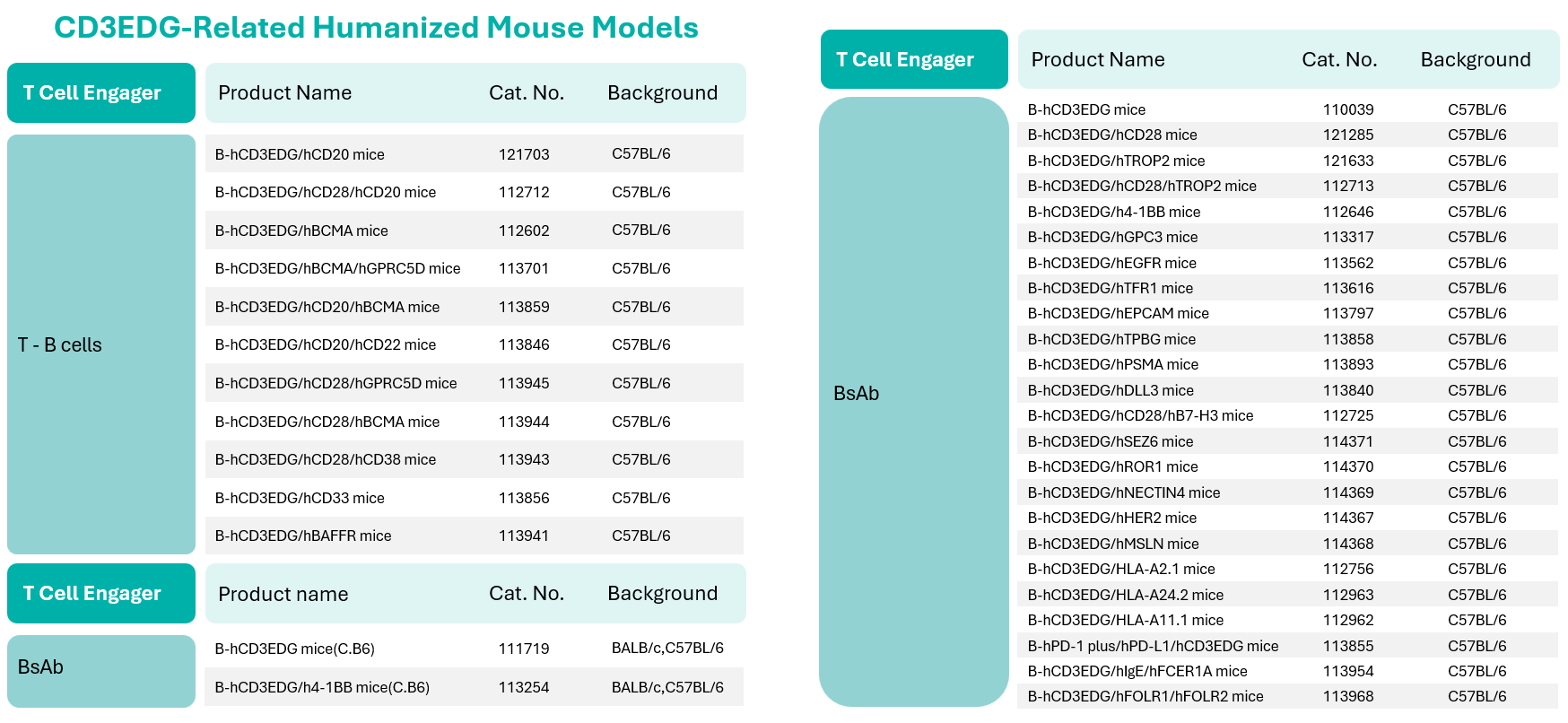
CD3EDG Humanized Model HighlightThe CD3EDG humanized mouse model, engineered to express human CD3E, CD3D, and CD3G, provides a robust platform for the accurate evaluation of human CD3-targeting TCEs. This model has been thoroughly validated through both in vitro T-cell activation assays and in vivo efficacy studies. |
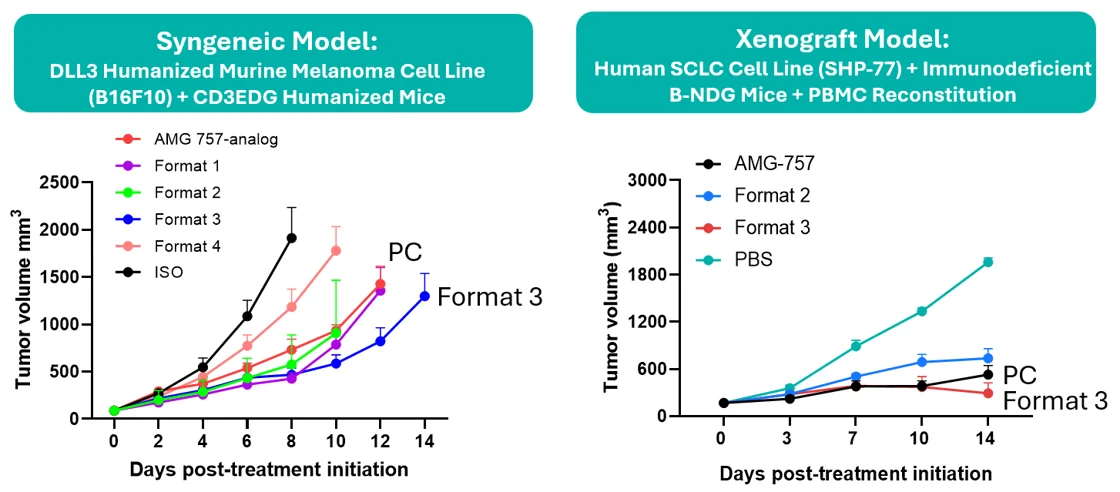
Case Study 1: Efficacy Evaluation of TCEs in Preclinical Solid Tumor Models |
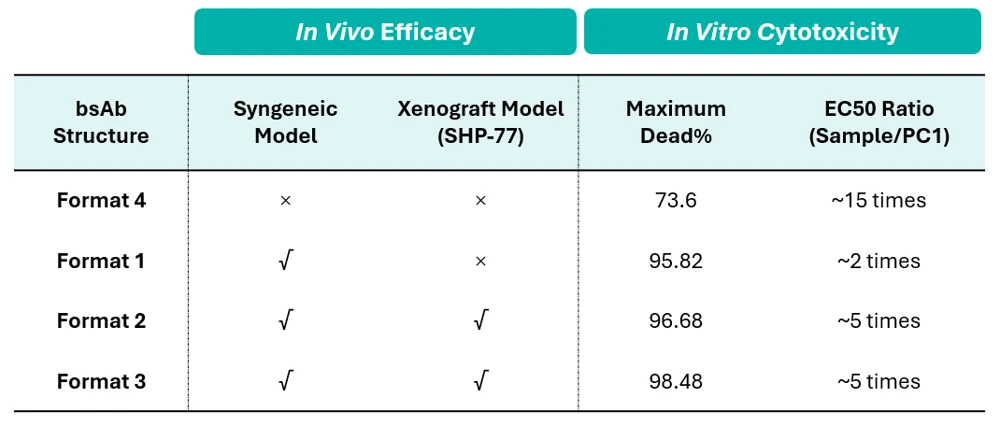
Model Comparison for DLL3×CD3 Bispecific Antibody (BsAb) Screening |
 |
 |
 |
Case Study 2: TCE Evaluation in Autoimmune Diseases Using CD3EDG/CD20 Humanized Models |
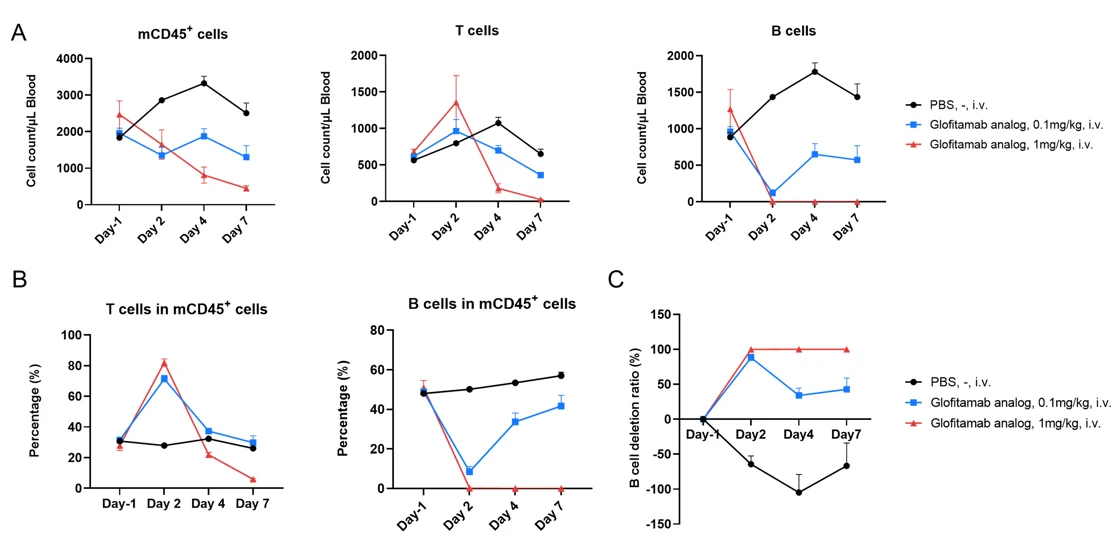
As TCE development expands beyond oncology, leading biopharma innovators are advancing CD3×CD19, CD3×CD20, and CD3×BCMA TCEs for autoimmune indications. By depleting pathogenic B cells through CD3-mediated cytotoxicity, these therapies present promising new treatment avenues for multiple sclerosis, systemic lupus erythematosus, and rheumatoid arthritis. |
In Vivo B Cell Depletion of Anti-Human CD3×CD20 BsAb in CD3EDG/CD20 Humanized Mice |
 |
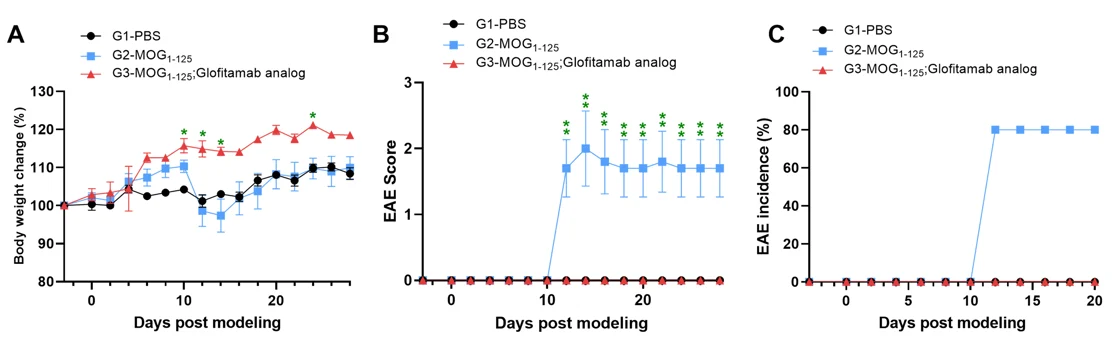
Anti-Human CD3×CD20 BsAb Alleviated MOG1-125 Induced EAE in CD3EDG/CD20 Humanized Mice |
 |
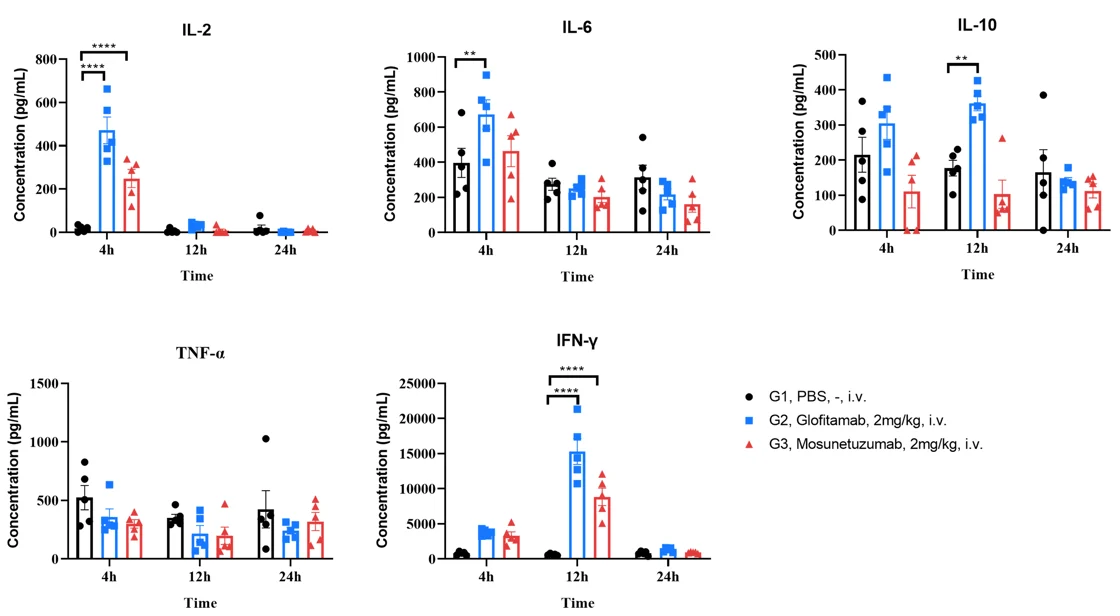
Case Study 3: Safety Evaluation of TCEs – Cytokine Release EvaluationToxicology remains a critical determinant of TCE clinical success, particularly for managing cytokine release syndrome (CRS).
|
Anti-CD3×CD20 BsAbs Induced Cytokine Release in CD3EDG/CD20 Humanized Mice |
 |
From early efficacy validation to safety risk assessment, Biocytogen’s advanced humanized animal model systems empower global biopharma teams to make faster, more informed TCE decisions. As bispecific and trispecific formats push the boundaries of immunotherapy, translational precision will remain the key to safety, success, and speed to clinic. Let’s build that bridge together—from tumors to autoimmune diseases, from discovery to therapy.
Frequently Asked Questions (FAQs)1. What are T-cell engagers (TCEs) and how do they work?T-cell engagers (TCEs) are bispecific antibodies that link CD3 on T cells to tumor-associated antigens (TAAs), activating cytotoxic T cells to destroy target cells. They enable precise, low-dose immune activation, redefining cancer immunotherapy. 2. Why are humanized mouse models essential for TCE evaluation?Humanized mouse models are essential for evaluating T-cell engagers (TCEs) because they express human immune targets and enable human-specific antigen engagement. Both target humanized models (e.g., B-hCD3EDG, B-hCD3/CD20) and immune-reconstituted models (e.g., PBMC- or HSC-humanized mice) enable accurate assessment of TCE efficacy, pharmacodynamics, and safety in a human-relevant context. 3. How do preclinical models help predict cytokine release syndrome (CRS)?In CD3/CD20 double-humanized mice, human anti-CD3×CD20 TCEs can trigger CRS-like cytokine release, helping researchers identify safety risks early. These models also support dose optimization and subcutaneous dosing strategies to enhance safety. 4. How does Biocytogen support TCE development?Biocytogen offers target humanized and human immune-reconstituted models, along with comprehensive pharmacological services for TCE efficacy and safety testing, and has supported numerous IND submissions spanning oncology, autoimmune diseases, and pharmacodynamic (PD) evaluations. Our target humanized models, such as CD3EDG, FcRn, and TAA humanized mice, serve as valuable tools for advancing next-generation bispecifics across diverse disease areas. |