you may also like
Drug discovery doesn’t wait—and neither should your data. In today’s fast-moving biopharma landscape, every decision has the power to accelerate innovation or stall progress. That’s why access to fast, reliable, and translational insights is essential. Today’s in vitro pharmacology has evolved beyond traditional compound screening to become a strategic driver of discovery, helping researchers uncover mechanisms of action, characterize immune responses, and translate preclinical data into meaningful clinical outcomes.
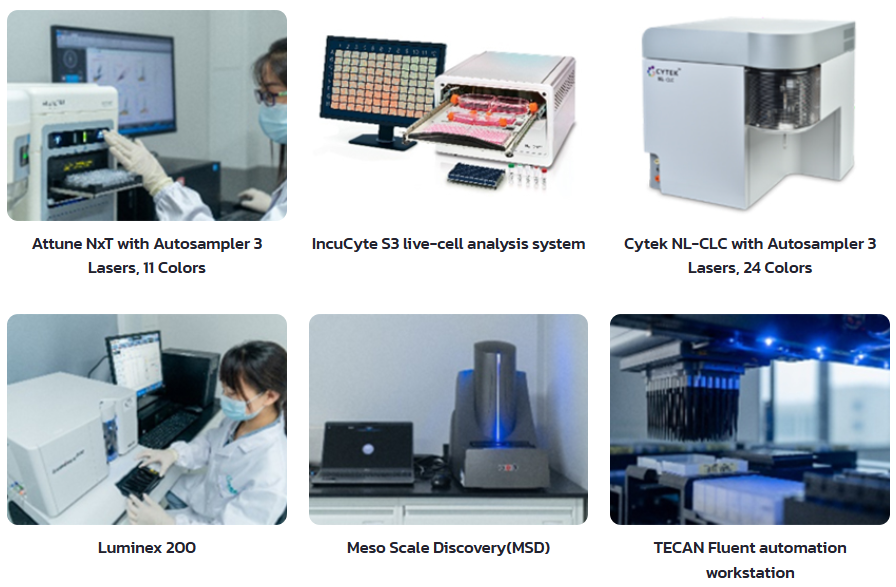
At Biocytogen, our in vitro pharmacology platform combines deep scientific expertise with advanced technologies to empower drug discovery beyond conventional screening. We deliver reproducible, mechanistically relevant data that drive smarter, faster decisions across diverse therapeutic modalities.
 |
Fully integrated with Biocytogen’s in vivo pharmacology and translational services, our in vitro platform ensures a seamless transition from in vitro findings to animal models, minimizing variability and shortening development timelines.
When you partner with Biocytogen, you gain access to:
|
Examples from Biocytogen’s In Vitro Pharmacology Platform |
In Vitro Testing of Monoclonal Antibodies |
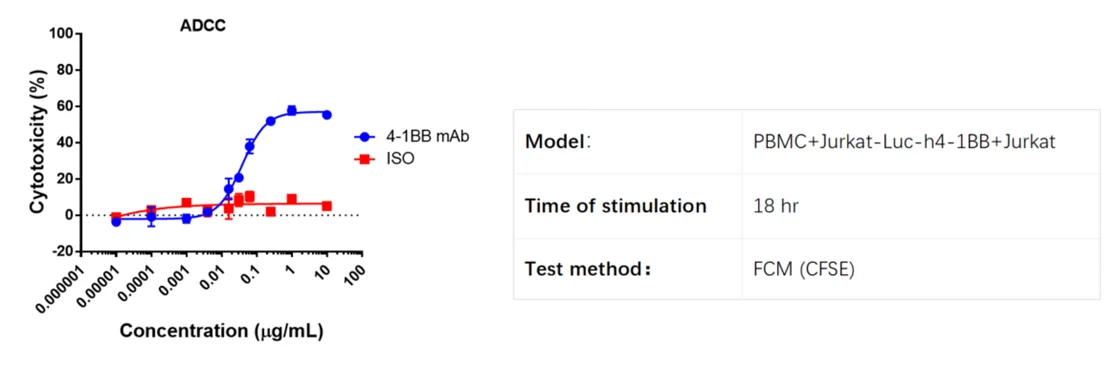 |
PBMCs were used as effector cells, and Jurkat h4-1BB (high CFSE) and Jurkat WT (low CFSE) target cells were incubated for 18 hours with varying concentrations of anti-human 4-1BB monoclonal antibody. Cytotoxicity (%) was calculated as [1 − (control ratio / experimental ratio)] × 100, where the ratio is CFSElow / CFSEhigh. |
In Vitro Testing of Bispecific Antibodies |
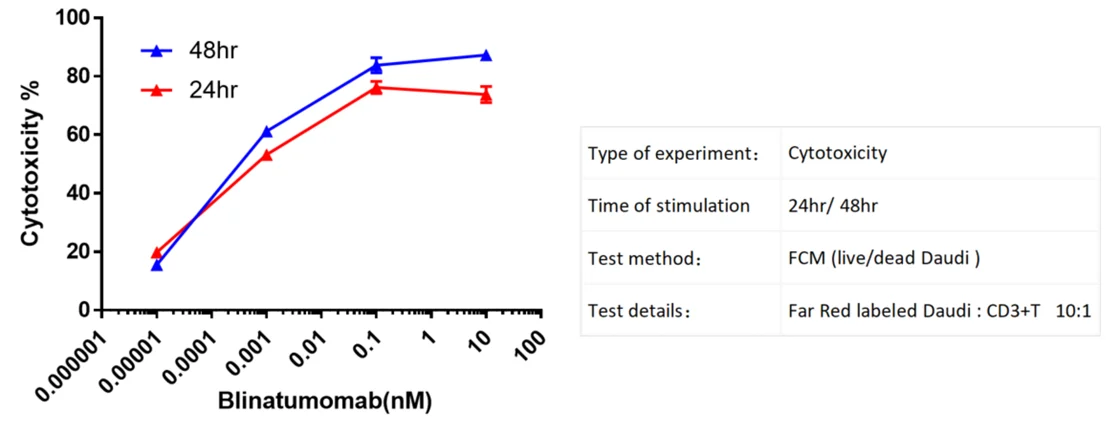 |
Far-Red–labeled Daudi cells were co-incubated with CD3⁺ T cells and treated with different concentrations of Blinatumomab (a CD3/CD19 bispecific T-cell engager). Cytotoxicity was quantified by flow cytometry after 24 or 48 hours, showing a concentration-dependent increase in cytotoxic activity with higher antibody levels. |
In Vitro Testing of Antibody–Drug Conjugates (ADCs) |
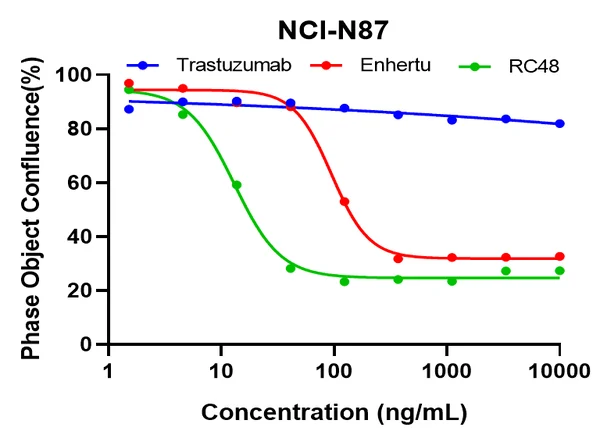 |
NCI-N87 cells were treated with increasing concentrations of trastuzumab (a HER2-targeting antibody), Enhertu (a trastuzumab-based ADC), or Disitamab Vedotin [RC48] (a HER2-targeting ADC). Cell proliferation was continuously monitored using Incucyte live-cell imaging over six days. Both Enhertu and RC48 showed significant, dose-dependent inhibition of NCI-N87 cell growth, whereas trastuzumab had minimal effect. |
CAR T-Cell–Mediated Tumor Cytotoxicity |
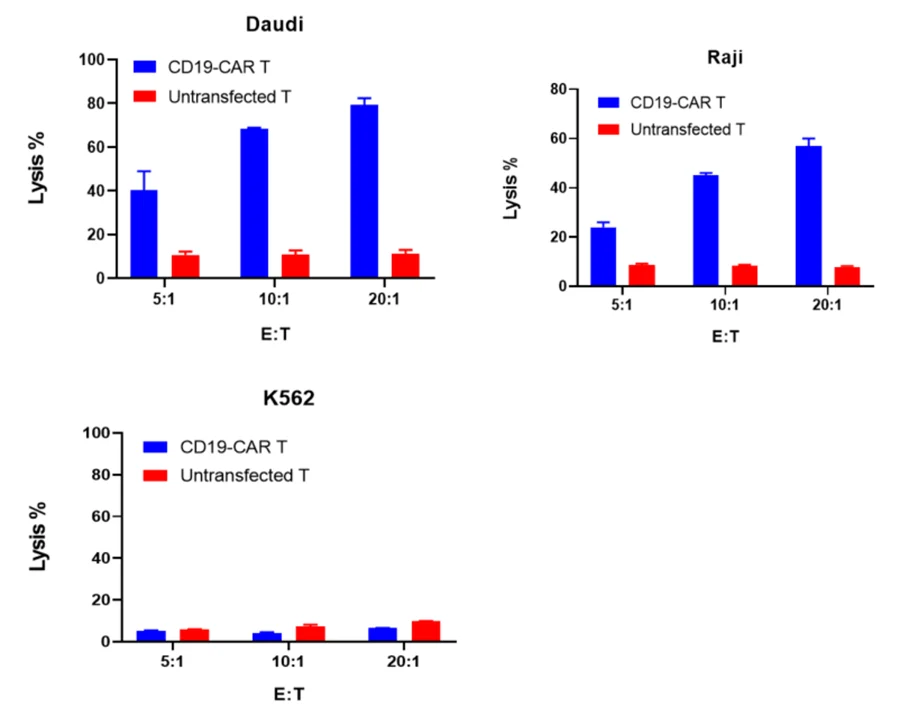 |
CD19-CAR T cells or untransfected T cells were co-cultured with Daudi, Raji, or K562 cells at effector-to-target ratios of 5:1, 10:1, and 20:1 for 24 hours. Tumor cytotoxicity was measured via flow cytometry using Fixable Viability Dye. CD19-CAR T cells exhibited strong cytotoxicity against CD19-positive Daudi and Raji cells but not CD19-negative K562 cells.
From early discovery to IND-enabling studies, Biocytogen’s integrated in vitro and in vivo platforms are designed to keep your programs moving forward with confidence. Our global team of pharmacology and immunology experts partners with you to design studies that are flexible, data-driven, and translationally meaningful—so you can focus on what matters most: bringing better therapies to patients, faster. Partner with Biocytogen today—and accelerate your path from discovery to development!
Frequently Asked Questions (FAQs)1. What is in vitro pharmacology, and why does it matter in drug discovery?In vitro pharmacology studies how drug candidates interact with cells and molecules in controlled lab settings. These assays reveal mechanisms of action, potency, and efficacy, helping scientists make faster, data-driven decisions that reduce risk in drug discovery and development.
2. How does Biocytogen’s in vitro pharmacology platform speed up development?Biocytogen’s platform integrates in vitro, in vivo, and translational research to deliver seamless, reproducible results. Our data-driven approach helps biotech and pharma teams confidently advance antibodies, bispecifics, ADCs, and cell therapies from discovery to clinic.
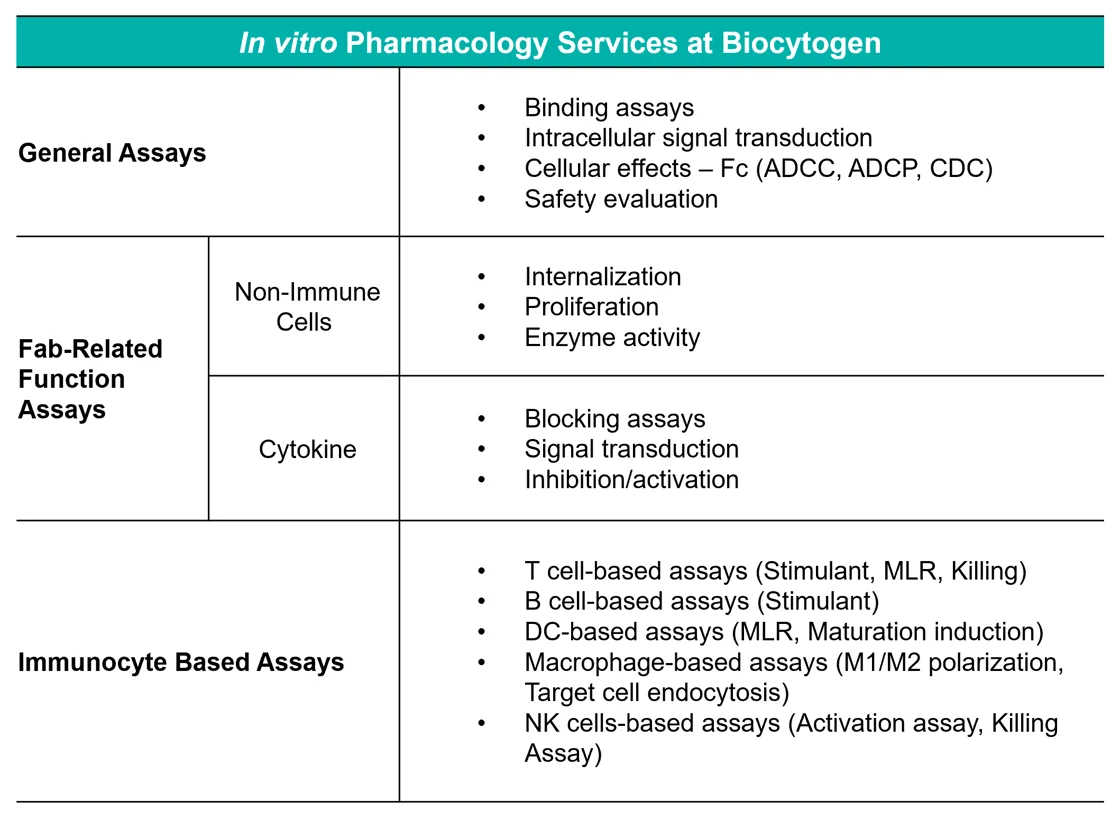
3. What types of in vitro pharmacology assays does Biocytogen offer?Biocytogen provides a full range of in vitro pharmacology services, including binding assays, signal transduction studies, cellular effect assays (ADCC, ADCP, CDC), safety evaluations, and more—designed to generate high-quality, translational data across drug modalities. 4. How does Biocytogen evaluate antibody and Fab-related functions in vitro?Our Fab-related function assays assess antibody internalization, cell proliferation, and enzyme activity in non-immune cells, as well as cytokine blocking, signal transduction, and activation/inhibition studies—helping elucidate mechanisms of action early in development. 5. What immunocyte-based assays are available for biologics and cell therapies?We offer T cell, B cell, dendritic cell (DC), macrophage, and NK cell–based assays, covering stimulation, killing, polarization, maturation, and activation endpoints. These assays support immune-oncology and biologic drug discovery with functional, mechanistic insights.
|