you may also like
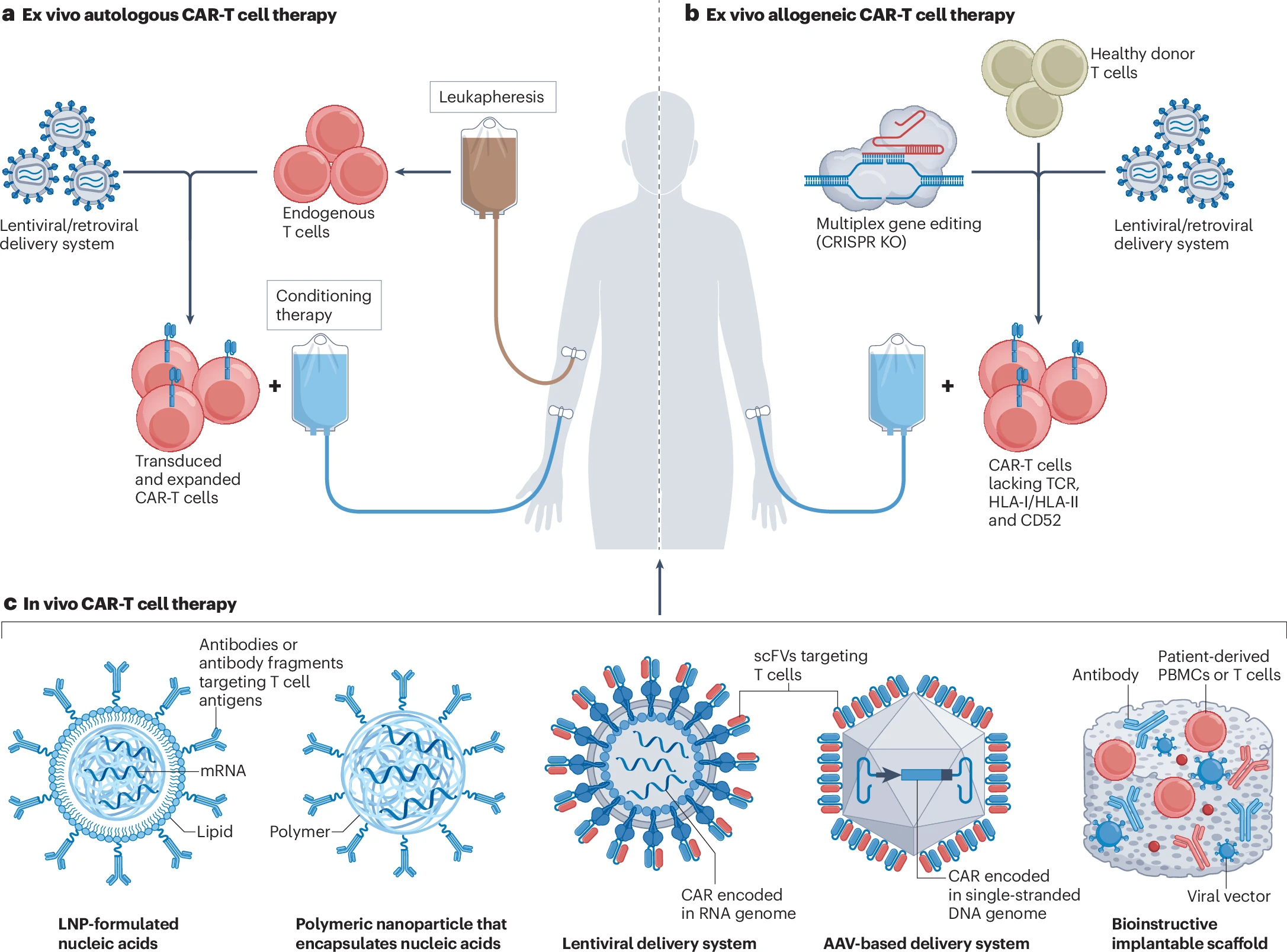
The in vivo CAR-T field is advancing rapidly, fueled by major strategic investments and early clinical wins. Lyell Immunopharma’s recent $860M licensing deal for ICT’s LYL273 underscores the momentum. In Phase I studies, this GCC-targeted in vivo CAR-T achieved a 67% response rate and 83% disease control in refractory metastatic colorectal cancer—an especially difficult-to-treat setting. Built on a CD19-CAR backbone and designed for controlled cytokine release, LYL273 demonstrated improved T-cell expansion, persistence, and safety. As pharmaceutical investment accelerates, one trend is evident: in vivo CAR-T is rapidly emerging as the faster, safer, and more scalable “third wave” of CAR-T innovation. By delivering CAR genes directly into T cells inside the body, this approach bypasses complex ex vivo manufacturing, reduces costs, streamlines logistics, and expands global patient access. Ex Vivo vs. In Vivo CAR-T: A Paradigm ShiftTraditional ex vivo CAR-T therapies require multi-step engineering outside the patient:
These steps add time, expense, and logistical hurdles.
In contrast, in vivo CAR-T leverages lipid nanoparticles (LNPs), viral vectors, or novel carriers to engineer T cells directly within the body, offering:
Comparison of Ex Vivo and In Vivo CAR-T Therapies (Li et al. 2025) |
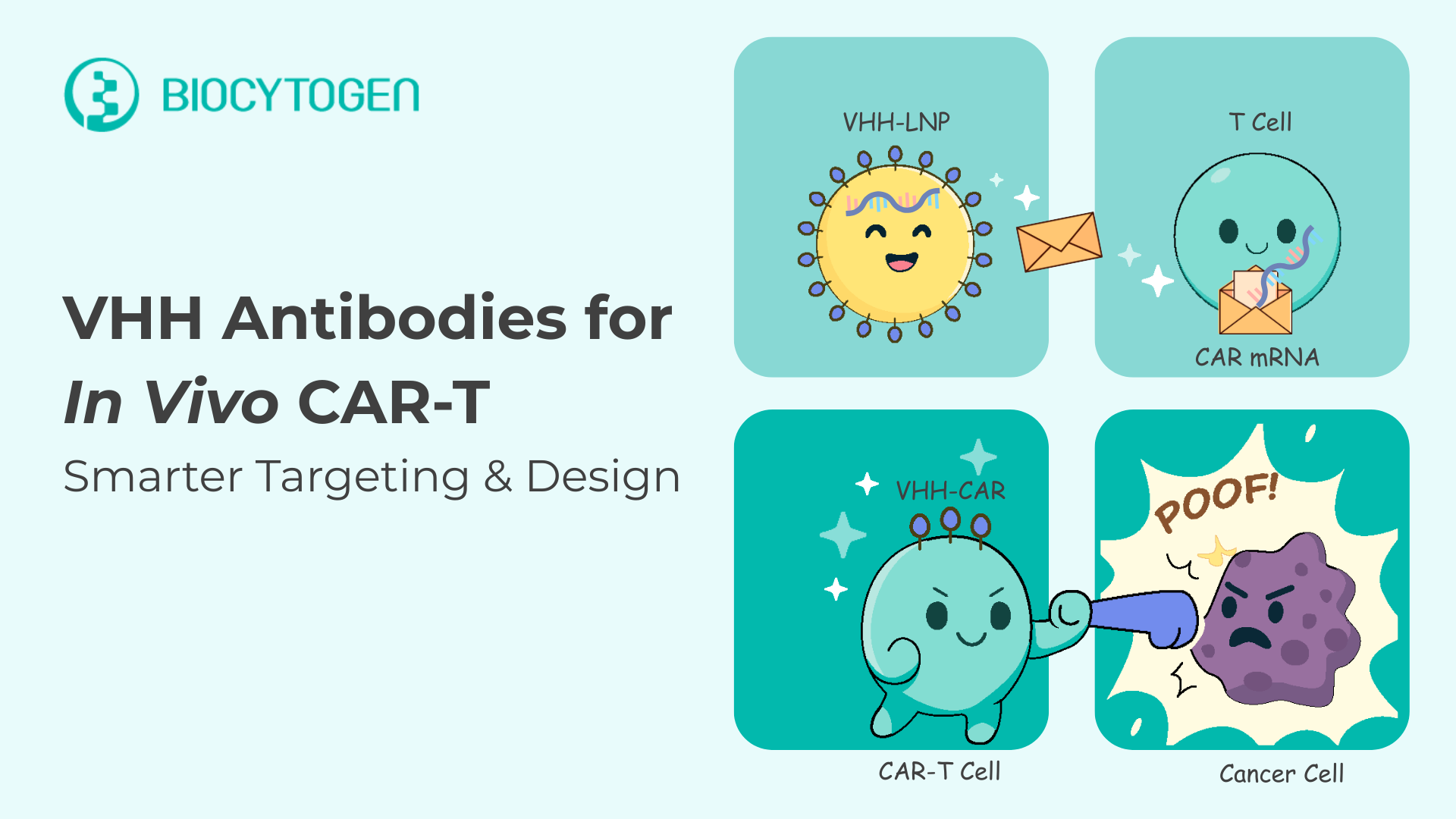
Fully Human VHH Antibodies for In Vivo CAR-T TherapiesLeveraging our proprietary RenNano® fully human VHH antibody discovery platform, Biocytogen is enabling next-generation solutions for both targeted delivery of in vivo CAR-T and advanced CAR construct design. |
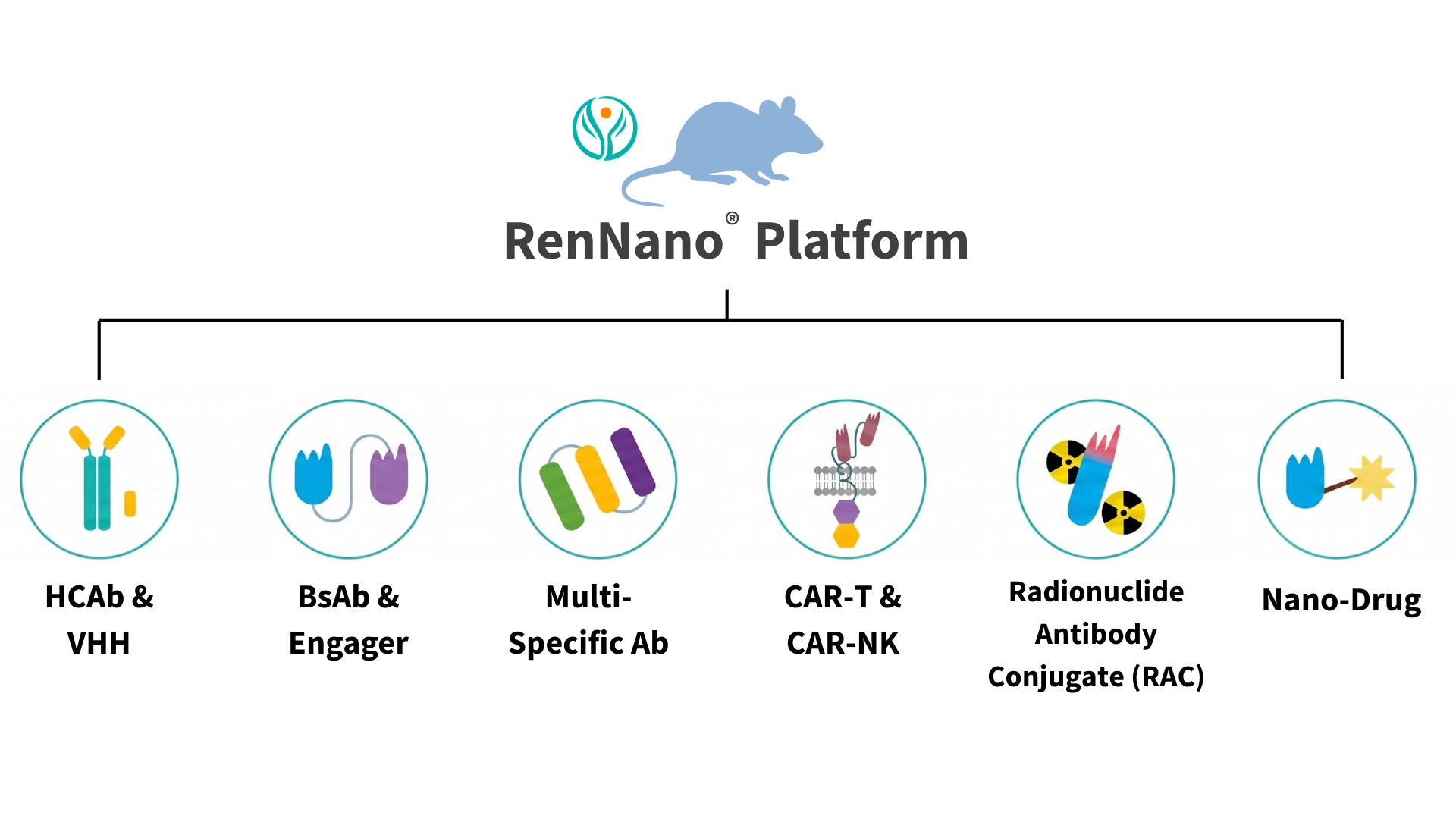 RenNano® platform is harnessing fully human VHH antibodies to power next-gen in vivo CAR-T breakthroughs |
▷ Targeted Delivery: VHH Antibodies Enable LNP-Mediated T Cell Targeting |
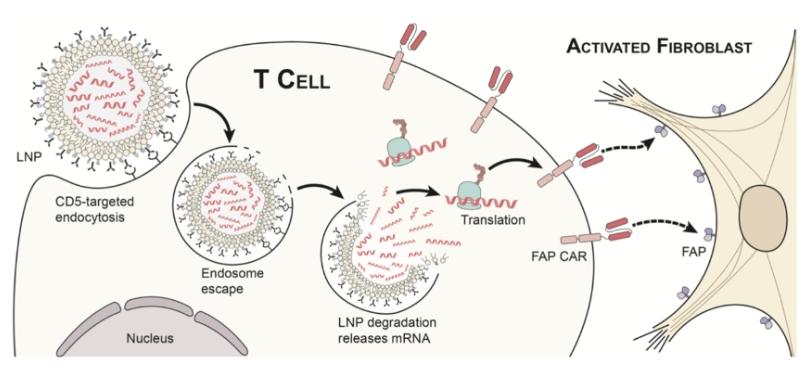
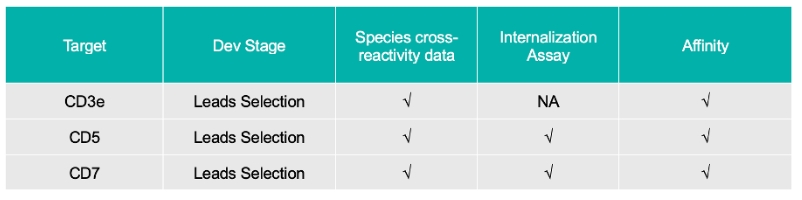
Precision delivery is the linchpin of in vivo CAR-T success. Innovations like Interius’s CD7-targeted lentiviruses and Capstan’s CD8-tLNPs are paving the way. Biocytogen’s RenNano® platform advances this further with fully human VHH antibodies against T-cell markers (CD3, CD5, CD7), which can be conjugated to LNPs for highly specific and efficient CAR gene delivery. Compact, stable, and easily engineered, VHHs outperform traditional antibodies by reducing off-target effects and toxicity while enhancing precision. |
CD5-Directed LNPs Enable Transient CAR Expression in T Cells (Rurik et al. 2022) |
VHH Antibodies for Antibody-Conjugated LNPs (Ab-LNPs) |
▷ Modular Design: VHH Antibodies Enhance CAR-T Constructs |
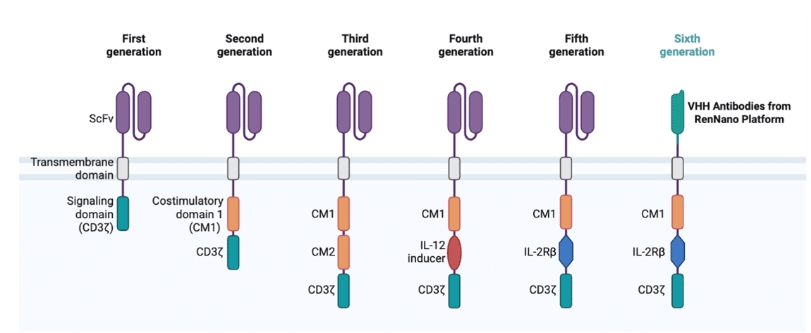
Biocytogen’s fully human VHH antibodies bring transformative advantages to CAR construct design. Compared with traditional scFvs, VHHs offer:
This modularity enables bi-specific or multi-antigen CAR-T constructs designed to overcome tumor heterogeneity and antigen escape—key barriers in solid tumor treatment. By integrating VHH components, CAR-T developers can build more durable, precise, and adaptable therapies suited for both in vivo and ex vivo modalities.
VHH Antibodies for CAR-T Constructs |
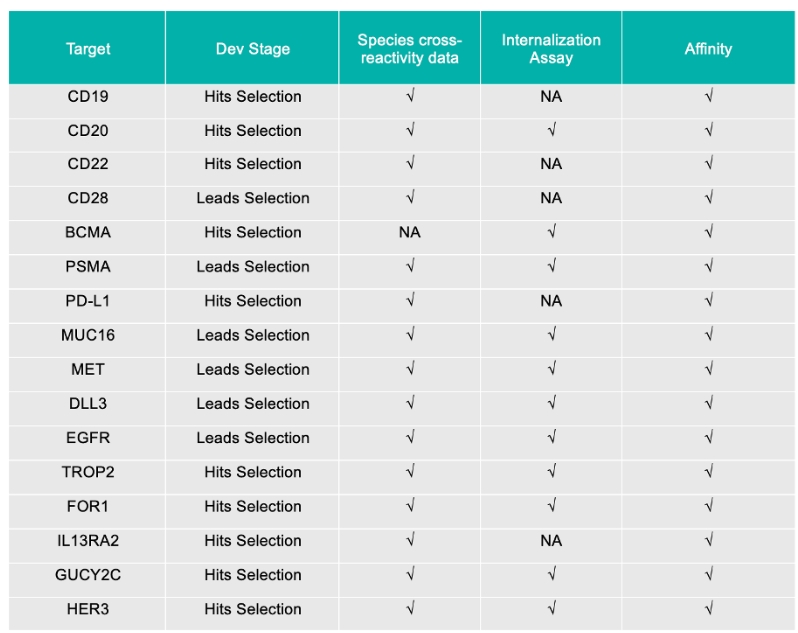
Biocytogen’s Role in Accelerating the In Vivo CAR-T EraThrough the RenNano® platform, Biocytogen offers a pipeline of fully human VHH antibodies optimized for:
Frequently Asked Questions (FAQs)1. What is in vivo CAR-T therapy and how is it different from ex vivo CAR-T?In vivo CAR-T delivers CAR genes directly into T cells in the body using LNPs or viral vectors, eliminating complex ex vivo manufacturing. This makes treatment faster, more scalable, and more accessible than traditional ex vivo CAR-T. 2. Why are fully human VHH antibodies valuable for in vivo CAR-T?Fully human VHH antibodies are small, stable, low-immunogenic, and easy to engineer, making them ideal for precise CAR design and targeted delivery in in vivo CAR-T therapies. 3. How do VHH-conjugated LNPs target T cells?Ab-LNPs use VHH antibodies against markers like CD3, CD5, or CD7 to selectively deliver genetic payloads to T cells. This enhances delivery accuracy, safety, and CAR expression for in vivo engineering. 4. What advantages do fully human VHH antibodies offer over scFvs in CAR-T constructs?Fully human VHHs are smaller, more stable, and less immunogenic than scFvs, enabling better folding, reduced aggregation, and easy multi-specific CAR design—ideal for solid tumors and in vivo CAR-T.
Reference:Li, Yan-Ruide, et al. "In vivo CAR engineering for immunotherapy." Nature Reviews Immunology (2025): 1-20. Rurik, Joel G., et al. "CAR T cells produced in vivo to treat cardiac injury." Science 375.6576 (2022): 91-96. |