you may also like
The 'one-size-fits-all' era of drug modeling is over. Because modern pipelines span everything from small molecules to complex biologics, traditional models often struggle to provide the modality-specific data needed to navigate unique pharmacokinetic (PK) hurdles. To overcome these hurdles and get cleaner, more reliable PK data, Biocytogen offers advanced target humanized mouse and rat models tailored to your specific modality.
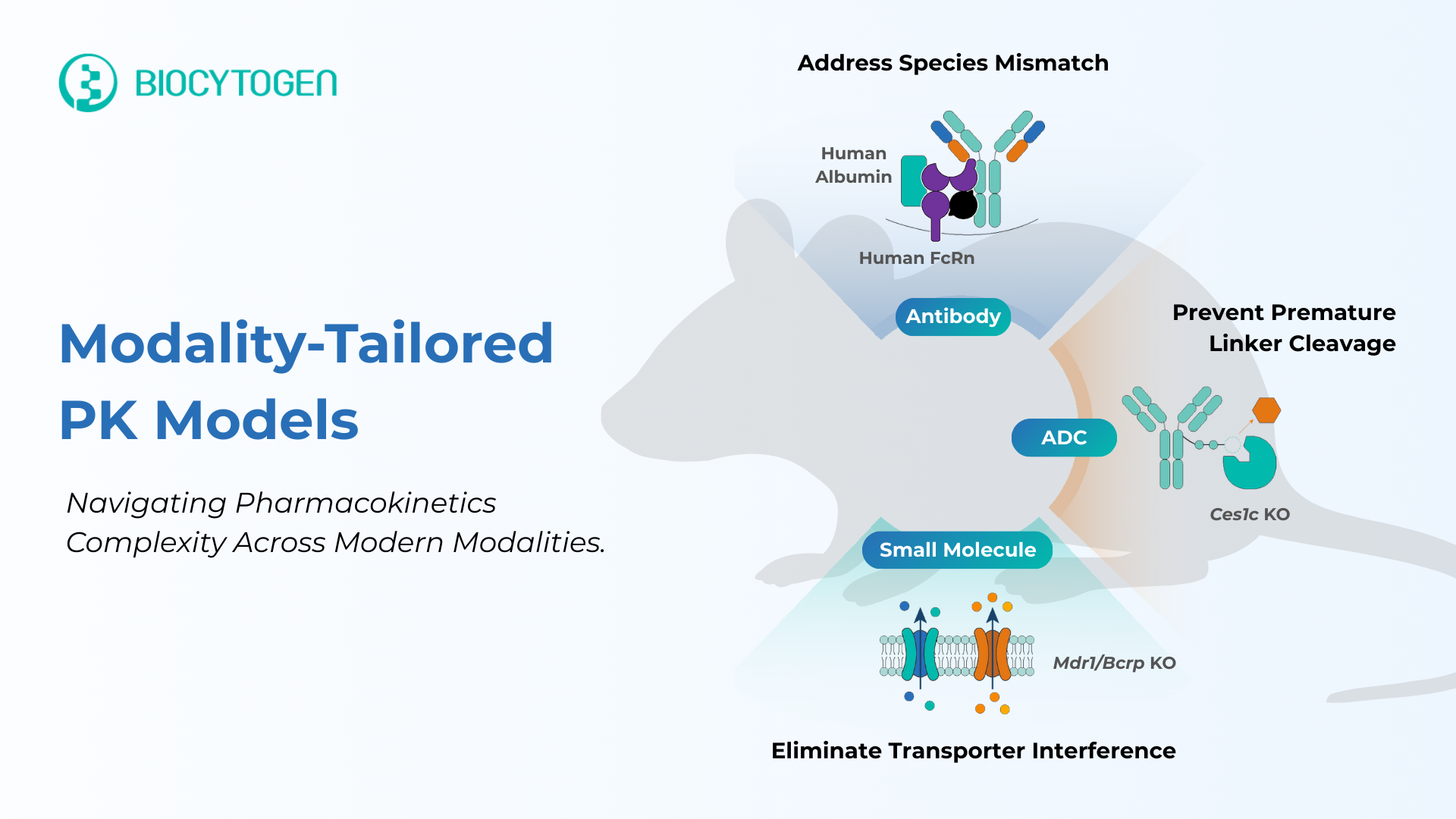
At Biocytogen, PK evaluation goes far beyond a single model. We have built a diverse portfolio of mouse and rat models specifically tailored to support PK studies across multiple therapeutic modalities and directly address these biological mismatches.
The neonatal Fc receptor (FcRn) is the primary regulator of IgG and albumin homeostasis, recycling these proteins to protect them from degradation. Because human IgG and albumin often bind mouse FcRn more strongly than human FcRn, wild-type mice can exhibit artificially efficient recycling. This species difference frequently results in overestimated half-lives and skewed clearance predictions during preclinical drug development.
► Biocytogen's Solution: B-hALB plus/hFcRn mice
To correct these physiological inaccuracies, our B-hALB plus/hFcRn mice replace native mouse proteins with human serum albumin (ALB) and human FcRn. This creates a humanized environment where albumin-binding drugs, such as the ozoralizumab-analog, can interact with their targets and receptors as they would in humans (Figure 1).
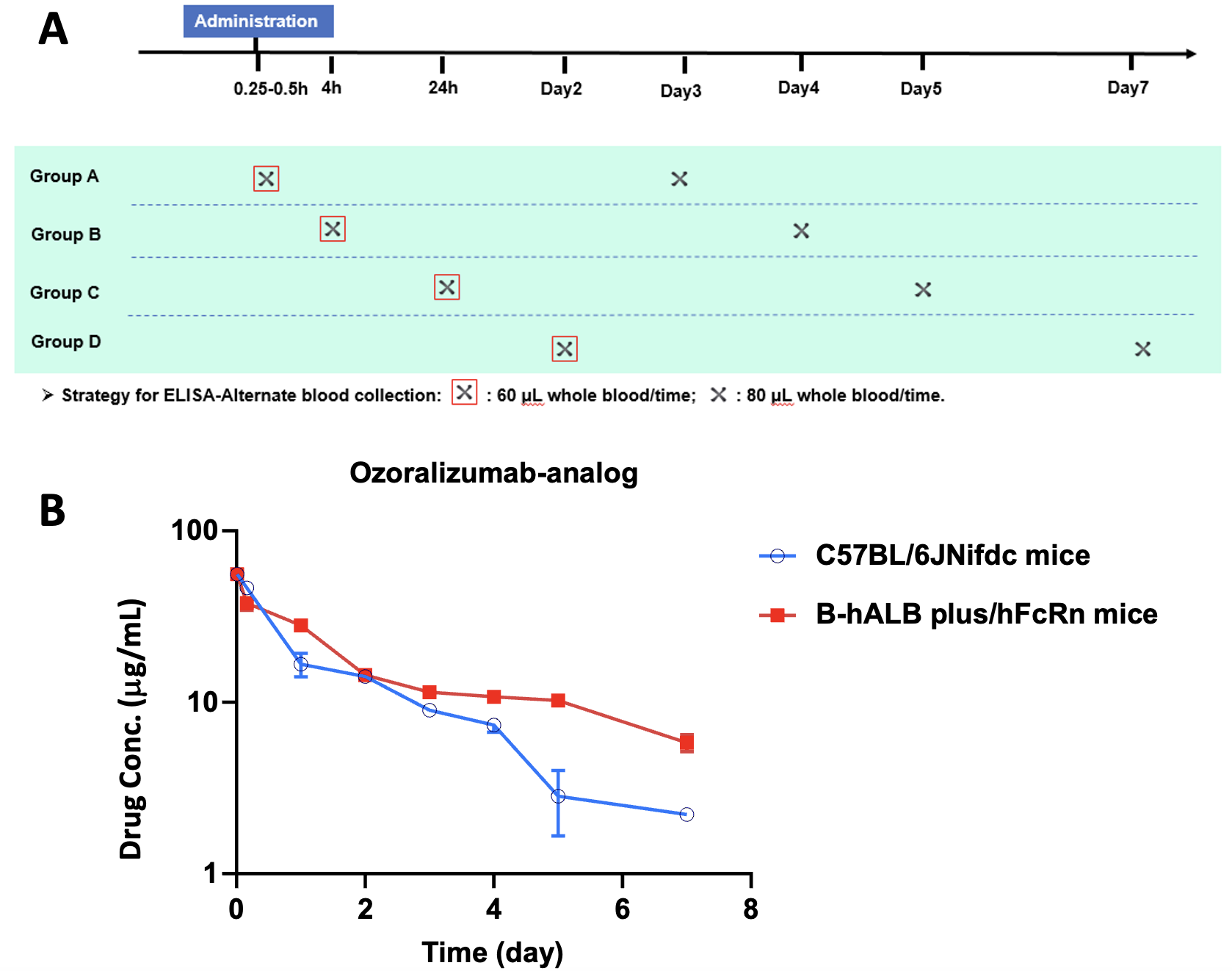
Figure 1. Humanized B-hALB plus/hFcRn mice enable accurate PK evaluation of ozoralizumab-analog. (A) Study design. (B) Ozoralizumab-analog lacks an Fc region and therefore does not directly interact with FcRn. Instead, it utilizes human serum albumin as a carrier to improve solubility, facilitate systemic distribution, and extend circulation time. In the humanized model (red), the analog demonstrates prolonged exposure due to its higher affinity for human albumin and the restored human albumin–FcRn recycling pathway. In contrast, in wild-type mice (blue), the analog shows minimal binding to mouse albumin and therefore cannot be efficiently recycled by mouse FcRn, resulting in a faster clearance.
MDR1 (P-glycoprotein/P-gp) and BCRP (Breast Cancer Resistance Protein) are primary ATP-binding cassette (ABC) transporters, acting as defensive pumps at key barriers (such as the blood-brain barrier) and in the gut. Wild-type mice often possess hyper-aggressive transporter activity compared to humans, actively pumping drugs out of tissues. This restricts drug absorption and accelerates clearance, effectively masking a compound's true exposure potential.
► Biocytogen's Solution: B-Mdr1/Bcrp KO mice
To accurately evaluate compounds hindered by these efflux transporters, our B-Mdr1/Bcrp double knockout (KO) mice provide a definitive physiological environment free from active efflux. This is demonstrated in the PK profile of baricitinib, a dual-substrate for both MDR1 and BCRP (Figure 2).
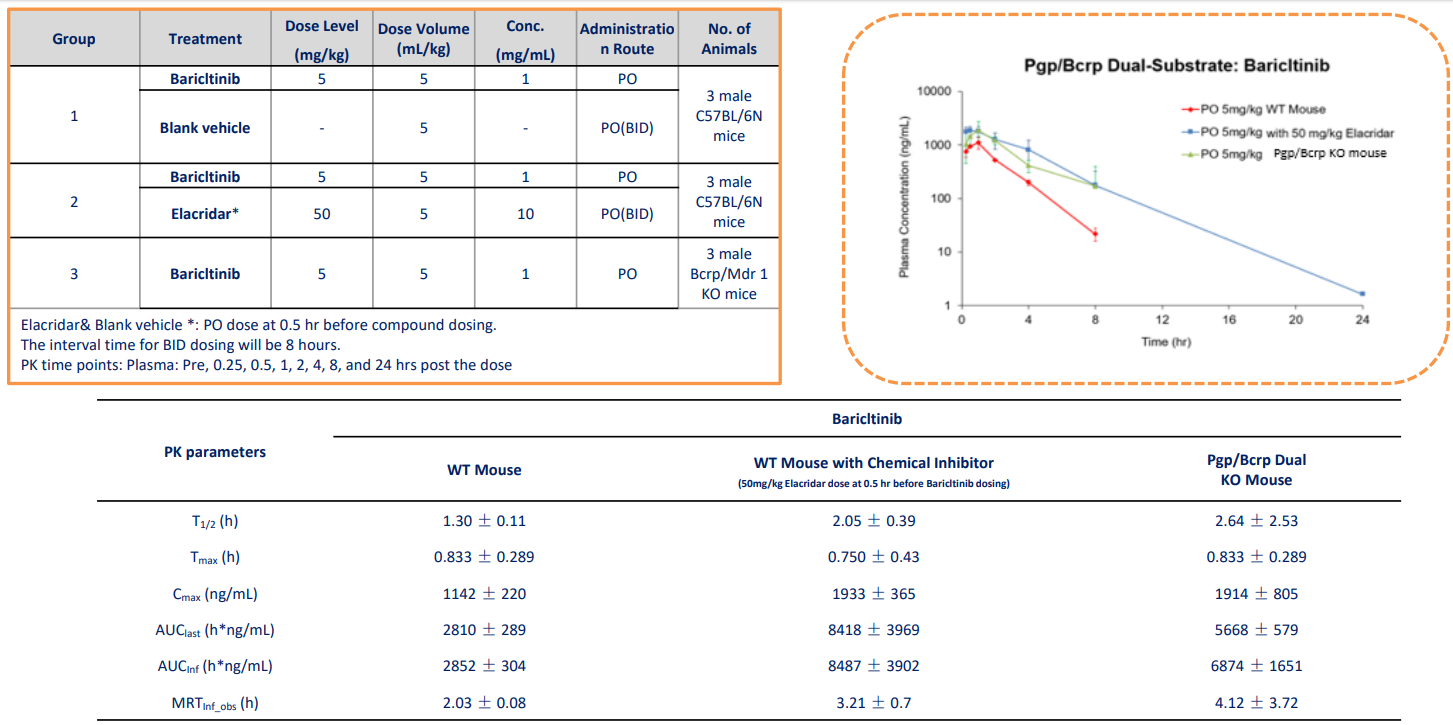
Figure 2. Genetic KO of Mdr1 and Bcrp enhances systemic exposure and reveals the true PK profile of baricitinib. Oral administration of baricitinib (5 mg/kg) in B-Mdr1/Bcrp KO mice and elacridar-treated WT mice resulted in significantly higher plasma exposure compared to vehicle control. Our model effectively mirrors the effects of chemical inhibition with elacridar (a dual MDR1 and BCRP inhibitor) in WT mice, validating the B-Mdr1/Bcrp KO mouse as a high-fidelity tool for eliminating efflux-related "noise" and improving the translational accuracy of small molecule PK predictions. (Experiment conducted by Pharmaron.)
The golden rule of an antibody-drug conjugate (ADC) is that the linker must remain stable in the bloodstream and only break apart once it is safely inside the target tumor cell to release the cytotoxic payload. Wild-type mice, however, have high levels of a circulating plasma enzyme, carboxylesterase 1c (CES1c), which aggressively hydrolyzes ester-linked drugs and ADC linkers in the bloodstream—a metabolic process that does not occur in humans. This causes premature payload release and generates artificial toxicity signals in conventional preclinical models, potentially misrepresenting the metabolic and safety profile of the ADC.
► Biocytogen's Solution: B-Ces1c KO mice
To better reflect human metabolism, our B-Ces1c KO mouse model eliminates non-human–specific metabolic activity, enabling more accurate preclinical PK evaluation. Validation study showed that these mice effectively prevent the premature payload release observed in wildtype models, producing ADC stability profiles that closely resemble those seen in human plasma (Figure 3).
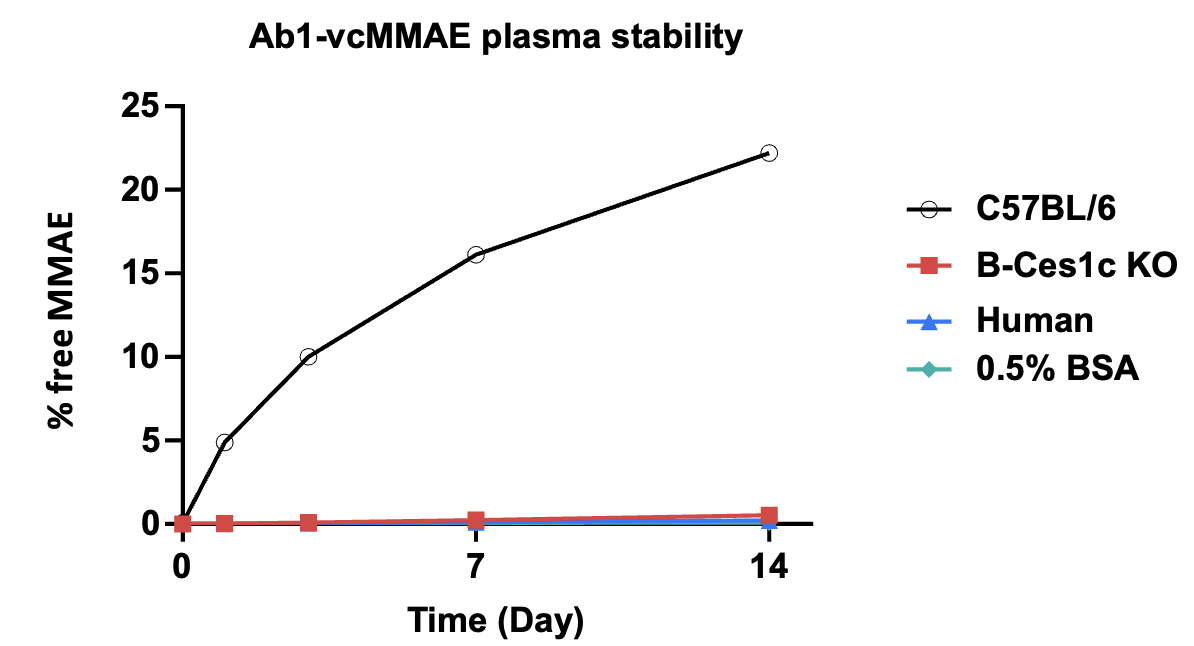
Figure 3. Plasma from B-Ces1c KO mice successfully recapitulates human ADC stability profiles. In vitro stability of Ab1-vcMMAE was evaluated over 14 days. Wildtype C57BL/6 plasma (black) aggressively cleaves the ADC linker, releasing over 20% free MMAE by day 14. In contrast, plasma from B-Ces1c KO mice (red) prevents premature cleavage with negligible free MMAE release, maintaining an intact ADC stability profile that directly mirrors true human plasma (blue) and control (green; 0.5% BSA).
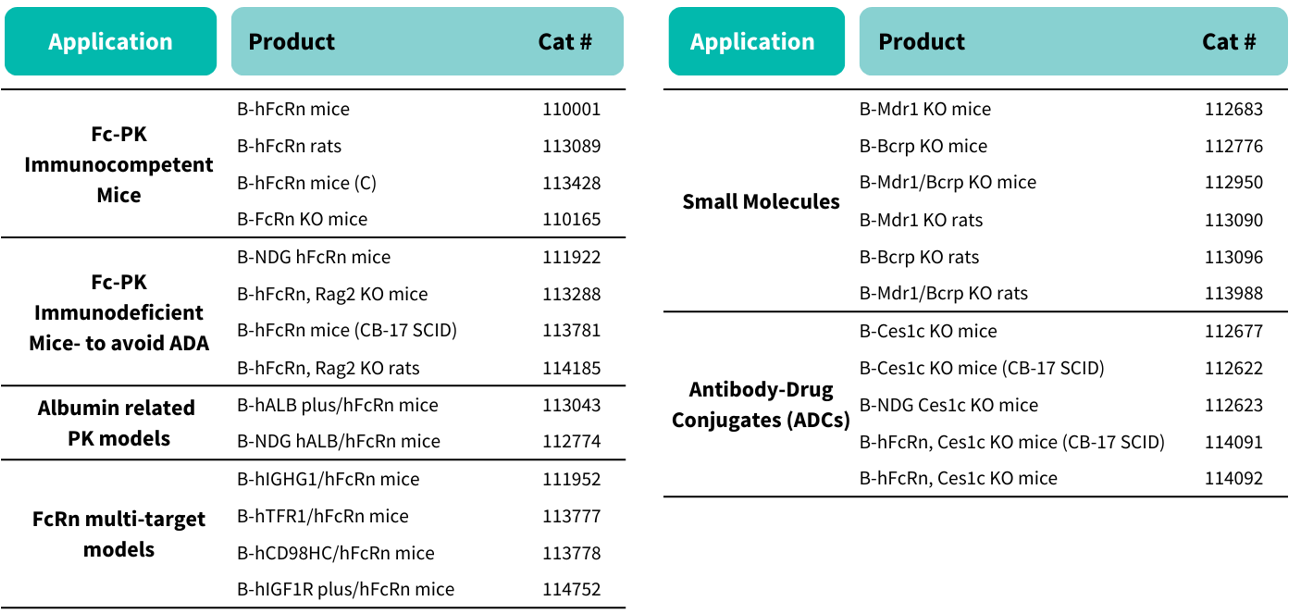
Biocytogen is dedicated to offering a portfolio of modality-tailored PK models designed to support translational PK evaluation of biologics, small molecules, and ADCs. Browse our list of popular models below and contact us to find the right model for your asset!
Conventional wild-type models frequently fail to recapitulate human biology due to species-specific biochemical differences. These "translational gaps" are often driven by target mismatches in receptors like FcRn, aggressive endogenous efflux transporters (MDR1/BCRP), or unique metabolic enzymes like CES1c that do not exist in humans.
In wild-type mice, human IgG and albumin bind more strongly to murine FcRn than to human FcRn, causing artificially efficient recycling of test articles. Biocytogen’s B-hALB plus/hFcRn mice (Cat # 113043) replace murine proteins with human versions, restoring proper recycling interactions to provide accurate exposure and clearance data.
The development of Anti-Drug Antibodies (ADAs) presents a major challenge in PK studies of highly immunogenic biologics and long-term dosing regimens, as ADAs can neutralize therapeutic agents and artificially accelerate drug clearance, masking their true PK profile. To address this interference, Biocytogen’s B-NDG hFcRn mice (Cat #111922) provide an immunodeficient platform that eliminates functional immune cell responses, allowing drug recycling and degradation kinetics to be evaluated with minimal ADA-related noise, particularly in long-term exposure studies.
Wild-type mice often exhibit strong efflux transporter activity that actively pumps drugs out of tissues, limiting absorption and accelerating clearance of transporter-sensitive compounds. The use of Biocytogen’s B-Mdr1/Bcrp double knockout mice (Cat #112950) removes this transporter-mediated “noise,” enabling accurate assessment of the systemic exposure and PK profile of the compounds.
Mice possess a plasma enzyme, Ces1c, that aggressively hydrolyzes ADC linkers in the bloodstream— a metabolic activity that is not present in humans and can lead to premature payload release. Biocytogen’s B-Ces1c KO mice (Cat #112677) eliminate this non-human-specific metabolism, enabling more accurate assessment of ADC stability that better reflect human clinical behavior.