Nucleic acid therapeutics and biologics have transformed drug discovery—from the first siRNA therapy to the global success of mRNA vaccines. One lesson is clear: delivery is the key to unlocking their full potential. Yet for central nervous system (CNS) diseases such as Alzheimer’s, Parkinson’s, and brain tumors, delivery remains a major challenge. The blood–brain barrier (BBB) blocks more than 98% of small molecules and nearly all biologics, limiting treatment options. Fortunately, the landscape of nucleic acid therapeutic delivery is evolving quickly: Receptor-mediated transcytosis (RMT) remains a cornerstone for BBB delivery. Targets such as transferrin receptor 1 (TfR1) have been studied with conventional antibodies as well as alternative scaffolds like single-domain antibodies (sdAbs) (Gao et al. 2021) and affibody fusion constructs (Meister et al. 2020), and have demonstrated improved CNS uptake in preclinical studies. Engineered lipid nanoparticles (LNPs)—already central to mRNA vaccines and hepatic siRNA delivery—have recently shown success in delivering mRNA to the brain in animal and ex vivo human models. Complementary approaches include AAV vectors, focused ultrasound, and intranasal or intrathecal routes, offering alternative pathways for delivering nucleic acids across or around the BBB.
Collectively, these advances highlight a future where delivery innovation, alongside molecular design, fuels breakthroughs in CNS therapeutics. |
|
Receptor-Mediated Transcytosis (RMT) for CNS Delivery |
Through RMT, therapeutic molecules can exploit endogenous transport pathways to cross the BBB and reach the CNS. Among the key targets, TfR1 (transferrin receptor 1) is widely studied and effective but limited by peripheral expression and safety concerns, while CD98hc (CD98 heavy chain) offers a newer shuttle with more sustained and evenly distributed brain delivery and reduced peripheral clearance. Increasingly, researchers are exploring dual-targeting strategies that combine TfR1 and CD98hc to achieve the next generation of safer and more efficient brain delivery approaches. 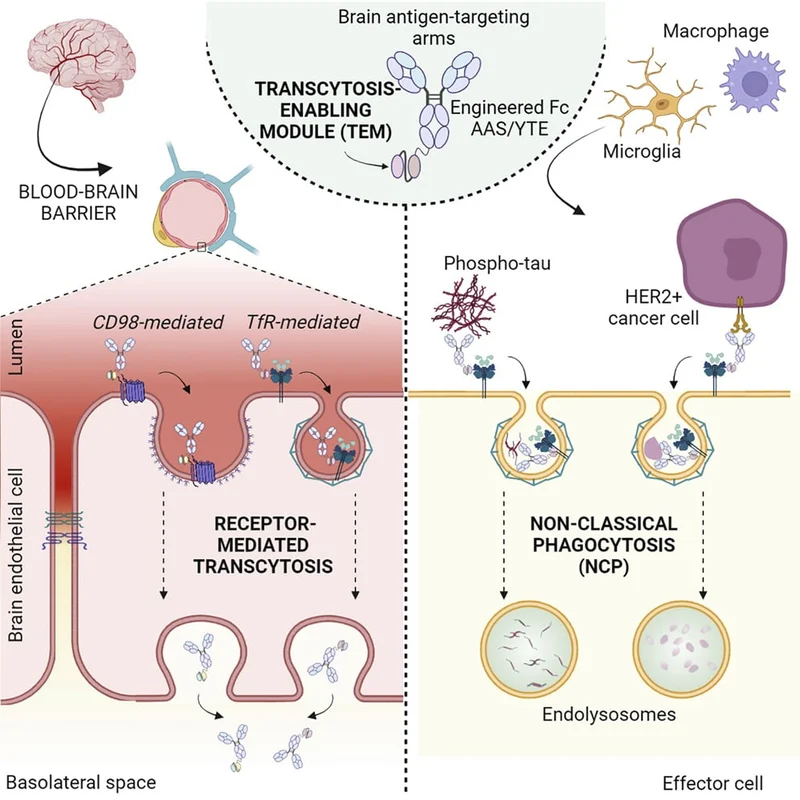
TfR1 and CD98HC in Receptor-Mediated Brain Delivery Systems (Edavettal et al. 2022) |
Lipid Nanoparticles (LNPs) for Nucleic Acid DeliveryLNPs are the leading platform for nucleic acid delivery, powering siRNA drugs, mRNA vaccines, and next-gen RNA therapeutics. Innovations aim to improve tissue specificity and expand beyond the liver, highlighted by major deals: - Vertex × Orna ($4.3B, extra-hepatic LNPs for gene editing)
- Lilly × Verve ($1.3B, GalNAc-LNPs for cardiovascular)
- AbbVie × Capstan ($2.1B, tLNPs for in vivo CAR-T)
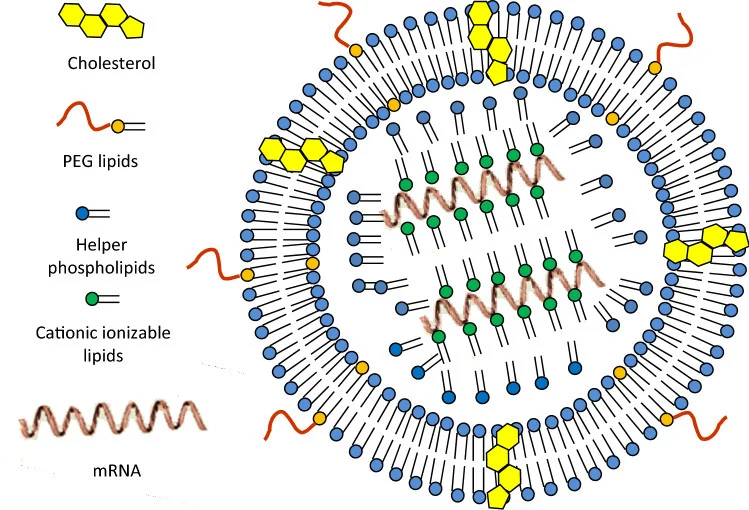
While today’s clinical progress largely relies on ligand-targeted and chemically engineered LNPs, antibody-conjugated LNPs are rapidly emerging as a next-generation strategy with strong future potential. Schematic of LNP structure (Ramachandran et.al. 2022) |
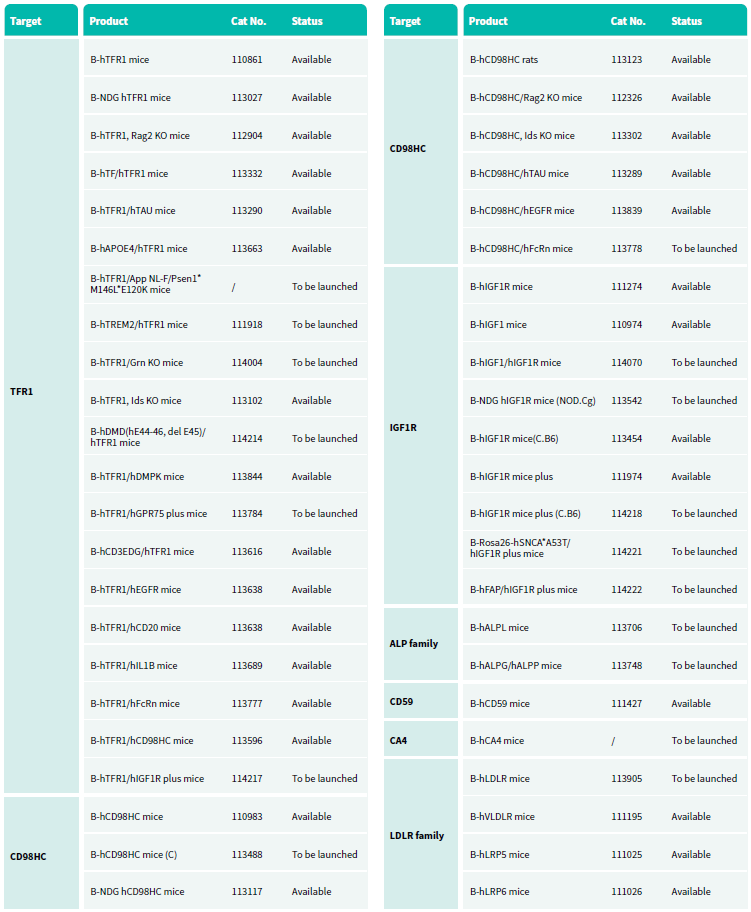
Accelerating CNS and Nucleic Acid DeliveryBiocytogen supports the next wave of delivery innovation with single- and multi-target humanized animal models expressing key BBB transport receptors—including TfR1, CD98HC, IGF1R, and members of the LDLR family—to enable efficient evaluation of both efficacy and safety for novel BBB-penetrant therapies. Featured models include: In addition, Biocytogen provides specialized services to assess LNP biodistribution and transfection efficiency, supporting partners in optimizing formulations, evaluating tissue-specific delivery, and generating critical preclinical data. |
|
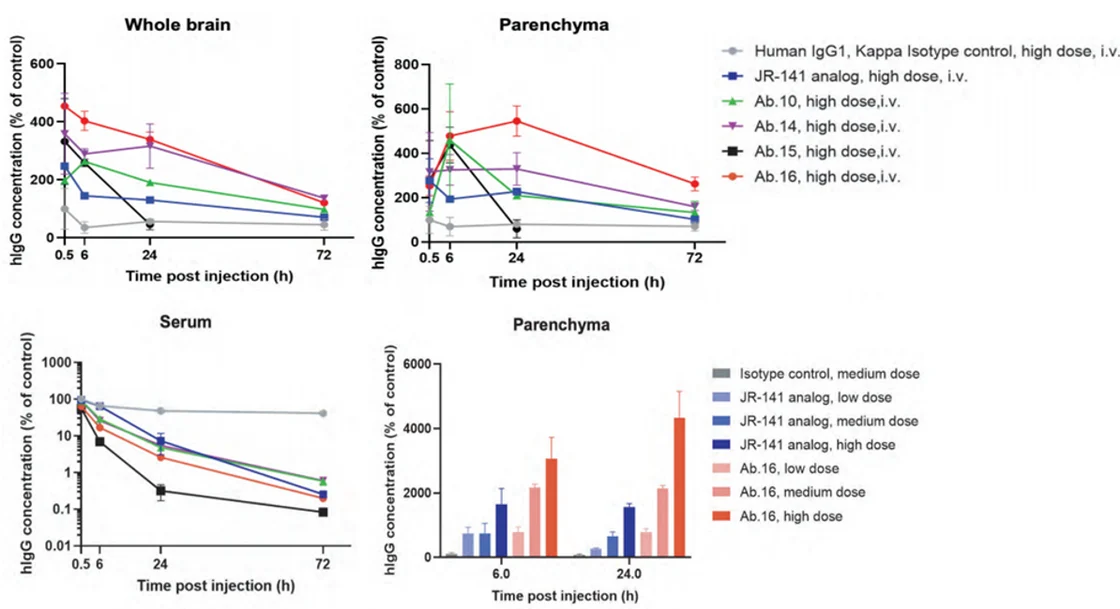
Human TFR1 HCAbs Efficiently Penetrate the BBB in B-hTFR1 mice |
B-hTFR1 mice were dosed with human IgG1 isotype control, anti-human TfR1 antibody (JR-141 analog), or TfR1 HCAbs (Ab.10, Ab.14, Ab.15, Ab.16) to evaluate BBB penetration. |
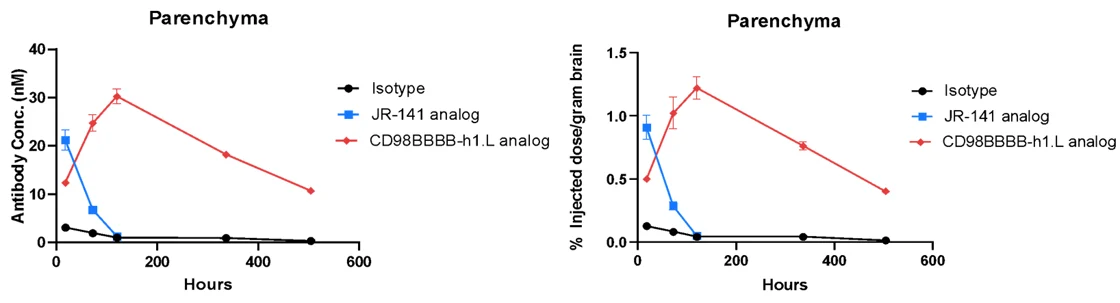
In Vivo PK Evaluation of Anti-TFR1 and CD98HC Antibodies in B-hTFR1/hCD98HC mice |
B-hTFR1/hCD98HC mice enable uptake of intravenously administered anti-human TfR1 (JR-141 analog) or anti-human CD98HC antibodies (CD98BBBB-h1.L analog) and serve as a model to compare the penetration efficacy of shuttle molecules targeting TfR1 or CD98HC. In Vivo Brain Imaging of LNP-mRNA–Encoded Akaluc and Firefly Luciferase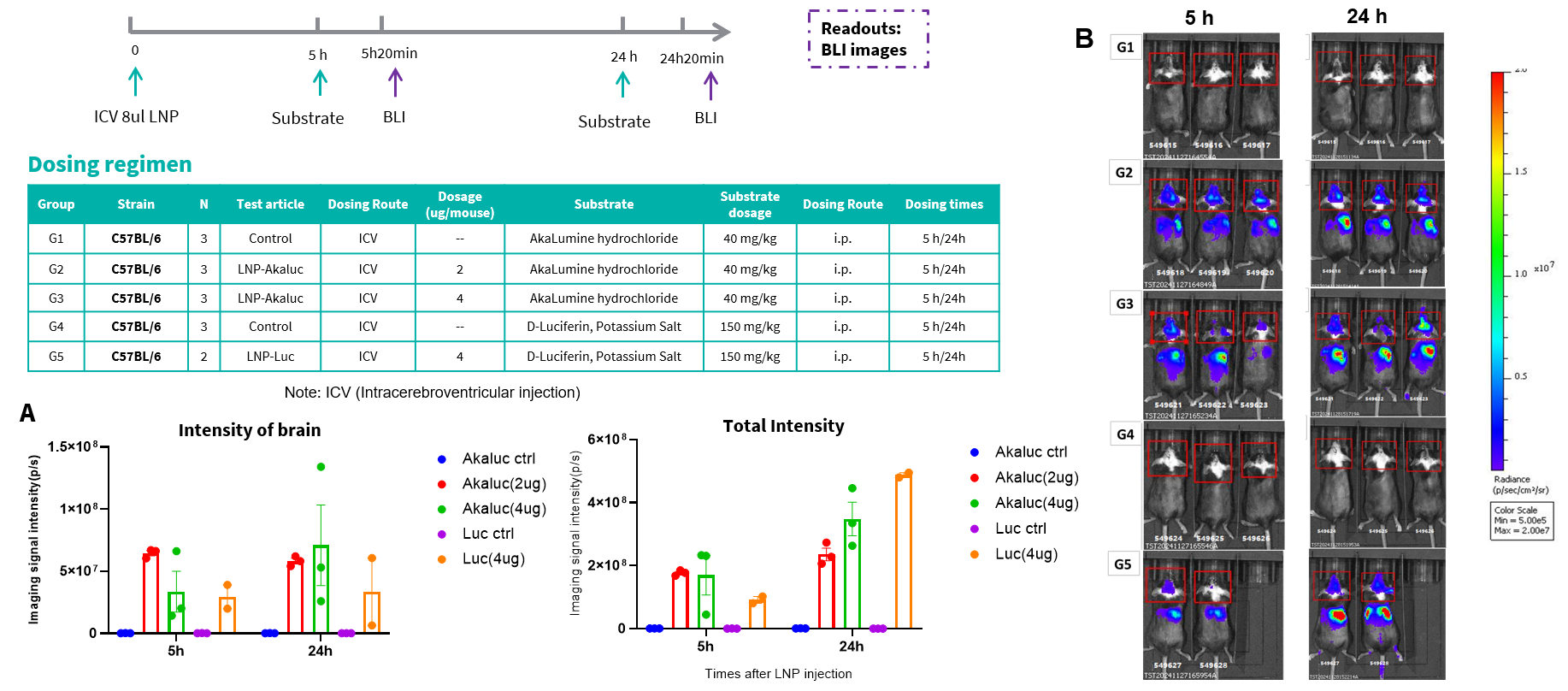
Female C57BL/6 mice (6–8 weeks, n=3 per group) received ICV delivery of LNPs carrying Akaluc or Firefly luciferase mRNA, and bioluminescent imaging was performed at 5 h and 24 h. Akaluc showed stronger and more specific brain signals than Firefly luciferase, as shown in quantified brain intensities (A) and representative in vivo images (B). |
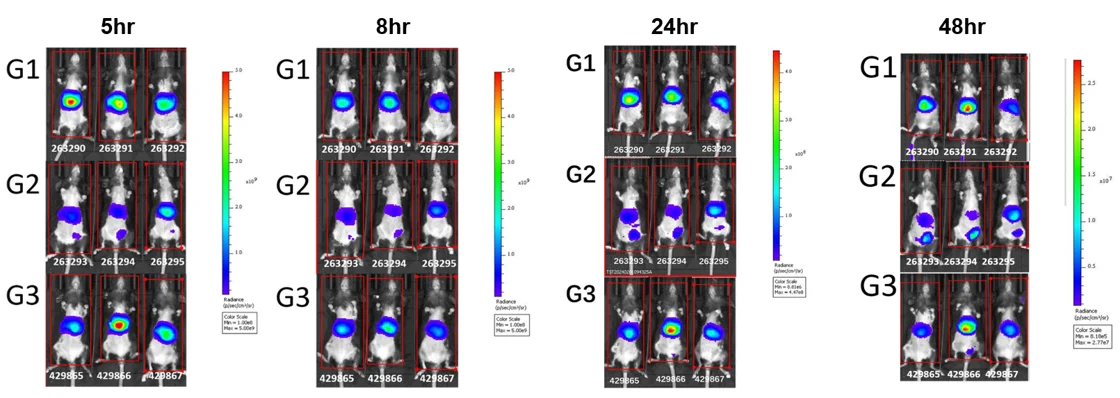
Evaluating LNP Biodistribution Across Administration Routes |
In vivo evaluation of LNP biodistribution. Luciferase expression in mice following orbital venous plexus, tail vein, or intraperitoneal injection (4.2 µg/mouse). Groups G1 (tail vein), G2 (intraperitoneal), and G3 (orbital venous plexus) were imaged for bioluminescence at 5, 8, 24, and 48 hours. |
In Vitro Transfection Efficiency of Antibody-Conjugated LNP-mRNA |
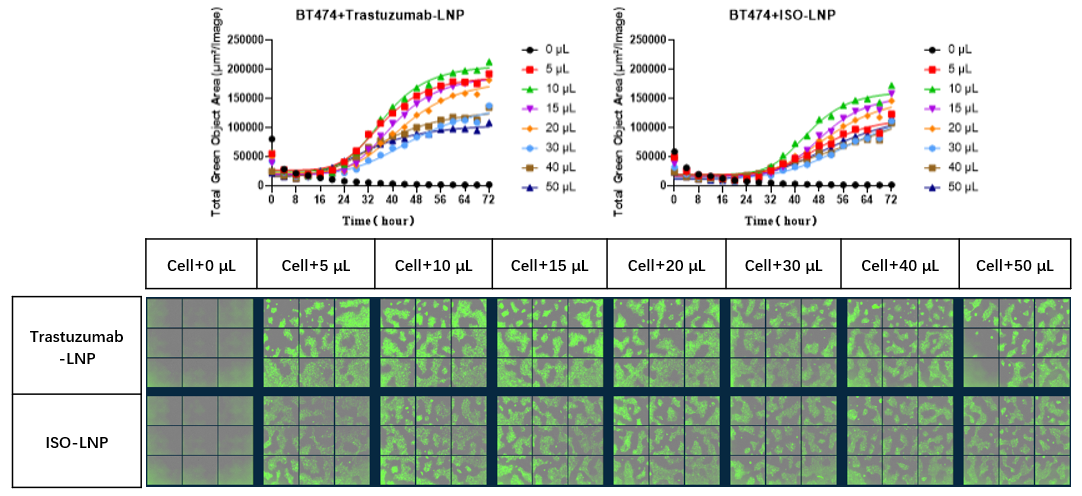
In vitro transfection efficacy of antibody-conjugated LNP in BT-474 cells. Trastuzumab or isotype control was conjugated to LNPs encapsulating mRNA-GFP and added to BT-474 cells in 96-well plates. Images were captured 72 h post-incubation. |
Humanized Mouse Models for BBB Research at Biocytogen |
 |
Frequently Asked Questions (FAQ)
Q1. What is the blood–brain barrier (BBB) and why is it important in drug delivery?
The blood–brain barrier (BBB) is a selective barrier that protects the brain from harmful substances while regulating nutrient transport. However, it also blocks over 98% of small molecules and nearly all biologics, making CNS drug delivery one of the biggest challenges in therapeutic development.
Q2. How can receptor-mediated transcytosis (RMT) help cross the BBB?
RMT uses receptors on brain endothelial cells, such as transferrin receptor 1 (TfR1) and CD98 heavy chain (CD98HC), to actively transport therapeutic molecules into the brain. By targeting these receptors, researchers can design antibodies or nanoparticles that “hitch a ride” across the BBB.
Q3. What role do lipid nanoparticles (LNPs) play in nucleic acid delivery?
LNPs are the most widely used platform for delivering nucleic acids like siRNA, ASO, and mRNA. They protect fragile RNA molecules, improve circulation time, and enable intracellular release. LNPs were central to the success of mRNA vaccines and are now being engineered for CNS delivery and beyond.
Q4. What are antibody-conjugated LNPs?
Antibody-conjugated LNPs combine the targeting ability of antibodies with the RNA-carrying capacity of lipid nanoparticles. This strategy allows more precise tissue delivery, potentially overcoming the limitations of conventional LNPs.
Q5. How does Biocytogen support BBB and nucleic acid delivery research?Biocytogen provides humanized mouse models—including B-hTFR1, B-hCD98HC, and dual-humanized B-hTFR1/hCD98HC—to evaluate brain-penetrant therapeutics that leverage these receptors. The company also offers services to assess LNP biodistribution and transfection efficiency, enabling researchers to optimize delivery strategies and accelerate preclinical development.
Reference:
Wang, Chang, et al. "Blood–brain-barrier-crossing lipid nanoparticles for mRNA delivery to the central nervous system." Nature Materials (2025): 1-11.
Gao, Yang, Jianwei Zhu, and Huili Lu. "Single domain antibody-based vectors in the delivery of biologics across the blood–brain barrier: A review." Drug Delivery and Translational Research 11.5 (2021): 1818-1828.
Meister, Sebastian W., et al. "An affibody molecule is actively transported into the cerebrospinal fluid via binding to the transferrin receptor." International Journal of Molecular Sciences 21.8 (2020): 2999.
Edavettal, Suzanne, et al. "Enhanced delivery of antibodies across the blood-brain barrier via TEMs with inherent receptor-mediated phagocytosis." Med 3.12 (2022): 860-882.