you may also like
B cells are central to the adaptive immune response. As key players in humoral immunity, they differentiate into plasma cells to secrete antibodies and contribute to immune memory (Chi, Pepper, and Thomas 2024). However, when dysregulated, B cells can become drivers of chronic inflammation and tissue damage—especially in autoimmune diseases such as systemic lupus erythematosus (SLE), rheumatoid arthritis (RA), and multiple sclerosis (MS) (Hofmann, Clauder, and Manz 2018).
B Cell Depletion Therapies (BCDT): Resetting Immune Balance
One of the most successful strategies for targeting B cells has been the use of BCDT, especially monoclonal antibodies targeting CD20 (Lee, Rojas, and Gommerman 2021). The most well-known of these, rituximab, binds to the CD20 antigen on pre-B and mature B cells, leading to their destruction via complement-dependent cytotoxicity (CDC) and antibody-dependent cellular cytotoxicity (ADCC) (Weiner 2010).
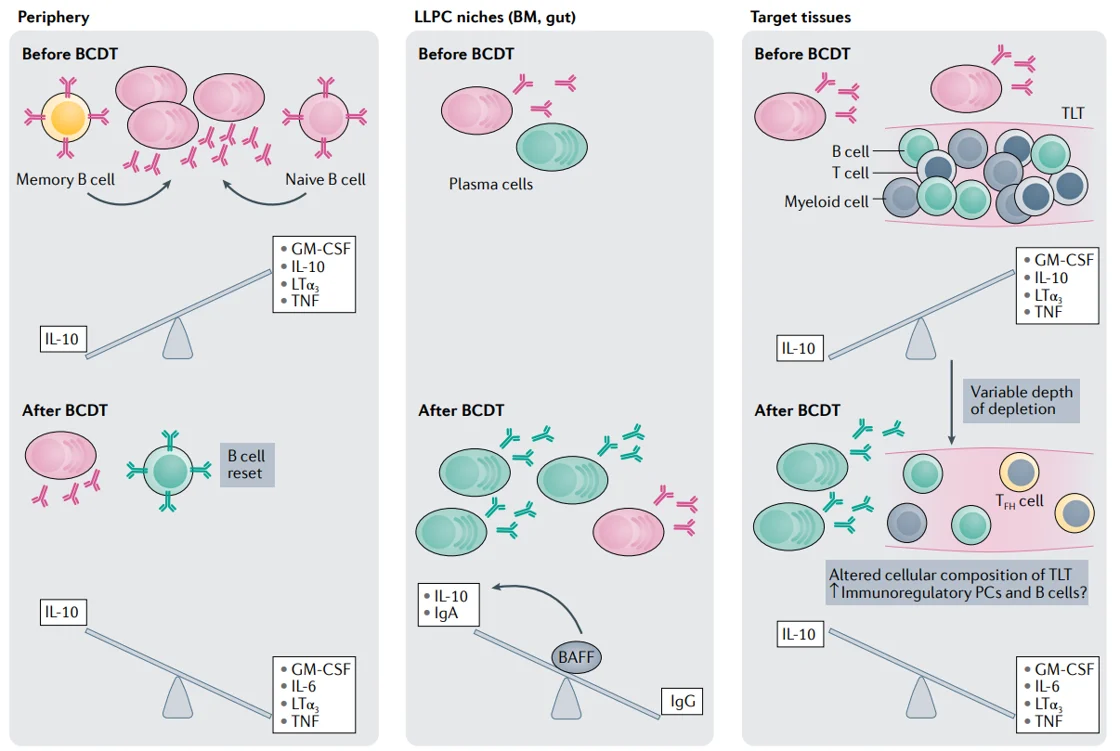 |
Effects of B cell depletion therapy on B cell populations (Lee, Rojas, and Gommerman, 2021)
BCDT typically disrupts the pool of autoreactive B cells in multiple ways:
Reduces autoantibody production by depleting precursors of plasma cells
Clears inflammatory memory B cells, allowing for repopulation by naive and potentially tolerogenic subsets
Dampens systemic inflammation and breaks the feedback loop between B and T cell activation
Importantly, long-lived plasma cells (LLPCs)—which do not express CD20—are spared, preserving immunity to previous infections and vaccines.
Driving Better ADCC for BCDT: Biocytogen’s IL15 Humanized B-NDG Mice
With the rise of B cell–targeted therapies, robust preclinical models are essential. Humanized immune system (HIS) mice, created by engrafting immunodeficient mice with human CD34⁺ hematopoietic stem cells (HSCs), enable in vivo studies of human B-cell biology and therapeutic responses.
To enhance effector function, Biocytogen developed immunodeficient B-NDG hIL15 mice expressing human IL-15, enhancing NK and CD8⁺ T cell activity for improved antibody-dependent cellular cytotoxicity (ADCC). Depletion of human CD19⁺/CD20⁺ B cells by a rituximab analog in CD34⁺ HSC–reconstituted B-NDG hIL15 mice highlights the model’s strength for evaluating B cell–targeted therapies
Study Design:
|
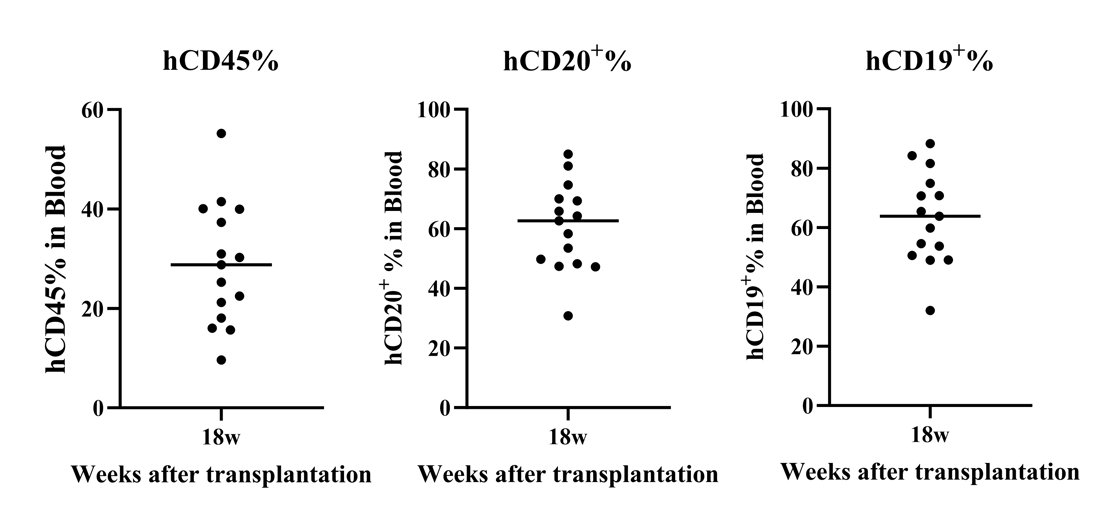
▷ Human Leukocyte and B Cell Reconstitution in B-NDG hIL15 Mice |
|
FACS analysis of peripheral blood from huHSC-B-NDG hIL15 mice 18 weeks post-engraftment (prior to treatment). Human leukocyte and B cell populations were assessed for hCD45⁺ (total human leukocytes), hCD19⁺ (pan-B cells), and hCD20⁺ (mature B cells). |
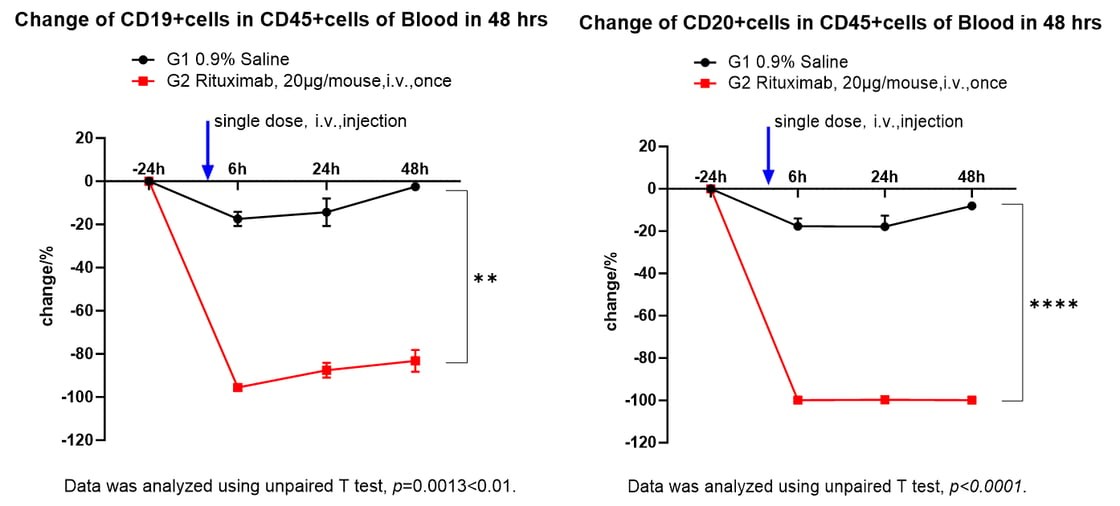
▷ Short-Term Depletion of CD19⁺/CD20⁺ Human B Cells in Mouse Peripheral Blood |
|
Depletion rates of human CD19⁺ and CD20⁺ B cells in peripheral blood within 48 hours post-treatment. |
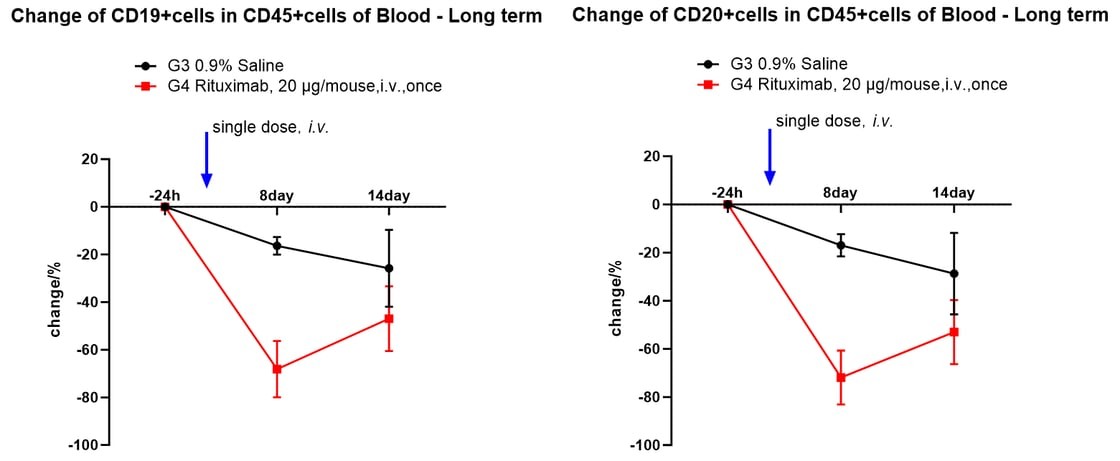
▷ Long-Term Depletion of CD19⁺/CD20⁺ Human B Cells in Mouse Peripheral Blood |
|
Depletion rates of human CD19⁺ and CD20⁺ B cells in peripheral blood within 14 days post-treatment. |
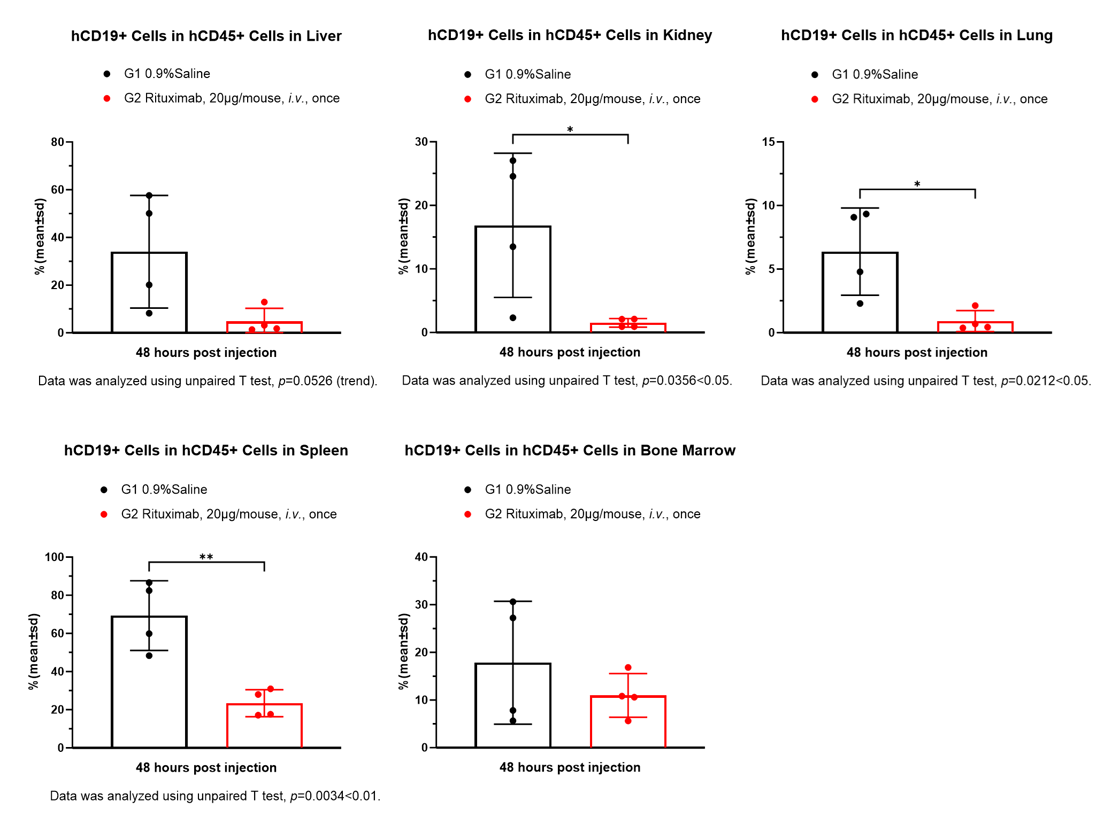
▷ Short-Term Depletion of Human CD19⁺ B Cells in Mouse Tissues |
|
Depletion of human CD19⁺ B cells in mouse liver, kidney, lung, spleen, and bone marrow evaluated 48 hours post-treatment. |
▷ Short-Term Depletion of Human CD20⁺ B Cells in Mouse Tissues |
|
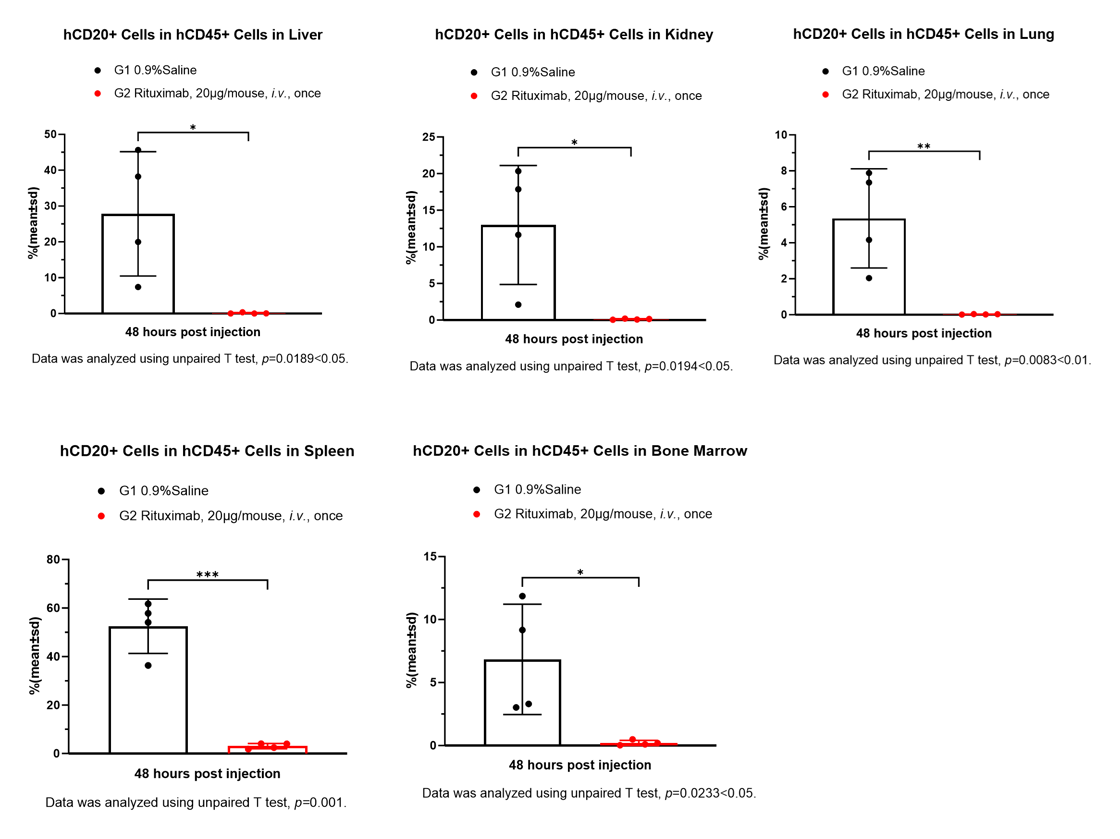
Depletion of human CD20⁺ B cells in mouse liver, kidney, lung, spleen, and bone marrow evaluated 48 hours post-treatment. |
▷ Long-Term Depletion of Human CD19⁺ B Cells in Mouse Tissues
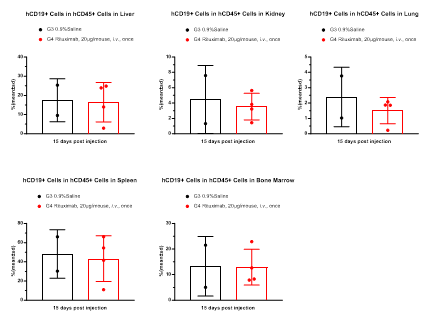
Depletion of human CD19⁺ B cells in mouse liver, kidney, lung, spleen, and bone marrow evaluated 15 days post-treatment.
▷ Long-Term Depletion of Human CD20⁺ B Cells in Mouse Tissues
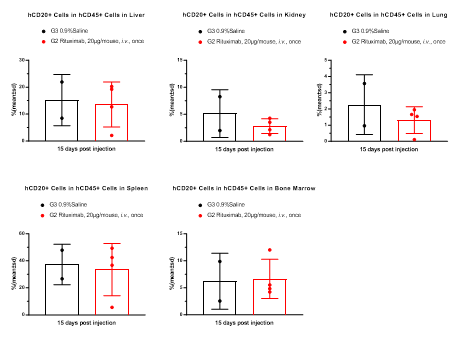
Depletion of human CD20⁺ B cells in mouse liver, kidney, lung, spleen, and bone marrow evaluated 15 days post-treatment.
Contact us to explore how Biocytogen’s B-NDG hIL15 mice can advance your next-gen B cell therapies!
Reference:
Chi, Hongbo, Marion Pepper, and Paul G. Thomas. "Principles and therapeutic applications of adaptive immunity." Cell 187.9 (2024): 2052-2078.
Hofmann, Katharina, Ann-Katrin Clauder, and Rudolf Armin Manz. "Targeting B cells and plasma cells in autoimmune diseases." Frontiers in immunology 9 (2018): 835.
Lee, Dennis SW, Olga L. Rojas, and Jennifer L. Gommerman. "B cell depletion therapies in autoimmune disease: advances and mechanistic insights." Nature reviews Drug discovery 20.3 (2021): 179-199.
Weiner, George J. "Rituximab: mechanism of action." Seminars in hematology. Vol. 47. No. 2. WB Saunders, 2010.