
on this page

Built on Biocytogen's antibody discovery platforms, BCG024 integrates a RenMice®-derived DLL3 antibody , a RenNano® -derived 4-1BB VHH , and a clinically validated SP34 CD3 arm into a compact DLL3 × CD3 × 4-1BB trispecific T cell engager format. The RenNano®-derived VHH supports efficient trispecific assembly and 4-1BB-mediated T-cell functionality, providing a developable foundation for next-generation DLL3 T cell engager engineering.
BCG024 is being evaluated as a DLL3 × CD3 × 4-1BB trispecific T cell engager, with a primary focus on small cell lung cancer (SCLC) and potential development in neuroendocrine carcinoma (NEC).

The supporting preclinical data package for BCG024 includes 4-1BB-mediated T-cell costimulation, potent cytotoxic activity under low E:T conditions, sustained T-cell function after repeated antigen stimulation, robust antitumor efficacy in a SCLC CDX model, and favorable preliminary safety, PK, and tolerability profiles in humanized mice and cynomolgus monkeys, supporting the development of BCG024 as a next-generation DLL3 × CD3 × 4-1BB trispecific T cell engager for SCLC and NEC.
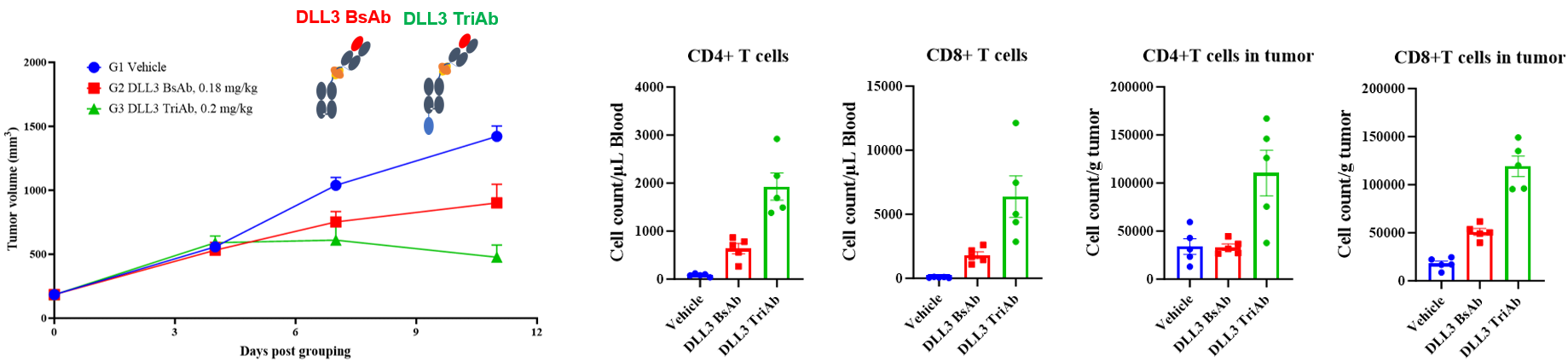
Figure 1. Tumor growth inhibition and T-cell expansion following DLL3 TriAb treatment. B-NDG mice were implanted with SHP-77 SCLC tumors and injected with human PBMCs. Antibody treatments (DLL3 BsAb and DLL3 TriAb) were administered on Days 10, 14, and 17, with samples collected on Day 21. DLL3 TriAb showed stronger tumor growth inhibition than DLL3 BsAb and increased CD4+ and CD8+ T-cell populations, supporting 4-1BB-mediated T-cell expansion and antitumor activity.
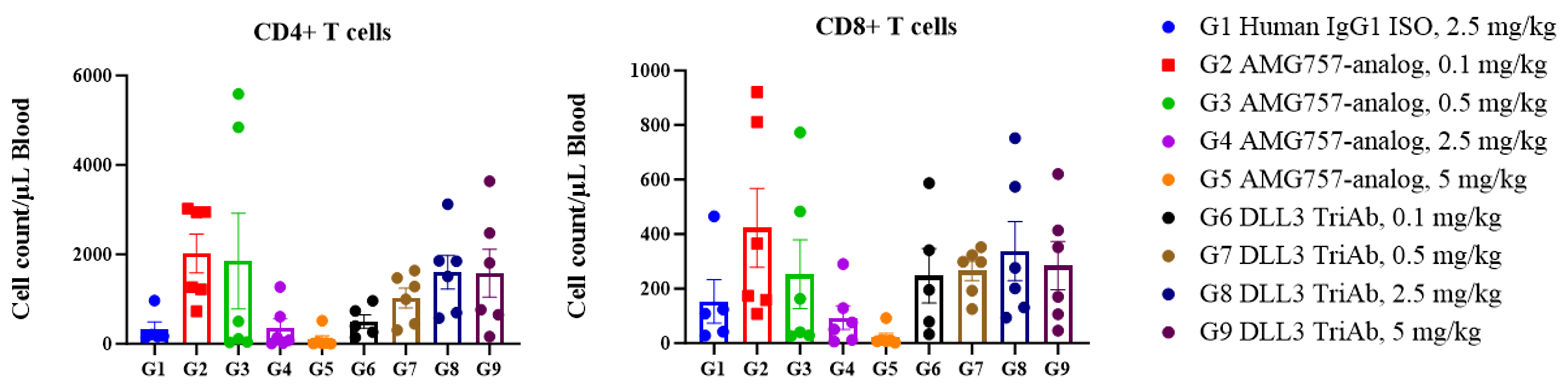
Figure 2. Dose-dependent T-cell proliferation without apoptosis. In a SHP-77 tumor-bearing PBMC-humanized mouse model, AMG757-analog and DLL3 TriAb were administered as a single intraperitoneal dose at 0.1, 0.5, 2.5, or 5 mg/kg, and serum hCD3-positive T-cell counts were measured 21 days after treatment. DLL3 TriAb promoted dose-dependent T-cell proliferation without inducing T-cell apoptosis, supporting enhanced T-cell expansion while preserving T-cell viability.
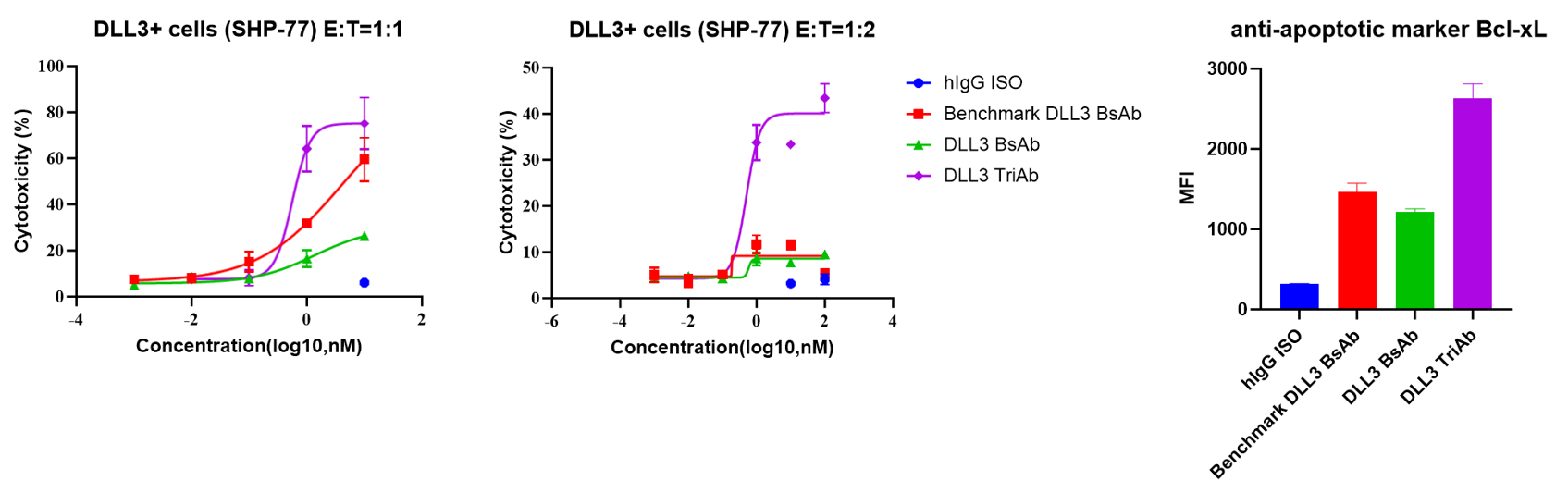
Figure 3. Cytotoxic activity against DLL3-positive tumor cells at low effector-to-target (E:T) co-culture and Bcl-xL upregulation. SHP-77 cells were co-cultivated with human PBMCs and a dose range of test articles for 7 days, and specific cytotoxicity was assessed by flow cytometry. At low E:T ratios of 1:2 and 1:1, BCG024 DLL3 TriAb showed superior cytotoxic activity compared with benchmark and DLL3 BsAb controls. BCG024 also upregulated the anti-apoptotic marker Bcl-xL, supporting enhanced T-cell survival signaling and cytotoxic function.
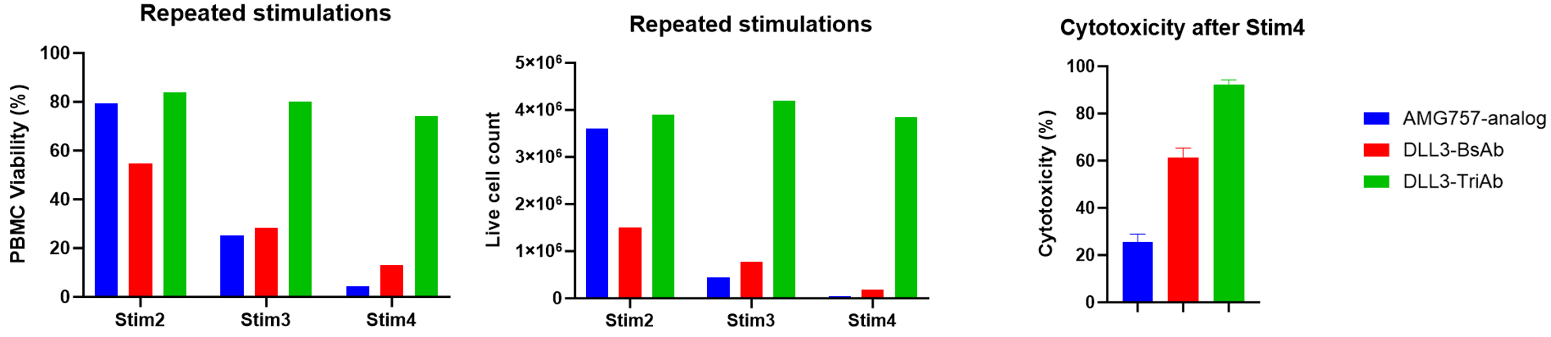
Figure 4. PBMC viability, live cell count, and cytotoxicity after repeated DLL3 antigen stimulation. PBMCs were incubated with the coated DLL3 protein and test article. For each subsequent round of stimulation (2-3 days), PBMCs were harvested, counted, and re-stimulated with fresh test article (5 nM). Across later stimulation rounds, BCG024 DLL3 TriAb maintained higher PBMC viability and live cell counts compared with AMG757-analog and DLL3 BsAb controls. After stimulation 4, BCG024 also preserved stronger cytotoxic activity, supporting sustained T-cell function under repeated antigen stimulation.
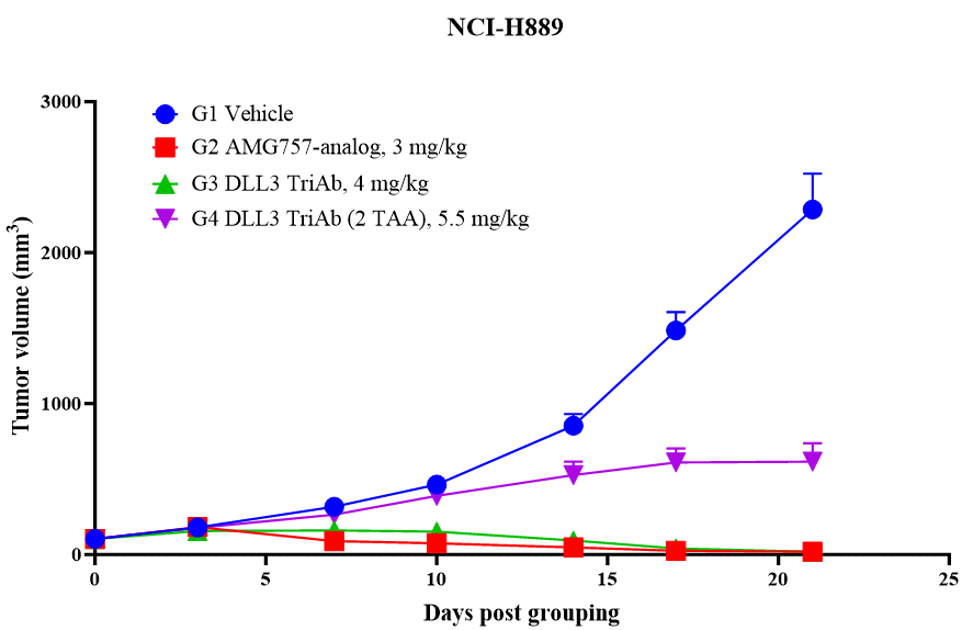
Figure 5. Antitumor efficacy in the NCI-H889 SCLC CDX model. B-NDG mice were subcutaneously implanted with NCI-H889 SCLC cells and injected with human PBMCs. Test articles were administered intraperitoneally on Day 0 and Day 7, including BCG024 DLL3 TriAb at 4 mg/kg, 2TAA DLL3 TriAb at 5.5 mg/kg, and AMG757-analog at 3 mg/kg. BCG024 showed potent antitumor activity, supporting the tumor growth inhibition potential of a monovalent DLL3-binding trispecific T cell engager format.
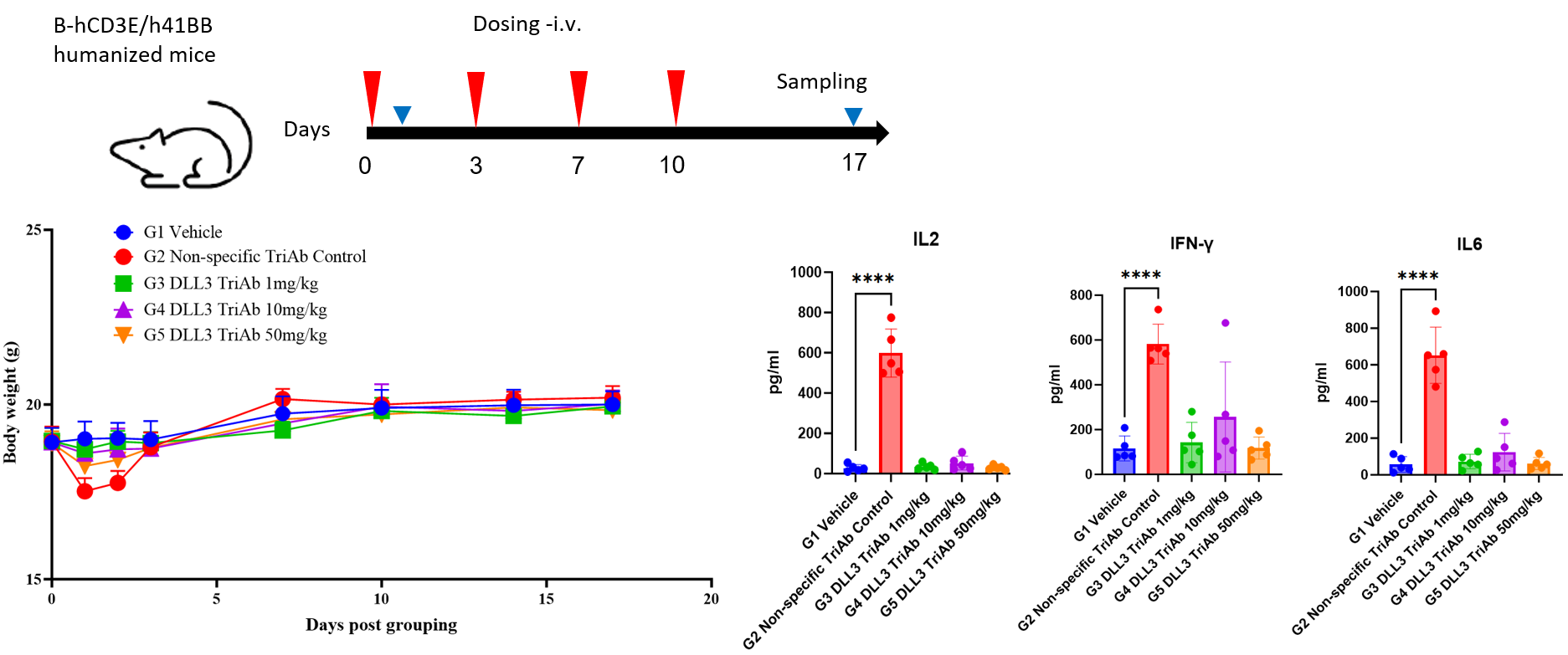
Figure 6. Body weight and cytokine assessment in CD3ε × 4-1BB humanized mice. B-hCD3E/h4-1BB humanized mice were intravenously dosed on Days 3, 7, and 10 with non-specific TriAb control or BCG024 DLL3 TriAb at 1, 10, and 50 mg/kg. Body weight was monitored from Day 0 to Day 17, and no significant body weight loss was observed following BCG024 DLL3 TriAb treatment. IL-2, IFN-γ, and IL-6 levels were shown in pg/mL, with BCG024 DLL3 TriAb-treated groups remaining close to background levels, while the non-specific TriAb control induced marked cytokine elevation.
In addition , preliminary cynomolgus monkey data showed an antibody-like PK profile and favorable repeat-dose tolerability for BCG024 DLL3 TriAb, with no major drug-related clinical observations and limited cytokine release, supporting further translational development.

Biocytogen welcomes partnership discussions to further evaluate this DLL3 × CD3 × 4-1BB trispecific T cell engager asset.

BCG024 is designed to address two major challenges associated with conventional T cell engagers: CRS risk and limited T-cell durability. By integrating DLL3-targeted tumor engagement, CD3-mediated T-cell redirection, and 4-1BB costimulation in a single molecule, BCG024 is engineered to support sustained antitumor activity while expanding the therapeutic window.
4-1BB provides a costimulatory signal within the DLL3 T cell engager format, helping reinforce T-cell activation beyond CD3 engagement alone. In BCG024, this 4-1BB component supports T-cell survival signaling, functional persistence, and cytotoxic activity under repeated or low effector-to-target stimulation conditions.
BCG024 incorporates a RenNano®-derived 4-1BB VHH as a compact and flexible costimulatory module. RenNano® mice generate heavy chain-only antibodies that do not require in vitro humanization, supporting a faster and more cost-effective discovery workflow. RenNano®-derived components also provide sequence diversity, optimal affinity, and favorable PK properties for modular multispecific antibody engineering.
BCG024 showed a favorable preliminary safety profile in CD3ε × 4-1BB humanized mice, with no significant body weight loss and limited cytokine induction compared with non-specific TriAb control. Preliminary cynomolgus monkey data further supported antibody-like PK, repeat-dose tolerability, and limited cytokine release.
The primary focus for BCG024 is SCLC, supported by high tumor-associated DLL3 expression and clinical validation of DLL3-targeted T-cell engagement in extensive-stage disease. DLL3-positive NEC may represent an additional development opportunity.
