Key Features of RenNano® Mice
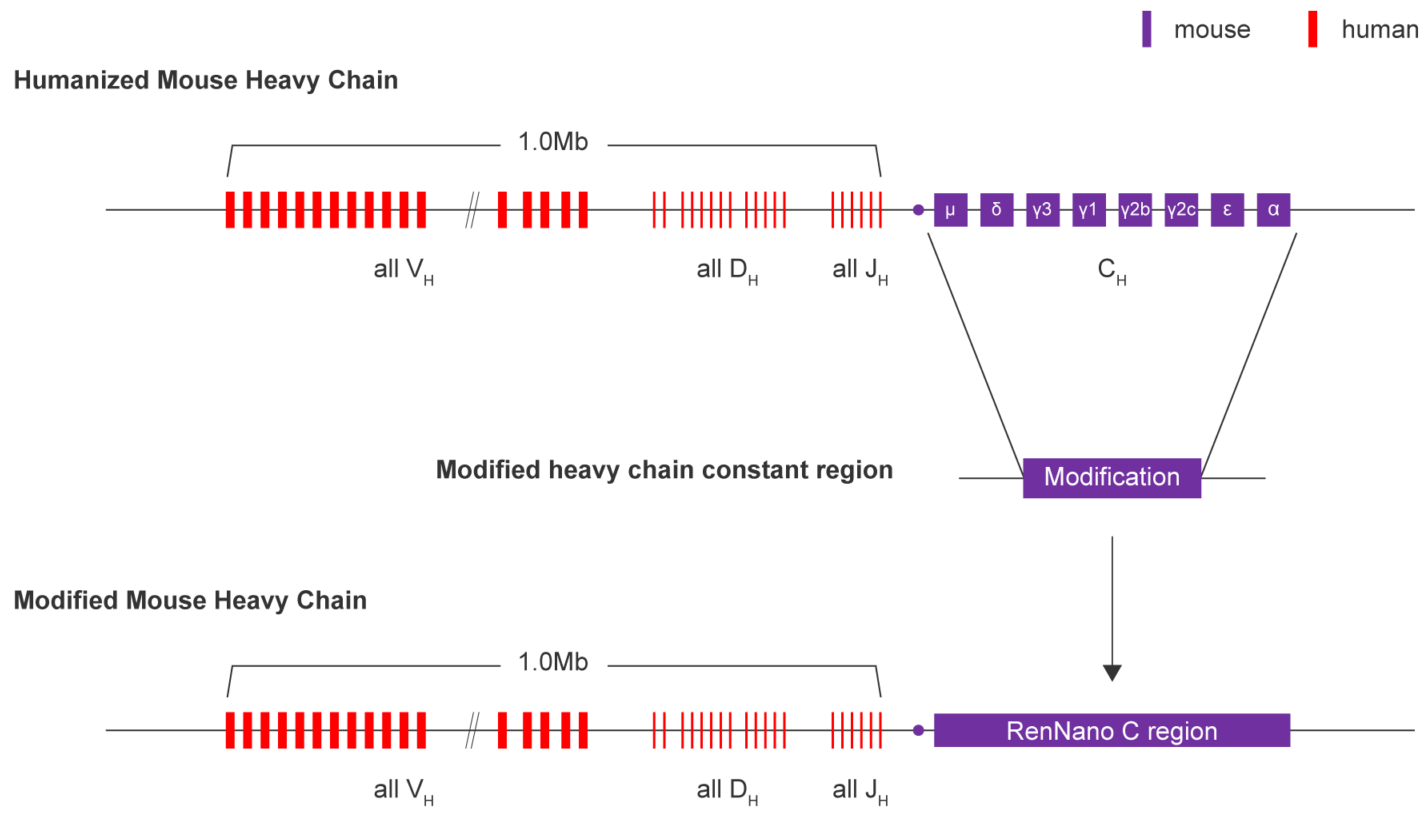
1. Fully human heavy chain variable region and modified constant region
2. RenNano mice demonstrate robust immune responses against multiple antigens
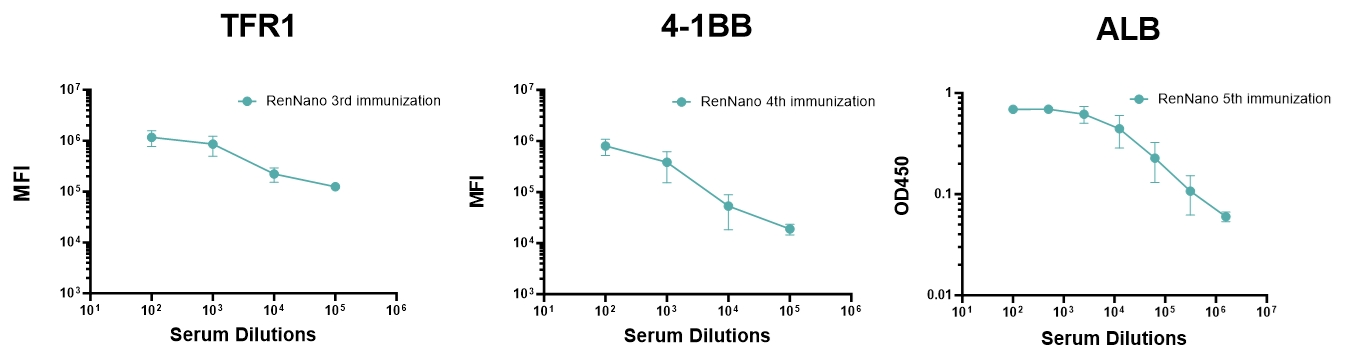
RenNano mice' immune responses against TFR1, 4-1BB, and ALB. Sera from RenNano mice immunized with TFR-1 and 4-1BB (membrane antigens) were diluted and incubated with antigen-expressing CHO cells. Fluorochrome-conjugated secondary antibodies were used to label CHO-bound HCAbs, and mean fluorescence intensity (MFI) was measured using flow cytometry to indicate the antigen-specific HCAb titer. Sera from RenNano mice immunized with ALB (secreted antigen) were diluted and incubated with fluorochrome-conjugated secondary antibodies. OD450 was measured using ELISA to indicate the antigen-specific HCAb titer.
3. RenNano-derived antigen-specific HCAbs showed great diversity
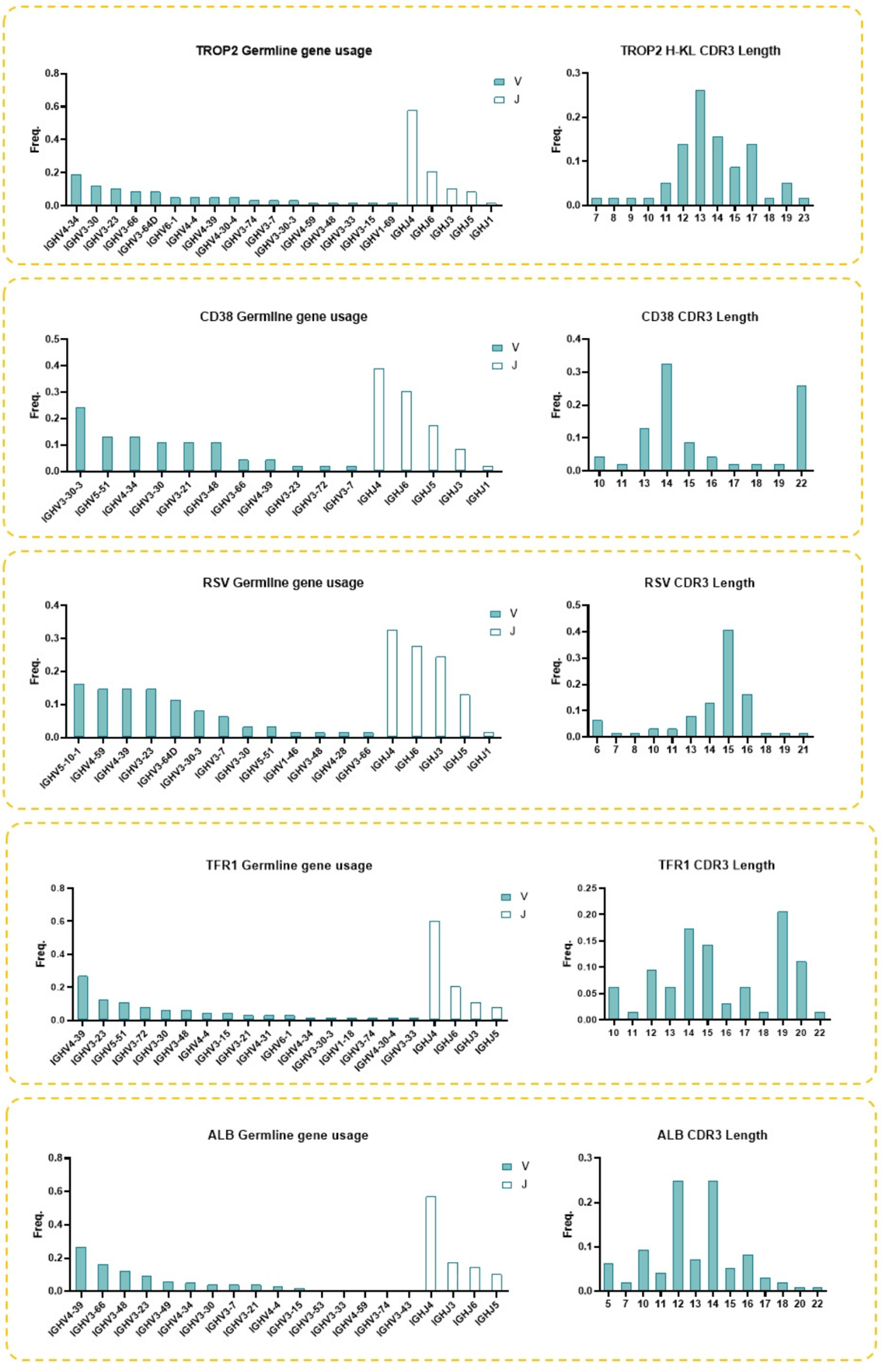
HCAbs derived from RenNano mice are diverse and many contain longer CDR3 regions. Antigen-specific HCAbs were analyzed by their heavy chain germline gene usage and CDR3 length. Analysis indicates broad IGHV germline diversity. Additionally, most CDR3 lengths observed were longer than 12 AA, with some longer than 17 AA.
Next-Gen RenNano® Mice:
Combining Fully Human and FR2-Camelized (FERF) Human V Genes to Maximize VHH Discovery Potential
Building on our proprietary RenNano® mouse platform for human heavy-chain-only antibody (HCAb) discovery, next-generation RenNano® mice retain the original, fully intact human V gene repertoire while incorporating dozens of engineered framework region 2 (FR2)-camelized human V gene segments
.
This expanded repertoire is designed to maximize discovery success and broaden structural epitope coverage.

FR2 Engineering for Improved Screening Success and Developability
In human heavy chains, FR2 residues at positions 37, 44, 45, and 47 (Martin numbering scheme) form part of the VH-VL interface. These residues are typically hydrophobic and are represented by the VGLW (Val-Gly-Leu-Trp) motif, which is normally buried within conventional heterotetrameric antibodies. (Sang et al., 2022, Structure)
In a heavy-chain-only or VHH format, however, these positions become more solvent-exposed. Naturally occurring camelid heavy-chain-only antibodies therefore feature more hydrophilic residues at these positions, most notably the characteristic FERF
(Phe-Glu-Arg-Phe) motif. (Sang et al., 2022, Structure)
By replacing exposed hydrophobic residues with more hydrophilic ones, FR2 camelization helps reduce unwanted hydrophobic interactions, thereby mitigating aggregation and improving overall candidate developability.
Comparative studies have shown that humanized libraries incorporating the FERF motif can achieve higher screening success rates for isolating viable lead candidates than libraries based on the human VGLW motif. (Arras et al., 2023, mAbs)
Our in-house data further show that clinical-stage VHHs retaining camelid FR2 signatures exhibit higher expression yields and greater thermostability than those carrying the human VGLW motif.
Strategic Advantages of Next-Generation RenNano®
- Reduced Aggregation Risk & Enhanced Developability:
The more hydrophilic FERF framework helps reduce unwanted hydrophobic interactions and aggregation risk, supporting improved solubility, lower nonspecific binding, better overall developability, and higher lead identification success.
- Dual-Engine Sequence Diversity:
Combines intact human V genes (VGLW) with engineered FR2-camelized human V genes (FERF), expanding candidate diversity across hard-to-target epitopes.
- Preserved Fully Human Potential:
Retains the original human V gene repertoire, allowing discovery campaigns to continue generating fully human VHHs when unmodified human sequences are preferred.
-
In Vivo
Affinity Maturation:
Enables natural in vivo
affinity maturation to generate high-affinity VHH leads, streamlining downstream optimization.
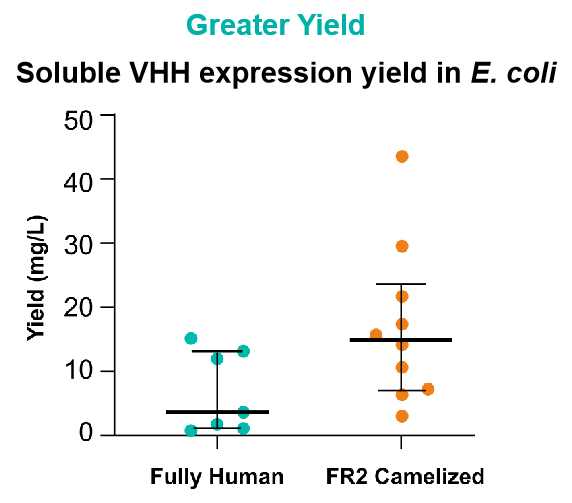
FR2 Camelization Improves Soluble VHH Expression in E. coli
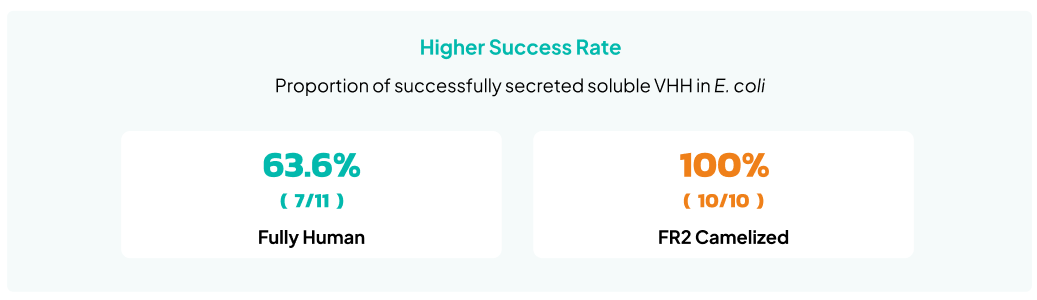
FR2 camelization significantly improves soluble VHH expression in E. coli
, achieving a 100% expression success rate and markedly higher expression yields.
VHHs derived from RenNano® mice were expressed in E. coli and purified in-house. Data are presented as the median and interquartile range.
FR2-Camelized Human VHH-Fcs Show Significantly Enhanced Hydrophilicity
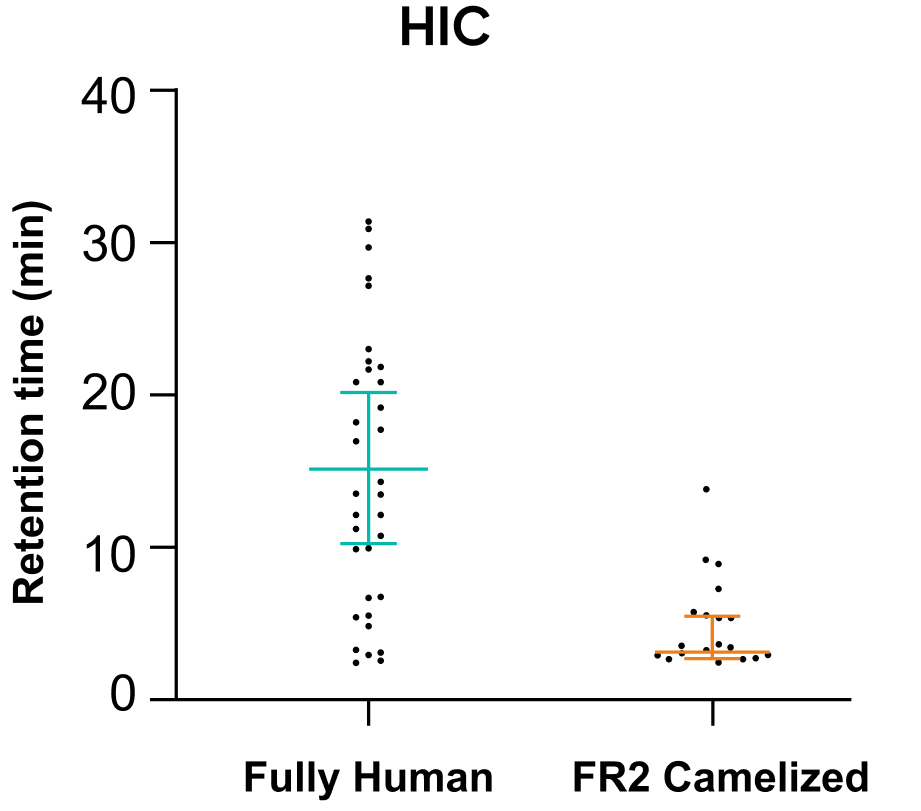
Hydrophobic interaction chromatography (HIC) analysis demonstrates that FR2-camelized VHH-Fcs exhibit significantly shorter retention times, indicating markedly enhanced surface hydrophilicity and a more favorable solubility profile. RenNano®-derived VHH-Fcs were expressed in CHO cells and purified in-house. Data are presented as the median and interquartile range.
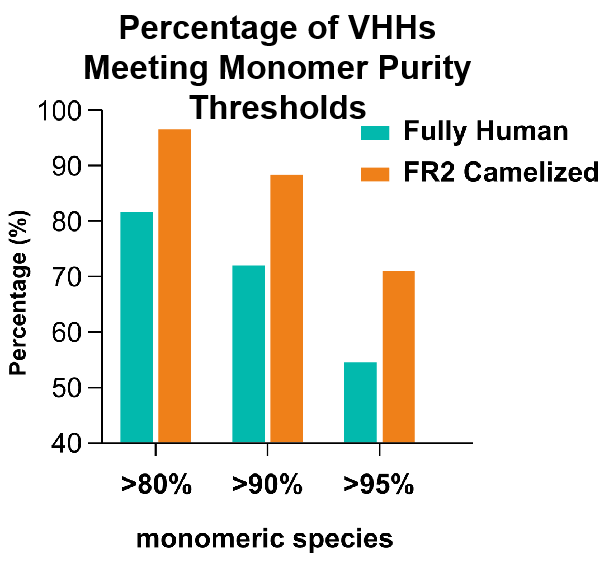
FR2-Camelized VHHs Exhibit Markedly Improved Monomer Purity
FR2-camelized VHHs demonstrate improved monomer purity, with a significantly higher proportion of clones meeting stringent purity thresholds (>80%, >90%, and >95%). RenNano®-derived VHHs were expressed in CHO cells or yeast and purified in-house. All 11 fully human VHHs were expressed in yeast; among the 60 FR2-camelized VHHs, 10 were expressed in yeast and 50 in CHO cells.