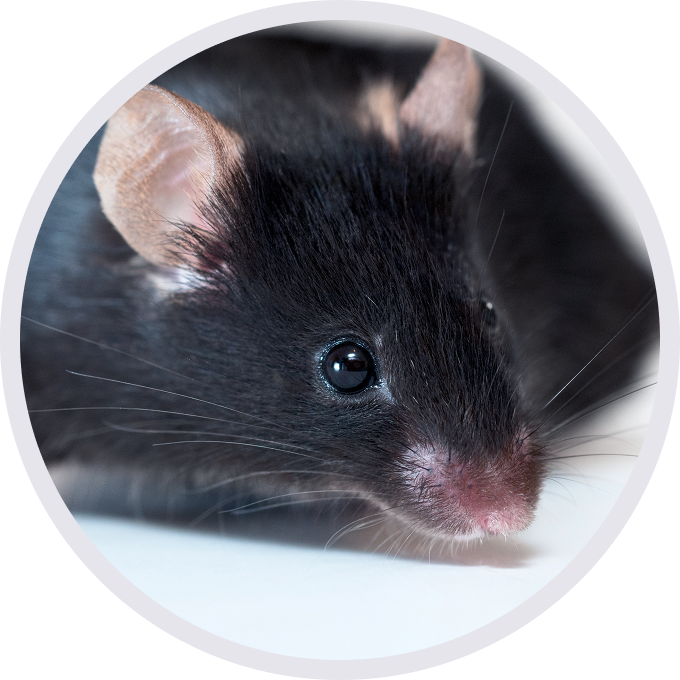
B-hAPP*K670N*M671L*V717I mice

C57BL/6JNifdc-Apptm1(APP*K670N*M671L*V717I )Bcgen /Bcgen • 113380

B-hAPP mice
B-hAREG mice

B-hAPP*K670N*M671L*V717I mice

Catalog Number
113380
Strain Name
C57BL/6JNifdc-Apptm1(APP*K670N*M671L*V717I )Bcgen /Bcgen
Strain Background
C57BL/6JNifdc
NCBI gene ID
351 (Human)
Aliases
AAA, ABETA, ABPP, AD1, APPI, CTFgamma, CVAP, PN-II, PN2, alpha-sAPP, preA4

on this page

  • Description
  • Targeting strategy
  • Phenotypic analysis
  • Efficacy
  • FAQ section

Posters

View All

    Publication

      Description
      • Amyloid precursor protein (APP) is a 100-140 kDa transmembrane glycoprotein closely associated with Alzheimer's disease (AD) pathogenesis.
      • Aberrant cleavage of APP by β-secretase and γ-secretase generates amyloid β peptides, including Aβ40 and Aβ42, which can oligomerize, aggregate, and form neurotoxic plaques.
      • B-hAPP*K670N*M671L*V717I mice carry human APP sequence with Swedish (K670N, M671L) and London (V717I) familial AD mutations inserted into the endogenous mouse App locus.
      • B-hAPP*K670N*M671L*V717I mice express human APP mRNA and human APP protein in disease-relevant CNS tissues, including cortex, hippocampus, cerebellum, and spinal cord.
      • This model supports pharmacodynamic, safety, and in vivo efficacy evaluation of human APP-targeted nucleic acid drugs and other Alzheimer's disease therapeutic strategies.

      Key Advantages

      • Endogenous App locus insertion of human APP with Swedish and London mutations
      • Human APP mRNA and protein expression validated in CNS tissues
      • Male and female expression data support sex-based study design
      • Supports in vivo evaluation of human APP-targeted nucleic acid therapeutics

      Validation

      • Molecular Validation:
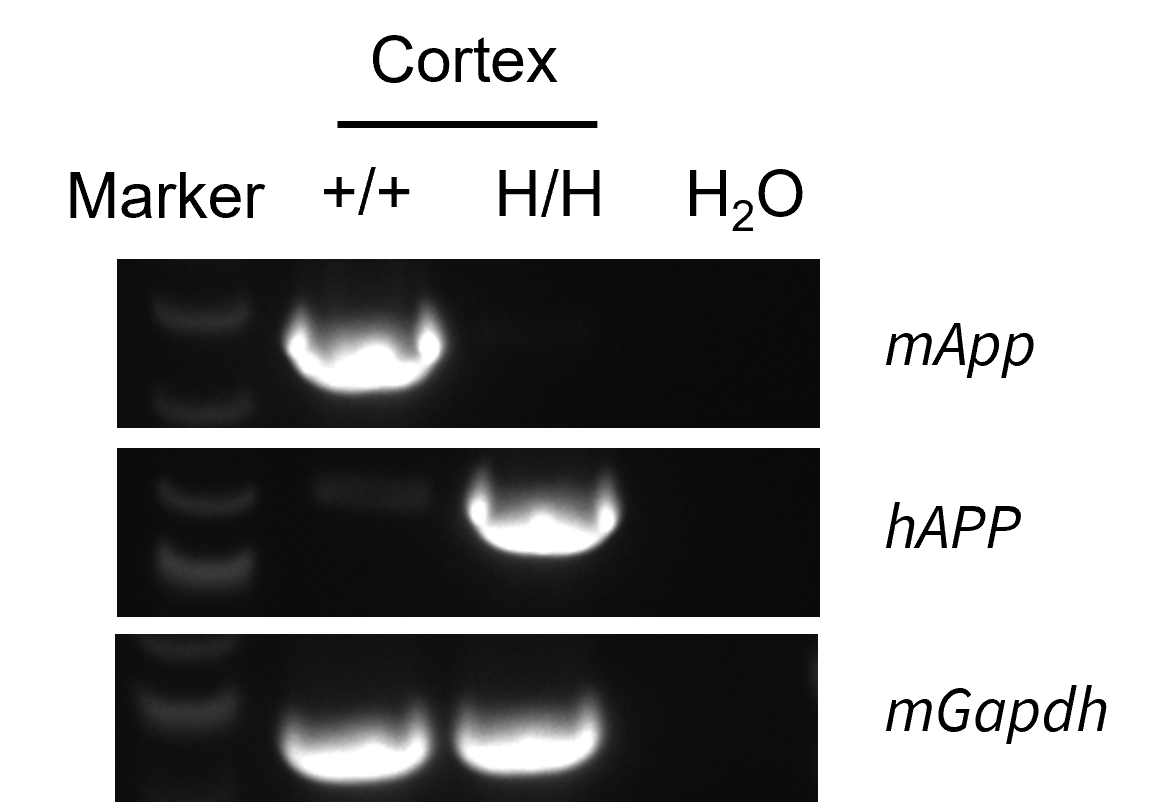
        Human APP mRNA was detected in homozygous B-hAPP*K670N*M671L*V717I mice by RT-PCR, while mouse App mRNA was detected in wild-type C57BL/6JNifdc mice.
      • Protein Validation:
        Human APP protein was detected in brain tissue, including cortex, hippocampus, cerebellum, and spinal cord, using species-specific anti-APP antibody.
      • Sex Comparison Validation:
        Human APP protein expression was compared between male and female homozygous B-hAPP*K670N*M671L*V717I mice, with no significant difference observed.
      • Efficacy Validation:
        ALN-APP analog reduced human APP mRNA in hippocampus, cortex, and spinal cord after ICV administration in B-hAPP*K670N*M671L*V717I mice.

      Application

      • Alzheimer's disease pharmacodynamics and safety evaluation
      • Human APP-targeted nucleic acid therapeutics studies
      • APP mRNA knockdown efficacy studies
      • CNS tissue expression and biomarker analysis
      • Swedish and London APP mutation model research
      • Preclinical evaluation of AD therapeutics targeting APP biology
      Targeting strategy

      APP

      • The partial 5’UTR and CDS that encodes the full-length human APP protein with Swedish (K670N, M671L) and London (V717I) mutation, followed by human 3’UTR-STOP is inserted right after mouse App 5’UTR to replace the exon 1 of mouse App gene.
      • The APP protein expression will be driven by endogenous mouse App promoter, while mouse App gene transcription and translation will be disrupted.
      mRNA Expression Analysis in APPK670NM671L*V717I Humanized Mice
      • Human APP mRNA was detected exclusively in the cerebral cortex of homozygous APPK670NM671L*V717I humanized mice and was not detected in wild-type C57BL/6 mice.

      Strain-specific analysis of mouse and human APP mRNA expression in wild-type C57BL/6 mice and APPK670NM671L*V717I humanized mice by RT-PCR. Total RNA was isolated from the cerebral cortex of wild-type C57BL/6 mice (+/+) and homozygous APPK670NM671L*V717I humanized mice (H/H). cDNA was synthesized by reverse transcription, followed by PCR amplification using mouse- or human-specific APP primers. Human APP mRNA was detected exclusively in homozygous APPK670NM671L*V717I humanized mice and was not detected in wild-type C57BL/6 mice.
      Protein Expression Analysis in APPK670NM671L*V717I Humanized Mice
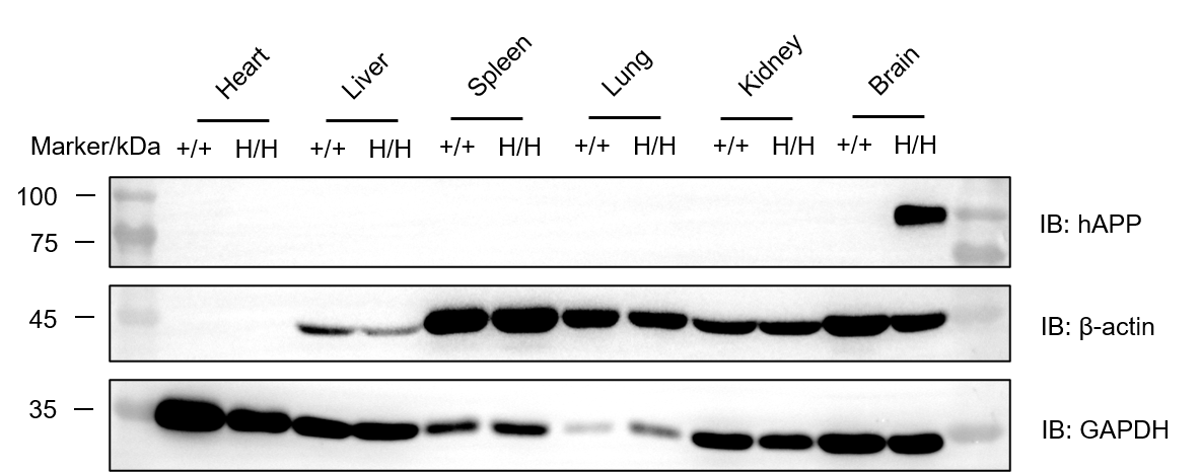
      • Human APP was detectable in the brain from homozygous APPK670NM671L*V717I humanized mice but not in wild-type mice.

      Protein expression analysis of APP in homozygous APPK670NM671L*V717I humanized mice. Various tissue lysates were collected from wild-type C57BL/6 mice (+/+) and homozygous APPK670NM671L*V717I humanized mice (H/H), and then analyzed by western blot with species-specific anti-APP antibody (abcam, ab133588). 50 μg total protein was loaded for western blotting analysis. Human APP was detected in brain from homozygous APPK670NM671L*V717I humanized mice but not in wild-type mice.
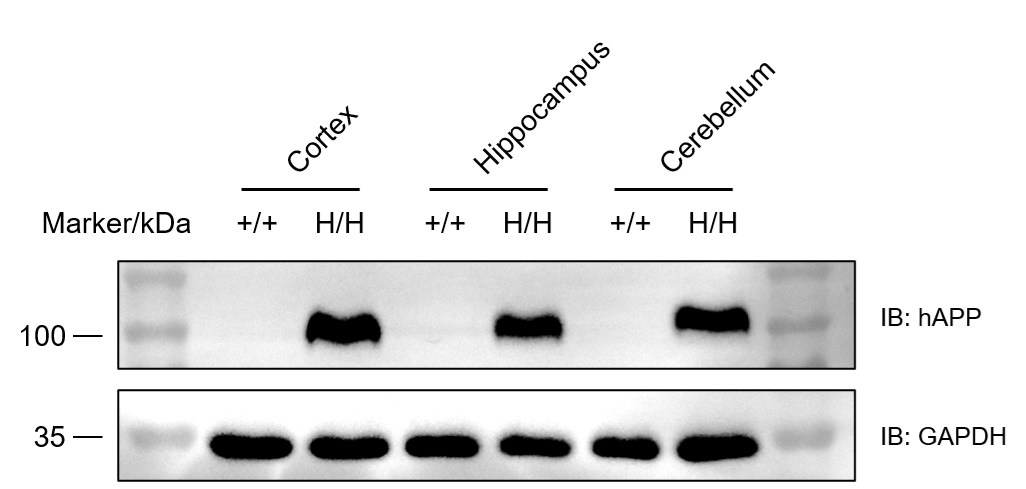
      • Human APP was detectable in the cortex, hippocampus and cerebellum from homozygous APPK670NM671L*V717I humanized mice but not in wild-type mice.
      Protein expression analysis of APP in homozygous APPK670NM671L*V717I humanized mice. Various tissue lysates were collected from wild-type C57BL/6 mice (+/+) and homozygous APPK670NM671L*V717I humanized mice (H/H), and then analyzed by western blot with species-specific anti-APP antibody (abcam, ab133588). 50 μg total protein was loaded for western blotting analysis. Human APP was detected in cortex, hippocampus and cerebellum from homozygous APPK670NM671L*V717I humanized mice but not in wild-type mice.

      Protein Expression Analysis in APP*K670N*M671L*V717I Humanized Mice
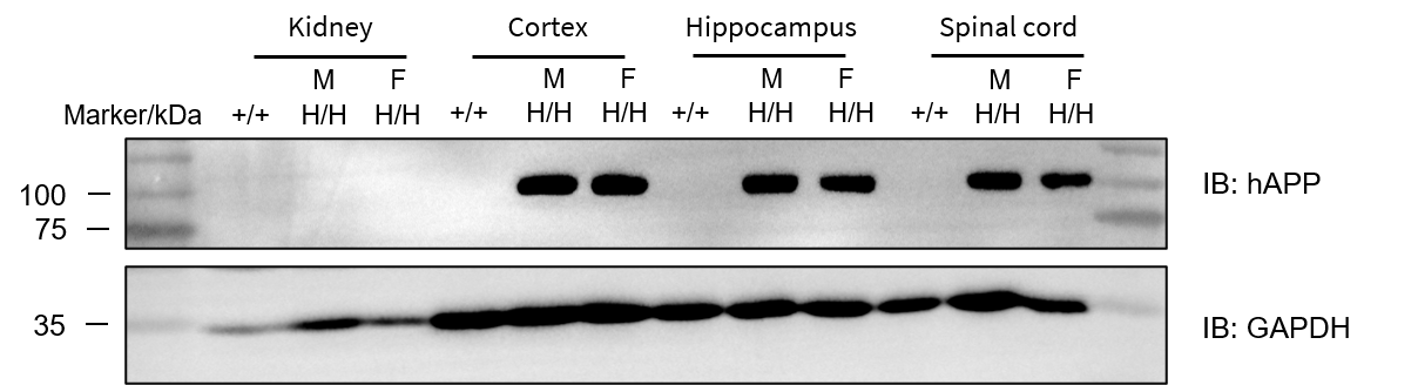
      • There was no significant difference in the expression of human APP between female and male mice from homozygous APPK670NM671L*V717I humanized mice.

      Protein expression analysis of APP in homozygous APPK670NM671L*V717I humanized mice. Various tissue lysates were collected from wild-type C57BL/6 mice (+/+) and homozygous APPK670NM671L*V717I humanized mice (H/H), and then analyzed by western blot with species-specific anti-APP antibody (Abcam, ab133588). 40 μg total proteins were loaded for western blotting analysis. Human APP was only detected in cortex, hippocampus and spinal cord from homozygous APPK670NM671L*V717I humanized mice but not in wild-type mice. There was no significant difference in the expression of human APP between female and male mice from homozygous APPK670NM671L*V717I humanized mice. M, Male; F, Female.
      Inhibitory Efficacy of Nucleic Acid Drugs Against Human APP in APPK670NM671L*V717I Humanized Mice

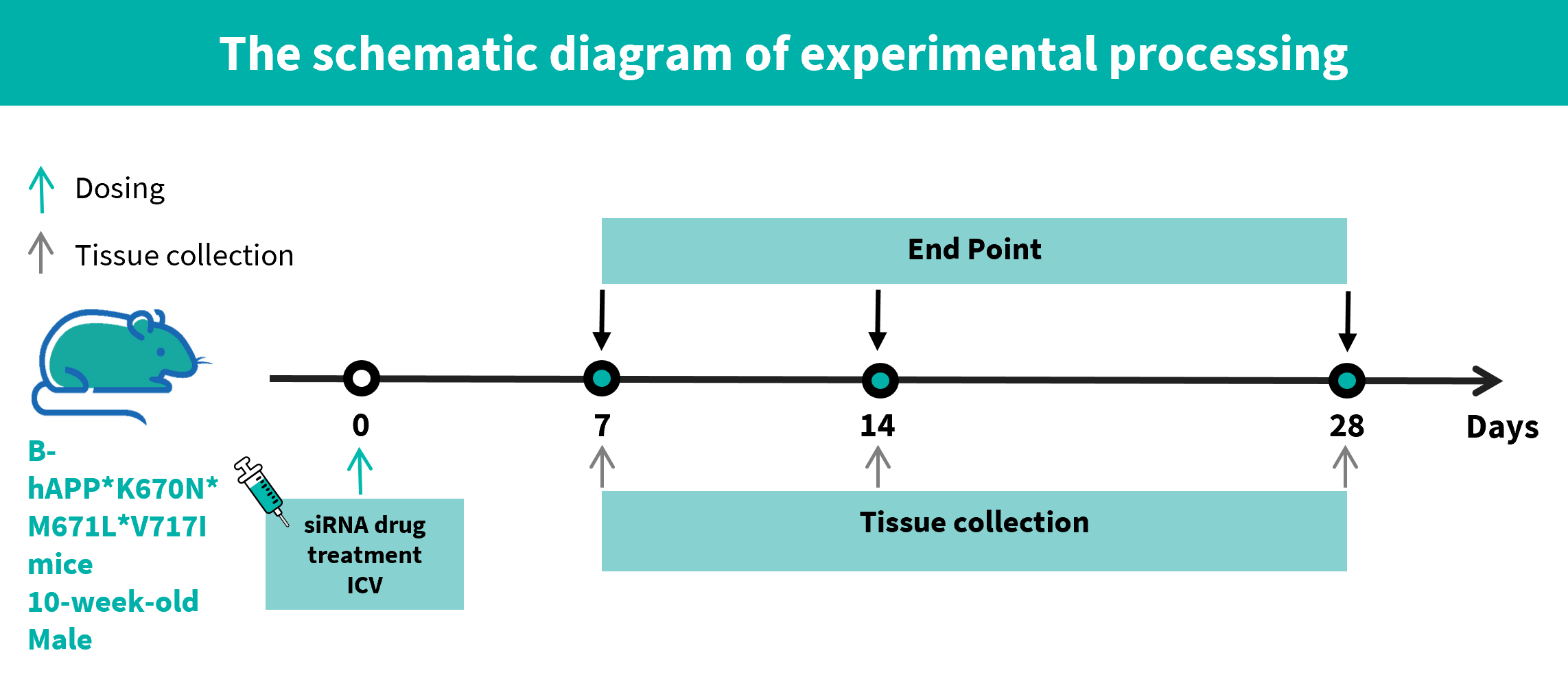
      Experimental schedule for the inhibitory efficiency of the siRNA drugs in APPK670NM671L*V717I humanized mice. APPK670NM671L*V717I humanized mice were randomly divided into two groups (n=4/group, 10-week-old, male). The ALN-APP analog (provided by client) and vehicle were administered to the mice individually by intra-cerebroventricular injection (ICV). The mice were sacrificed on day 7, day 14 and day 28, respectively. Then the hippocampus, cortex and spinal cord tissue were collected to detect the human APP mRNA by qRT-PCR.
      Inhibitory Efficacy of Nucleic Acid Drugs Against Human APP in APP*K670N*M671L*V717I Humanized Mice
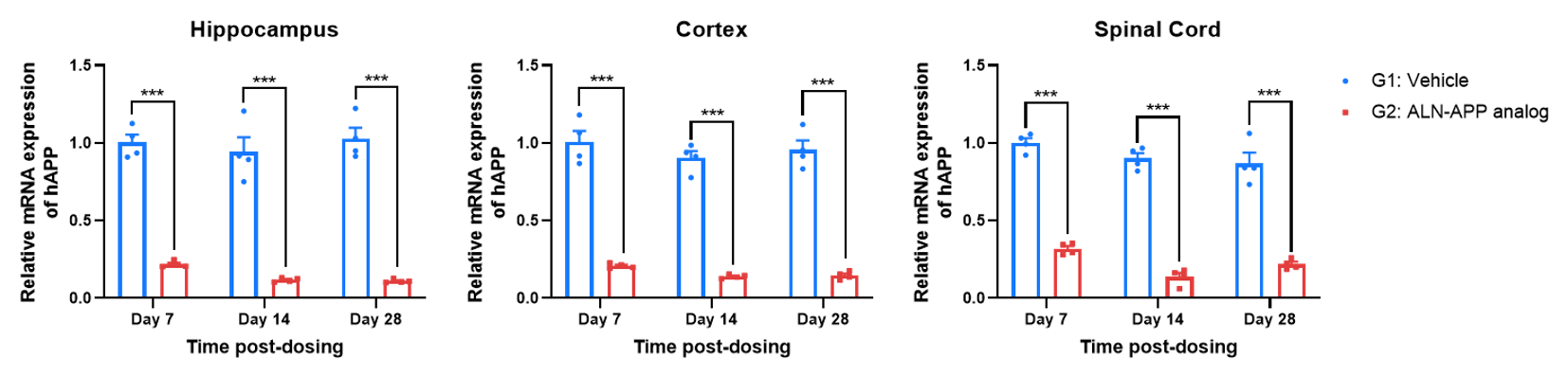
      • APPK670NM671L*V717I humanized mice provide a powerful preclinical model for in vivo evaluation of human APP targeted nucleic acid drugs.

      The inhibitory efficiency of the siRNA drugs against human APP in APPK670NM671L*V717I humanized mice. The expression of human APP mRNA in hippocampus, cortex and spinal cord was detected by qRT-PCR. The human APP mRNA in the treatment group (G2) was significantly reduced compared to the control group (G1), demonstrating that APPK670NM671L*V717I humanized mice provide a powerful preclinical model for in vivo evaluation of human APP targeted nucleic acid drugs. Values are expressed as mean ± SEM. Significance was determined by unpaired test. ***P < 0.001.

      This experiment was conducted in collaboration with the client using APPK670NM671L*V717I humanized mice.

      FAQ section

      Q: Does the homozygous B-hAPP*K670N*M671L*V717I mice retain any endogenous mouse App gene fragments?

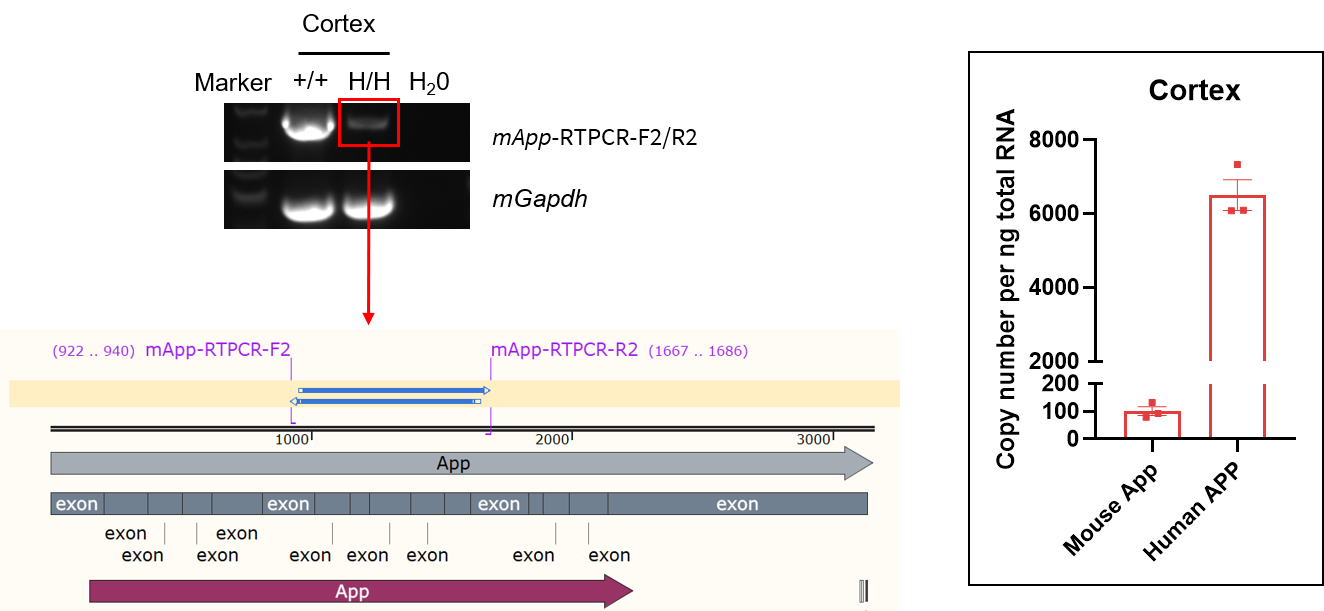
      A: The mouse App mRNA was still could detected in homozygous B-hAPP*K670N*M671L*V717I mice, but the proportion was very low.  We detected the expression ratios of mouse App and human APP in the cortex of homozygous B-hAPP*K670N*M671L*V717I mice.  The expression level of mouse App was only 1/60—1/50 of that of human APP.
      * When publishing results obtained using this animal model, please acknowledge the source as follows: The animal model [B-hAPP*K670N*M671L*V717I mice] (Cat# 113380) was purchased from Biocytogen.