Description
- CD3 Molecule: As a vital component of the T-cell receptor (TCR) complex, CD3 is responsible for transducing antigen recognition signals into the cell interior. The engagement and ligation of CD3 can directly induce T-cell activation.
- Functional mechanism of KLK2 and PSA: KLK2, a member of the kallikrein family, functions synergistically with prostate-specific antigen (PSA/KLK3) in the prostate. Its expression is androgen-dependent, regulated through the androgen response element (ARE) in its promoter region, linking it directly to androgen receptor (AR) activity. KLK2 promotes angiogenesis and remodels the tumor microenvironment, thereby enhancing tumor aggressiveness and playing a key role in prostate cancer progression. PSA is not only a synergistic partner of KLK2 but also a promising therapeutic target. It critically influences multiple oncogenic processes, including cell proliferation, invasion, metastasis, angiogenesis, apoptosis, immune modulation, and tumor microenvironment regulation.
- T-Cell Engagement (TCE): CD3 redirection bispecific antibodies bind tumor associated antigens (TAA) on cancer cells and CD3 on recruited T cells to elicit cancer cell cytotoxicity independent of T cell receptor specificity. Cancer cell cytotoxicity occurs through perforin and granzyme B release resulting in apoptosis through caspase pathway induction.
- CD3/KLK2/KLK3 Antibody: T-cell engager platform includes a KLK2-targeted bispecific antibody and a KLK2/KLK3-targeted trispecific antibody, both of which bind to tumor-associated antigens on prostate cancer cells and to CD3 on T cells to mediate T-cell-dependent killing without requiring T-cell receptor recognition.
Gene Targeting Strategy
CD3E
- The exons 2-6 of mouse Cd3e gene that encode the extracellular domain were replaced by human CD3E exons 2-7 in B-hCD3E/hKLK2/hKLK3 mice.
KLK2/KLK3
- The full coding sequences of human KLK2 and KLK3 gene, including the promoter, 5’UTR and 3’UTR are inserted into mouse Hipp11 (H11) locus in B-hCD3E/hKLK2/hKLK3 mice.
CD3E Protein Expression Analysis
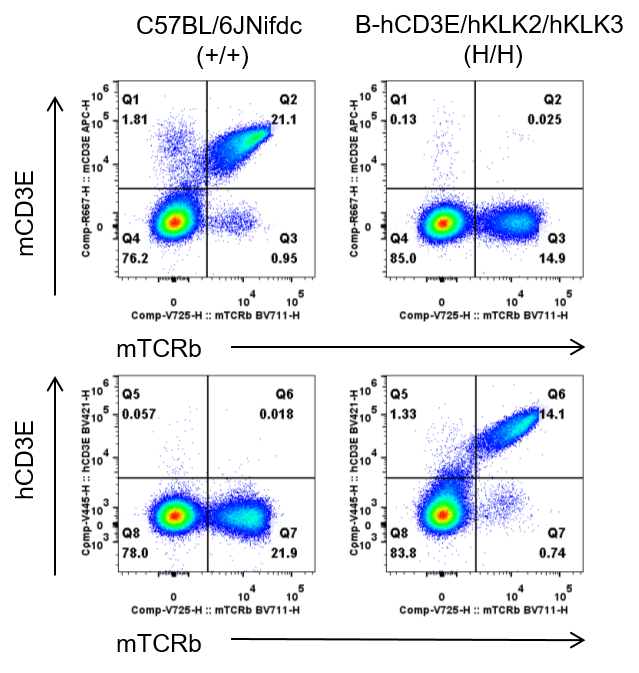
- Mouse CD3E was exclusively detectable on the T cells of wild-type mice, but not on homozygous B-hCD3E/hKLK2/hKLK3 mice. Human CD3E was exclusively detectable on the T cells of homozygous B-hCD3E/hKLK2/hKLK3 mice.
Strain specific CD3E expression analysis in wild-type mice and homozygous B-hCD3E/hKLK2/hKLK3 mice by flow cytometry. Splenocytes were collected from wild-type C57BL/6JNifdc mice (+/+) and homozygous B-hCD3E/hKLK2/hKLK3 mice(H/H), and analyzed by flow cytometry with species-specific anti-mouse CD3E antibody (Biolegend, 100312) and anti-human CD3E antibody (BD Horizon™, 562426).
KLK2 Protein Expression Analysis
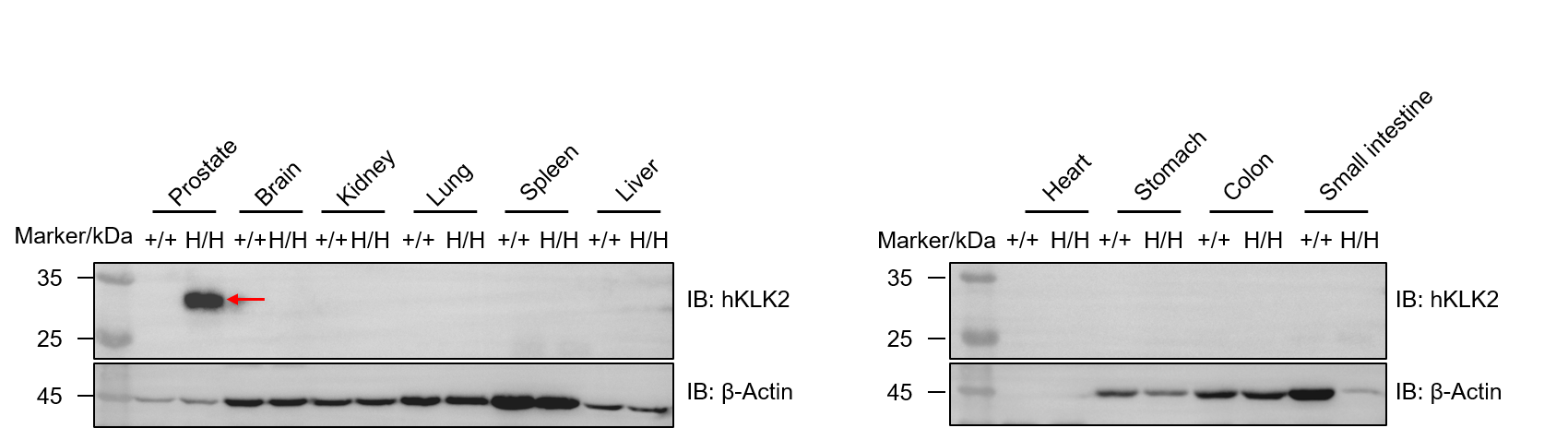
- KLK2 was detected in prostate of homozygous B-hCD3E/hKLK2/hKLK3 mice.
Western blot analysis of KLK2 protein expression in homozygous B-hCD3E/hKLK2/hKLK3 mice. Various tissue lysates were collected from wild-type C57BL/6JNifdc mice (+/+) and homozygous B-hCD3E/hKLK2/hKLK3 mice (H/H), and then analyzed by western blot with anti-KLK2 antibody (LSbio, LS-C336461). 40 μg total proteins were loaded for western blotting analysis.
KLK3 Expression Pattern Analysis by IHC
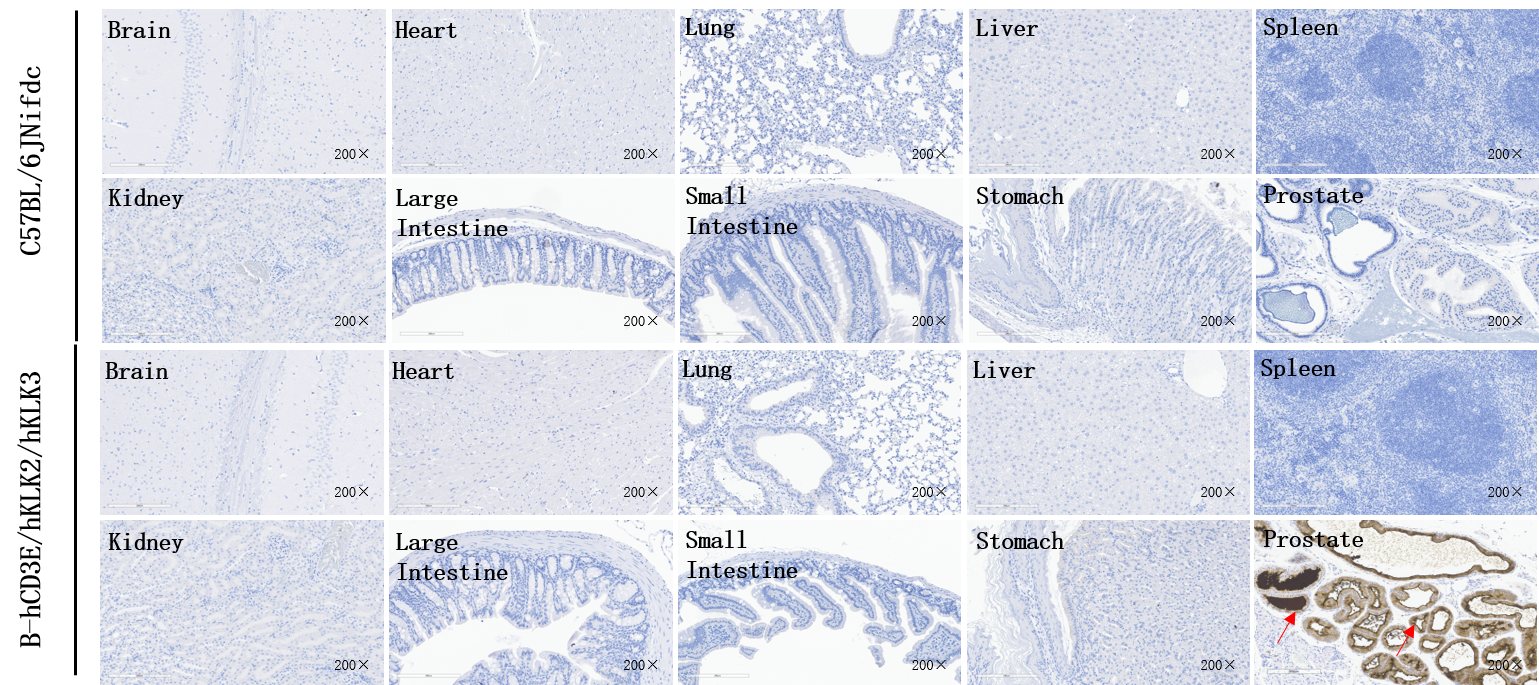
- KLK3 was exclusively detectable in prostate of B-hCD3E/hKLK2/hKLK3 mice, but not in wild-type mice.
Immunohistochemical (IHC) analysis of KLK3 expression in wild-type C57BL/6JNifdc mice and homozygous B-hCD3E/hKLK2/hKLK3 mice. Various tissue were collected from wild-type mice (+/+) and homozygous B-hCD3E/hKLK2/hKLK3 mice (H/H; H/H; H/H) and analyzed by IHC with anti-KLK3 antibody (abcam, ab76113).
Anti-tumor Effect of Pasritamig-analog against B-Tg(hKLK2) MC38 Tumor Cells
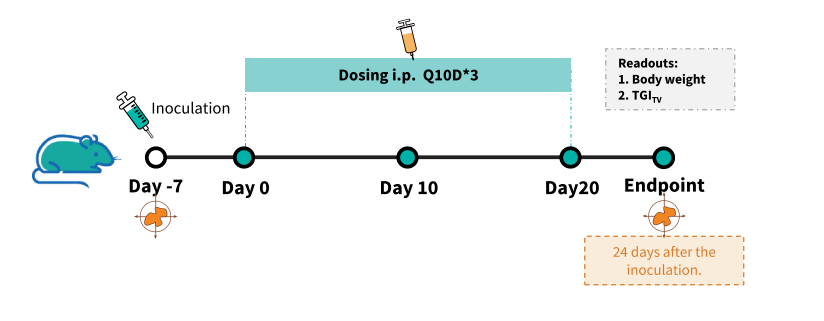
Establishment of a B-Tg(hKLK2) MC38 model and in vivo efficacy study of the Pasritamig-analog. B-Tg(hKLK2) MC38 cells were implanted subcutaneously into homozygous B-hCD3E/hKLK2/hKLK3 mice (male, 12-weeks-old, n=6). Mice were grouped once tumor volume reached approximately 88 mm³, at which time they were intravenously injected with anti-human CD3/KLK2 bispecific antibody Pasritamig-analog (made in house).
Antitumor activity of Pasritamig-analog against syngeneic tumors. (A) Tumor growth curves. (B) Body weight changes during treatment. (C) Tumor cells growth of individual mouse. As shown in panel A, CD3/KLK3 bispecific antibodies (made in house) was efficacious in controlling tumor growth in B-hCD3E/hKLK2/hKLK3 mice. These results demonstrate that B-hCD3E/hKLK2/hKLK3 mice provide a powerful preclinical model for in vivo evaluation of anti-human CD3E/KLK2 bispecific antibodies. Values are expressed as mean ± SEM. The overage of this tumor model is 40%.
* When publishing results obtained using this animal model, please acknowledge the source as follows: The animal model [B-hCD3E/hKLK2/hKLK3 mice] (Cat# 113581) was purchased from Biocytogen.