CD45 Protein Expression in Blood
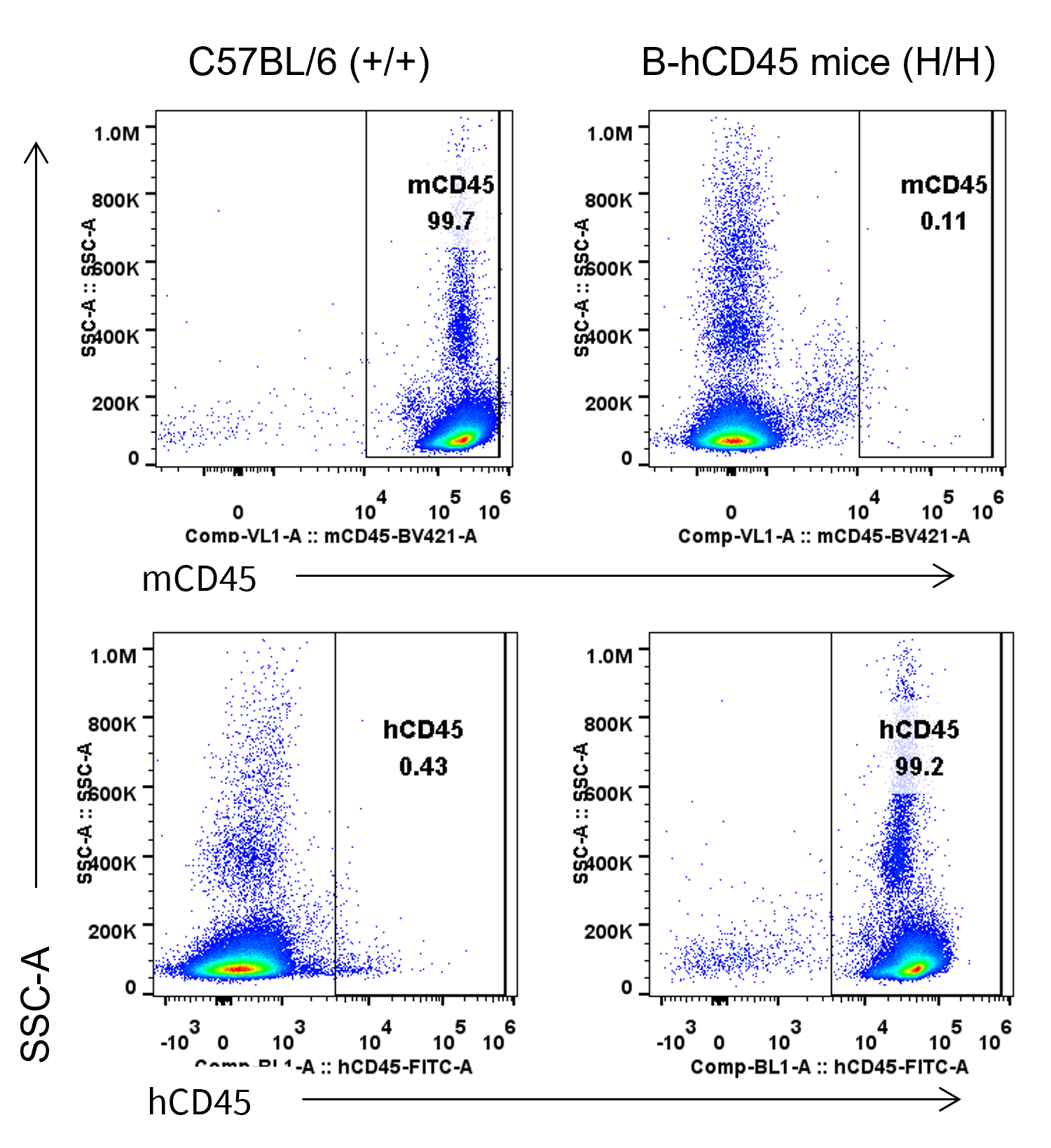
- Mouse CD45 was detected in wild-type C57BL/6 mice.
- Human CD45 was detected in B-hCD45 mice, but not in wild-type C57BL/6 mice.
Strain specific CD45 expression analysis in homozygous B-hCD45 mice by flow cytometry. Blood was collected from wild-type C57BL/6 (+/+) and homozygous B-hCD45 mice (H/H) and analyzed by flow cytometry with species-specific anti-CD45 antibody. Mouse CD45 was detectable in wild-type mice. Human CD45 was exclusively detectable in homozygous B-hCD45 mice but not in wild-type mice.
Analysis of Leukocyte Subpopulations
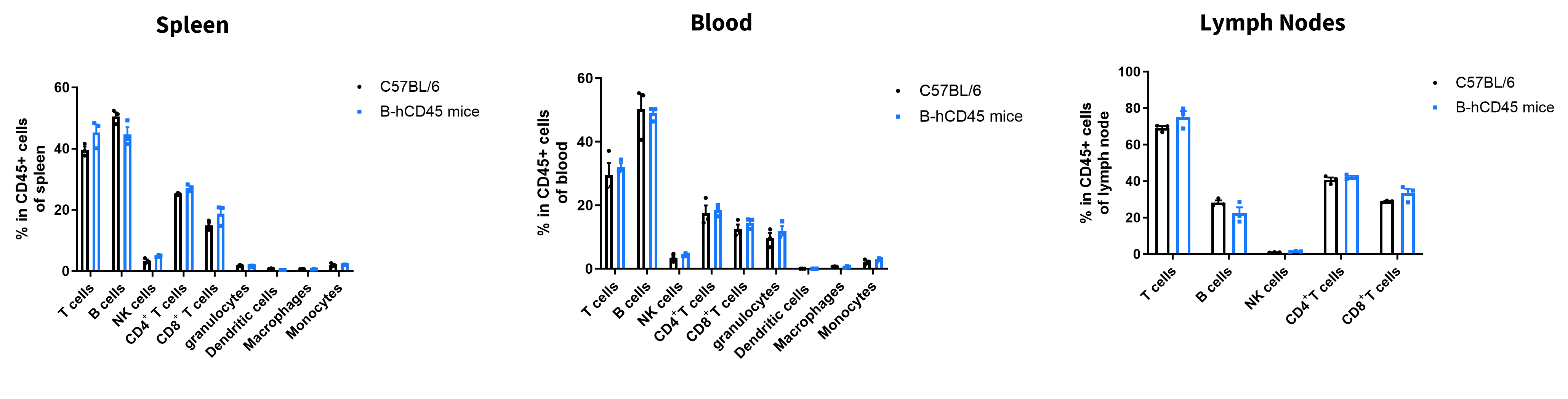
- The percentages of T cells, B cells, NK cells, DCs, granulocytes, monocytes, and macrophages in homozygous B-hCD45 mice were similar to those in C57BL/6 mice.
- Humanization CD45 does not affect normal immune cell development or splenic distribution.
Analysis of leukocyte subpopulations by flow cytometry in immune organs and blood. Splenocytes, peripheral blood, and lymph nodes were isolated from female C57BL/6 and B-hCD45 mice (female, 8-week-old, n = 3). Single live cells were gated on the CD45⁺ population and analyzed by flow cytometry as indicated. Values are expressed as mean ± SEM.
Analysis of T Cell Subpopulations
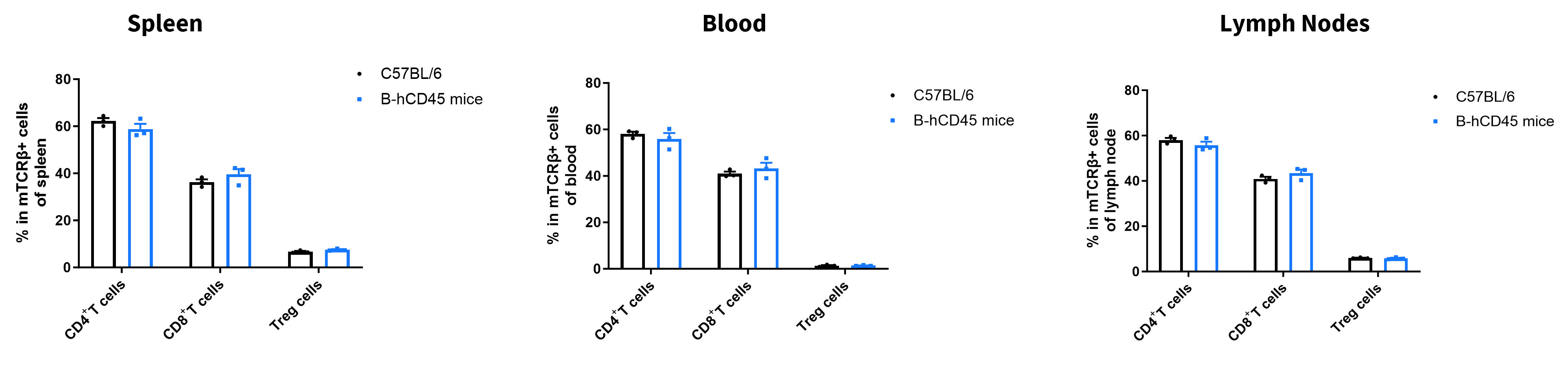
- The proportions of CD4⁺ T cells, CD8⁺ T cells, and Tregs in homozygous B-hCD45 mice were comparable to those in C57BL/6 mice.
- Humanization of CD45 does not affect normal T cell development, differentiation, or splenic distribution.
Analysis of T-cell subpopulations by flow cytometry in immune organs and blood. Splenocytes, peripheral blood, and lymph nodes were isolated from female C57BL/6 and B-hCD45 mice (female, 8-week-old, n = 3). Single live cells were gated on the TCRβ⁺ T-cell population and analyzed by flow cytometry as indicated. Values are expressed as mean ± SEM.
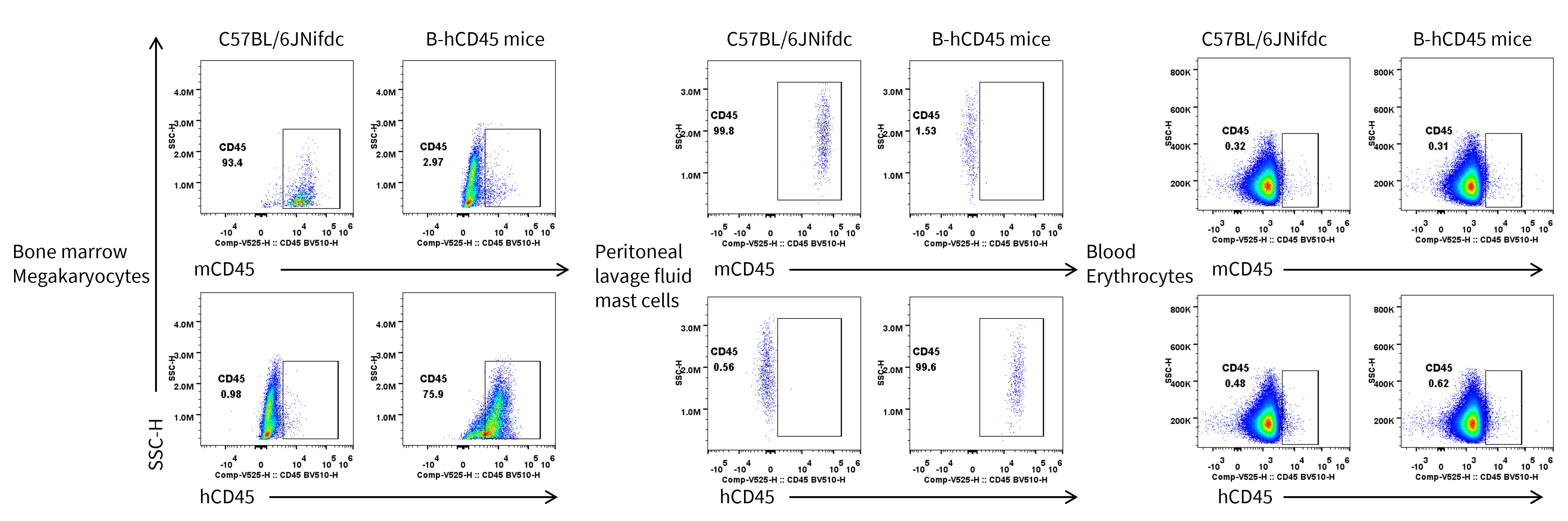
Protein Expression Analysis in Megakaryocytes, Mast Cells and Erythrocytes
- Mouse CD45 was detected in megakaryocytes and mast cells but not erythrocytes from wild-type C57BL/6JNifdc mice.
- Human CD45 was detected in megakaryocytes and mast cells but not erythrocytes from B-hCD45 mice, but not in wild-type C57BL/6JNifdc mice.
Strain specific CD45 expression analysis in wild-type C57BL/6JNifdc mice and homozygous B-hCD45 mice by flow cytometry. Bone marrow, peritoneal lavage fluid and blood were collected from wild-type C57BL/6JNifdc mice(+/+) (n=1, Female, 7-week-old) and homozygous B-hCD45 mice (H/H) (n=1, Female, 7-week-old). Protein expression was analyzed with anti-mouse CD45 antibody (Biolegend, 103138) and anti-human CD45 antibody (Biolegend, 304036) by flow cytometry. Mouse CD45 was only detectable in wild-type C57BL/6JNifdc mice, and human CD45 was only detectable in homozygous B-hCD45 mice.
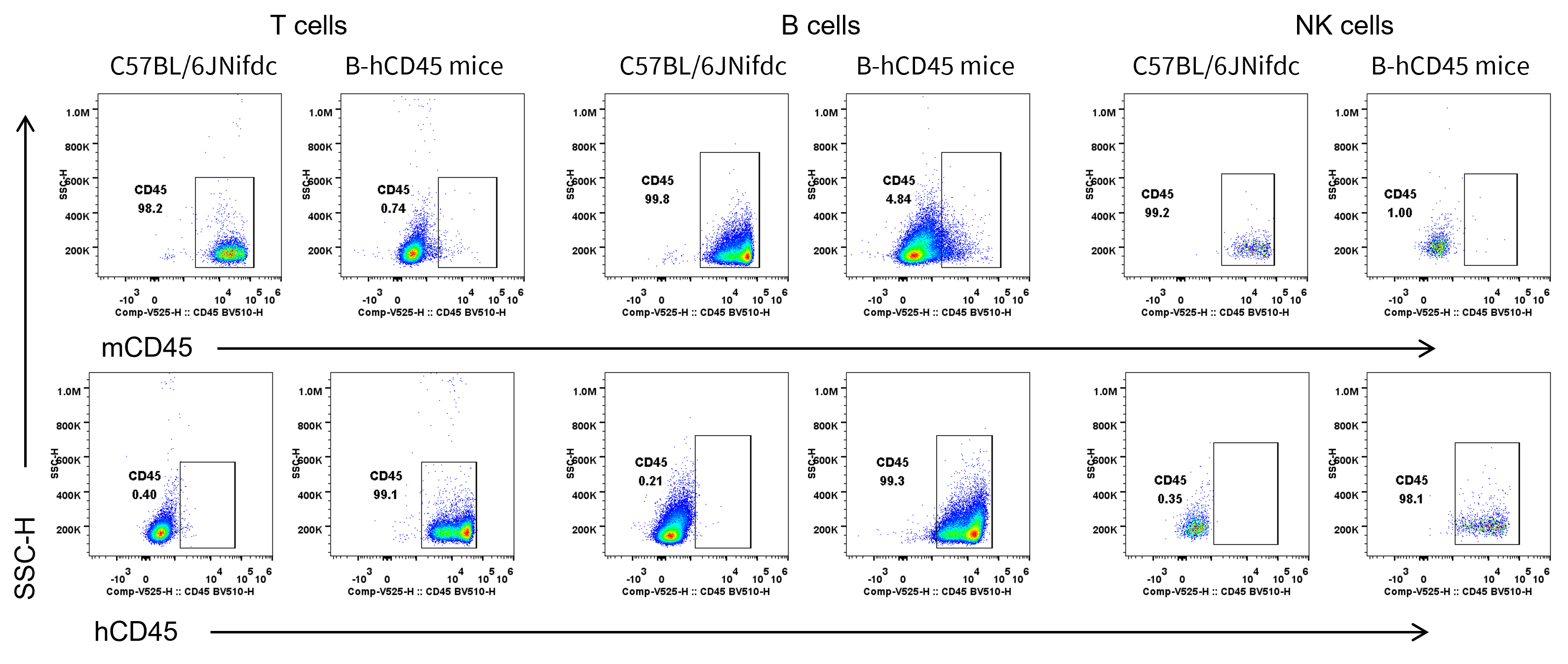
Protein Expression Analysis-Spleen
- Mouse CD45 was detected in T cells, B cells and NK cells from wild-type C57BL/6JNifdc mice.
- Human CD45 was detected in T cells, B cells and NK cells from B-hCD45 mice, but not in wild-type C57BL/6JNifdc mice.
Strain specific CD45 expression analysis in wild-type C57BL/6JNifdc mice and homozygous B-hCD45 mice by flow cytometry. Splenocytes were collected from wild-type C57BL/6JNifdc mice(+/+) (n=1, Female, 7-week-old) and homozygous B-hCD45 mice (H/H) (n=1, Female, 7-week-old). Protein expression was analyzed with anti-mouse CD45 antibody (Biolegend, 103138) and anti-human CD45 antibody (Biolegend, 304036) by flow cytometry. Mouse CD45 was only detectable in wild-type C57BL/6JNifdc mice, and human CD45 was only detectable in homozygous B-hCD45 mice.
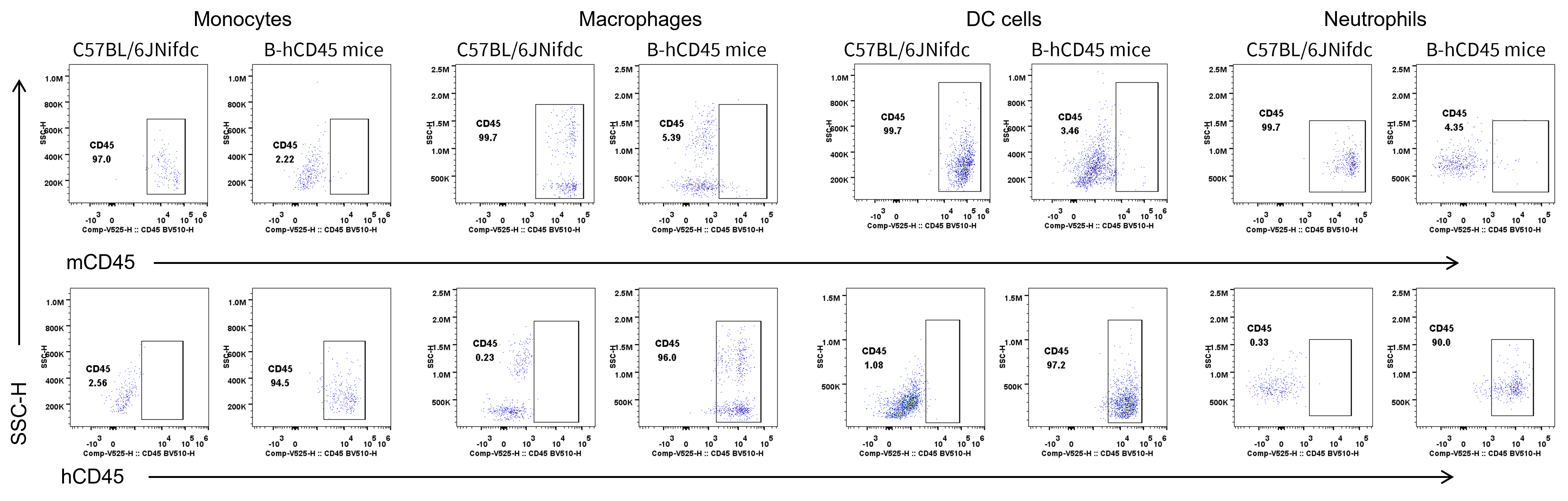
- Mouse CD45 was detected in monocytes, macrophages, DC cells and neutrophils from wild-type C57BL/6JNifdc mice.
- Human CD45 was detected in monocytes, macrophages, DC cells and neutrophils from B-hCD45 mice, but not in wild-type C57BL/6JNifdc mice.
Strain specific CD45 expression analysis in wild-type C57BL/6JNifdc mice and homozygous B-hCD45 mice by flow cytometry. Splenocytes were collected from wild-type C57BL/6JNifdc mice(+/+) (n=1, Female, 7-week-old) and homozygous B-hCD45 mice (H/H) (n=1, Female, 7-week-old). Protein expression was analyzed with anti-mouse CD45 antibody (Biolegend, 103138) and anti-human CD45 antibody (Biolegend, 304036) by flow cytometry. Mouse CD45 was only detectable in wild-type C57BL/6JNifdc mice, and human CD45 was only detectable in homozygous B-hCD45 mice.
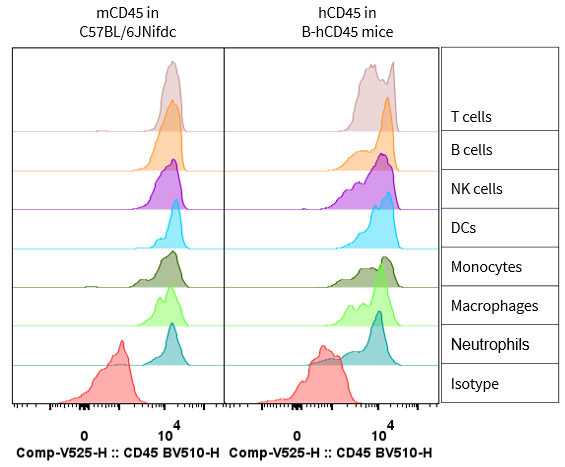
Protein Expression Profiles of CD45 in Spleen
- Mouse CD45 was detected in T cells, B cells, NK cells, monocytes, macrophages, DC cells and neutrophils from wild-type C57BL/6JNifdc mice.
- Human CD45 was detected in T cells, B cells, NK cells, monocytes, macrophages, DC cells and neutrophils from B-hCD45 mice, but not in wild-type C57BL/6JNifdc mice.
Strain specific CD45 expression analysis in wild-type C57BL/6JNifdc mice and homozygous B-hCD45 mice by flow cytometry. Splenocytes were collected from wild-type C57BL/6JNifdc mice(+/+) (n=1, Female, 7-week-old) and homozygous B-hCD45 mice (H/H) (n=1, Female, 7-week-old). Protein expression was analyzed with anti-mouse CD45 antibody (Biolegend, 103138) and anti-human CD45 antibody (Biolegend, 304036) by flow cytometry. Mouse CD45 was only detectable in wild-type C57BL/6JNifdc mice, and human CD45 was only detectable in homozygous B-hCD45 mice.
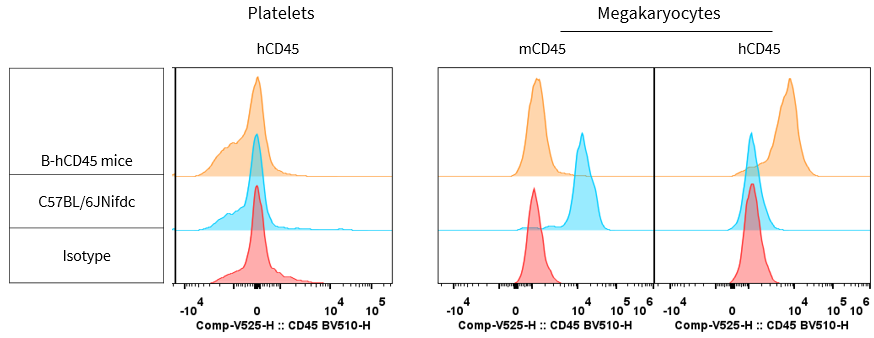
Protein Expression Profiles of CD45 in Platelets and Megakaryocytes
- Mouse CD45 was only detectable in megakaryocytes from wild-type C57BL/6JNifdc mice
- Human CD45 was only detectable in megakaryocytes but not platelets from homozygous B-hCD45 mice.
Strain specific CD45 expression analysis in wild-type C57BL/6JNifdc mice and homozygous B-hCD45 mice by flow cytometry. Bone marrow and blood were collected from wild-type C57BL/6JNifdc mice(+/+) (n=1, Female, 7-week-old) and homozygous B-hCD45 mice (H/H) (n=1, Female, 7-week-old). Protein expression was analyzed with anti-mouse CD45 antibody (Biolegend, 103138) and anti-human CD45 antibody (Biolegend, 304036) by flow cytometry. Mouse CD45 was only detectable in megakaryocytes from wild-type C57BL/6JNifdc mice. Human CD45 was only detectable in megakaryocytes but not platelets from homozygous B-hCD45 mice.
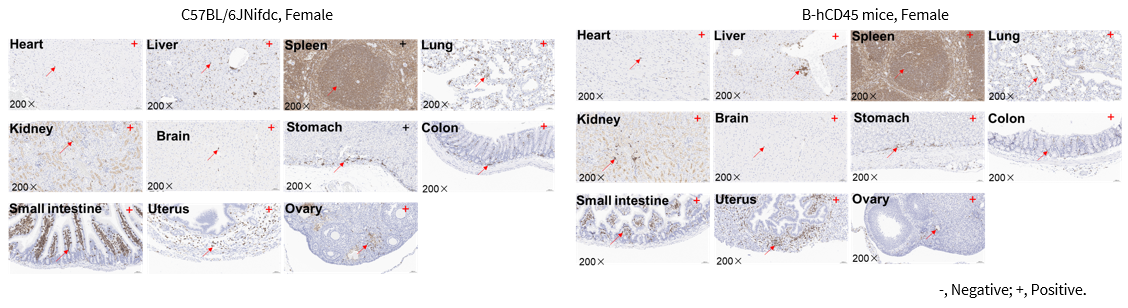
Protein Expression Profile of CD45
- Human CD45 is expressed ubiquitously in tissues of female B-hCD45 mice.
Immunohistochemical (IHC) analysis was performed to evaluate CD45 protein expression in wild-type (WT) C57BL/6JNifdc mice and B-hCD45 mice. Tissues from eleven major organs were collected from WT and homozygous B-hCD45 mice (n=1, 8 weeks old) and analyzed by IHC using anti-CD45 antibody (CST, 70257). Human CD45 expression was detected in the heart, liver, spleen, lung, brain, stomach, colon, small intestine, uterus and ovary of homozygous B-hCD45 mice. The results demonstrated that the human CD45 is expressed ubiquitously in tissues of B-hCD45 mice. The red arrow indicates the positive cells.
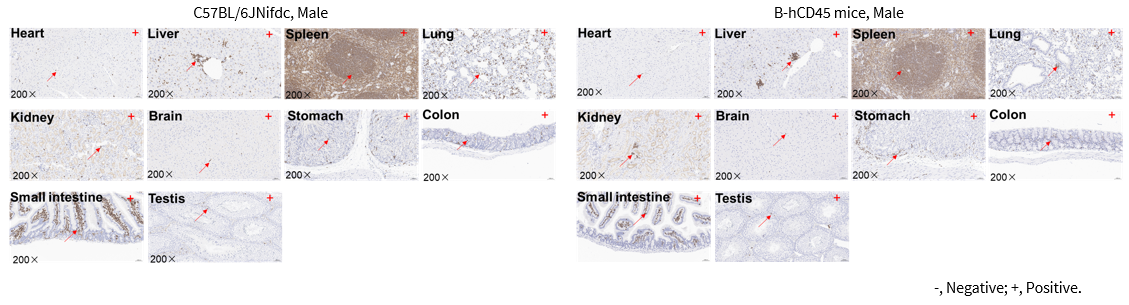
- Human CD45 is expressed ubiquitously in tissues of male B-hCD45 mice.
Immunohistochemical (IHC) analysis was performed to evaluate CD45 protein expression in wild-type (WT) C57BL/6JNifdc mice and B-hCD45 mice. Tissues from eleven major organs were collected from WT and homozygous B-hCD45 mice (n=1, 8 weeks old) and analyzed by IHC using anti-CD45 antibody (CST, 70257). Human CD45 expression was detected in the heart, liver, spleen, lung, brain, stomach, colon, small intestine, and testis of homozygous B-hCD45 mice. The results demonstrated that the human CD45 is expressed ubiquitously in tissues of B-hCD45 mice . The red arrow indicates the positive cells.
* When publishing results obtained using this animal model, please acknowledge the source as follows: The animal model [B-hCD45 mice] (Cat# 110973) was purchased from Biocytogen.