
C57BL/6N-Lrrc15tm1(LRRC15)Bcgen/Bcgen • 111177
on this page

LRRC15: A Stromal Target in Cancer and Fibrosis

LRRC15

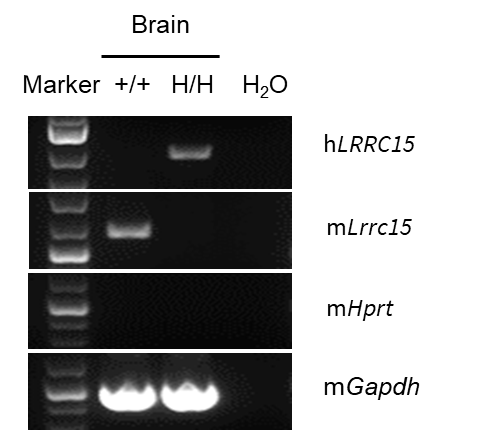
Human LRRC15 was detectable in B-hLRRC15 mice by RT-PCR and sequencing. Brain tissues were isolated from wild-type C57BL/6 mice (+/+) and homozygous B-hLRRC15 mice (H/H). (A) Primers were designed to detect human LRRC15 and mouse LRRC15. (B) Human LRRC15 mRNA was detectable in B-hLRRC15 mice, but not in wild-type mice. Sequencing of PCR products confirmed that the amplified sequences were consistent with database reference sequences.
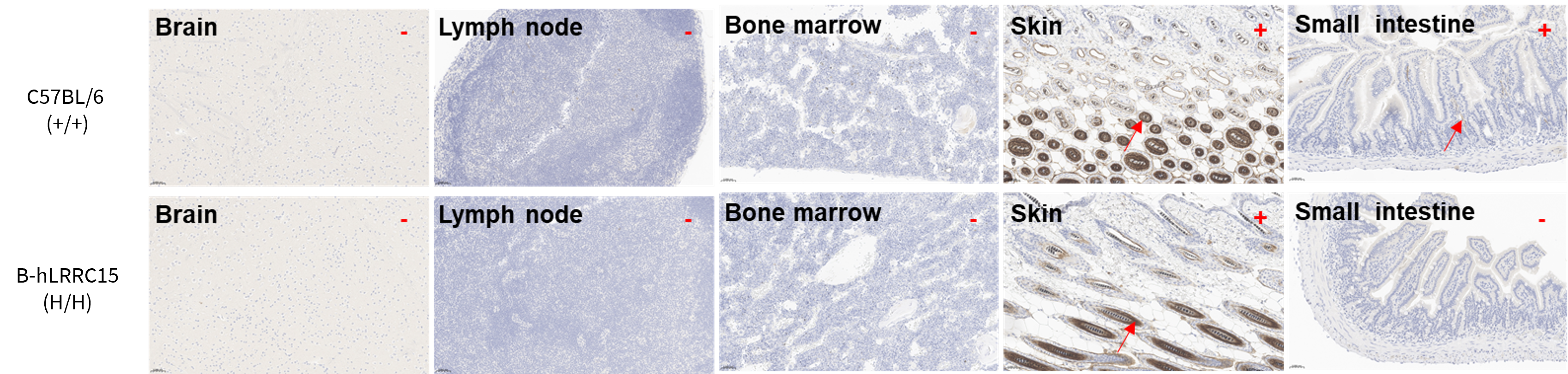
Immunohistochemical analysis of organs in B-hLRRC15 mice. Major organs were collected from wild-type C57BL/6 mice and homozygous B-hLRRC15 mice (female, 6-7-week-old), and analyzed by IHC using anti-LRRC15 antibody (CST, #50546S). The arrow indicates tissue cells with positive LRRC15 staining (brown). “+” indicates that the tissue is positive, and “-” indicates that the tissue is negative.
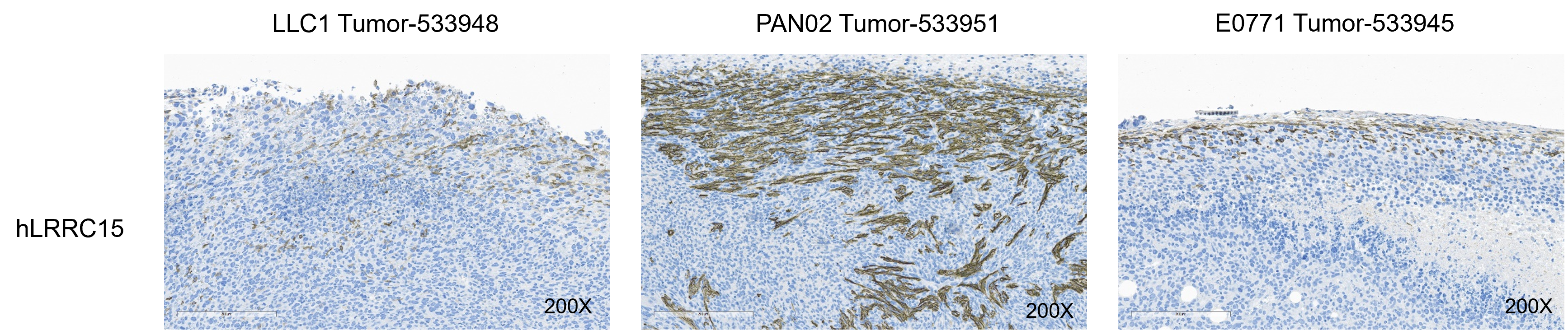
Immunohistochemical (IHC) analysis of human LRRC15 expression in tumors from B-hLRRC15 mice bearing PAN02, LLC1, and E0771 cell-derived grafts. Tumors were collected from B-hLRRC15 mice at the experimental endpoint, and analyzed by IHC using anti-LRRC15 antibody (provided by the client).
Notes: This data was validated collaboratively by the client and Biocytogen (24P095803).

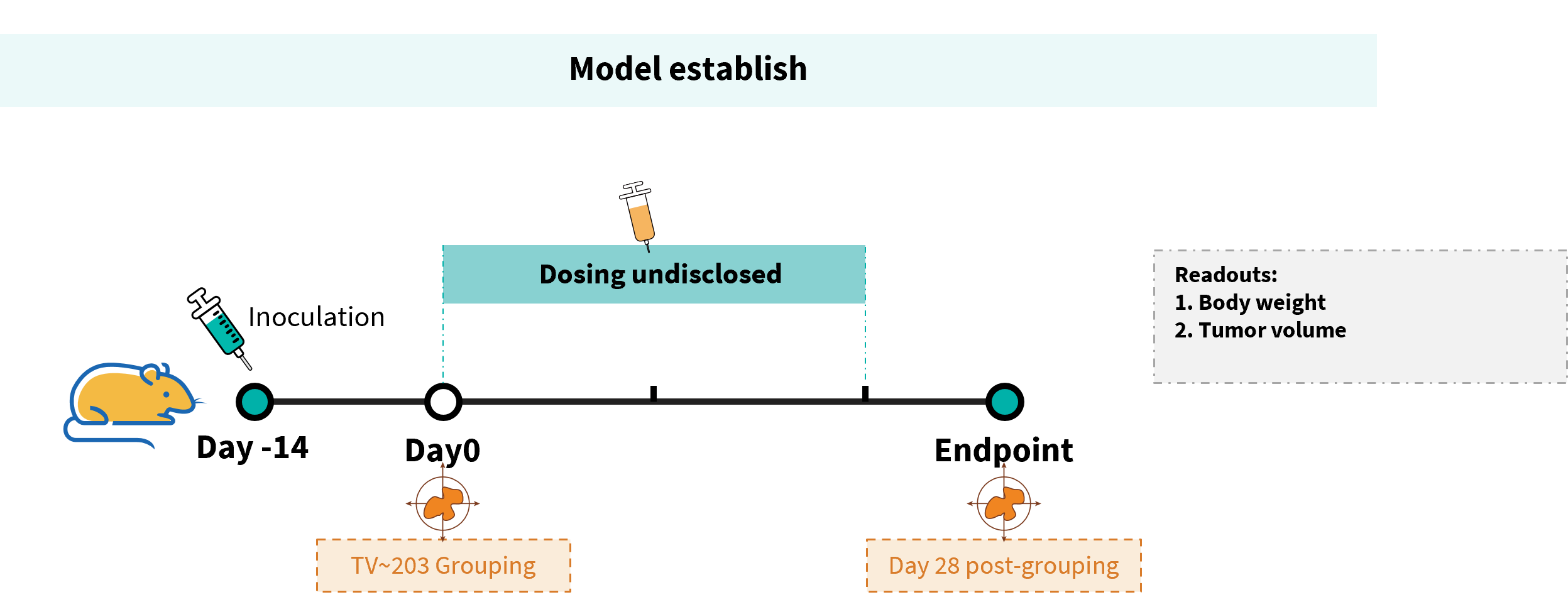
Establishment of a PAN02 model and in vivo efficacy study of a LRRC15-targeting ADC. PAN02 pancreatic cancer cells were implanted subcutaneously into homozygous B-hLRRC15 mice (female, 6 weeks old, n = 8). When the average tumor volume reached approximately 203 mm³, mice were randomized and subsequently administered the LRRC15-targeting ADC (provided by the client).
Notes: This data was validated collaboratively by the client and Biocytogen.
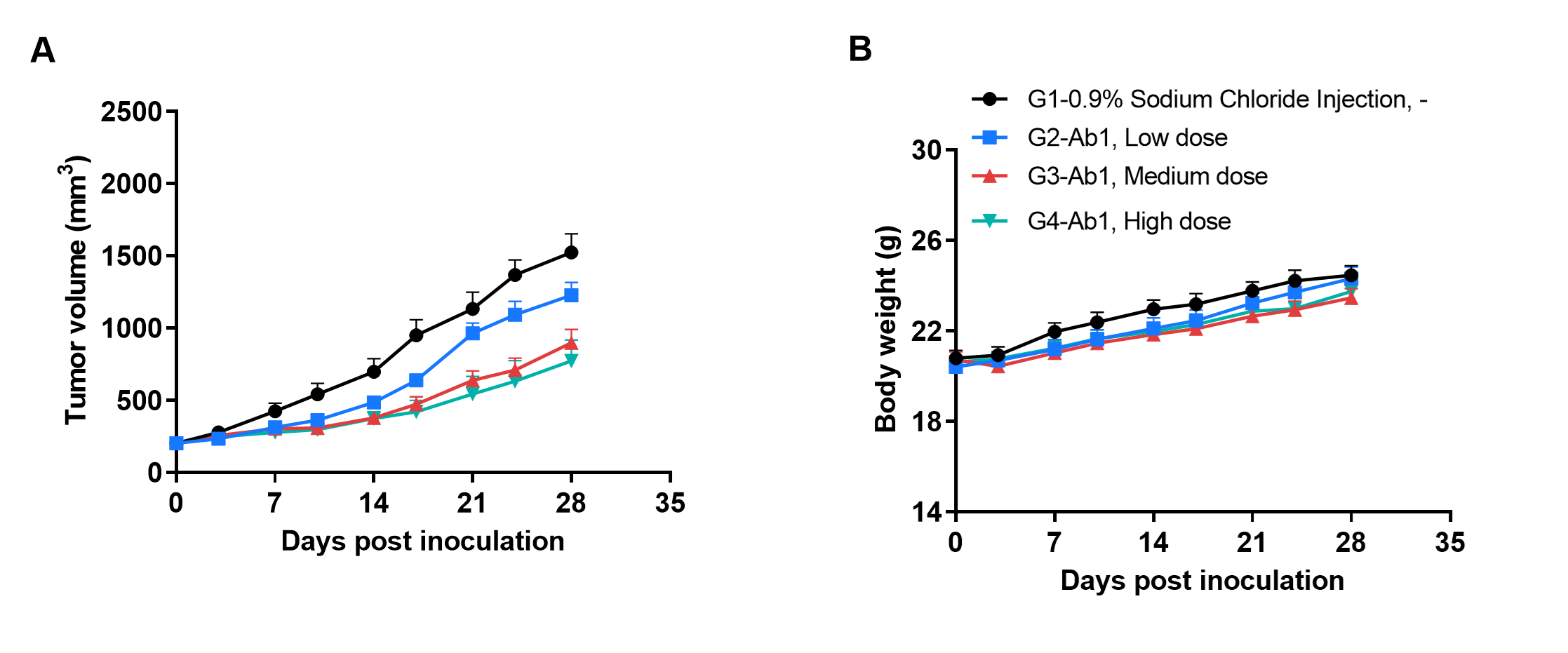
Efficacy of a LRRC15-targeting ADC in B-hLRRC15 mice. (A) Tumor growth curves. (B) Body weight changes during treatment. As shown in panel A, the LRRC15-targeting ADC (provided by the client) was efficacious in controlling tumor growth in B-hLRRC15 mice in a dose-dependent manner, demonstrating that the B-hLRRC15 mice provide a powerful preclinical model for in vivo evaluation of LRRC15-targeting ADC . Values are expressed as mean ± SEM.
Notes: This data was validated collaboratively by the client and Biocytogen.