

B-hEPCAM mice(C)

BALB/cCrSlcNifdc-Epcamtm1(EPCAM)Bcgen/Bcgen • 114390

B-hEPCAM mice
B-hEPCAM rats

B-hEPCAM mice(C)

Catalog Number: 114390
Strain Name: BALB/cCrSlcNifdc-Epcamtm1(EPCAM)Bcgen/Bcgen
Strain Background: BALB/cCrSlcNifdc
NCBI gene ID: 4072 (Human)
Aliases: Ber-Ep4, BerEp4, DIAR5, EGP-2, EGP314, EGP40, ESA, HNPCC8, KS1/4, KSA, LYNCH8, M4S1, MIC18, MK-1, MOC-31, TACSTD1, TROP1
---
Licensing option available

B-hEPCAM mice(C)

on this page

  • Description
  • Targeting strategy
  • Phenotypic analysis

Posters

View All

    Publication

      Description

       EPCAM: A key adhesion molecule in tumor malignancy and its therapeutic intervention

      • Gene Information: EPCAM is a transmembrane glycoprotein featuring both extracellular (EpEx) and intracellular (EpICD) domains. Cleavage of EPCAM releases EpICD, which translocates to the nucleus as a transcriptional co-factor.
      • Protein Expression: EPCAM is expressed in various human epithelial tissues, cancerous tissues, progenitor cells, and stem cells. It is widely overexpressed in a variety of solid tumors and tumor-initiating cells (TICs), playing a vital role in fueling cancer progression, particularly in colorectal cancer (CRC).
      • Signaling Pathway: EpICD interacts with Wnt receptor promoters (FZD6 and LRP5/6) to upregulate their transcription and activate Wnt signaling. Additionally, activation of Wnt kinases (GSK3β and CK1) in the β-catenin destruction complex induces γ-secretase activity to enhance EpICD shedding, forming a positive feedback loop.
      • Therapeutic Inhibition: By blocking EPCAM-mediated Wnt receptor upregulation and signaling, thereby inhibiting tumor growth and prolonging survival in CRC models.
      Targeting Strategy

      EPCAM

      • Exons 3-8 of mouse Epcam gene that encode extracellular domain (except signaling peptide) and transmembrane domain are replaced by human EPCAM exons 2-7 in B-hEPCAM mice(C).
      • The genomic region of mouse Epcam gene that encodes signaling peptide and cytoplasmic portion are retained. The promoter, 5’UTR and 3’UTR region of the mouse gene are also retained. The chimeric EPCAM expression is driven by endogenous mouse Epcam promoter, while mouse Epcam gene transcription and translation will be disrupted.
      EPCAM Expression by RT-PCR

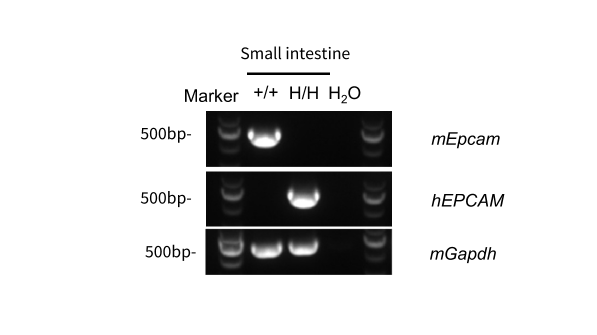
      Human EPCAM was detectable in B-hEPCAM mice(C) by RT-PCR and sequencing. Small intestine tissues were isolated from wild-type BALB/cCrSlcNifdc mice (+/+) and homozygous B-hEPCAM mice(C) (H/H). Primers were designed to detect mouse and human EPCAM. Sequencing of the PCR products confirmed that the amplified sequences were consistent with database reference sequences.

      EPCAM Protein Expression in Small Intestine

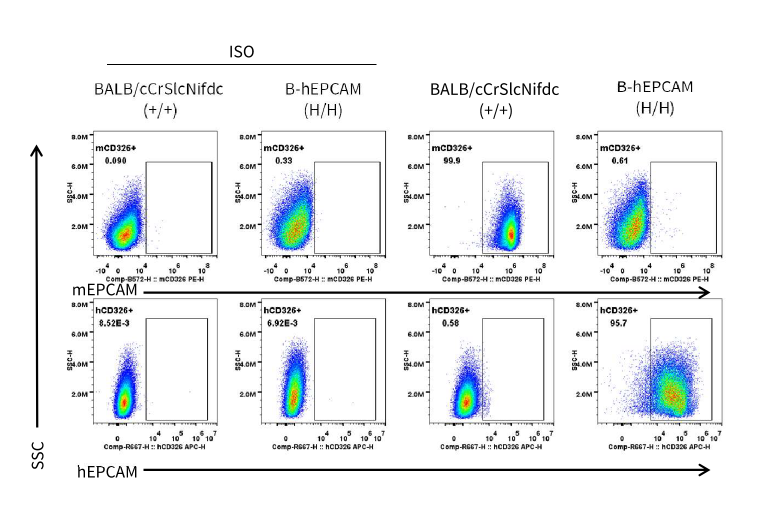
      Mouse and human EPCAM expression analysis in smallintestine cells. Small intestine cells were collected from wild-type BALB/cCrSlcNifdc mice and homozygous B-hEPCAM mice (C). EPCAM expression was analyzed by flow cytometry using anti-human EPCAM antibody (Biolegend, 369809) and anti-mouse EPCAM antibody (Biolegend, 118205).

      EPCAM Protein Expression in Lung

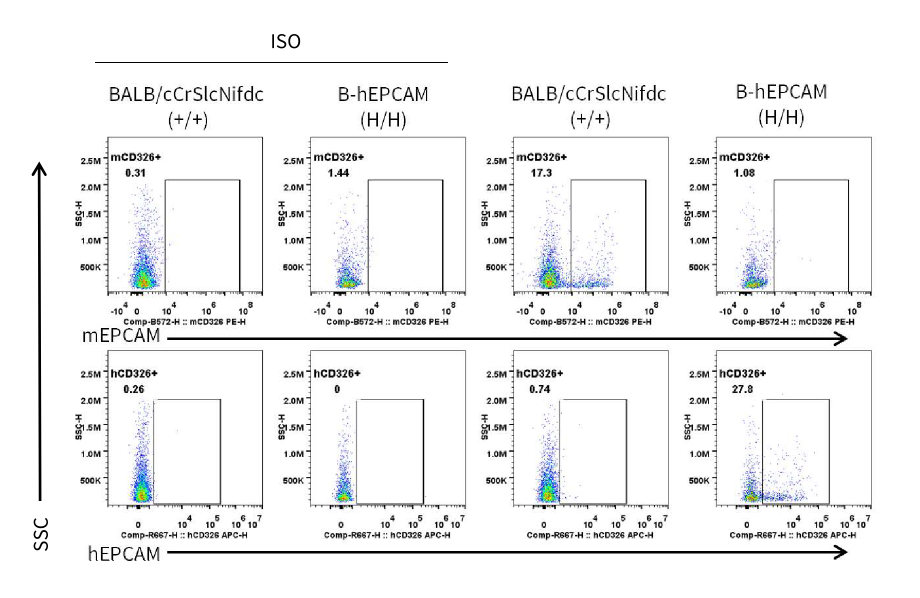
      Mouse and human EPCAM expression analysis in lung cells. Lung cells were collected from wild-type BALB/cCrSlcNifdc mice and homozygous B-hEPCAM mice(C). EPCAM expression was analyzed by flow cytometry using anti-human EPCAM antibody (Biolegend, 369809) and anti-mouse EPCAM antibody (Biolegend, 118205).

      * When publishing results obtained using this animal model, please acknowledge the source as follows: The animal model [B-hEPCAM mice(C)] (Cat# 114390) was purchased from Biocytogen.