

C57BL/6JNifdc-Hrh1tm1(HRH1)Bcgen/Bcgen • 113692

HRH1: HRH1 mediates smooth muscle contraction, increases vascular permeability, and promotes pro-inflammatory cytokine expression.
Gene Information: Histamine Receptor H1 (HRH1) is a protein-coding gene located on human chromosome 3p25. It encodes a G protein-coupled receptor (GPCR) composed of 487 amino acids, belonging to the rhodopsin-like GPCR family.
Protein Expression: HRH1 is widely expressed across various tissues, primarily in smooth muscle cells (e.g., airway and vascular smooth muscle), vascular endothelial cells, the central nervous system (neurons), immune cells (e.g., macrophages, mast cells), and the gastrointestinal tract.
Signaling Pathway: Upon histamine binding, HRH1 activates downstream signaling mainly via coupling to the Cαq/11 protein, which stimulates phospholipase C (PLC) to produce inositol trisphosphate IP3 and diacylglycerol (DAG). This induces intracellular calcium Ca2+ release and activates protein kinase C (PKC). Additionally, it can activate the NF-κB pathway to mediate inflammatory responses..
Therapeutic Inhibition: By using HRH1 antagonists or inverse agonists (such as second-generation antihistamines like loratadine and cetirizine), histamine binding and receptor activation are blocked. This effectively inhibits downstream allergic responses and inflammation, reducing vascular permeability, alleviating smooth muscle spasms, and providing clinical benefits for allergic rhinitis, urticaria, and asthma symptoms. Recent studies also suggest its potential therapeutic target value in tumor immune microenvironment modulation.

HRH1

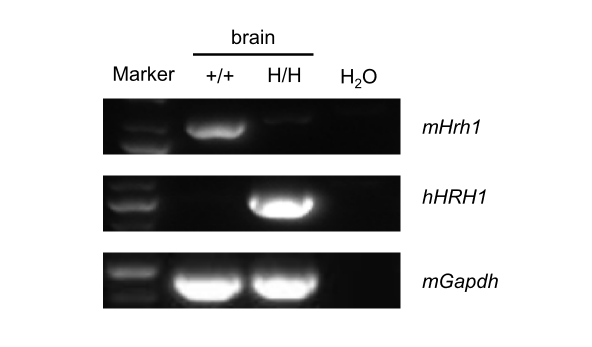
Strain specific analysis of HRH1 mRNA expression in wild-type C57BL/6JNifdc mice and homozygous B-hHRH1 mice by RT-PCR. Brain RNA was isolated from wild-type C57BL/6JNifdc mice (+/+) and homozygous B-hHRH1 mice (H/H), then cDNA libraries were synthesized by reverse transcription, followed by PCR with mouse or human HRH1 primers. Mouse Hrh1 mRNA were detectable in wild-type mice and homozygous B-hHRH1 mice. Mouse Hrh1 mRNA was detectable in wild-type mice. Human HRH1 mRNA was detectable only in B-hHRH1 mice, but not in wild-type mice.
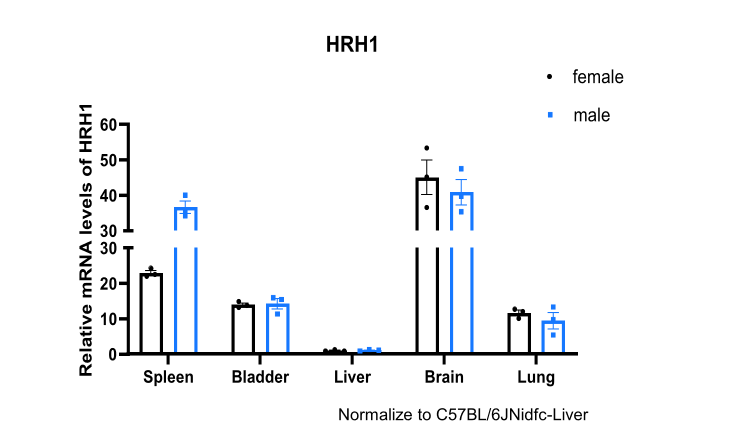
Analysis of HRH1 mRNA expression in B-hHRH1 mice by RT-qPCR. Total RNA was isolated from liver, lung, spleen, brain and bladder of homozygous B-hHRH1 mice (female/male, n=3, 8-week-old), qPCR method was used to detect the RNA expression of HRH1. The results showed that the abundance of HRH1 mRNA in liver, lung, spleen, brain and bladder of B-hHRH1 mice were similar in female and male mice. Values are expressed as mean ± SEM.
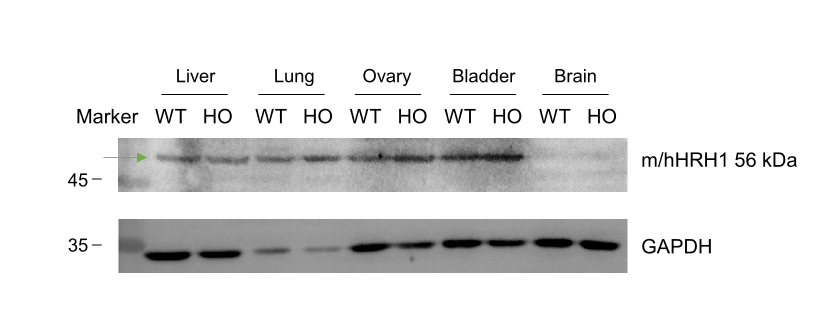
Strain specific HRH1 expression analysis in homozygous B-hHRH1 mice by western blot. Brain, liver, lung, ovary and bladder were collected from wild-type C57BL/6JNifdc mice (+/+) and homozygous B-hHRH1 mice (H/H) and analyzed by western blot with anti-HRH1 antibody (R&D, NBP1-06039). m/hHRH1 was detectable in liver, lung, ovary and bladder of wild-type C57BL/6JNifdc mice and homozygous B-hHRH1 mice.
WT: wild-type C57BL/6JNifdc mice; HO: homozygous B-hHRH1 mice.