
C57BL/6N-Tnfsf15tm2(TNFSF15)Bcgen Tnfrsf25tm3(TNFRSF25)Bcgen/Bcgen • 113082
on this page

TL1A: A key inflammation cytokine in chronic intestinal inflammation and fibrosis-related diseases

TL1A
DR3

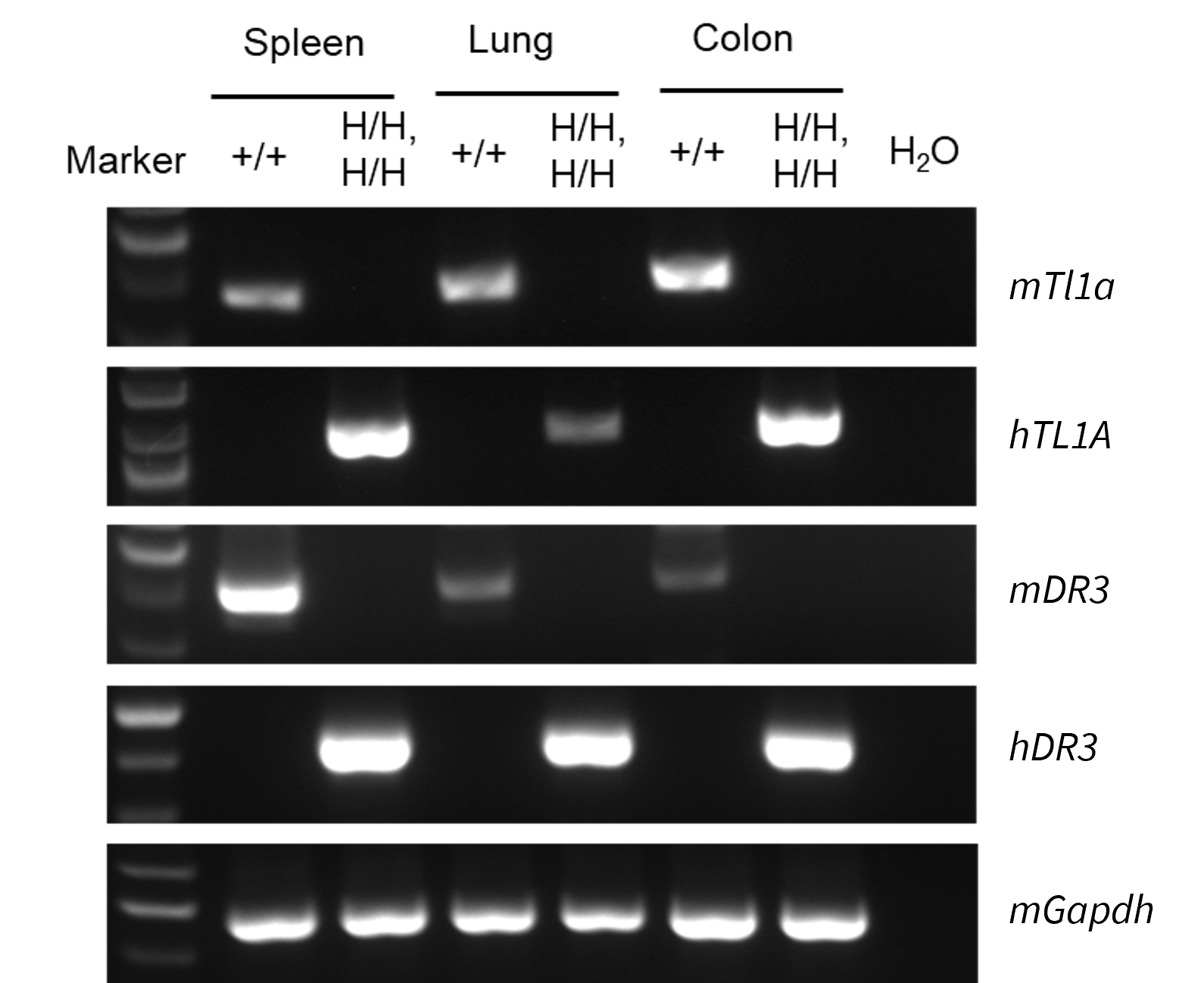
Strain specific analysis of TL1A and DR3 gene expression in in wild-type C57BL/6N mice and homozygous B-hTL1A/hDR3 mice by RT-PCR. Lung and colon tissues were collected from wild-type C57BL/6N mice (+/+) and homozygous B-hTL1A/hDR3 mice (H/H;H/H). Mouse Tl1a and DR3 mRNA were detectable in wild-type C57BL/6N mice. Human TL1A and DR3 mRNA were exclusively detectable in homozygous B-hTL1A/hDR3 mice, but not in wild-type C57BL/6N mice.

Soluble TL1A expression analysis in B-hTL1A/hDR3 mice by ELISA. Bone marrow derived dendritic cells (BMDCs) were produced by culturing the bone marrow from wild-type C57BL/6N mice (+/+) and homozygous B-hTL1A/hDR3 mice (H/H;H/H), which were stimulated with LPS in vitro. After stimulation, the supernatants were collected and the levels of soluble TL1A were measured using the species-specific human TL1A ELISA kit. Soluble human TL1A was exclusively detectable in homozygous B-hTL1A/hDR3 mice but not wild-type C57BL/6N mice. Values are expressed as mean ± SEM. ND: not detectable.
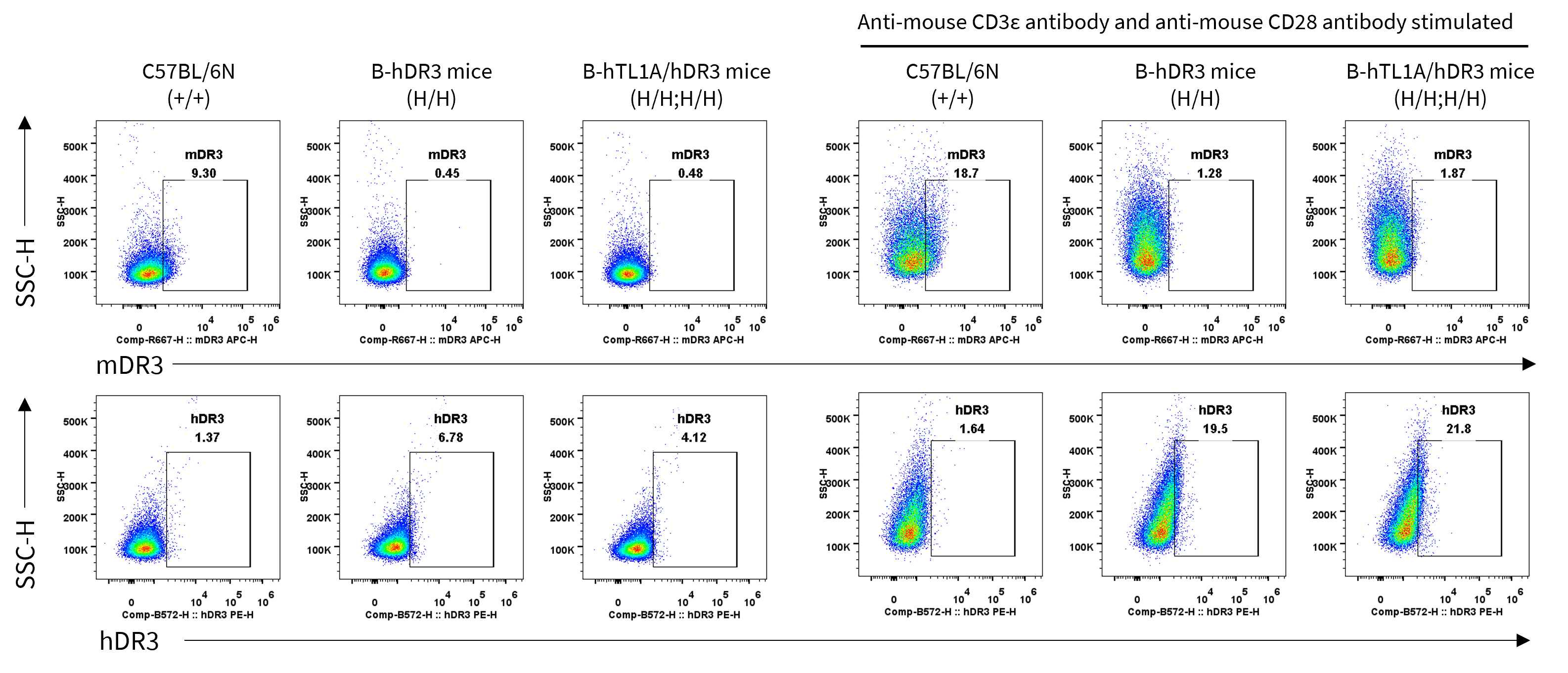
Strain specific DR3 expression analysis in wild-type C57BL/6N mice, homozygous B-hDR3 mice and B-hTL1A/hDR3 mice by flow cytometry. Splenocytes were collected from wild-type C57BL/6N mice (+/+), homozygous B-hDR3 mice (H/H) and B-hTL1A/hDR3 mice (H/H;H/H) stimulated with anti-mouse CD3ε antibody and anti-mouse CD28 antibody in vivo for 24 h, protein expression was analyzed with anti-mouse DR3 antibody (Biolegend, 144407) and anti-human DR3 antibody (Biolegend, 307105) by flow cytometry. Mouse DR3 was detectable in CD4+ T cells of wild-type C57BL/6N mice, human DR3 was detectable in CD4+ T cells of homozygous B-hDR3 mice and B-hTL1A/hDR3 mice.
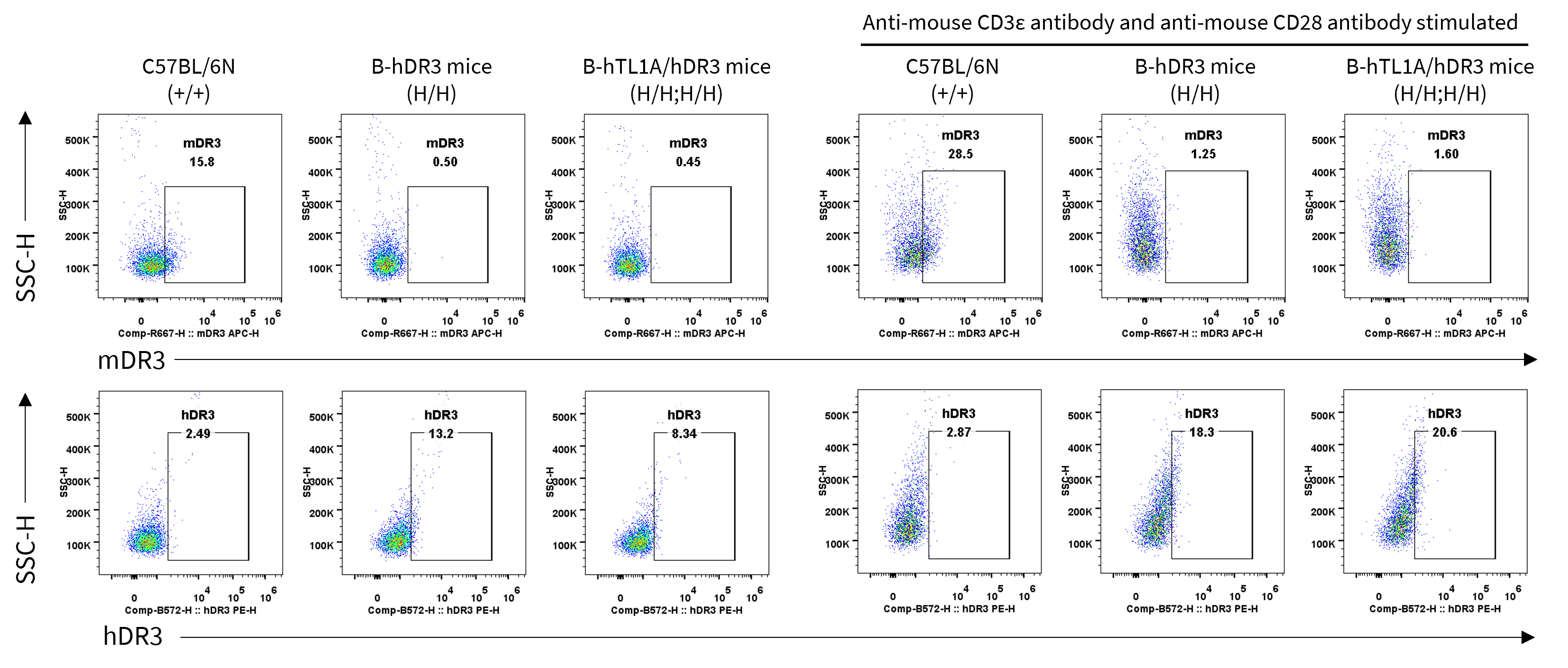
Strain specific DR3 expression analysis in wild-type C57BL/6N mice, homozygous B-hDR3 mice and B-hTL1A/hDR3 mice by flow cytometry. Splenocytes were collected from wild-type C57BL/6N mice (+/+), homozygous B-hDR3 mice (H/H) and B-hTL1A/hDR3 mice (H/H;H/H) stimulated with anti-mouse CD3ε antibody and anti-mouse CD28 antibody in vivo for 24 h, protein expression was analyzed with anti-mouse DR3 antibody (Biolegend, 144407) and anti-human DR3 antibody (Biolegend, 307105) by flow cytometry. Mouse DR3 was detectable in Treg cells of wild-type C57BL/6N mice, human DR3 was detectable in Treg cells of homozygous B-hDR3 mice and B-hTL1A/hDR3 mice.
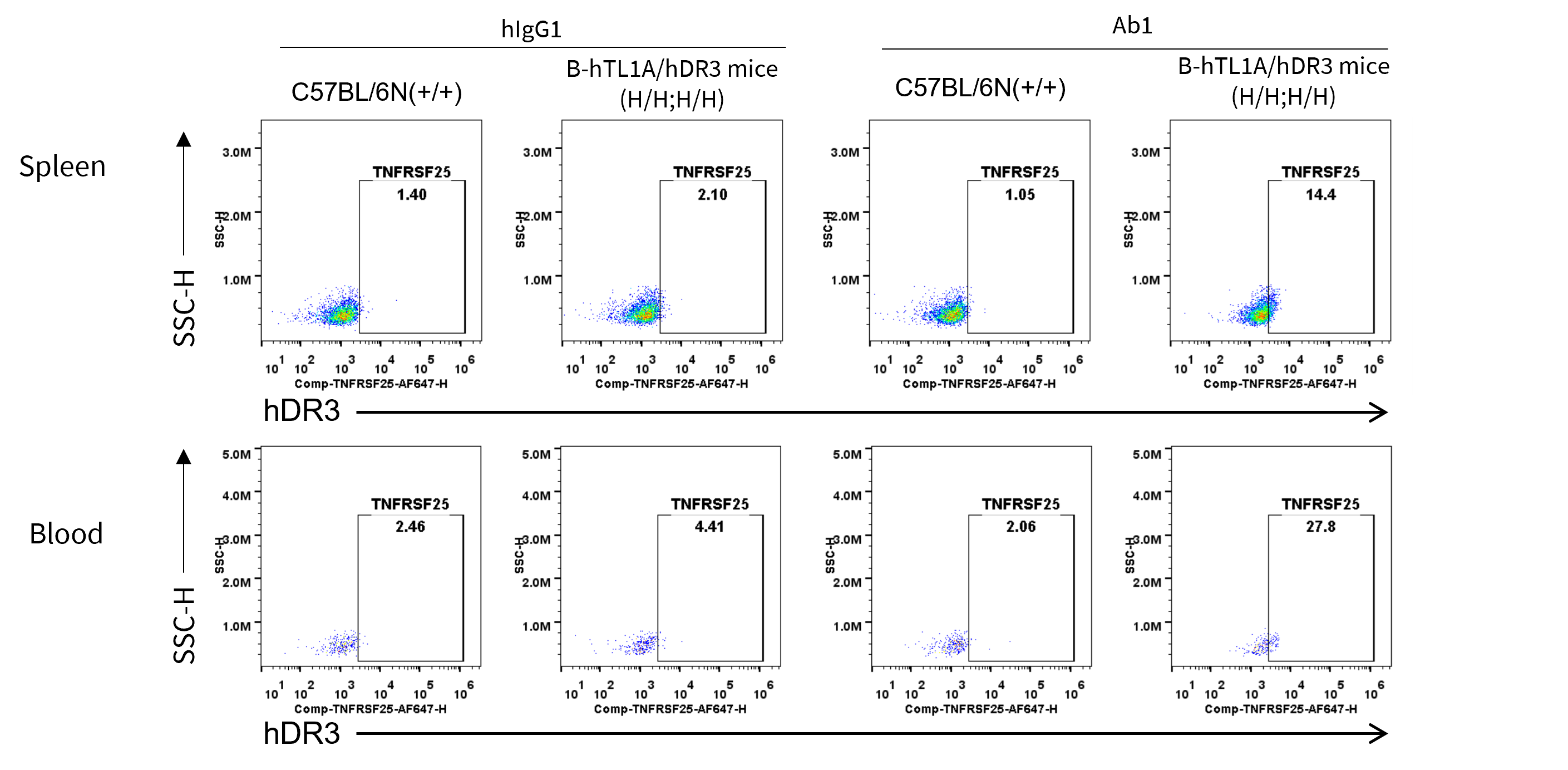
Anti-human DR3 antibody binding assessment in homozygous B-hTL1A/hDR3 mice by flow cytometry. Splenocytes and blood were collected from wild-type C57BL/6N mice(+/+) and homozygous B-hTL1A/hDR3 mice(H/H;H/H), and analyzed by flow cytometry with anti-human DR3 antibody Ab1, which is offered by the client. Ab1 can bind to Treg cells of homozygous B-hTL1A/hDR3 mice.
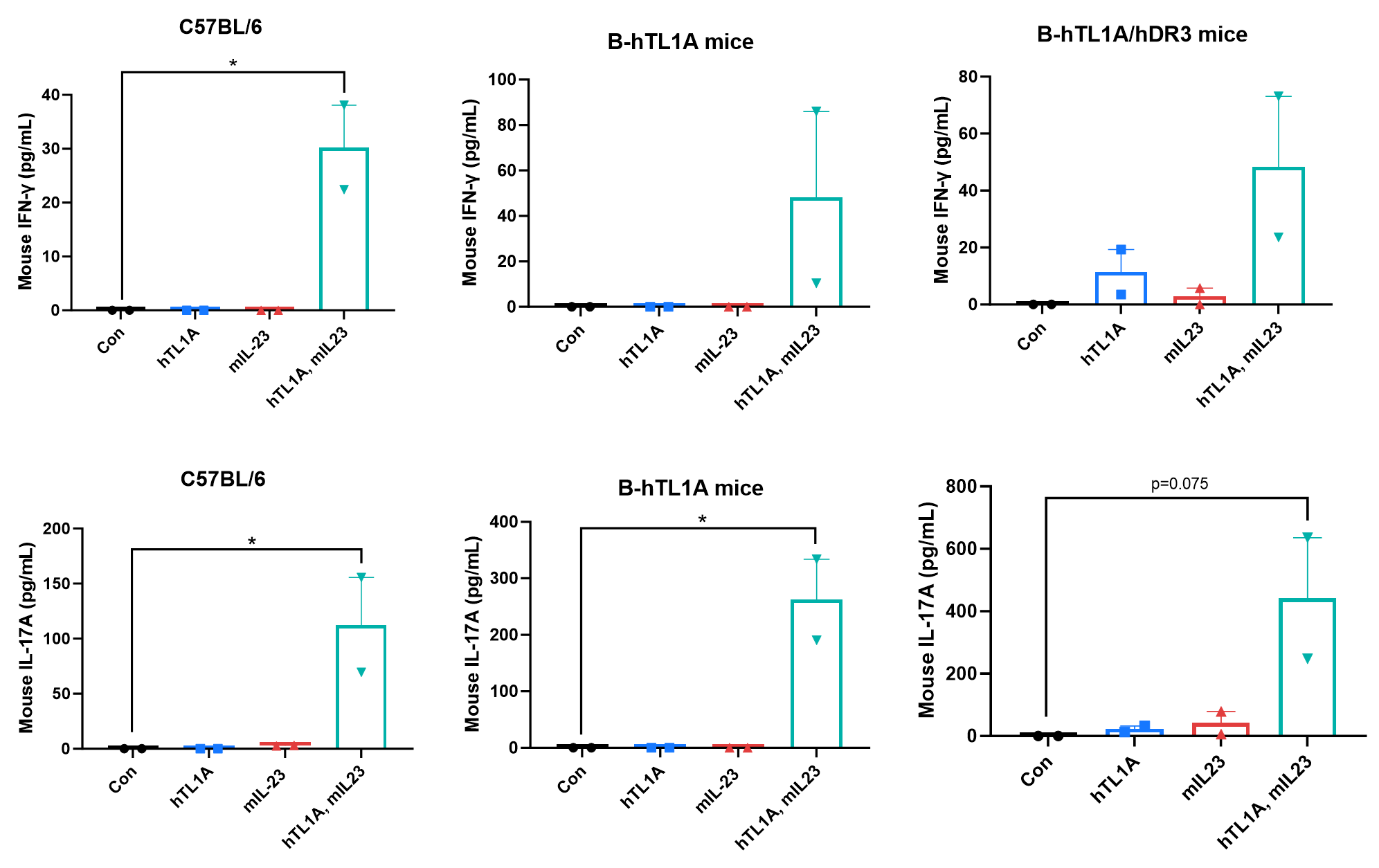
Ex vivo functional analysis in B-hTL1A mice and B-hTL1A/hDR3 mice. Splenocytes were collected from wild-type C57BL/6 mice (+/+), homozygous B-hTL1A mice (H/H) and homozygous B-hTL1A/hDR3 mice (H/H;H/H), then the production of mouse IFN-γ and mouse IL-17A in supernatants were assessed by ELISA after 72 h of incubation with mIL23 (10 ng/mL) and hTL1A (300 ng/mL) in vitro.
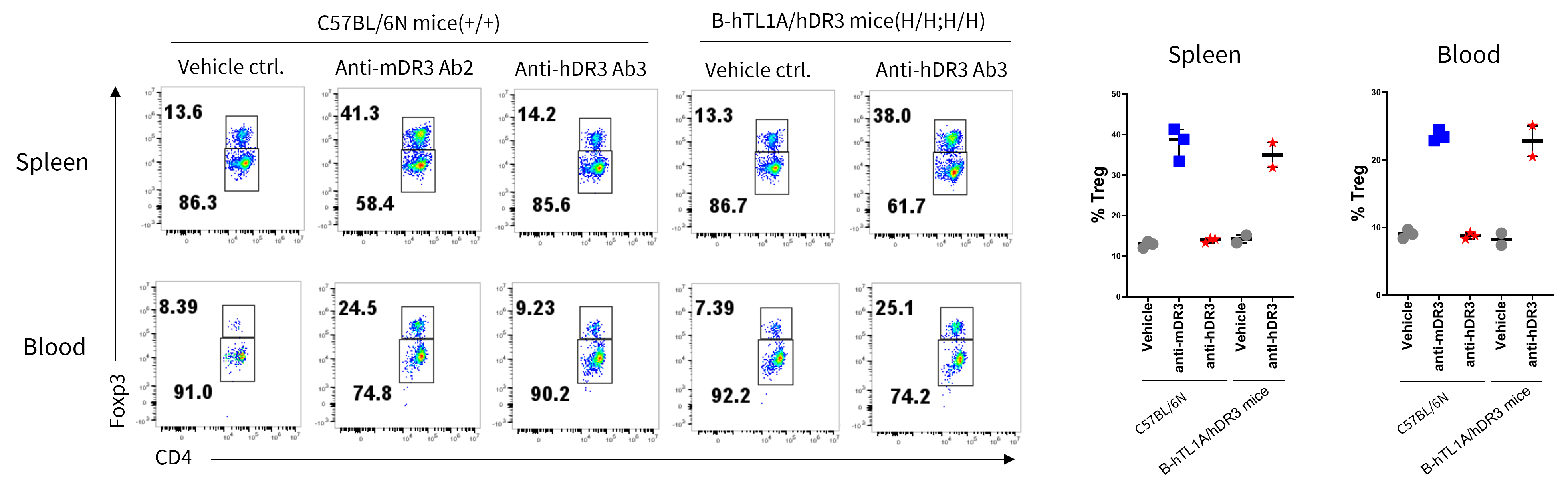
Activation of DR3 signaling pathway increased the expansion of Treg cells in wild-type C57BL/6N mice and homozygous B-hTL1A/hDR3 mice. Wild-type C57BL/6N mice(+/+) and homozygous B-hTL1A/hDR3 mice(H/H;H/H) were given single intraperitoneal injection of DPBS, anti-mDR3 and anti-hDR3 antibodies on day 0, splenocytes and blood cells were collected on day 4 for flow analysis. The agonistic anti-mouse DR3 antibody Ab2 expanded Treg cell populations in wild-type C57BL/6N mice, and the agonistic anti-human DR3 antibody Ab3 increased Treg cells in homozygous B-hTL1A/hDR3 mice. These results contribute to a deeper understanding of DR3 activation in Treg cells modulation. Note: This experiment was conducted by the client using B-hTL1A/hDR3 mice.
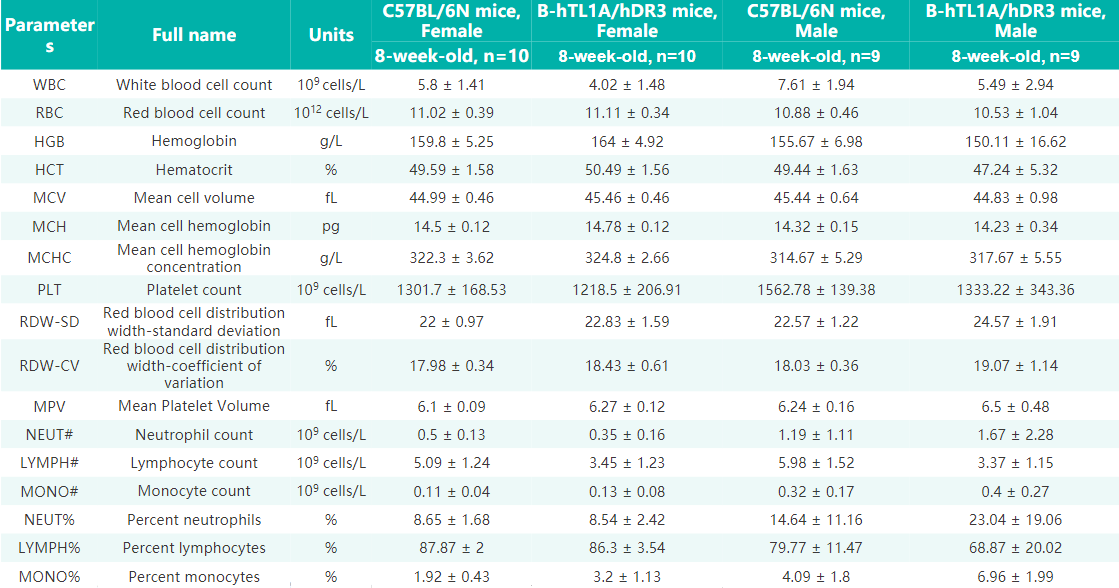
Complete blood count (CBC) of B-hTL1A/hDR3 mice. Values are expressed as mean ± SD.
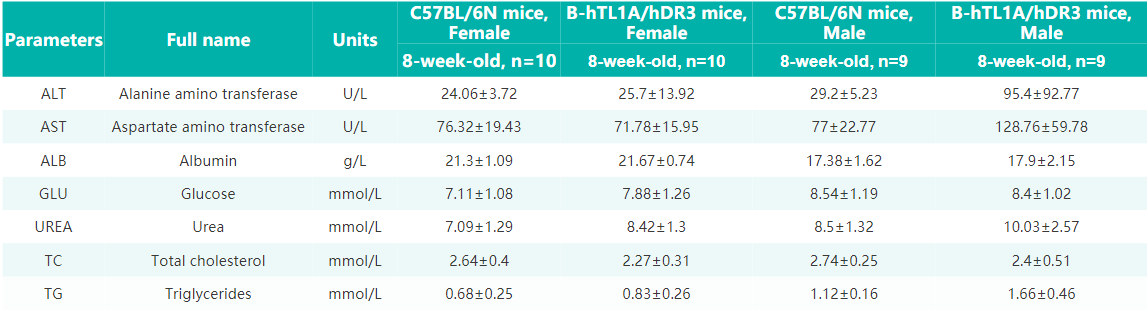
Blood biochemical parameters of B-hTL1A/hDR3 mice are shown. Values are expressed as mean ± SD.
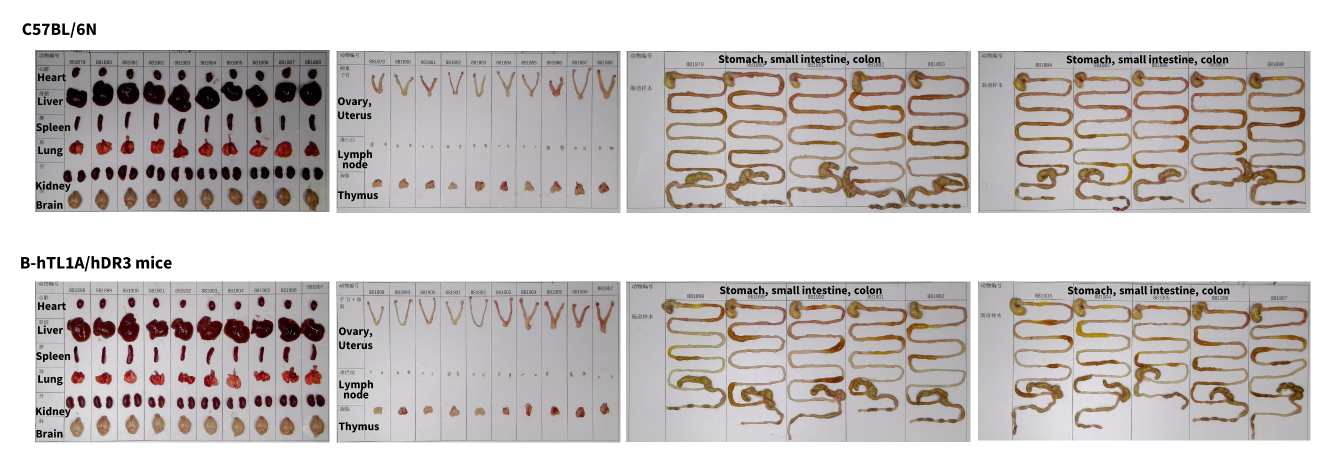
Organs of female C57BL/6N (8 week old, n=10) and B hTL1A/hDR3 mice (8 week old, n=10).
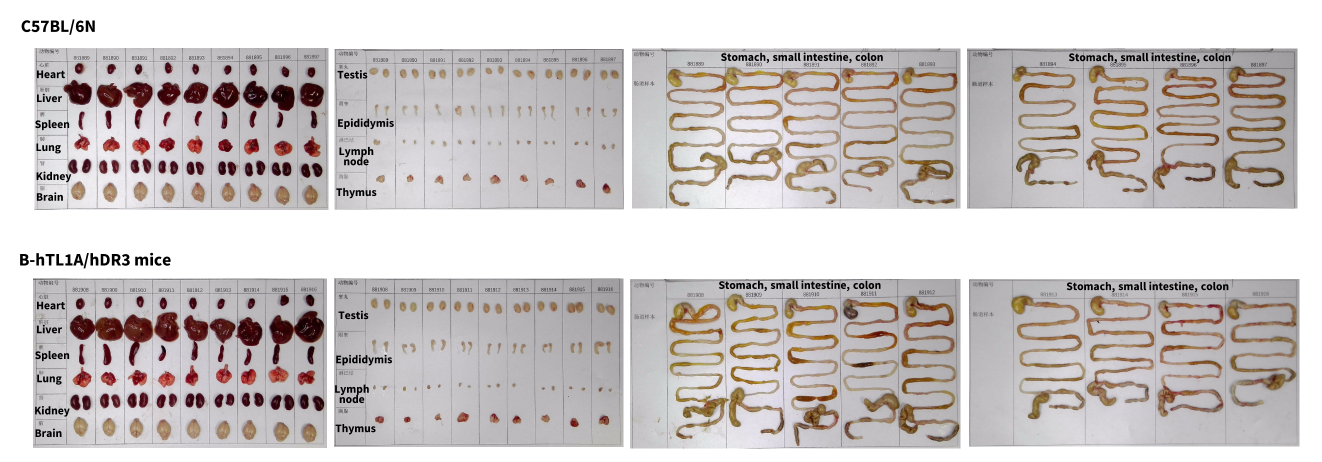
Organs of male C57BL/6N (8 week old, n=9) and B hTL1A/hDR3 mice (8 week old, n=9).
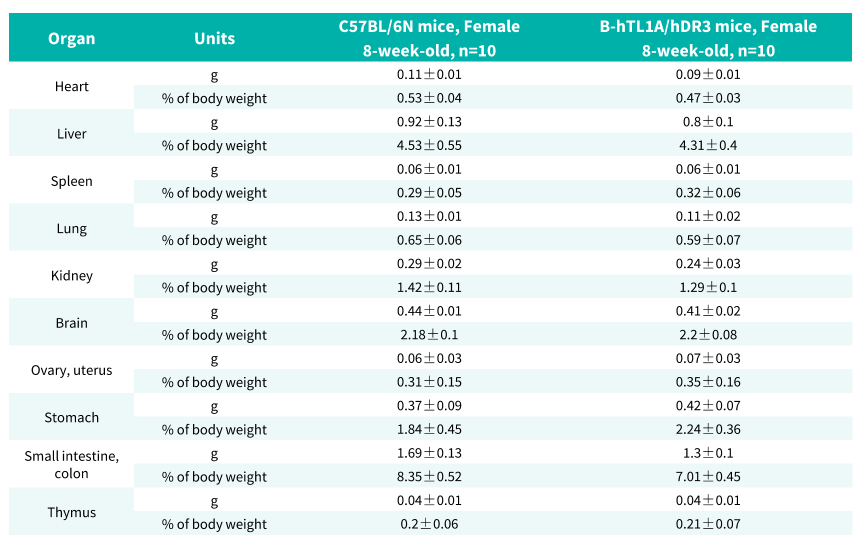
Average weight of the main organs of female C57BL/6N and B-hTL1A/hDR3 mice.
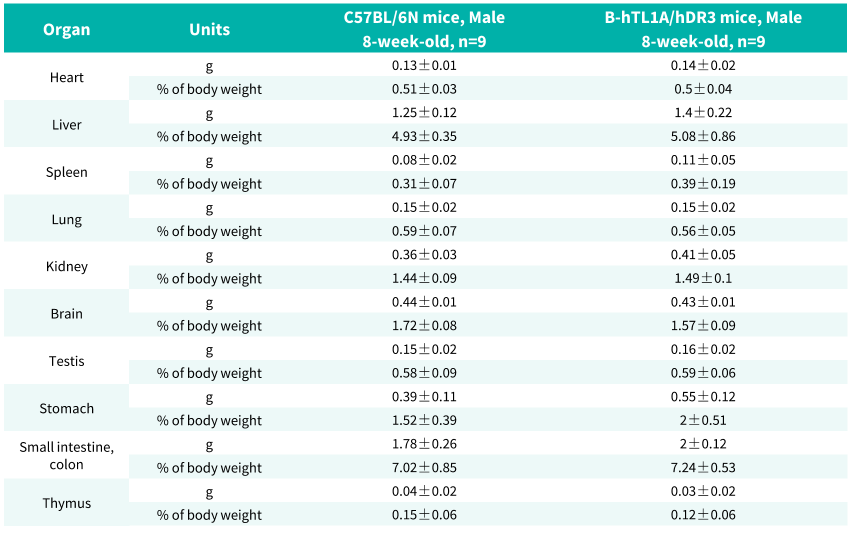
Average weight of the main organs of male C57BL/6N and B-hTL1A/hDR3 mice.
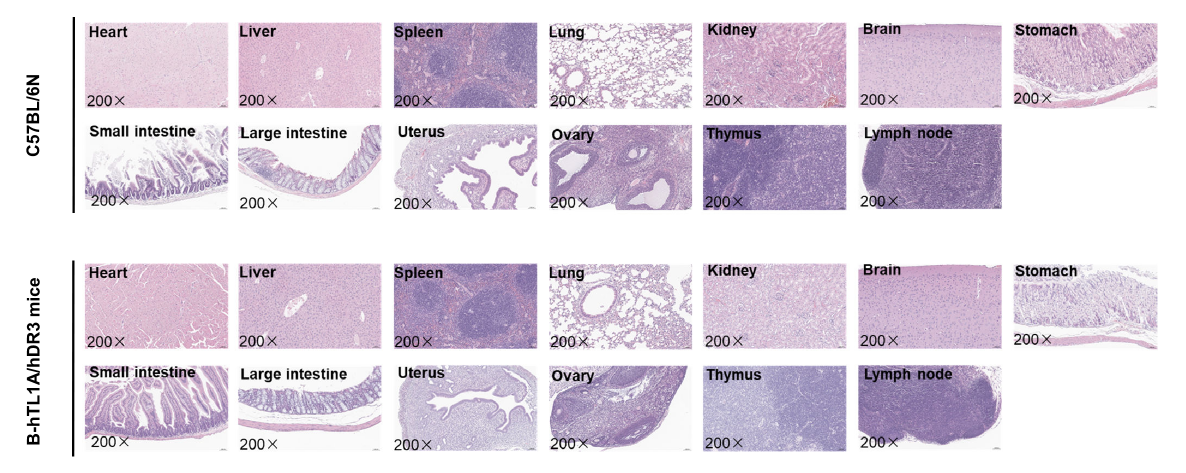
Major organs from C57BL/6N and B hTL1A/hDR3 mice were collected at 8 weeks of age and analyzed by H&E staining (female, n = 3).
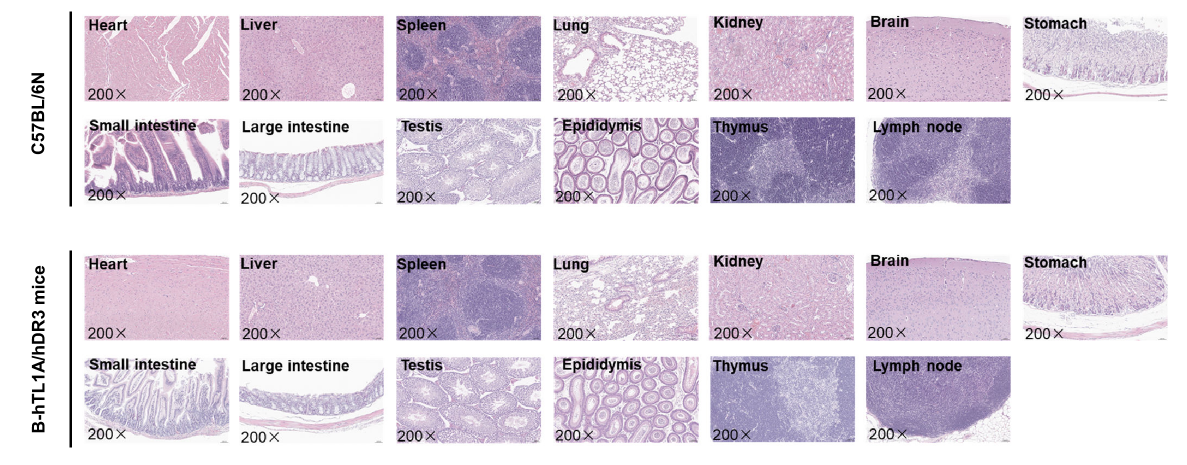
Major organs from C57BL/6N and B hTL1A/hDR3 mice were collected at 8 weeks of age and analyzed by H&E staining (male, n = 3).

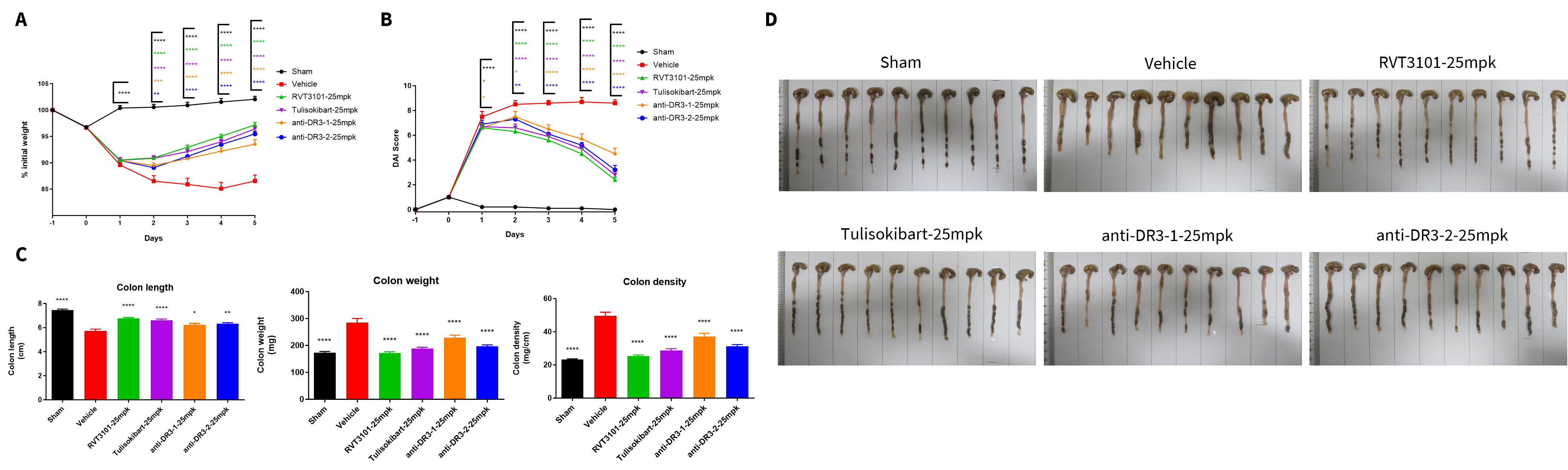
The therapeutic efficacy of anti-TL1A antibodies and anti-human DR3 antibodies on the TNBS-induced acute colitis model in B-hTL1A/hDR3 mice. TNBS solution was instilled into the colon lumen of B-hTL1A/hDR3 mice (female, 8-10 weeks-old, n=8). The control group (Sham) received intrarectal injections of 50% ethanol. The treatment groups received anti-TL1A antibodies RVT-3101 and Tulisokibart (25 mpk, provided by WuXi AppTec), anti-human DR3 antibodies anti-DR3-1 and anti-DR3-2 (25 mpk, provided by the client). (A) Body weight change. (B) DAI score. (C) Colon Index. (D) Colon photo. A TNBS-induced acute colitis model was established in B-hTL1A/hDR3 mice. Administration of anti-TL1A antibodies and anti-human DR3 antibodies effectively improved TNBS-induced acute colitis. The results indicate that B-hTL1A/hDR3 mice are a powerful tool for evaluating in vivo efficacy of anti-TL1A antibodies and anti-human DR3 antibodies. Values are expressed as mean ± SEM. *p<0.05, **p<0.01, ***p<0.001, ****p<0.0001, versus Vehicle, ANOVA.
Note: This experiment was conducted by WuXi AppTec using B-hTL1A/hDR3 mice.
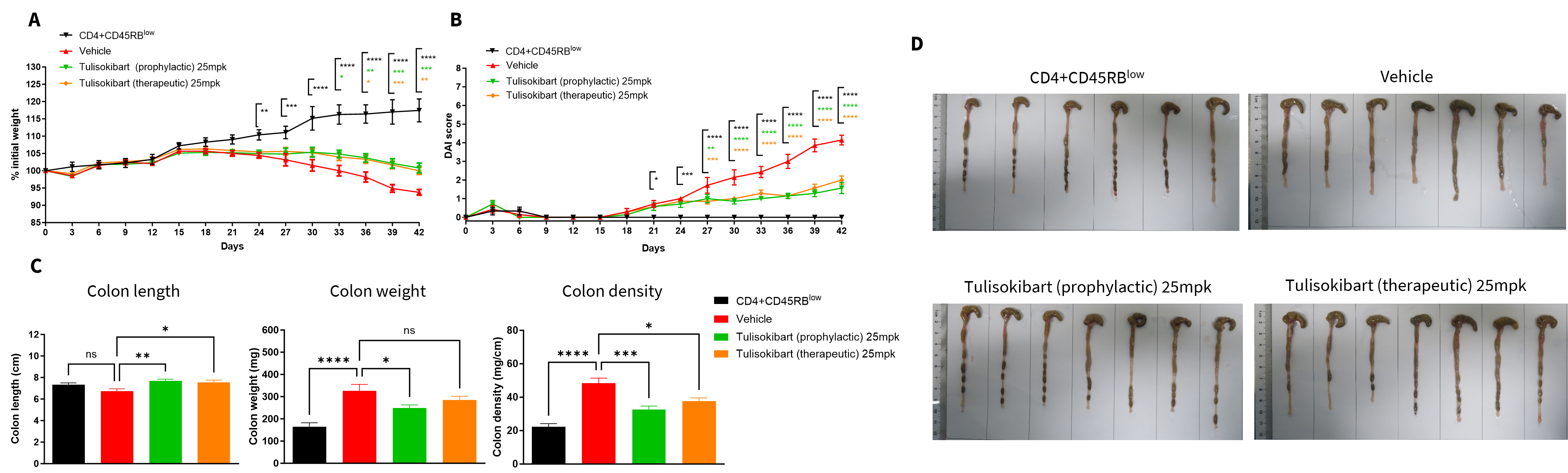
The therapeutic efficacy of Tulisokibart on T cells transfer induced colitis model in B-hTL1A, Rag2 KO mice. CD4+CD45RBlow T and CD4+CD45RBhigh T cells were isolated from the spleens of B-hTL1A/hDR3 mice. B-hTL1A, Rag2 KO mice in group G1 were injected with CD4+CD45RBlow T cells, while B-hTL1A, Rag2 KO mice in groups G2-G4 were injected with CD4+CD45RBhigh T cells. Animals in group G3 were given prophylactic administration of 25 mg/kg of anti-human TL1A antibody Tulisokibart every two days, and animals in group G4 were given therapeutic administration of 25 mg/kg of anti-human TL1A antibody Tulisokibart every two days. (A) Body weight change. (B) DAI score. (C) Colon index. (D) Colon photo. Administration of anti-human TL1A antibody effectively improved T cells transfer induced colitis. Two-way ANOVA or one-way ANOVA was used for multiple comparisons, with each group compared to Vehicle. Values are expressed as mean ± SEM. *p<0.05, **p<0.01, ***p<0.001, ****p<0.0001..
Note: This experiment was conducted by WuXi AppTec, T cell transfer induced chronic colitis in B-hTL1A, Rag2 KO mice (Donor: B-hTL1A/hDR3 mice).