Delayed-Type Hypersensitivity (DTH) Mouse Model

Biocytogen has developed OXA- and KLH-induced delayed-type hypersensitivity (DTH) mouse models, serving as robust preclinical platforms for immunosuppressant drug testing and immunology research. These delayed type hypersensitivity models replicate T cell–mediated immune responses, enabling precise evaluation of anti-inflammatory efficacy and immune modulation. Biocytogen’s DTH mouse models provide reliable in vivo systems for advancing immunotherapy development and cell-mediated immune reaction studies.
Delayed Type Hypersensitivity

on this page

Publication

    Delayed-Type Hypersensitivity (DTH) Mouse Model
    Delayed-type hypersensitivity (DTH) is a T-cell–mediated immune response characterized by mononuclear cell infiltration, localized inflammation, and tissue damage caused by effector T cells recognizing specific antigens. This immune mechanism is central to bacterial and viral infection models, autoimmune diseases, cancer immunology, transplant rejection, and contact dermatitis research.
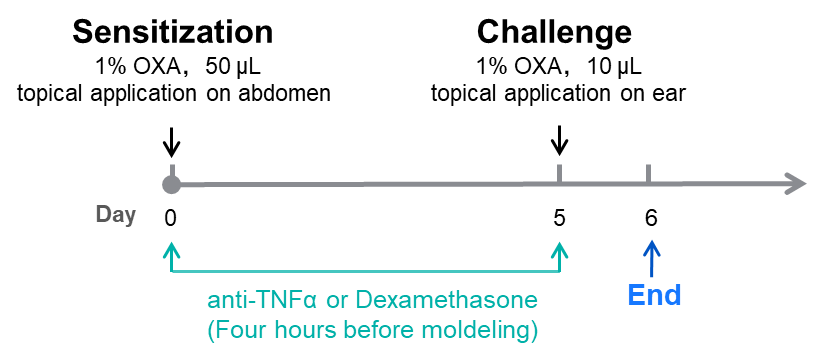
    The mouse contact hypersensitivity model is a well-established in vivo system for studying T-cell–mediated immune responses to contact allergens. Oxazolone (OXA), a classic hapten, forms complete antigens when applied to the skin, activating T cells and inducing delayed-type hypersensitivity reactions upon re-exposure after 4–7 days.
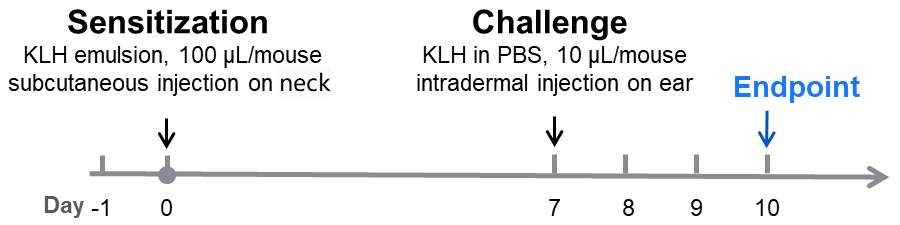
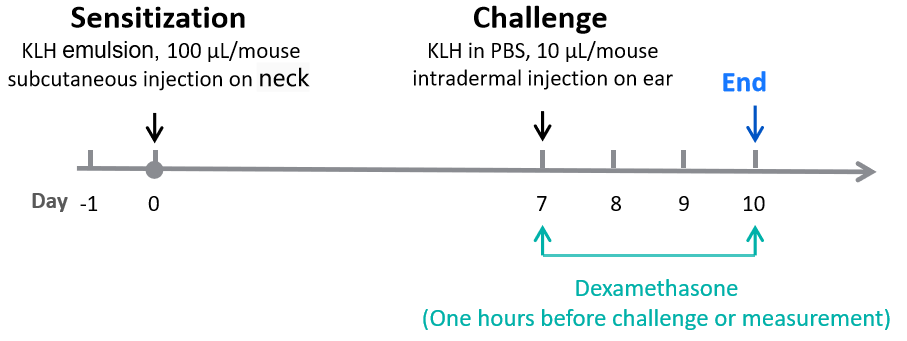
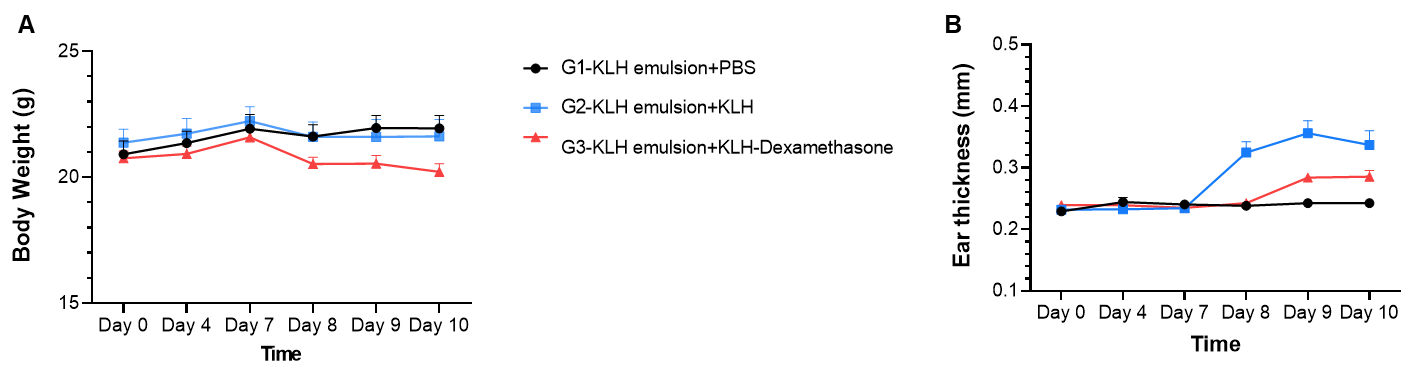
    Similarly, Keyhole limpet hemocyanin (KLH) is a potent immunogenic protein that drives dendritic cell–mediated Th1 activation, making it ideal for inducing systemic DTH responses. Following initial sensitization, local re-challenge triggers swelling and inflammation, measurable at the injection site.
    Biocytogen's OXA- and KLH-induced DTH mouse models provide robust, validated platforms for preclinical immunology research, immunosuppressant drug screening, and anti-inflammatory efficacy evaluation. These models support the development of novel immunotherapies and enhance understanding of T-cell–driven immune modulation in preclinical drug discovery.
    OXA Induced DTH Model
    Establishment of OXA-Induced DTH Mouse Model
    Establishment of OXA-Induced DTH Mouse Model
    Efficacy Evaluation of Dexamethasone in OXA-induced DTH Model of BALB/c Mice
    Efficacy Evaluation of Dexamethasone in OXA-induced DTH Model of BALB/c Mice
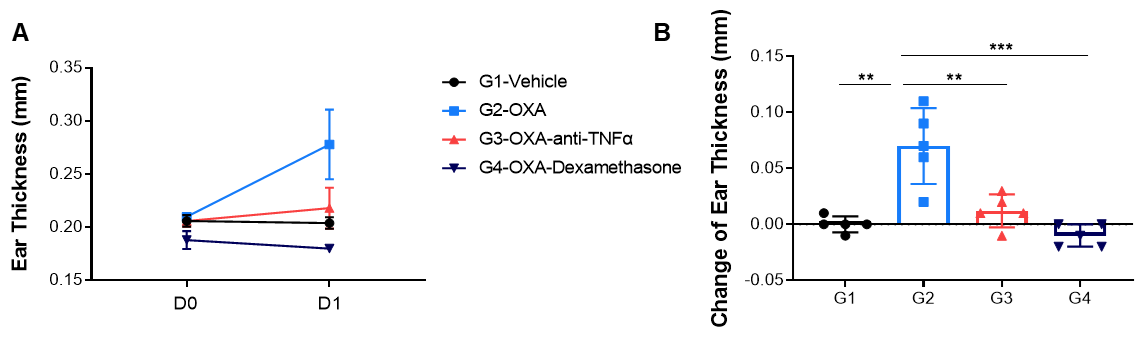
    Efficacy evaluation of Dexamethasone in DTH model of BALB/c mice. A. Ear thickness (mm). B. Change of ear thickness (mm). (A. Two-way ANOVA; B. One-way ANOVA; ** p< 0.01 , **** p< 0.0001).
    Efficacy Evaluation of Dexamethasone in OXA-induced DTH Model of BALB/c Mice 2
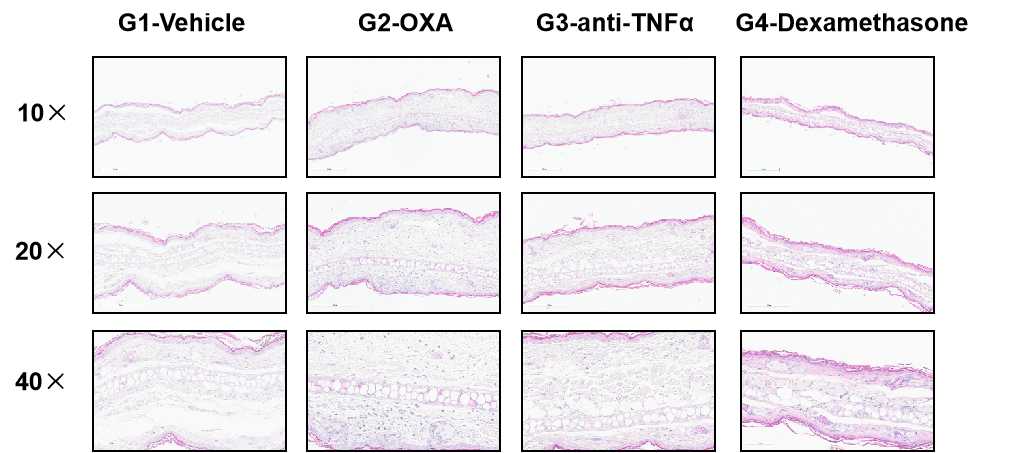
    Histologic assessment of DTH in BALB/c mice. Ear-swelling responses induced by 1% OXA were assessed by measurement of ear thickness (H&E staining). And evaluate the efficacy of anti-TNFα Ab or Dexamethasone (Dex) in the DTH model.