Background
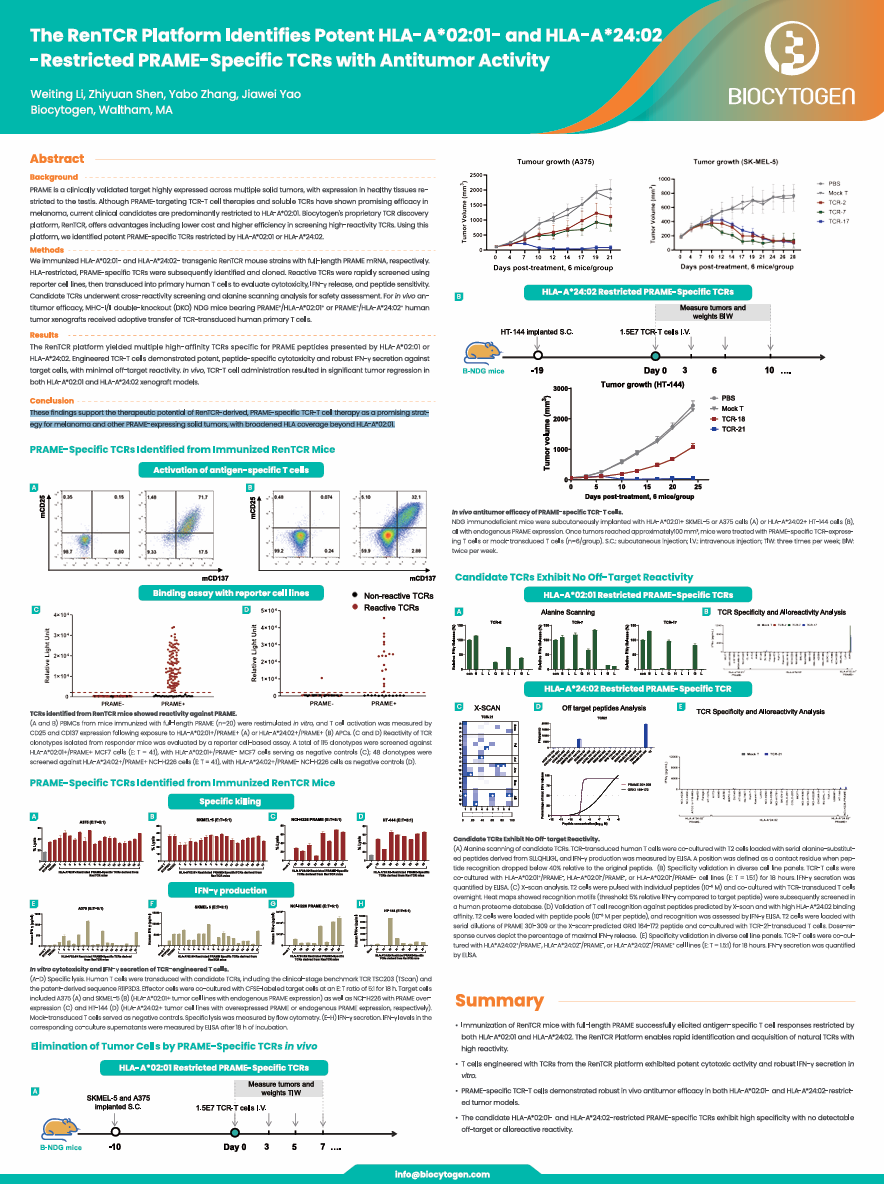
PRAME is a clinically validated target highly expressed across multiple solid tumors, with expression in healthy tissues restricted to the testis. Although PRAME-targeting TCR-T cell therapies and soluble TCRs have shown promising efficacy in melanoma, current clinical candidates are predominantly restricted to HLA-A*02:Ol. Biocytogen's proprietary TCR discovery platform, RenTCR, offers advantages including lower cost and higher efficiency in screening high-reactivity TCRs. Using this platform, we identified potent PRAME-specific TCRs restricted by HLA-A*02:Ol or HLA-A*24:02.
Methods
We immunized HLA-A*02:01- and HLA-A*24:02- transgenic RenTCR mouse strains with full-length PRAME mRNA, respectively. HLA-restricted, PRAME-specific TCRs were subsequently identified and cloned. Reactive TCRs were rapidly screened using reporter cell lines, then transduced into primary human T cells to evaluate cytotoxicity, IFN-y release, and peptide sensitivity. Candidate TCRs underwent cross-reactivity screening and alanine scanning analysis for safety assessment. For in vivo antitumor efficacy, MHC-I/II double-knockout (DKO) NDG mice bearing or PRAME+/HLA-A*24:02+ human tumor xenografts received adoptive transfer of TCR-transduced human primary T cells.
Results
The RenTCR platform yielded multiple high-affinity TCRs specific for PRAME peptides presented by HLA-A*02:01 or HLA-A*24:02. Engineered TCR-T cells demonstrated potent, peptide-specific cytotoxicity and robust IFN-y secretion against target cells, with minimal off-target reactivity. In vivo, TCR-T cell administration resulted in significant tumor regression in both HLA-A*02:01 and HLA-A*24:02 xenograft models.
Conclusion
These findings support the therapeutic potential of RenTCR-derived, PRAME-specific TCR-T cell therapy as a promising strategy for melanoma and other PRAME-expressing solid tumors, with broadened HLA coverage beyond HLA-A*02:01.