Background:
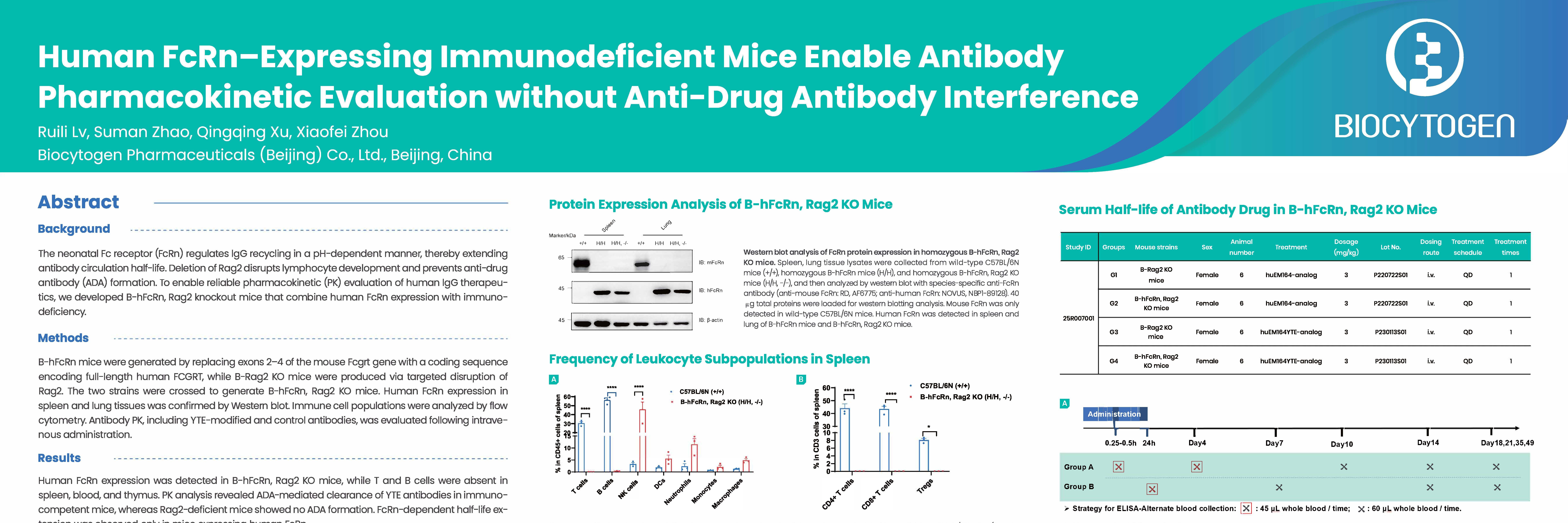
The neonatal Fe receptor (FcRn) regulates lgG recycling in a pH-dependent manner, thereby extending antibody circulation half-life. Deletion of Rag2 disrupts lymphocyte development and prevents anti-drug antibody (ADA) formation. To enable reliable pharmacokinetic (PK) evaluation of human lgG therapeutics, we developed B-hFcRn, Rag2 knockout mice that combine human FcRn expression with immunodeficiency.
Methods:
B-hFcRn mice were generated by replacing exons 2-4 of the mouse Fcgrt gene with a coding sequence encoding full-length human FCGRT, while B-Rag2 KO mice were produced via targeted disruption of Rag2. The two strains were crossed to generate B-hFcRn, Rag2 KO mice. Human FcRn expression in spleen and lung tissues was confirmed by Western blot. Immune cell populations were analyzed by flow cytometry. Antibody PK, including YTE-modified and control antibodies, was evaluated following intravenous administration.
Results:
Human FcRn expression was detected in B-hFcRn, Rag2 KO mice, while T and B cells were absent in spleen, blood, and thymus. PK analysis revealed ADA-mediated clearance of YTE antibodies in immunocompetent mice, whereas Rag2-deficient mice showed no ADA formation. FcRn-dependent half-life extension was observed only in mice expressing human FcRn.
Conclusion:
B-hFcRn, Rag2 KO mice provide a robust and translatable in vivo platform for PK evaluation of antibody therapeutics that are susceptible to ADA interference in immunocompetent models.