Backgroud:
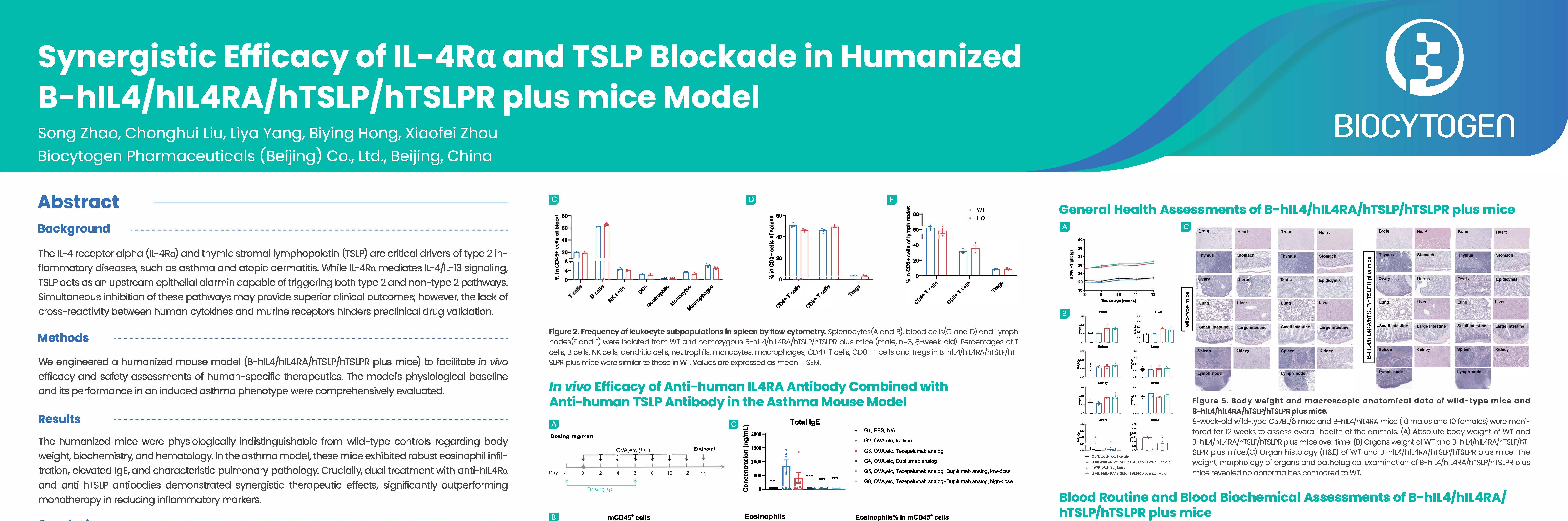
The IL-4 receptor alpha (IL-4Ra) and thymic stromal lymphopoietin (TSLP) are critical drivers of type 2 inflammatory diseases, such as asthma and atopic dermatitis. While IL-4Ra mediates IL-4/IL-13 signaling, TSLP acts as an upstream epithelial alarmin capable of triggering both type 2 and non-type 2 pathways. Simultaneous inhibition of these pathways may provide superior clinical outcomes; however, the lack of cross-reactivity between human cytokines and murine receptors hinders preclinical drug validation.
Methods:
We engineered a humanized mouse model (B-hlL4/hlL4RA/hTSLP/hTSLPR plus mice) to facilitate in vivo efficacy and safety assessments of human-specific therapeutics. The model's physiological baseline and its performance in an induced asthma phenotype were comprehensively evaluated.
Results:
The humanized mice were physiologically indistinguishable from wild-type controls regarding body weight, biochemistry, and hematology. In the asthma model, these mice exhibited robust eosinophil infiltration, elevated lgE, and characteristic pulmonary pathology. Crucially, dual treatment with anti-hll4Ra and anti-hTSLP antibodies demonstrated synergistic therapeutic effects, significantly outperforming monotherapy in reducing inflammatory markers.
Conclusion:
The B-hlL4/hlL4RA/hTSLP/hTSLPR plus mice model provides a highly translational platform for the safety and efficacy testing of next generation combination therapies targeting the IL-4 and TSLP axes.