Duchenne Muscular Dystrophy (DMD) is a severe X-linked genetic disorder caused by mutations in the Dystrophin gene, leading to progressive muscle degeneration and premature mortality. In this study, we utilized two distinct mouse models to investigate the pathophysiology of DMD and to develop a novel humanized model for therapeutic research.
We firstly generated a knockout mouse model, B-Dmd KO (del45-50) mice, with deletion of exons 45 to 50 in the Dmd gene. We confirmed the knock-out at both the mRNA and protein expression levels. To evaluate the functional impact of this genetic modification, we conducted grip strength and rotarod tests to assess muscle strength and motor balance, respectively. Results showed that B-Dmd KO (del45-50) mice exhibited significantly reduced forelimb grip strength and impaired motor balance compared to wild-type control mice, thereby effectively mimicking the motor deficits observed in DMD patients.
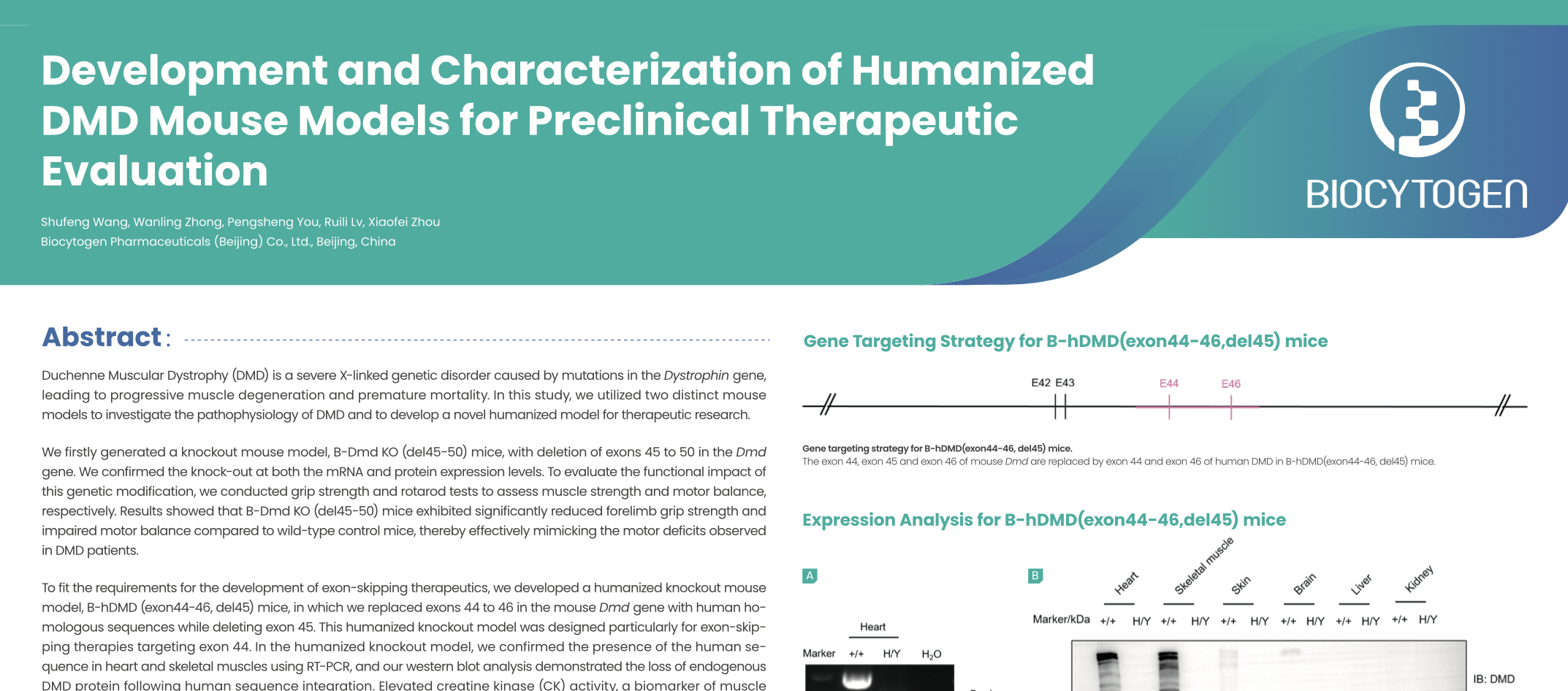
In recent years, exon-skipping oligonucleotide therapies have shown promise for DMD treatment. However, the DMD gene is the largest known human gene, making conventional gene editing approaches challenging. To address this, we developed a humanized knockout mouse model, B-hDMD (exon44-46, del45) mice, in which we replaced exons 44 to 46 in the mouse Dmd gene with human homologous sequences while deleting exon 45. This humanized knockout model was designed particularly for exon-skipping therapies targeting exon 44.
In the humanized knockout B-hDMD (exon44-46, del45) mice, we confirmed the presence of the human sequence in heart and skeletal muscles using RT-PCR, and our western blot analysis demonstrated the loss of endogenous DMD protein following human sequence integration. Elevated creatine kinase (CK) activity, a biomarker of muscle damage in DMD, was detected in the serum of these humanized knockout mice. Additionally, histological examination via hematoxylin and eosin (H&E) staining revealed significant pathological changes in the muscles, including muscle cell atrophy, centralized nuclei, and inflammatory cell infiltration in the gastrocnemius and soleus muscles.
In conclusion, our study successfully developed two mouse models that recapitulate key pathological and functional features of DMD. The humanized knockout B-hDMD(exon44-46, del45) mouse model, in particular, provides a valuable platform for preclinical evaluation of exon-skipping therapies and other novel treatments targeting DMD. Future research will focus on further characterizing the disease progression in these models and exploring their potential applications in therapeutic development.