you may also like
Driven largely by a shift toward complex modalities like ADCs, bispecific antibodies, and engineered cell therapies, global oncology spending reached a record $291 billion in 2025. Today, ADCs and bispecifics represent a rapidly growing sector projected to top $28 billion in 2026. However, because these therapies rely on intricate interactions between the drug, the tumor, and the patient's immune system, standard preclinical testing often falls short. This complexity is making human immune reconstitution mouse models increasingly vital for developers needing to accurately assess efficacy, combination synergies, and potential safety signals before entering the clinic.
As illustrated below, tumor-bearing human immune reconstitution (HIS) mouse models combine human tumors with human immune components to recapitulate key aspects of the human tumor–immune microenvironment, providing a translational platform for preclinical immunotherapy evaluation.
However, achieving consistent and robust immune reconstitution remains challenging. PBMC-humanized models enable rapid engraftment but are largely T-cell dominant and typically constrained by the onset of xenogeneic graft-versus-host disease (GvHD). In contrast, CD34⁺ hematopoietic stem cell (HSC)-humanized models support broader, longer-lasting multilineage immune development but require extended reconstitution timelines and may exhibit variable or incomplete engraftment—particularly of NK and myeloid cells in conventional recipient strains.
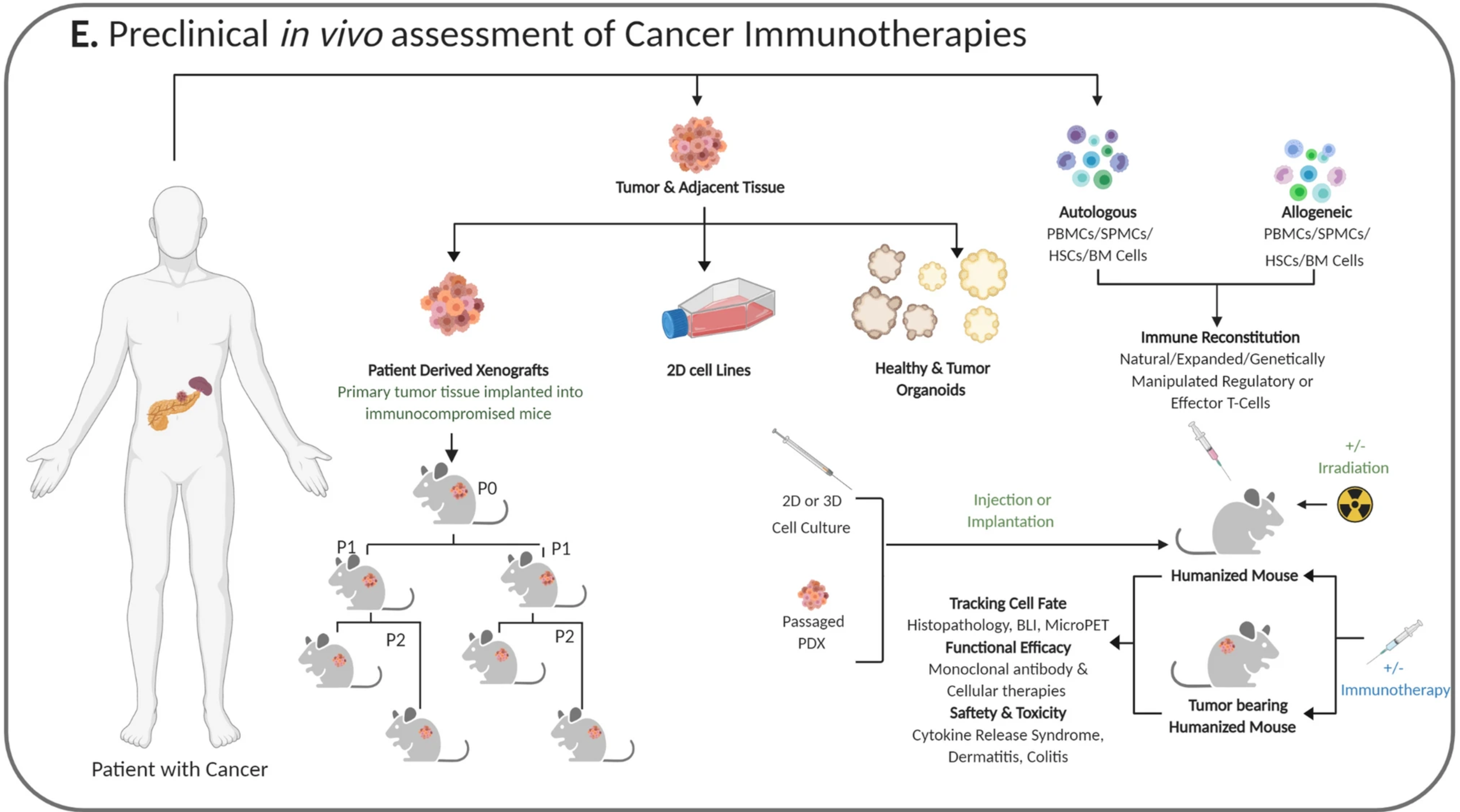
Modeling human tumor-immune environments in vivo for the preclinical assessment of immunotherapies (Bareham et al. 2021)
The B-NDG immunodificient mouse platform provides a highly immunodeficient background that supports the engraftment of human HSCs, PBMCs, and tumors for humanized immune system studies. Because IL-15 plays an important role in the development, survival, and function of several immune-cell populations, particularly NK cells, Biocytogen developed B-NDG hIL15 mice to provide human IL-15 support within this platform. Following transplantation of human CD34⁺ HSCs into neonatal mice, longitudinal flow cytometric analysis confirmed sustained hCD45⁺ chimerism and multilineage reconstitution of human T, B, and NK cells, together with a smaller myeloid-cell population. This validated model supports efficacy, immune-response, and toxicity studies across diverse immuno-oncology modalities, including bispecific antibodies, LNP-delivered in vivo CAR therapies, and ADC–checkpoint inhibitor combinations.
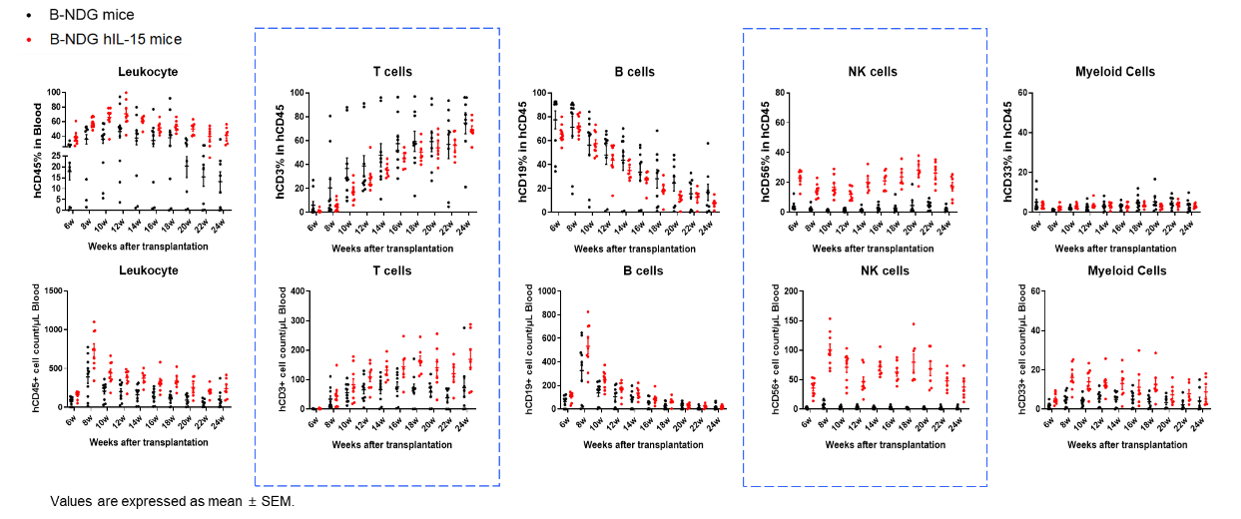
Engraftment of human CD34+ HSCs in neonatal B-NDG hIL15 mice successfully reconstituted human T, B and NK cells, a small number of myeloid cells. Human CD34+ HSCs (3E4) were engrafted via the facial vein of B-NDG hIL15 mice and B-NDG mice within 4-12 hours after being irradiated with 0.9 or 1.0 Gy of X-ray. Percentages and number of reconstituted human immune cells cells in peripheral blood was analyzed by flow cytometry. The percentages of human CD45+ cells and NK cells in huHSC-B-NDG hIL15 mice were higher than that in huHSC-B-NDG mice. The number of all cell types including human CD45+ cells, T cells, B cells, NK cells and myeloid cells in huHSC-B-NDG hIL15 mice were more than huHSC-B-NDG mice.
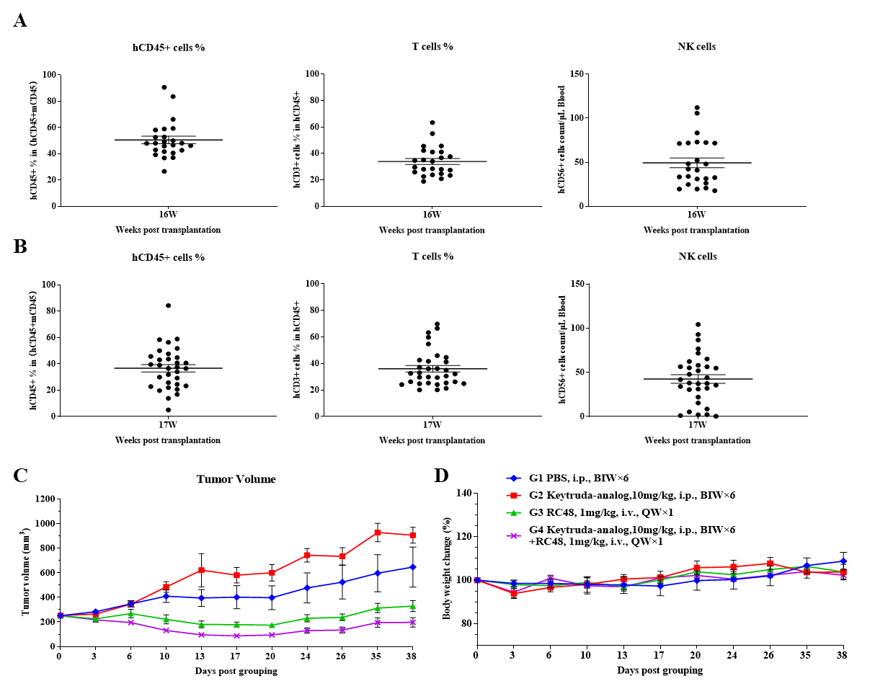
HuHSC-B-NDG hIL15 mice bearing subcutaneous NCI-N87 gastric tumors were used to evaluate the HER2-targeting ADC RC48, alone or in combination with Keytruda analog. Peripheral blood analysis at 16 and 17 weeks post-transplantation confirmed the reconstitution of human CD45⁺ cells, T cells, and NK cells (A–B). RC48 inhibited tumor growth, while the combination treatment produced greater tumor growth suppression than either monotherapy (C), with no notable treatment-related body weight loss (D).
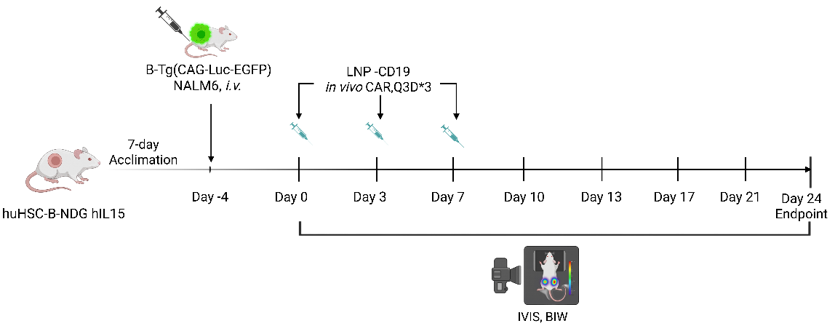
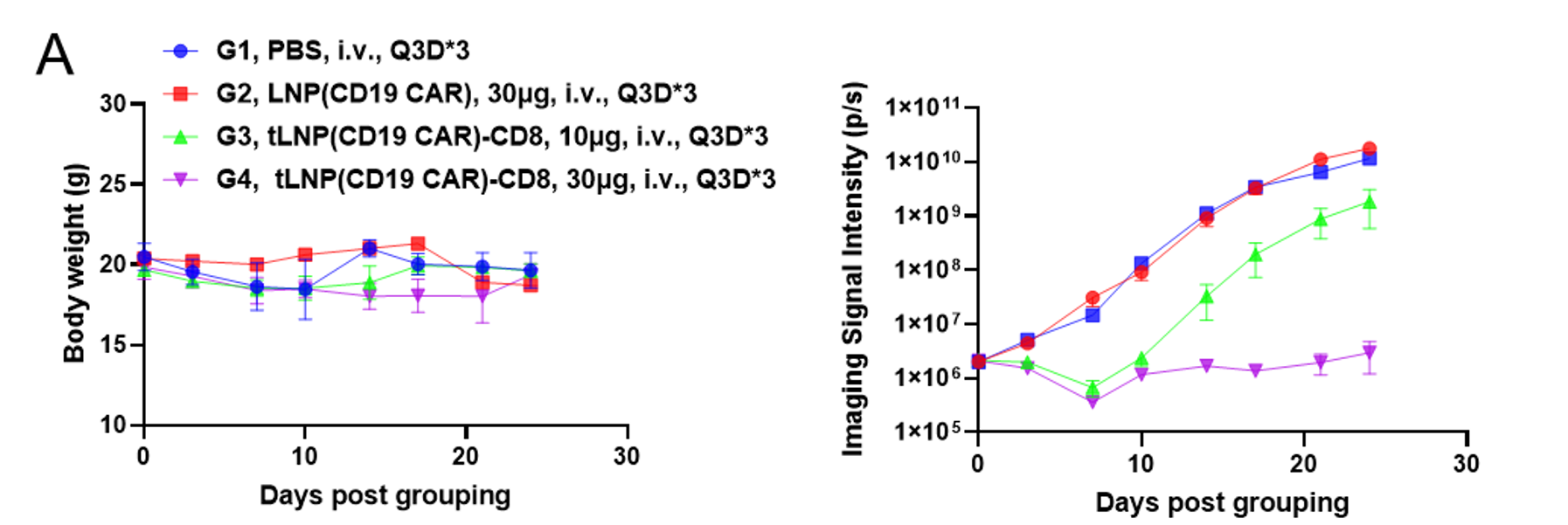
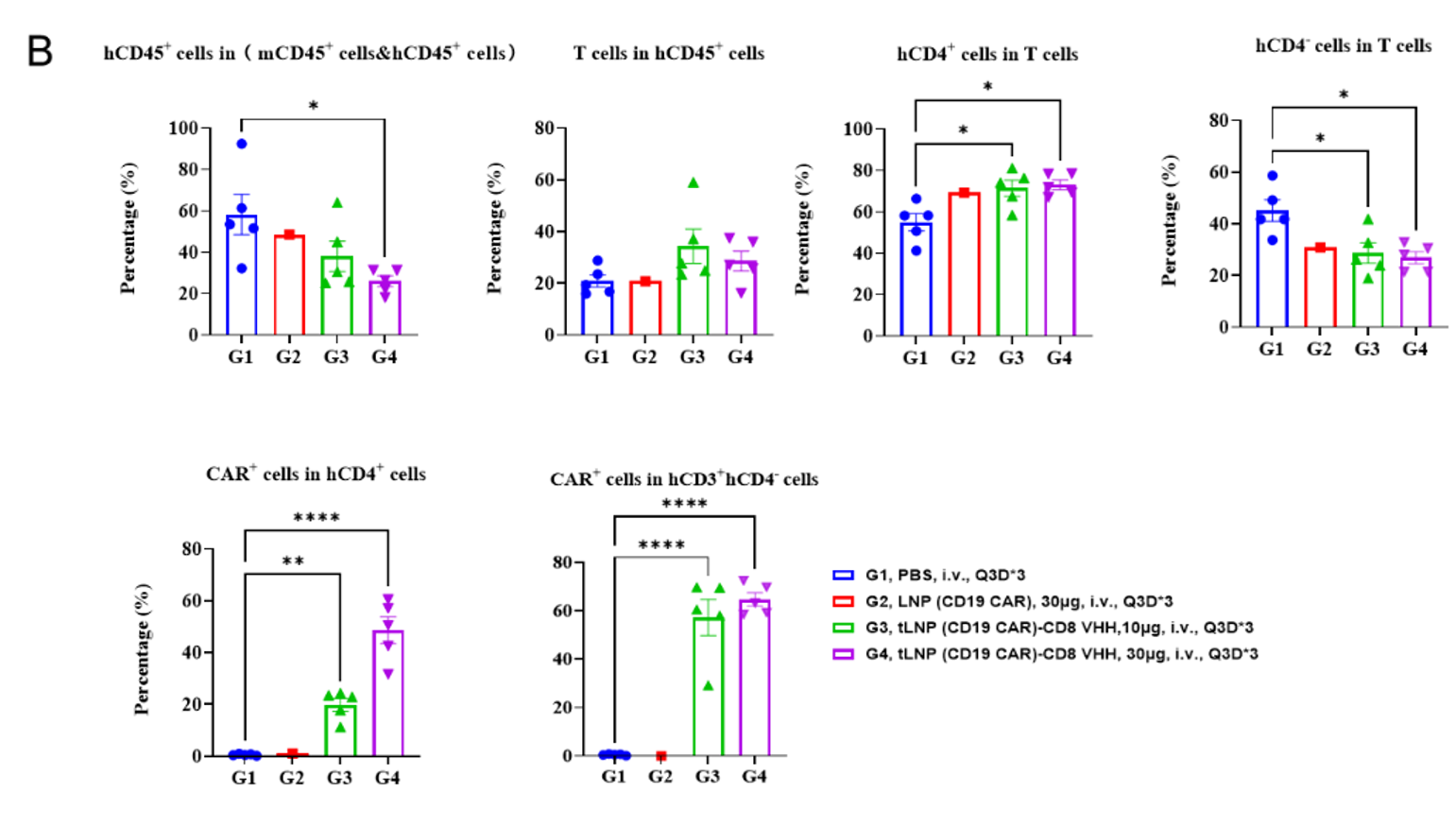
HuHSC-B-NDG hIL15 mice engrafted with Nalm-6 tumor models were used to evaluate tLNP in vivo CAR-T therapies. Mice received PBS, non-targeted LNP, or CD8-targeted LNP formulations on Days 0, 3, and 7. Body weight and tumor burden were monitored longitudinally by body weight measurement and IVIS bioluminescence imaging (A). Flow cytometric analysis of peripheral blood demonstrated successful human immune reconstitution and CAR expression in T-cell populations following targeted LNP administration, with CAR⁺ cells detected as early as 3 hours after dosing (B).

Antitumor activity of CD3*CD20 BsAb in huHSC-B-NDG hIL15 mice. Raji cells were subcutaneously implanted into in huHSC-B-NDG hIL15 mice. Mice were grouped when tumor volume reached approximately 80-100 mm3, at which time they were intravenously injected with antibodies or control.
As immuno-oncology pipelines continue to diversify, selecting an in vivo model that supports sustained human immune reconstitution is increasingly important for generating meaningful pharmacology and efficacy data. Biocytogen’s B-NDG mouse series—including B-NDG hIL15 mice—provides versatile preclinical platforms for evaluating established and emerging therapeutic modalities, such as bispecific antibodies, antibody–drug conjugates (ADCs), combination immunotherapies, and in vivo CAR therapies.
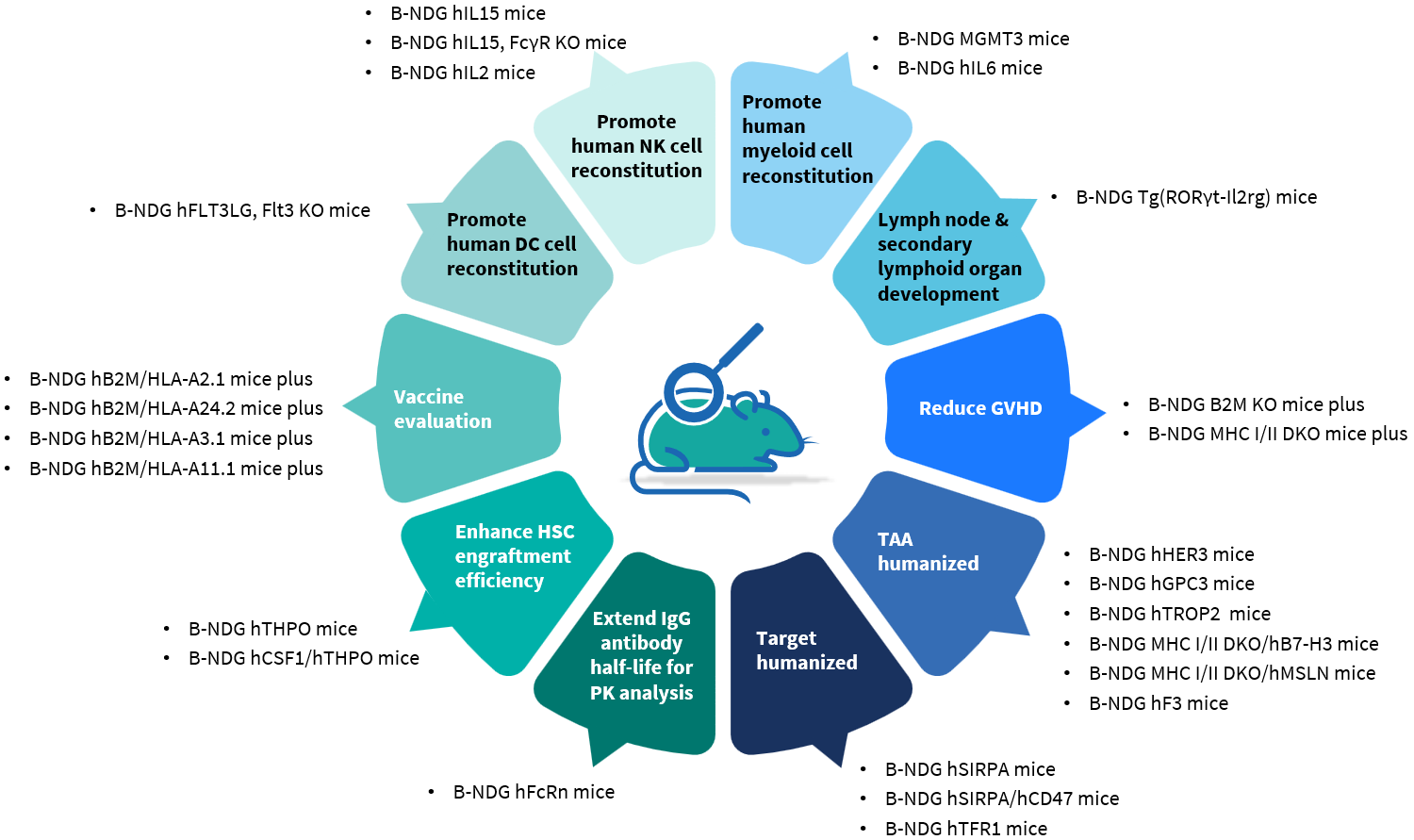
Human IL-15 provides stronger support for the development, survival, and function of IL-15-dependent immune populations, particularly NK cells. This helps broaden innate immune representation within the CD34⁺ HSC-reconstituted human immune system.
Available readouts include longitudinal tumor-volume measurements, IVIS bioluminescence imaging, body-weight monitoring, peripheral blood immune profiling, overall hCD45⁺ chimerism, T-, B-, NK-, and myeloid-cell analysis, and modality-specific pharmacodynamic endpoints such as CAR expression. These measurements enable integrated evaluation of therapeutic activity and immune-cell dynamics.
The CD34⁺ HSC-based reconstitution strategy provides a longer experimental window and lower GvHD risk than PBMC-based models, making it suitable for longitudinal pharmacology, efficacy, safety, and mechanistic evaluation. In the characterization study, surviving huHSC-B-NDG hIL15 mice continued to gain body weight through the extended observation period.
B-NDG hIL15 mice express human IL-15 and support robust development and reconstitution of human NK cells following CD34⁺ HSC engraftment. This makes the model potentially useful for evaluating NK cell-based therapies and mechanisms involving endogenous human NK cells.
1. Bareham, B., Georgakopoulos, N., Matas-Céspedes, A., Curran, M., & Saeb-Parsy, K. (2021). Modeling human tumor-immune environments in vivo for the preclinical assessment of immunotherapies. Cancer Immunology, Immunotherapy, 70(10), 2737-2750.
2. Lin, Q., Hu, Y., Zhou, X., Su, Y., & Shen, Y. (2020). Long-term maintenance of human mature NK cells from hCD34+ HSCs engraftment supported by immune humanized B-NDG hIL15 mice. Cancer Research, 80(16_Supplement), 1632-1632.
3. Lin, Y., Xiao, Z., Hu, F., Zheng, X., Zhang, C., Wang, Y., ... & Wang, J. (2025). Engineered CRO-CD7 CAR-NK cells derived from pluripotent stem cells avoid fratricide and efficiently suppress human T-cell malignancies. Journal of Hematology & Oncology, 18(1), 57.
4. Sun, Z., Gu, M., Yang, Z., Shi, L., Zhao, L., Zheng, M., ... & Tang, N. (2025). Application of humanized mice in the safety experiments of antibody drugs. Animal Models and Experimental Medicine, 8, 1023-1032. https://doi.org/10.1002/ame2.12562
5. Chuprin, J., Buettner, H., Seedhom, M. O., Greiner, D. L., Keck, J. G., Ishikawa, F., ... & Brehm, M. A. (2023). Humanized mouse models for immuno-oncology research. Nature Reviews Clinical Oncology, 20(3), 192–206. https://doi.org/10.1038/s41571-022-00721-2
6. Karnik, I., Her, Z., Neo, S. H., Liu, W. N., & Chen, Q. (2023). Emerging Preclinical Applications of Humanized Mouse Models in the Discovery and Validation of Novel Immunotherapeutics and Their Mechanisms of Action for Improved Cancer Treatment. Pharmaceutics, 15(6),