you may also like
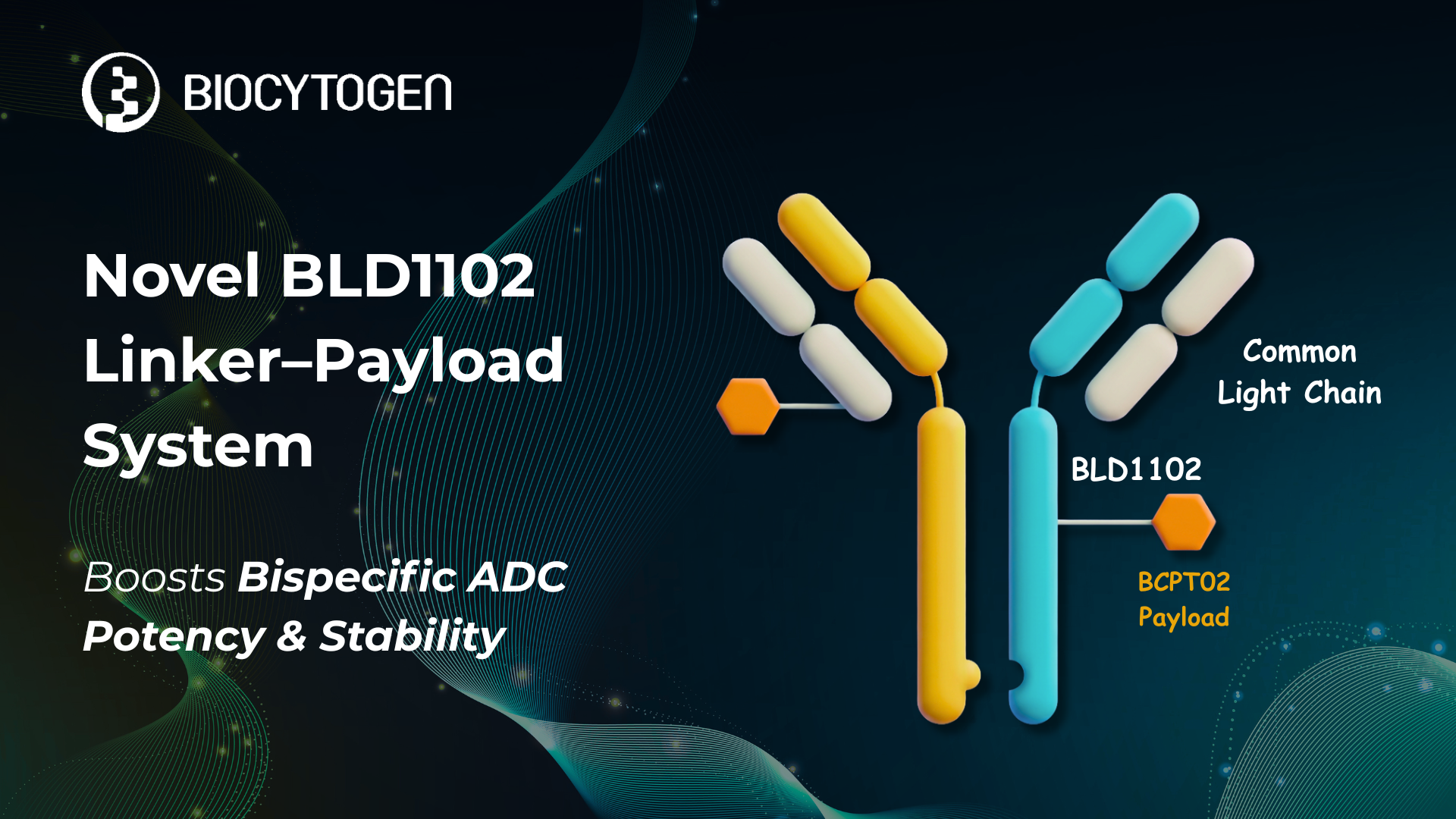
Antibody–drug conjugates (ADCs) are a leading cancer therapy, delivering cytotoxic payloads with improved tumor specificity, yet off-target effects and resistance—particularly in solid tumors—continue to limit efficacy. Bispecific ADCs (BsADCs) help address these challenges through dual-epitope or dual-target engagement, improving tumor selectivity, internalization, and potency. With 10+ candidates now in clinical development, BsADCs are advancing rapidly, but optimal performance still depends on coordinated co-optimization of the antibody, linker, and payload (Fu et al. 2023).
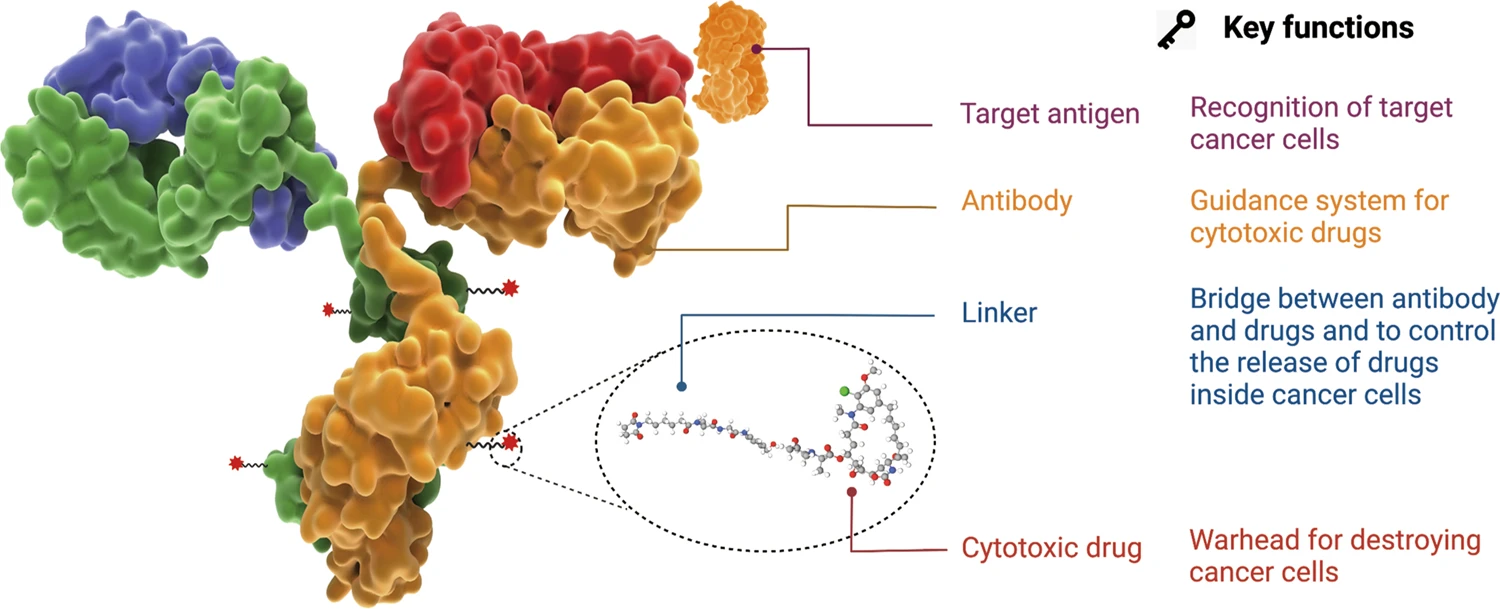
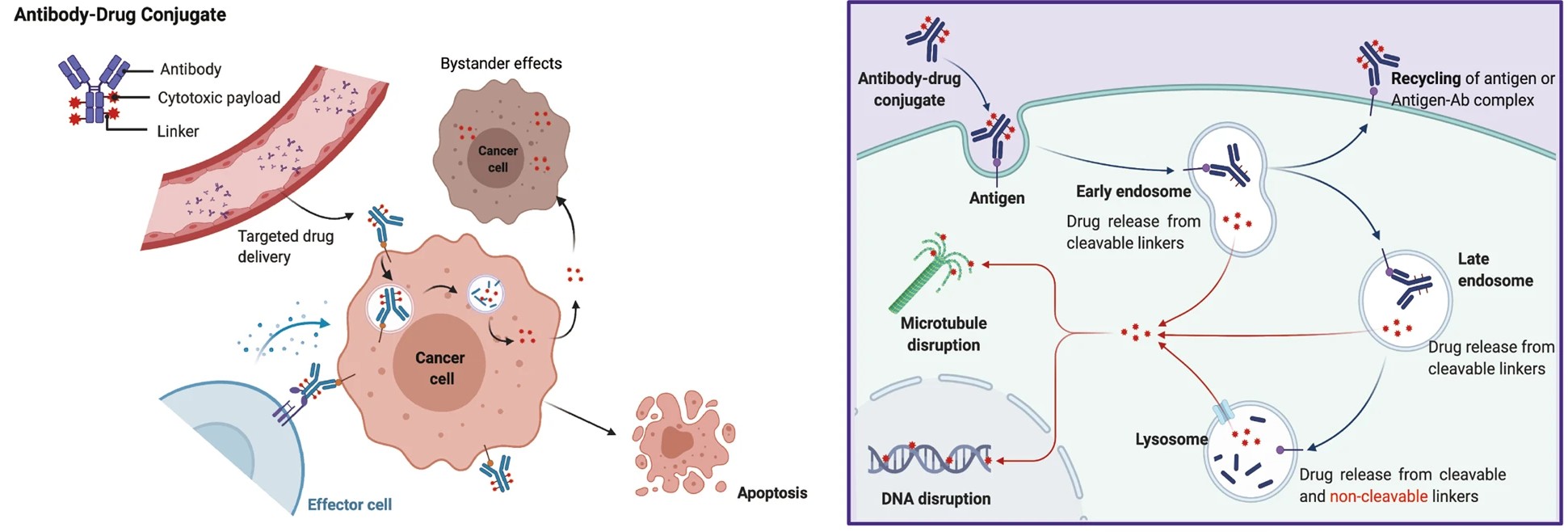
ADC Structure, Key Features, and Core Mechanism of Action (Fu et al. 2023)
Our BsADC platform brings these elements together by combining the RenLite® fully human common light chain platform with the BLD1102 novel linker–payload system, empowering high-diversity antibody discovery, efficient bispecific assembly, and superior ADC performance.
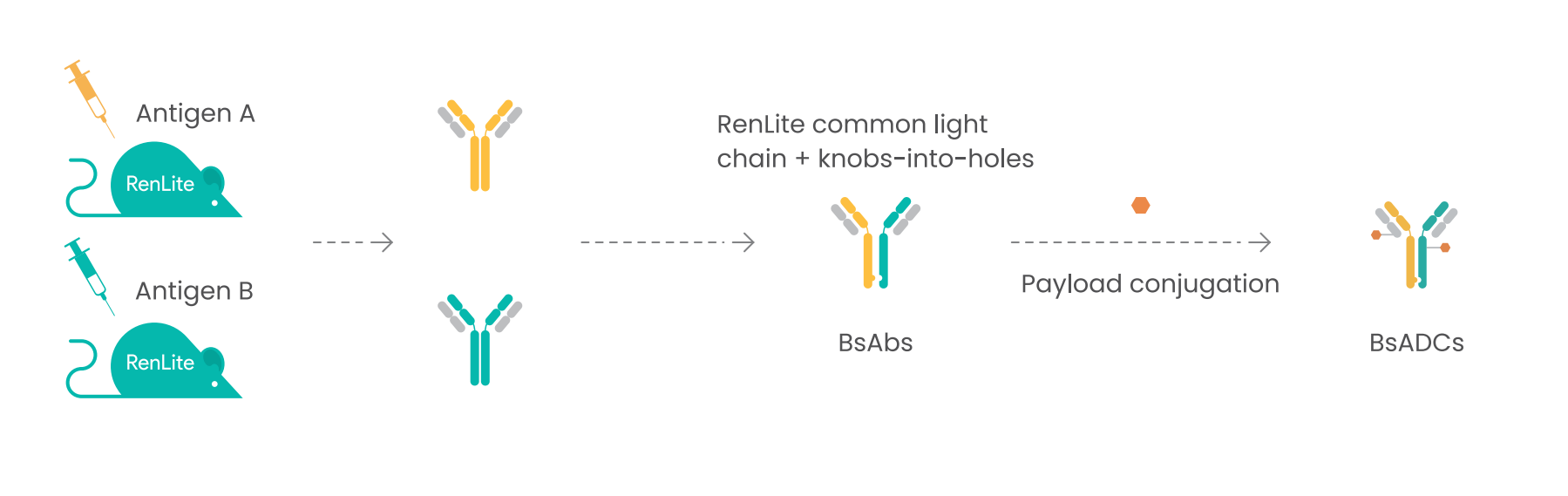
▷ Key Advantages of Biocytogen’s BsADC Platform
|
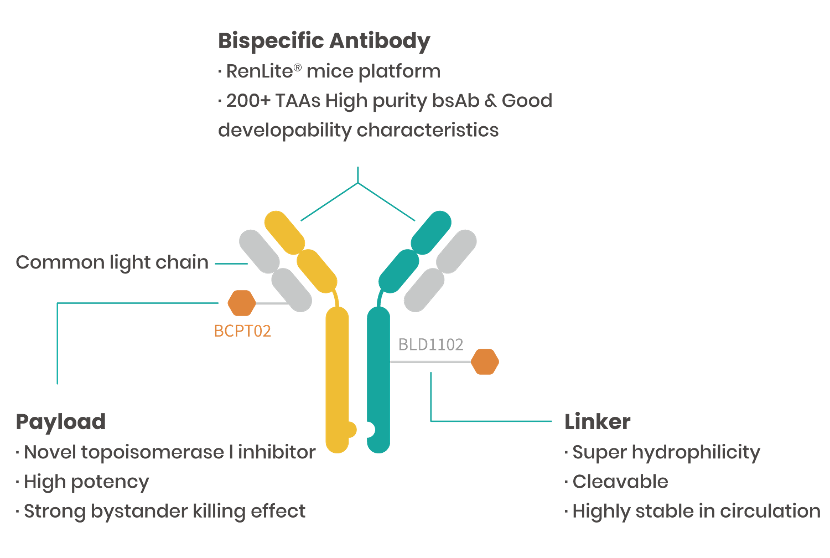 |
▷ BLD1102: Biocytogen’s Proprietary Novel Linker–Payload System
|
Discovery of Novel BsADCsAs part of Project Integrum, tumor-associated antigen (TAA)–targeting antibodies derived from RenLite® or RenLite KO mice are assembled into fully human common light chain bispecifics. BsADC candidates conjugated with BLD1102 undergo rigorous in vitro functional and developability assessments, followed by in vivo efficacy, PK/PD, and toxicity studies. Our large-animal translational platform further identifies bsADC candidates with optimal clinical potential.
Frequently Asked Questions (FAQs)1: What makes bispecific ADCs different from traditional ADCs?BsADCs target two epitopes or antigens instead of one, improving tumor selectivity, internalization, and antitumor potency. This dual-target design helps address challenges such as off-target toxicity and tumor resistance seen with traditional ADCs. 2: How does the BLD1102 linker–payload system improve ADC performance?BLD1102 pairs a novel TOP1 inhibitor with a hydrophilic, cleavable linker to enhance ADC stability, solubility, and controlled payload release. Preclinical data show stronger efficacy than vcMMAE and good tolerability, improving overall ADC performance. 3: What are the advantages of using RenLite® mice for bispecific antibody discovery?RenLite® mice generate fully human common light chain antibodies, enabling efficient bispecific assembly with low mismatch rates. Combined with RenLite KO, the platform expands diversity and supports discovery of novel or conserved epitopes for high-quality BsADCs. Reference:Fu, Zhiwen, et al. "Antibody drug conjugate: the “biological missile” for targeted cancer therapy." Signal transduction and targeted therapy 7.1 (2022): 93. |