Key Features
1. Complete human heavy chain variable domain combined with a common light chain substitution in situ
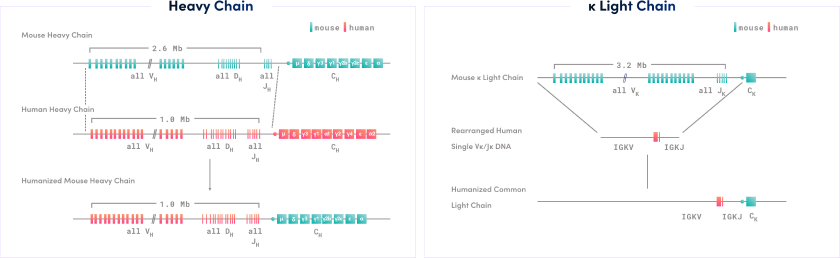
2. Fully human heavy chain antibody repertoire diversity
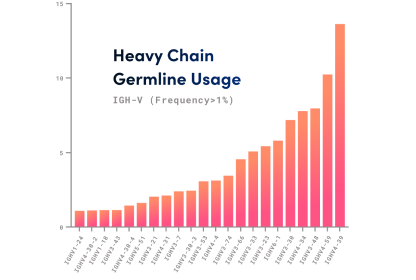
IGH-V (>1%)
Heavy chain IGHV germline usage of naive RenLite mice
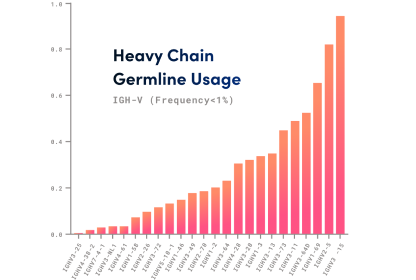
IGH-V (<1%)
Heavy chain IGHV germline usage of naive RenLite mice
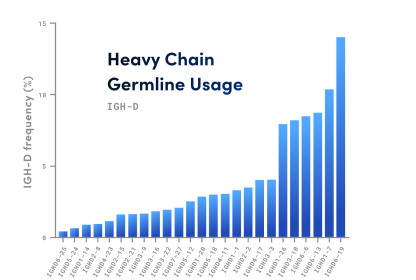
IGHD
Heavy chain IGHD germline usage of naive RenLite mice
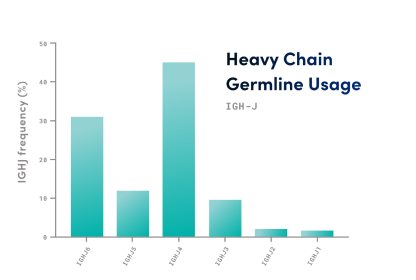
IGHJ
Heavy chain IGHJ germline usage of naive RenLite mice
3. Human-like CDR3 features
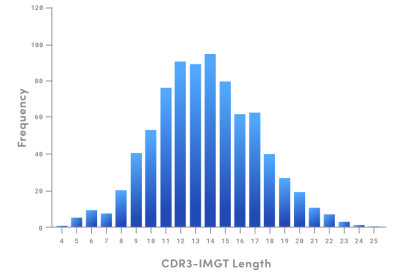
CDRH3 Length (Amino Acids)
The median length of heavy chain CDR3 (14aa) from naive RenLite mice is comparable to the average length of human CDR3.
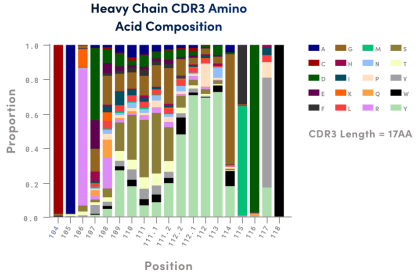
Heavy Chain CDR3 Amino Acid Composition
Human-like CDR3 features, such as increasing frequency of tyrosine usage, are observed in RenLite mouse heavy chain CDR3.
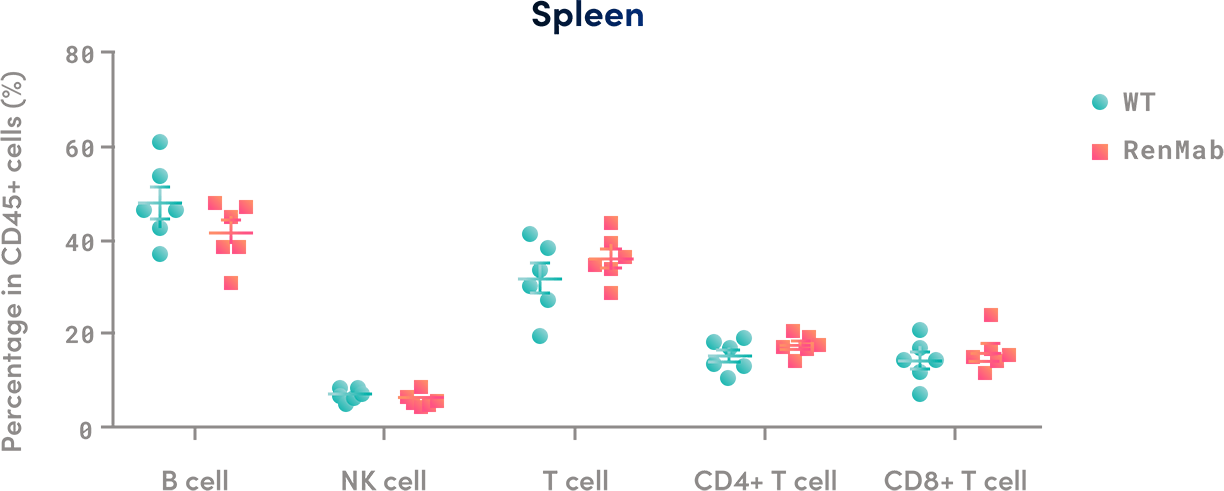
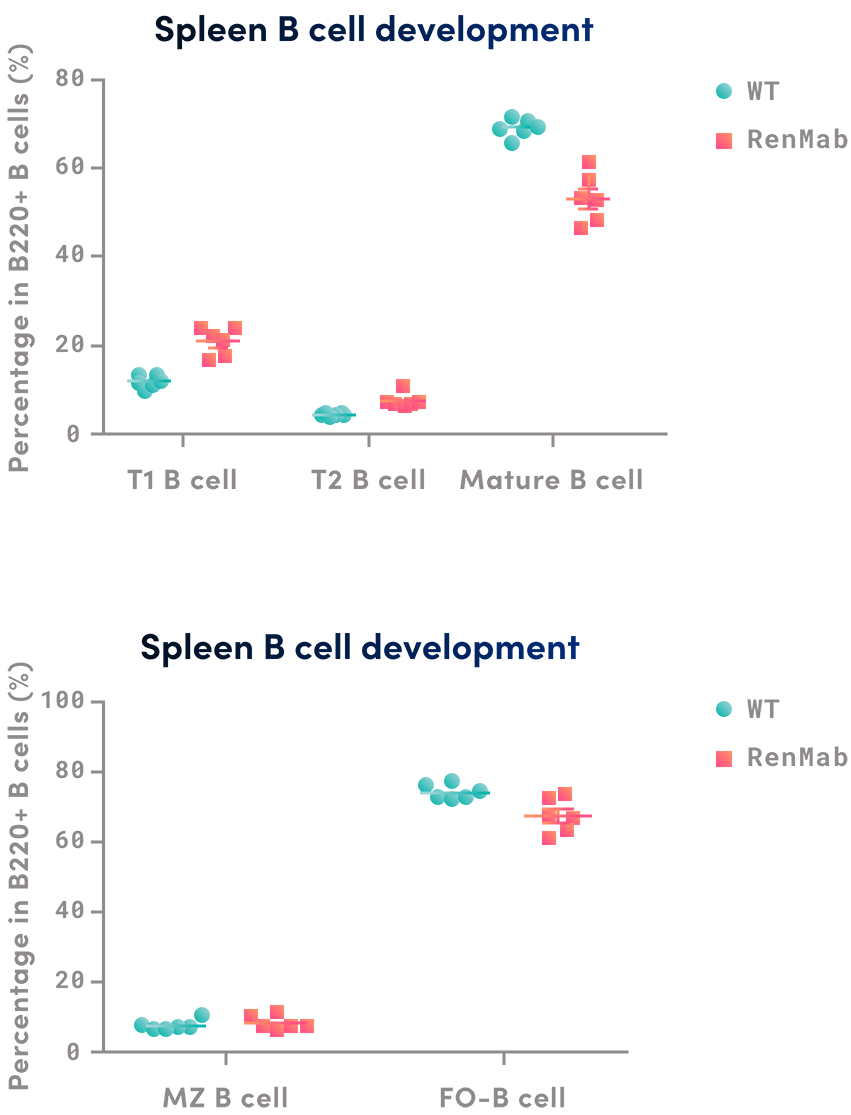
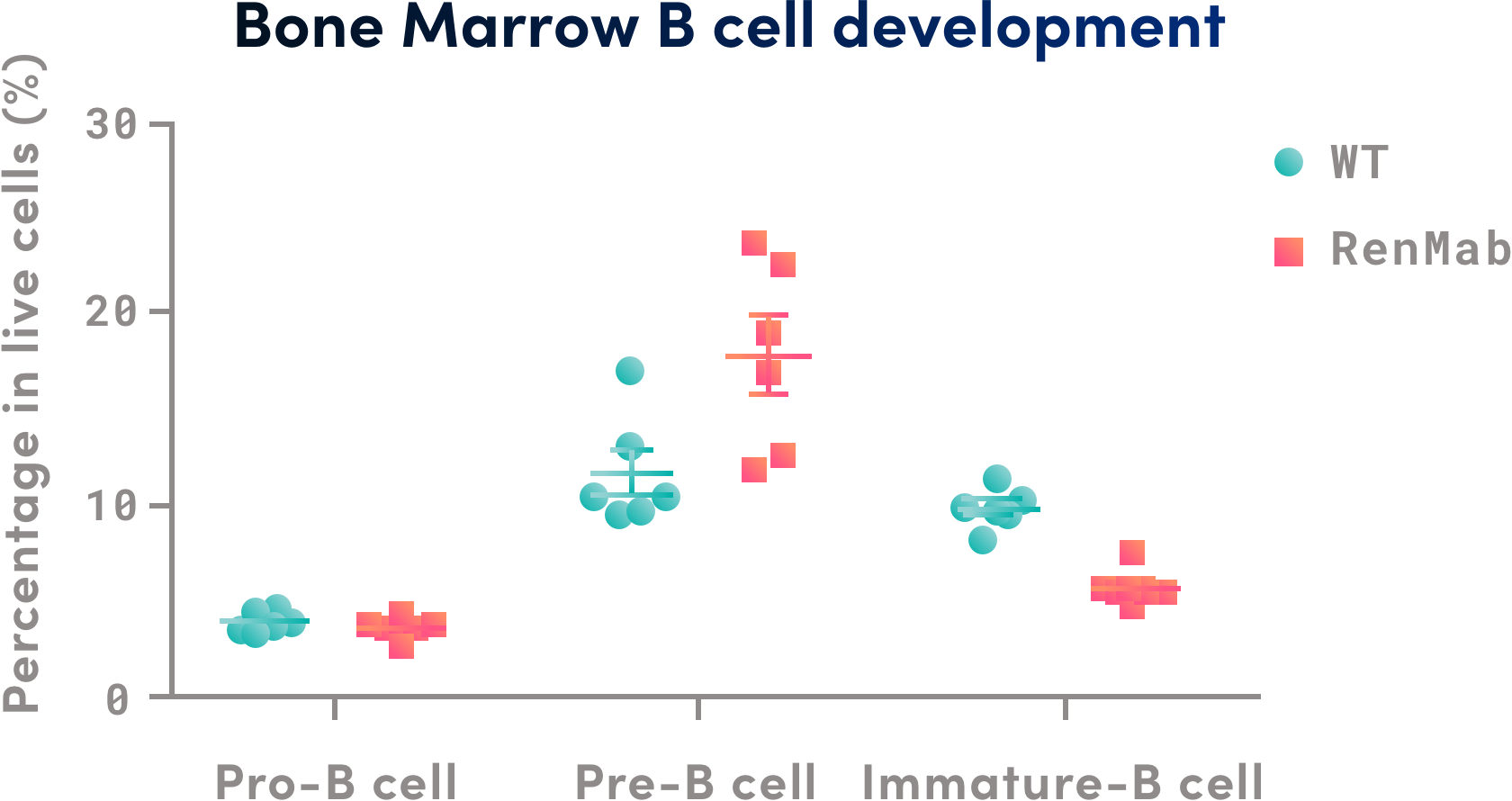
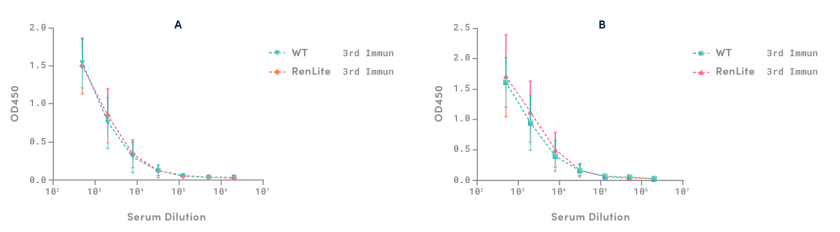
4. Robust immune response comparable to wild type mouse
Frequently Asked Questions (FAQs) About RenLite®
1. What is RenLite®, and what types of antibodies does it generate?
RenLite® is Biocytogen’s
fully human antibody discovery platform within the RenMice® family. It generates fully human antibodies that share a
common light chain, providing building blocks for developing multiple
bispecific antibody formats and
bispecific antibody-drug conjugates (BsADCs).
2. How is the common light chain designed in RenLite® mice?
RenLite® mice are generated using Biocytogen’s proprietary Size-Unlimited and Precise Chromosome Engineering (SUPCE™) technology. They combine fully human immunoglobulin heavy-chain variable regions with a fixed common human κ light-chain variable region, IGKV3-11. This design generates antibodies with diverse heavy-chain variable regions that share the same light chain, simplifying bispecific antibody discovery and development.
3. How does RenLite® address chain-pairing challenges in bispecific antibody development?
RenLite® uses a common light chain design to minimize heavy-light chain mispairing in bispecific antibodies. Complementary Knobs-into-Holes (KIH) engineering can promote correct pairing between the two different heavy chains. Together, these approaches support the development of bispecific antibodies and bsADCs with mAb-like physicochemical properties.
4. How does RenLite® expand antibody diversity for BsAb and BsADC discovery?
RenLite® combines a diverse fully human heavy-chain repertoire with a common light chain to support bsAb and bsADC discovery. RenLite® target-gene knockout (KO) mice further overcome immune tolerance, enabling antibody discovery against both conserved and non-conserved target regions. This approach can broaden epitope coverage, uncover novel epitopes, and support the identification of high-affinity, target-specific antibodies.