you may also like

    Engineering Smarter Antibodies for Autoimmune Diseases: From Single-Target to Immune Network Modulation

    Engineering Smarter Antibodies for Autoimmune Diseases: From Single-Target to Immune Network Modulation

    July 30, 2026
    Share on:

    RenSuper Biologics™ Autoimmune Disease Series | Part 1


    Autoimmune diseases—including asthma, inflammatory bowel disease (IBD), and psoriasis—are highly complex, driven by dynamic interactions among immune cells, tissues, and signaling pathways. For decades, drug discovery focused on blocking single inflammatory pathways (e.g., TNF, IL-17, IL-23), which revolutionized care but often falls short of long-term disease control due to patient non-response, incomplete remission, or loss of efficacy over time (Roda et al., 2016; Taylor et al., 2022).


    Beyond Single Targets: Coordinated Network Modulation 

    Because the immune system is deeply interconnected, single-target therapies are increasingly limited by biological redundancy, compensatory signaling, and heterogeneous, dynamic disease evolution (Chan & Carter, 2010). 

    To overcome these hurdles and achieve durable remission, the field is shifting from transient cytokine suppression to active immune network modulation (Mingueneau et al., 2024). Researchers aim to actively "reset" the immune system and restore long-term homeostasis by:

    • Co-targeting complementary pathways to address multiple disease drivers simultaneously and prevent compensatory inflammation.
    • Engineering multispecific antibodies to engage interconnected targets with a single therapeutic.
    • Improving tissue selectivity to enhance precision at the site of inflammation while preserving normal, systemic immune function.

    Although these approaches employ different molecular strategies, they share a common objective: achieving more coordinated regulation of complex immune networks while maintaining normal immune function.


    Example: Receptor-Level Immune Network Modulation

    The Oncostatin M receptor (OSMR) is an emerging immune regulatory hub in autoimmune diseases, tissue remodeling and fibrosis (West et al., 2017). Targeting OSMR enables simultaneous blockade of OSM and IL-31 signaling, representing a receptor-level approach to modulate interconnected inflammatory pathways.

    Biocytogen’s Fully Human Anti-OSMR Blocking Antibody:

    • Network-level pathway modulation: Blocks OSMR-mediated signaling pathways, including OSM and IL-31 pathway activity, through a single antibody molecule.
    • Optimized therapeutic profile: High affinity, favorable developability, extended half-life than benchmark vixarelimab analog, and suitability for high-concentration subcutaneous formulation. 
    • Preclinical validation: Demonstrated target blockade, safety, and efficacy in humanized OSMR/OSM/IL-31 mouse models. 
    • Potential applications: Atopic dermatitis, fibrotic diseases, IBD, and other immune-mediated conditions. 


    Together these advanced strategies represent a broader shift in autoimmune drug development:

    From target biology toward network biology.


    Beyond Target Selection: Key Considerations for Next-Generation Autoimmune Antibodies

    Because autoimmune diseases often require lifelong management rather than short-term intervention, therapeutic success depends on achieving durable control while maintaining long-term safety. Developing antibody therapeutics for these chronic conditions therefore requires more than identifying disease-relevant targets—it requires integrated consideration of molecular design, pharmacology, and patient needs over years of treatment.

    1. Long-Acting Design for Chronic Treatment: Optimizing antibody half-life through Fc engineering, including modulation of FcRn interactions, can enable less frequent dosing while maintaining sustained efficacy and improving patient convenience (Mackness et al., 2019).
    2. Molecular Stability for Long-Term Safety: For chronic biologics, molecular stability is essential. Antibody aggregation or degradation may increase immunogenicity, trigger anti-drug antibodies (ADA), and reduce therapeutic durability. Early developability assessment and formulation optimization are therefore critical.
    3. Select Optimal Molecular Format for Complex Immune Networks: As autoimmune therapies move beyond single-target inhibition, successful development increasingly depends on matching the right antibody format, epitope, and molecular design to the underlying disease biology.
    4. Maintain Immune Balance to Minimize Infection Risk: Effective autoimmune therapies must suppress pathological inflammation while preserving protective immune responses. Achieving this balance requires precise molecular engineering and robust translational models to evaluate efficacy and safety.

    Together, these challenges highlight the need for advanced discovery platforms capable of delivering high-quality antibody candidates optimized for complex, long-term therapeutic applications.


    Innovation in Therapeutics Requires Innovation in Discovery

    Powered by our proprietary fully human RenMice® platform, Biocytogen has generated 100+ autoimmune disease antibody programs designed to address diverse inflammatory pathways.

    Through integrated platforms including RenMab®, RenLite®, and RenNano®, we enable the discovery and development of high-affinity therapeutic antibodies across multiple modalities, including monoclonal antibodies, bispecific antibodies, bispecific ADCs, and VHH-based therapeutics.

    Our autoimmune antibody portfolio spans multiple indications, including asthma, psoriasis, atopic dermatitis, systemic lupus erythematosus, rheumatoid arthritis, and transplant rejection, with off-the-shelf programs available to accelerate therapeutic development. 

    ► Explore selected fully human antibody assets for autoimmune and inflammatory diseases below. 
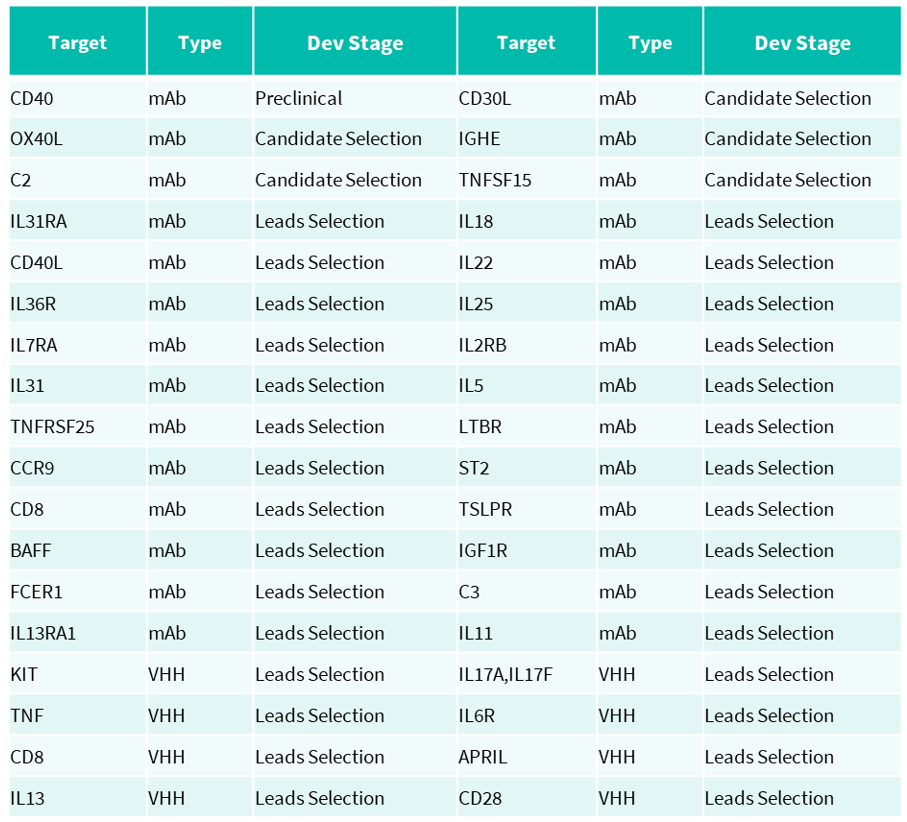
    Biocytogen fully human antibody for autoimmune and inflammatory diseases

    ► More autoimmune antibody assets: https://biocytogen.com/drug-development/autoimmune-assets

    ► Browse our library for more: https://biocytogen.com/drug-development/inflammation-autoimmunity


    Looking Ahead & Partner with Biocytogen

    The future of autoimmune drug development will increasingly be defined not only by the discovery of new targets, but more importantly by a deeper understanding of how immune pathways interact and the ability to design therapies that restore balance across these networks. Our programs and platform support researchers to rapidly evaluate therapeutic targets and engineer for advanced formats, including bispecific and multispecific antibodies.

    Contact us to learn more about our antibody discovery platform and assets.


    In the next articles of this series, we will explore how this paradigm shift is reshaping therapeutic antibody strategies in specific diseases.

    • Part 2 examines inflammatory bowel disease (IBD), where persistent inflammation, fibrosis, and incomplete mucosal healing highlight the need for next-generation immune network modulation.
    • Part 3 explores asthma and type 2 inflammation, focusing on how simultaneous targeting of upstream epithelial alarmins and downstream cytokine pathways may redefine future biologic therapies.

    Stay tuned!


    Frequently Asked Questions: Therapeutic Antibody for Autoimmune Diseases

    1. What is immune network modulation in autoimmune diseases?

    Immune network modulation is an emerging therapeutic strategy that aims to regulate multiple interconnected immune pathways rather than inhibiting a single cytokine or receptor. The goal is to achieve more durable disease control while preserving protective immune function.

    2. Why are single-target biologics no longer sufficient for some patients?

    Although biologics targeting TNF, IL-17, IL-23 and IL-4Ra have transformed treatments, many patients still experience primary non-response, secondary loss of response or incomplete remission. Autoimmune diseases are driven by interconnected immune networks, making single-target inhibition insufficient in some cases.

    3. Why are bispecific antibodies attracting interest in autoimmune diseases?

    Bispecific antibodies can simultaneously engage two complementary biological pathways within a single molecule. This approach may help address pathway redundancy and compensatory signaling, making them promising modality for next-generation opportunities.

    4. What challenges are unique to antibody development for autoimmune diseases?

    Unlike therapies for acute diseases, autoimmune biologics are often administered for years. Developers much balance long half-life, molecular stability, low immunogenicity, durable efficacy and preservation of normal immune function.

    5. How dose Biocytogen support autoimmune antibody discovery?

    Biocytogen's RenSuper Biologics™ provides off-the-shelf access to a large portfolio of fully human antibody sequences generated from Biocytogen’s proprietary RenMice® platforms, enabling researchers to rapidly evaluate therapeutic targets and engineer for advanced formats, including bispecific and multispecific antibodies.


    Additional Resources:


    References:


    • Roda, G., Jharap, B., Narula, N., & Colombel, J. (2016). Loss of Response to Anti-TNFs: Definition, Epidemiology, and Management. Clinical and Translational Gastroenterology, 7, e135. https://doi.org/10.1038/ctg.2015.63 
    • Taylor, P. C., Matucci Cerinic, M., Alten, R., Avouac, J., & Westhovens, R. (2022). Managing inadequate response to initial anti-TNF therapy in rheumatoid arthritis: optimising treatment outcomes. Therapeutic Advances in Musculoskeletal Disease, 14. https://doi.org/10.1177/1759720x221114101
    • Mingueneau, M., Karrer, D. P., Da Silva, V., & Hobeika, E. (2024). Sequential immunotherapy: towards cures for autoimmunity. Nature Reviews Drug Discovery, 23(3), 195-212. https://doi.org/10.1038/s41573-024-01016-0
    • Chan, C. E., & Carter, P. J. (2010). Therapeutic antibodies for autoimmunity and inflammation. Nature Reviews Immunology, 10(5), 301-316. https://doi.org/10.1038/nri2761
    • West, N. R., Hegazy, A. N., Owens, B. M. J., et al. (2017). Oncostatin M drives intestinal inflammation and predicts response to tumor necrosis factor–neutralizing therapy in patients with inflammatory bowel disease. Nature Medicine, 23, 579-589. https://doi.org/10.1038/nm.4307
    • Mackness, B. C., Jaworski, J. A., Boudanova, E., et al. (2019). Antibody Fc engineering for enhanced neonatal Fc receptor binding and prolonged circulation half-life. MABS, 11, 1276-1288. https://doi.org/10.1080/19420862.2019.1633883
    • Schwartz, D. M., Kanno, Y., Villarino, A., Ward, M., Gadina, M., & O'Shea, J. J. (2016). JAK inhibition as a therapeutic strategy for immune and inflammatory diseases. Nature Reviews Drug Discovery, 15(4), 269-281. https://doi.org/10.1038/nrd.2015.14