
you may also like
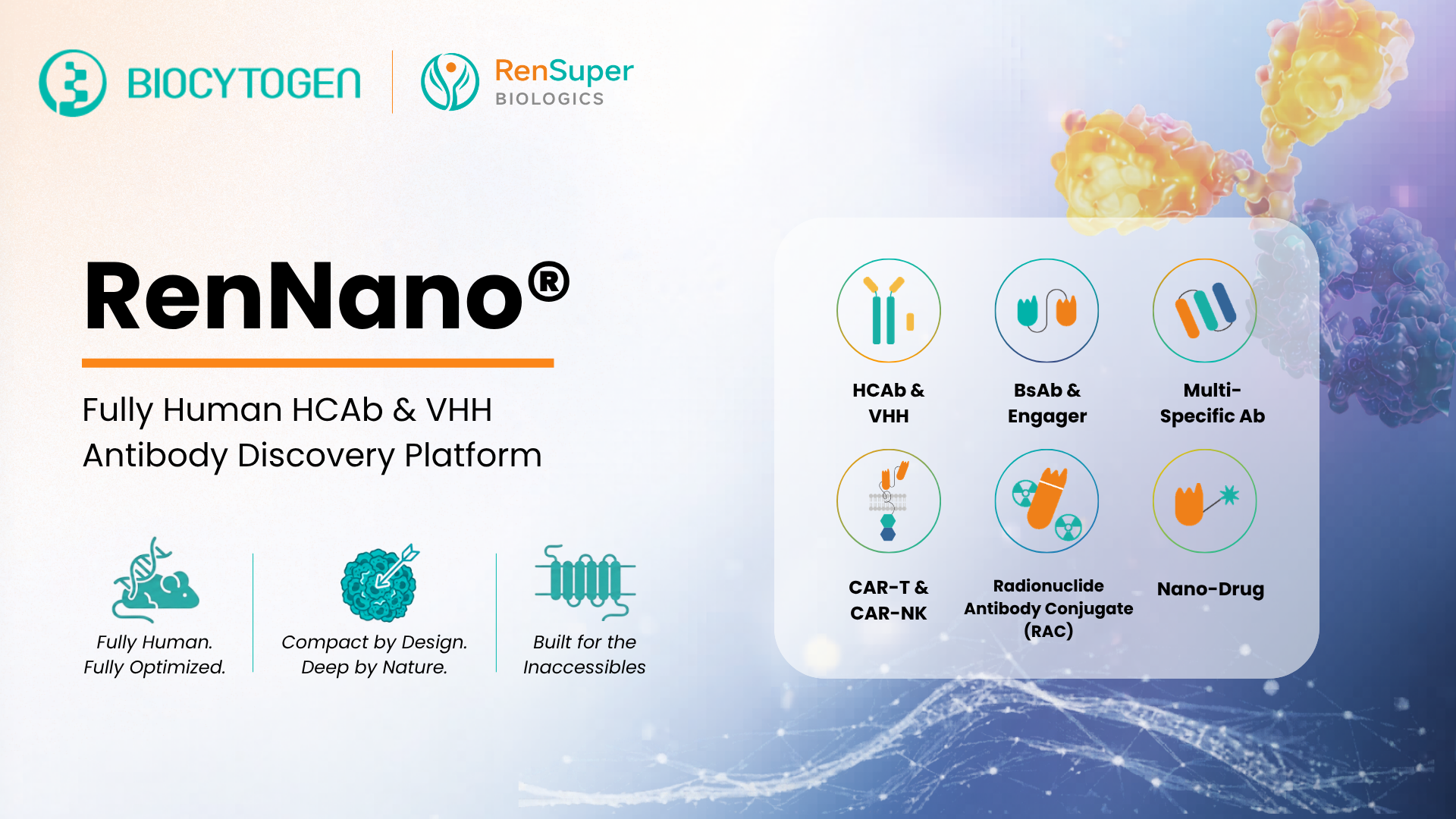
As therapeutic demands evolve, traditional antibody formats are increasingly constrained in addressing complex targets and modalities. Heavy-chain-only antibodies (HCAbs) and VHHs are now redefining what’s possible. With their smaller size, superior tissue penetration, and inherent modularity, they unlock new opportunities for multispecific design, cell therapy, ADCs, and next-generation biologics.
Against this backdrop, Biocytogen is at the forefront of this shift, propelled by the growing impact of its RenNano® platform. Recent high-profile collaborations with Moonlight Bio and Taisho Pharmaceutical underscore rising industry confidence in our fully human heavy-chain-only antibody (HCAb) capabilities.
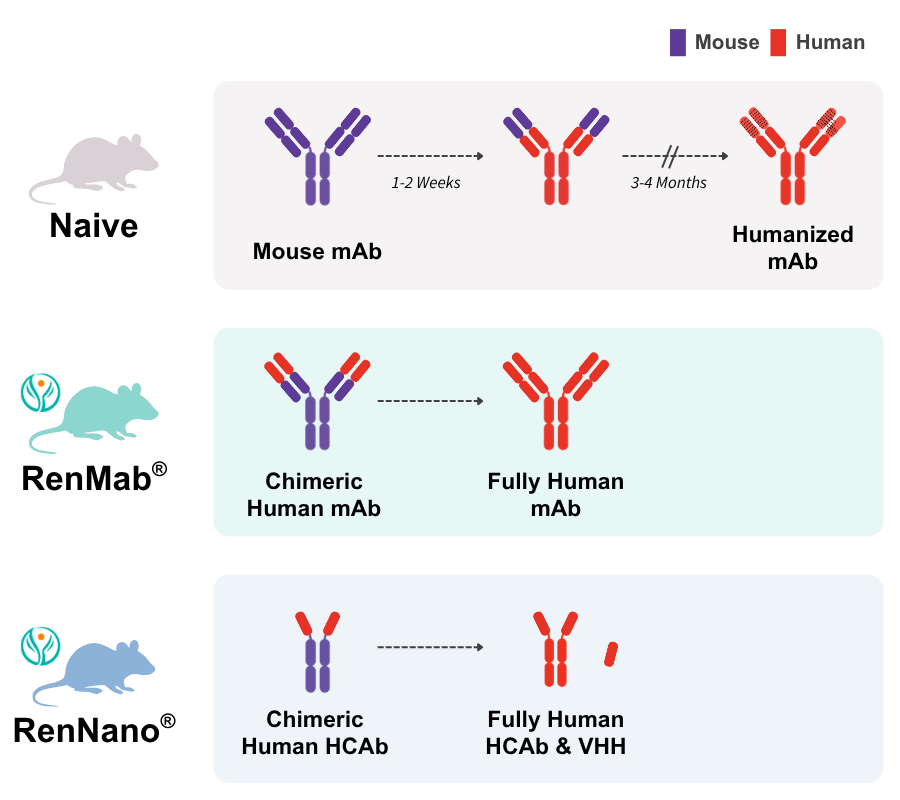
At its core, RenNano® represents a sophisticated reprogramming of the immune system, enabling mice to efficiently generate fully human HCAbs. By integrating a comprehensive human germline repertoire with targeted structural engineering, the platform overcomes key limitations of conventional approaches and provides direct access to diverse, therapeutic-ready molecules.
The RenNano platform is built on a three-part coordinated genetic engineering strategy that enables the direct in vivo generation of fully human HCAbs without downstream humanization or antibody reformatting.
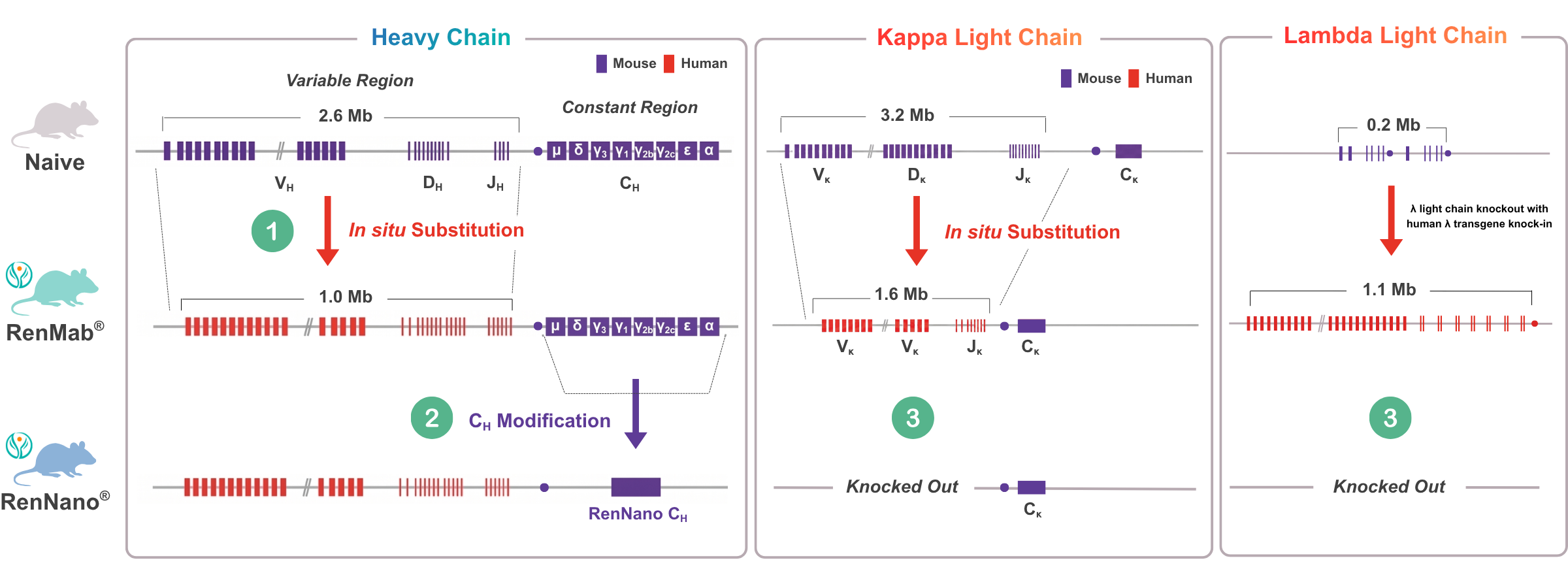 Figure 1. Development of RenMab® and RenNano® Mouse Technology for Fully Human Antibody Discovery. Step 1: In situ replacement of murine heavy chain variable region gene loci (VH, DH, JH) with the corresponding human heavy chain variable region counterparts. Step 2: Modifications of murine heavy chain constant region. Step 3: Deletion (knockout) of all light chain gene loci.
The first engineering layer replaces the entire mouse heavy chain variable region with the human immunoglobulin V(D)J repertoire directly in the genome (Figure 1, Step 1).
Importantly, the mouse constant region is preserved, allowing normal B-cell development, signaling, and antibody secretion.
► Outcome:
The RenNano platform is engineered to overcome key limitations of conventional antibodies—unlocking targets that are physically inaccessible, structurally complex, or poorly druggable. By combining a compact heavy-chain-only format with a fully human immune repertoire, RenNano enables deep tissue penetration, expanded epitope access, and high-affinity functional diversity—all within a development-ready architecture.
A defining feature of RenNano-derived VHH domains is the extended CDR3 loop, enabled by the absence of light chain constraints. These loops typically span 12–23 amino acids, compared to 8–15 in conventional VH domains, providing increased flexibility and structural reach (Figure 4 and 5). This unique architecture allows antibodies not only to bind—but to reach.
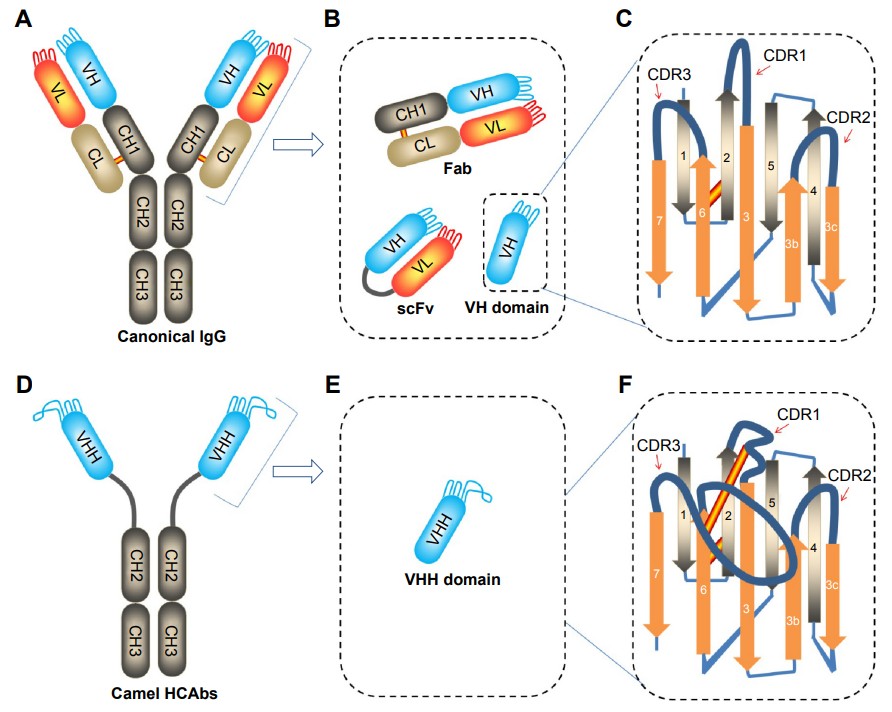
Figure 4. Structural Comparison of Conventional IgG and HCAb Highlighting the Extended CDR3 Loop on the VHH Domain. (A-C) Conventional IgG structure and VH domain illustrating standard CDR1–3 arrangement. (D-F) HCAb and VHH domain highlighting the extended, flexible CDR3 loop. This unique architecture allows VHH to penetrate cryptic epitopes, such as enzyme active sites or GPCR clefts, that are sterically inaccessible to bulkier IgG molecules. Figure modified from Wang et al 2016.
Why CDR3 Length Matters?
Conventional antibodies often struggle to distribute uniformly within solid tumors and fibrotic tissues, with activity largely limited to perivascular regions. RenNano-derived HCAbs are fundamentally different.
Their smaller size and simplified structure enable:
This capability is critical for addressing heterogeneous tumors, where effective therapy depends on reaching all relevant cell populations—not just the most accessible ones.
Antibody diversity begins with V(D)J recombination, where variable (V), diversity (D), and joining (J) germline segments assemble to form the heavy chain variable region—the core of antigen recognition. The RenNano platform utilizes fully human germline segments in their native diversity, generating antibodies that closely mirror the human immune repertoire (Figure 5).
This baseline diversity is further refined in vivo through somatic hypermutation (SHM) and natural immune selection, processes that produce antibodies that are both high-performing and translationally relevant.
Together, this produces a pool of functionally validated antibodies with strong translational potential.
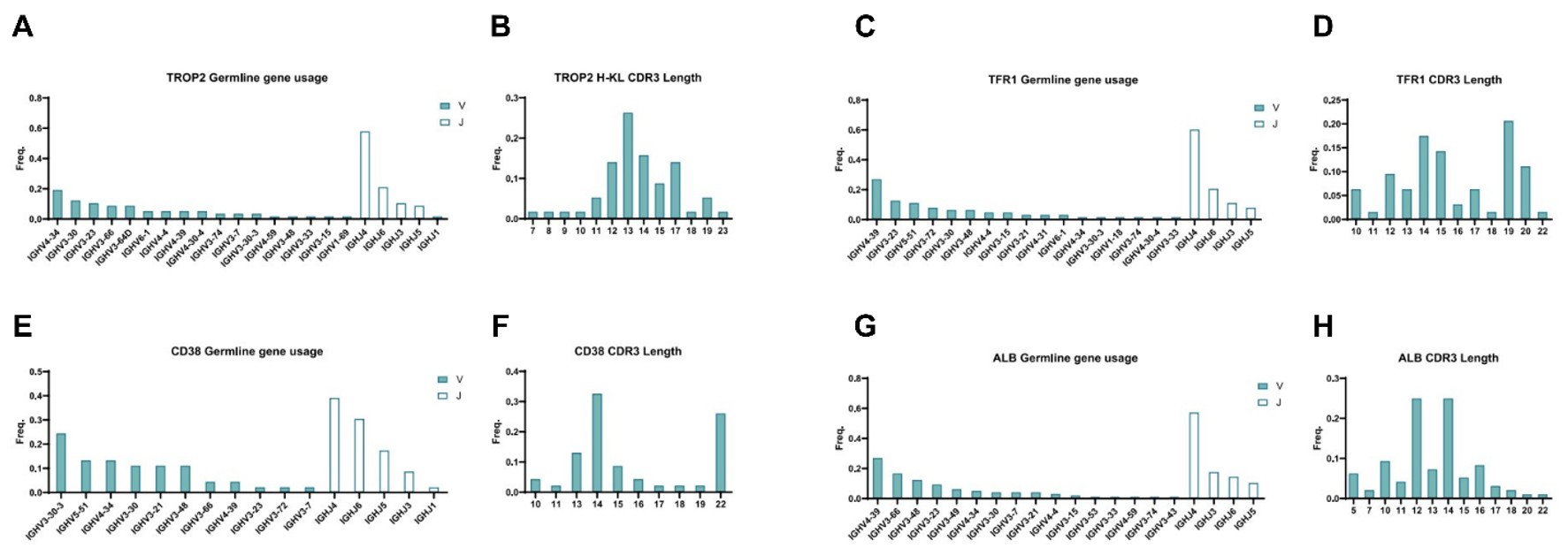
Figure 5. RenNano®-Derived HCAbs Demonstrate High Diversity and Extended CDR3 Lengths. Next-Generation Sequencing (NGS) was utilized to analyze the genetic landscape of HCAbs generated against four distinct antigens (TROP2, TFR1, CD38, and ALB). (A, C, E, G) Analysis of human IGHV and IGHJ germline usage across four distinct antigens, illustrating the broad and unbiased genetic repertoire of the RenNano® platform. (B, D, F, H) Distribution of CDR3 amino acid lengths, highlighting the consistent generation of antibodies with extended loops (up to 23+ residues) across various therapeutic targets.
RenNano-derived HCAbs are compact, stable, and inherently modular—offering clear advantages for drug development:
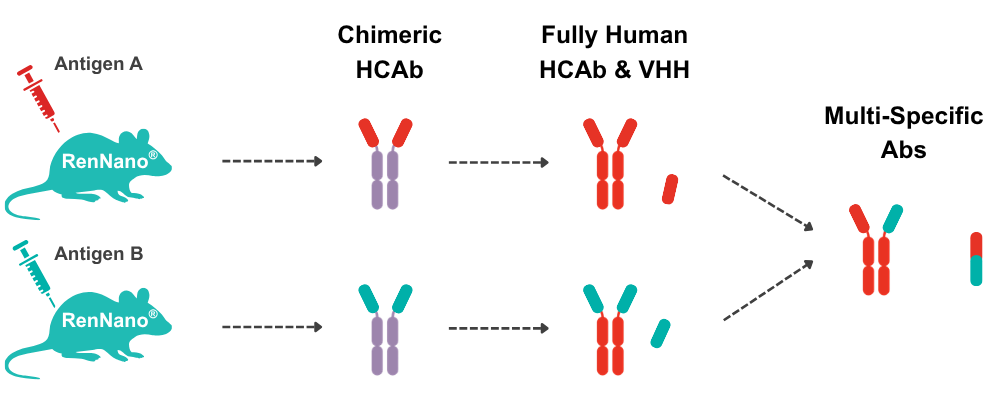
RenNano® integrates human repertoire diversity, structural reprogramming, and enforced HCAb expression into a single in vivo platform—enabling the direct discovery of fully human, therapeutic-ready heavy-chain-only antibodies with broad therapeutic utilities. Contact us to get started!
The RenNano® platform is an engineered mouse model designed for the direct in vivo discovery of fully human heavy-chain-only antibodies (HCAbs). It operates as a "living antibody factory" using a three-part genetic engineering strategy:
This coordinated approach generates diverse, therapeutic-ready HCAbs natively.
RenNano® bypasses the costly and time-consuming humanization process through in situ chromosome engineering. The entire mouse heavy chain variable region is replaced with the human immunoglobulin V(D)J repertoire directly within the genome. Because these segments undergo natural recombination, the resulting antibodies feature fully human variable regions straight from the source, preserving native immune selection without the need for post-discovery sequence reformatting, which usually risks in affinity loss.
RenNano® replaces only the heavy chain variable region to ensure fully human antigen-binding sequences while preserving normal mouse immune system function. Keeping the mouse constant region intact is critical because it maintains B-cell receptor signaling, antibody assembly, and class switching efficiency. This design allows the system to generate fully human antibodies in vivo without disrupting immune development or antibody production.
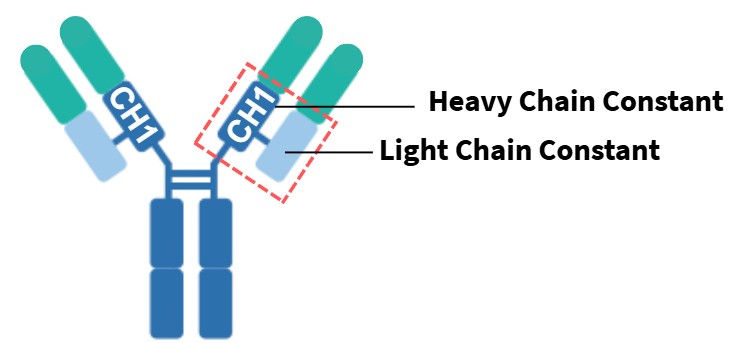
Stabilization is achieved through constant region engineering, most commonly by modifying or removing the CH1 domain. Without CH1, the heavy chain no longer requires a light chain partner and can fold into a stable, secretion-competent format.
The kappa (κ) and lambda (λ) light chains are functionally redundant, and each B cell requires only one light chain to form a functional antibody. In mice, the κ light chain is naturally dominant and is sufficient to support normal B-cell development, antibody assembly, and immune function, allowing the λ light chain to be fully deleted without affecting immunity. In RenNano® HCAb mice, λ is therefore completely knocked out, while the κ variable region is removed but the κ constant region (Cκ) is retained to preserve a stable immunoglobulin structural scaffold required for proper BCR assembly, folding, and expression. This design eliminates endogenous light-chain antigen-binding diversity while maintaining antibody structural integrity, enabling full control of specificity through the heavy-chain-only antibody format.
Without the spatial constraints of a light chain, the VHH domains of RenNano® HCAbs feature an extended CDR3 loop, typically spanning 12–23 amino acids (compared to 8–15 in standard human IgGs). This extended, highly flexible loop acts as a finger-like projection capable of penetrating cryptic epitopes—such as the recessed active pockets of GPCRs and ion channels—that are sterically inaccessible to the flatter binding surfaces of conventional antibodies.
Antibody diversity in RenNano® mice is driven by two natural biological processes:
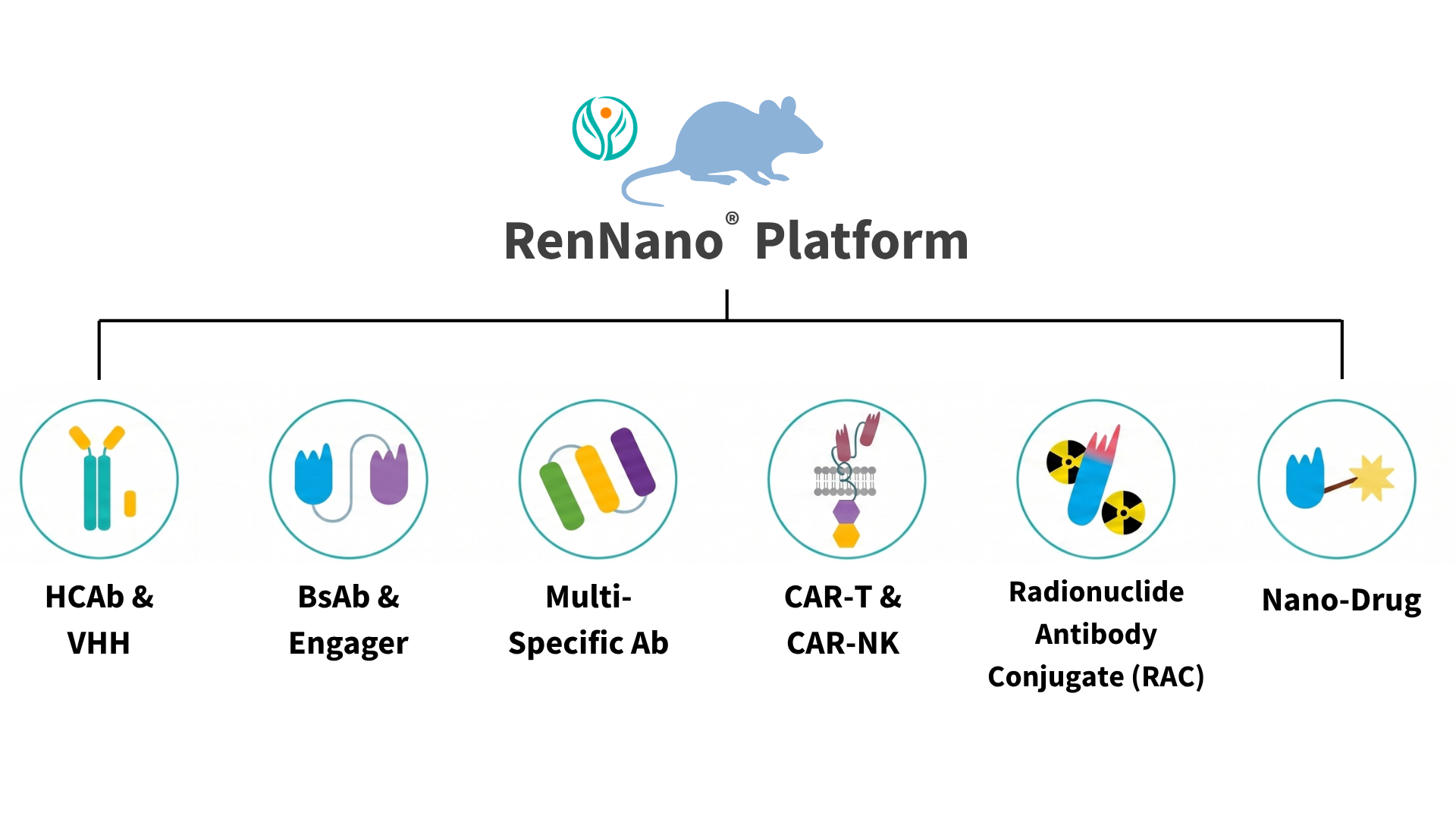
RenNano®-derived HCAbs offer a uniquely modular therapeutic format. Because they completely lack a light chain, they entirely eliminate the light-chain mispairing risks that create severe bottlenecks in complex antibody engineering. Their compact, streamlined architecture makes them ideal, plug-and-play building blocks for assembling bispecific antibodies, CAR-T therapies, and radionuclide antibody conjugates (RACs), ultimately simplifying development workflows downstream.
While in vitro display libraries rely on artificial pairing and extensive, manual affinity maturation, RenNano® operates entirely in vivo. By utilizing the mouse’s living immune system, antibodies undergo natural somatic hypermutation (SHM) and immune tolerance selection. This ensures that the resulting HCAb candidates not only possess exceptionally high affinity but also exhibit superior biophysical properties and natural structural stability, significantly reducing downstream developability risks.
