
C57BL/6N-Ms4a1tm2(MS4A1)Bcgen/Bcgen • 111231

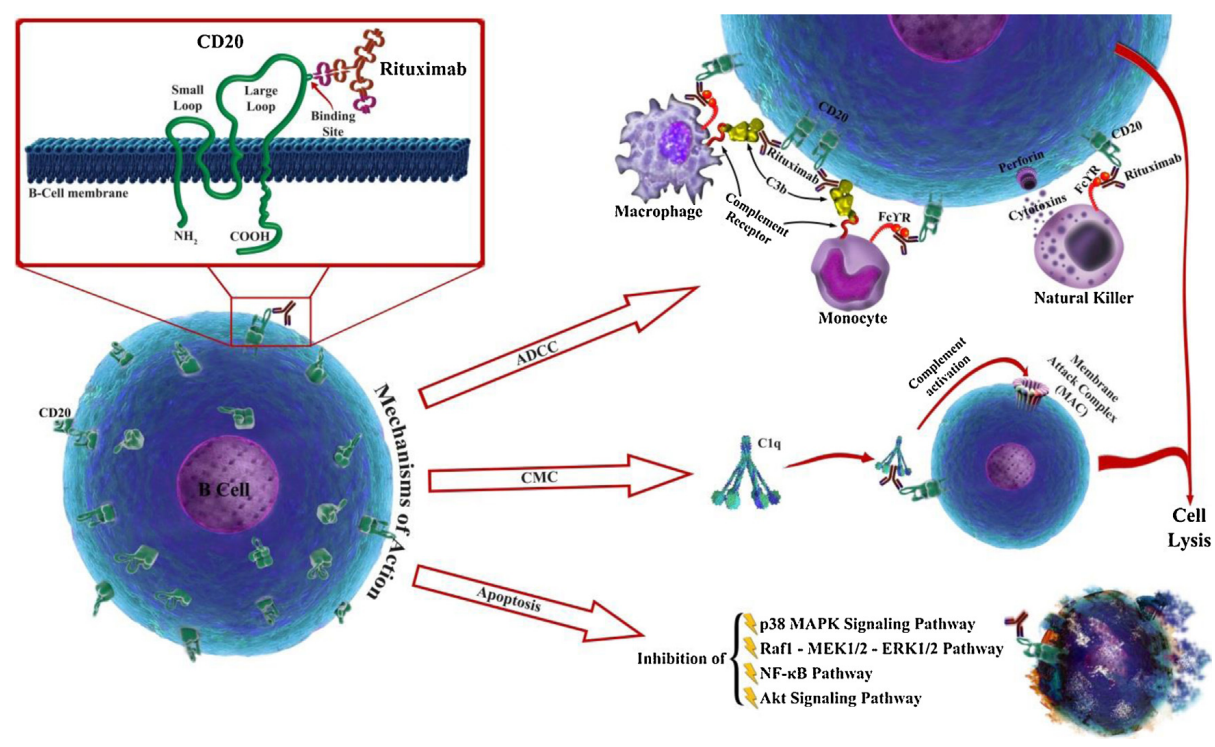
CD20: A B-cell surface marker modulating calcium influx and activation.

CD20 is a hallmark surface marker of B cells. It emerges at the pre-B stage and is downregulated as B cells differentiate into plasma cells. CD20 is broadly expressed on normal B cells and on about 95% of malignant B lymphocytes, while it is not expressed on hematopoietic stem cells, plasma cells, or most non-hematopoietic tissues—making it a well-validated target for B-cell lymphoma and autoimmune disease therapy.
CD20 humanized mice (B-hCD20) were generated by replacing the coding region of the murine Cd20 gene with the human CD20 coding sequence, enabling physiological expression of human CD20 under endogenous regulatory control.
Validation studies show that human CD20 is detectable only in homozygous CD20 humanized mice (B-hCD20). Importantly, CD20 humanization does not measurably alter immune cell distribution in spleen, blood, or lymph nodes, nor does it affect routine hematology profiles or liver function indicators (e.g., ALT and AST). Humoral immunity remains intact, and anti-human CD20 antibodies can effectively deplete B cells in CD20 humanized mice (B-hCD20).
Key Advantage
Validation
Applications
CD20 humanized mice (B-hCD20) provide a translational in vivo platform for pharmacodynamic, efficacy, and safety evaluation of CD20-targeting therapeutics in B-cell malignancies and autoimmune diseases.

CD20

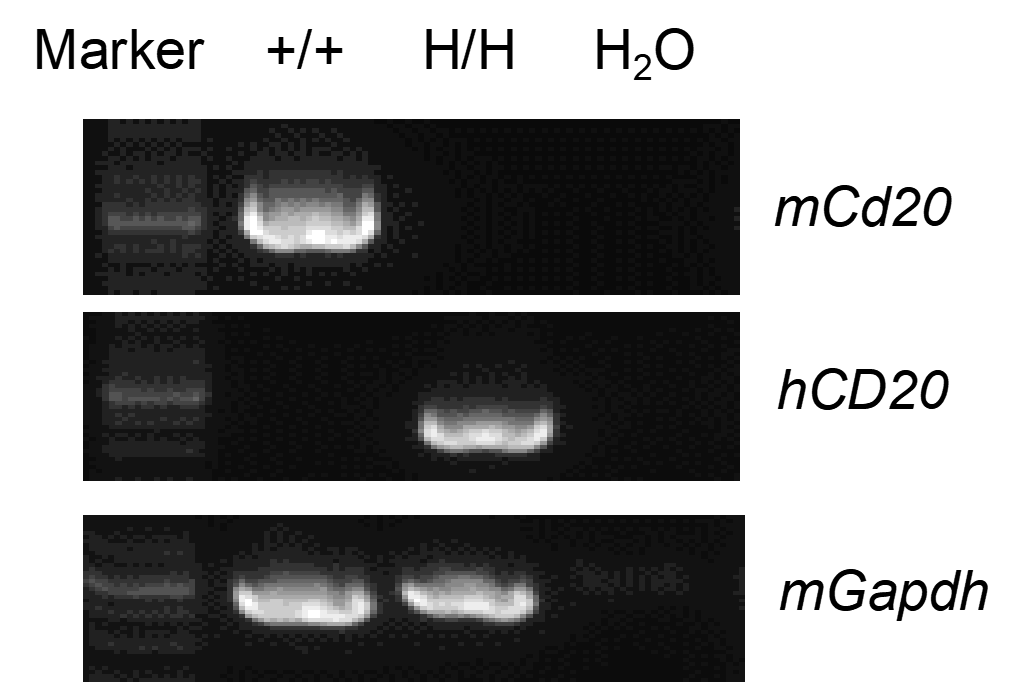
Species specific analysis of CD20 gene expression in wild-type C57BL/6 mice and homozygous humanized B-hCD20 mice by RT-PCR. Spleen RNA was isolated from wild-type C57BL/6 mice (+/+) and homozygous B-hCD20 mice (H/H), and then cDNA libraries were synthesized by reverse transcription, followed by PCR with mouse Cd20 primers and human CD20 primers.
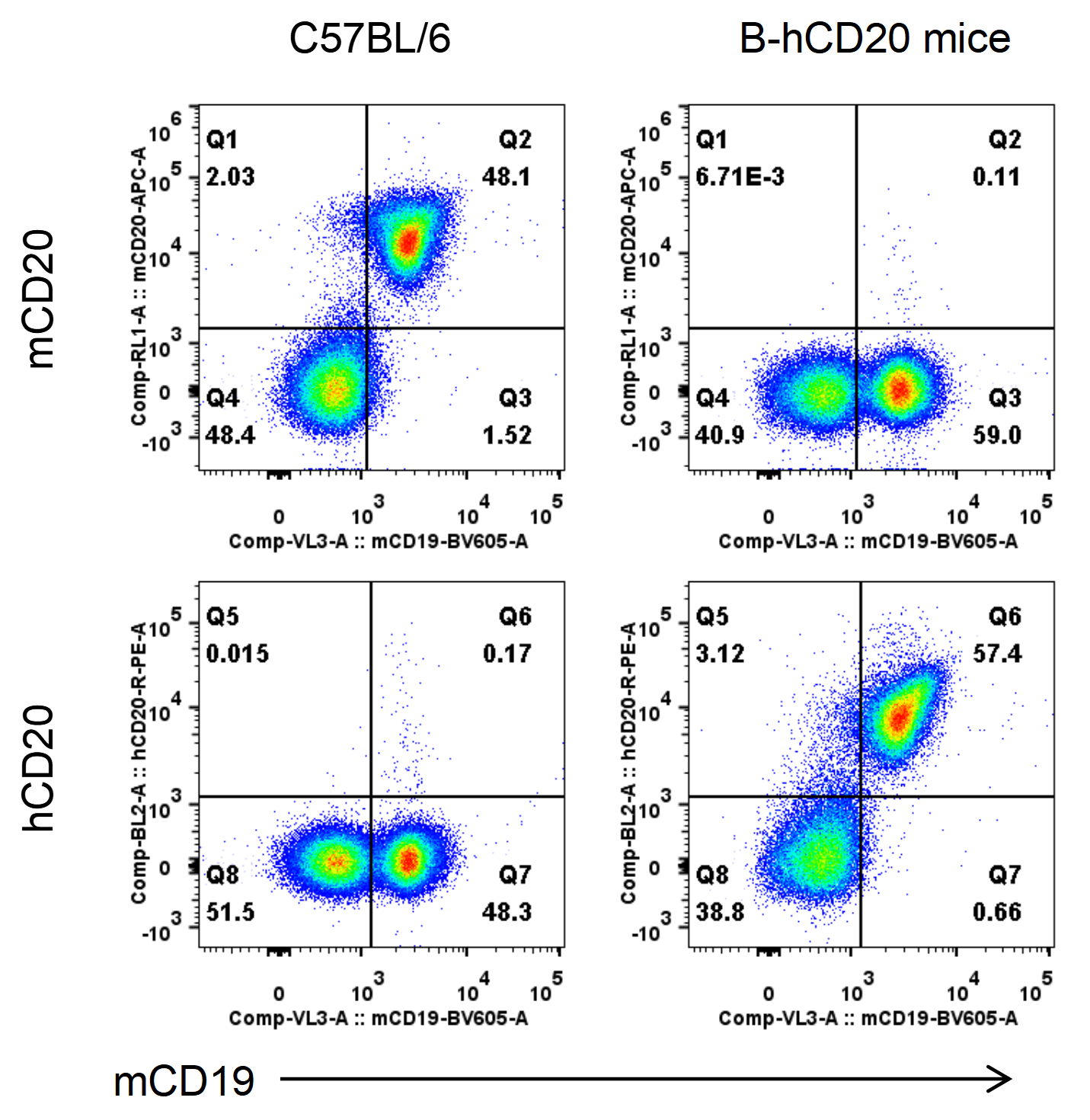
Strain specific CD20 expression analysis in wild-type C57BL/6 mice and homozygous humanized B-hCD20 mice by flow cytometry. Splenocytes were collected from wild-type C57BL/6 mice and homozygous B-hCD20 mice. Protein expression was analyzed with anti-mouse CD20 antibody (Biolegend, 152107) and anti-human CD20 antibody (Biolegend, 302305) by flow cytometry.


B-hCD20 mice (n=6) were intraperitoneally immunized with OVA/CFA or PBS on Day 0 (A). Blood was collected on Day 0, Day 14 and Day 21 and analyzed by ELISA with mouse IgG antibody (B) and OVA specific IgG antibody (C). Values are expressed as mean ± SEM.



Analysis of leukocyte subpopulations by flow cytometry in immune organs and blood. Splenocytes, peripheral blood, and lymph nodes were isolated from C57BL/6 mice and homozygous B-hCD20 mice (female, 9-week-old, n = 3). Single live cells were gated on the CD45⁺ population and analyzed by flow cytometry as indicated. Values are expressed as mean ± SEM.

Analysis of T-cell subpopulations by flow cytometry in immune organs and blood. Splenocytes, peripheral blood, and lymph nodes were isolated from C57BL/6 mice and homozygous B-hCD20 mice (female, 9-week-old, n = 3). Single live cells were gated on the CD3⁺ T-cell population and analyzed by flow cytometry as indicated. Values are expressed as mean ± SEM.

Q1: What are CD20 humanized mice (B-hCD20)?
CD20 humanized mice (B-hCD20) are genetically engineered mice in which the coding region of the mouse Cd20 gene is replaced with the human CD20 coding sequence. This enables physiological expression of human CD20 under the control of the endogenous mouse regulatory elements, providing a relevant in vivo platform for evaluating anti-human CD20 therapeutics.
Q2: How is human CD20 expression validated in CD20 humanized mice (B-hCD20)?
Validation studies demonstrate that human CD20 mRNA and protein are exclusively detectable in homozygous CD20 humanized mice (B-hCD20), while absent in wild-type controls. Flow cytometry confirms specific expression on B cells, and anti-human CD20 antibodies effectively recognize and bind to CD20-positive B cells in this model.
Q3: Does CD20 humanization affect immune cell development or general health?
Comprehensive immunophenotyping shows that CD20 humanized mice (B-hCD20) maintain normal immune cell distribution in spleen, blood, and lymph nodes. Hematological parameters, liver function markers (e.g., ALT, AST), and humoral immune responses remain comparable to wild-type mice, indicating that CD20 humanization does not disrupt physiological immune development or systemic health.
Q4: What are the main applications of CD20 humanized mice (B-hCD20)?
CD20 humanized mice (B-hCD20) are widely used for in vivo pharmacodynamic, efficacy, and safety evaluation of anti-human CD20 antibodies. This model supports preclinical studies in B-cell lymphoma, autoimmune diseases, and other CD20-targeted therapeutic research programs.