C57BL/6-Il23atm1(IL23A)Bcgen Il12btm1(IL12B)Bcgen/Bcgen • 120553
on this page

Key Advantages
Validation
Application

Exons 1-4 of the mouse Il23a gene encoding the full-length coding region were replaced by human IL23A counterpart gene sequences. Exons 2-8 of the mouse Il12b gene encoding the full-length coding region and 3’ UTR were replaced by human IL12B counterpart gene sequences.

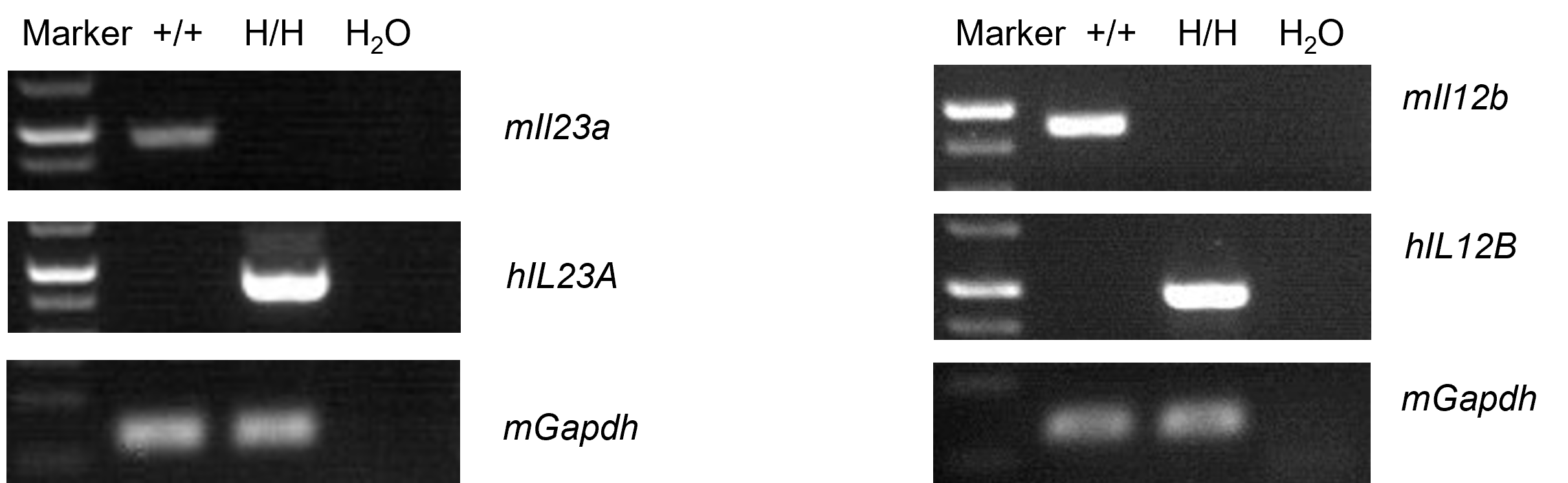
Strain-specific analysis of IL23A and IL12B gene expression in B-hIL23A/hIL12B mice by RT-PCR. Mouse Il23a and Il12b mRNA were detectable in thymocytes of wild-type mice (+/+). Human IL23A and IL12B mRNA were detectable in homozygous B-hIL23A/hIL12B mice (H/H), but not in wild-type C57BL/6 mice.

Strain-specific IL23(IL23A and IL12B) expression analysis in wild-type C57BL/6 mice, homozygous B-hIL23A/hIL12B mice, and B-hTL1A/hIL23A/hIL12B mice by ELISA. Bone marrow-derived dendritic cells were stimulated with 10 μg/mL LPS in vivo for 24 h. Supernatants were collected and mouse IL23 and human IL23 levels were analyzed by ELISA. Mouse IL23 was detectable in wild-type C57BL/6 mice. Human IL23 was detectable in homozygous B-hIL23A/hIL12B mice and B-hTL1A/hIL23A/hIL12B mice. ND: not detectable.
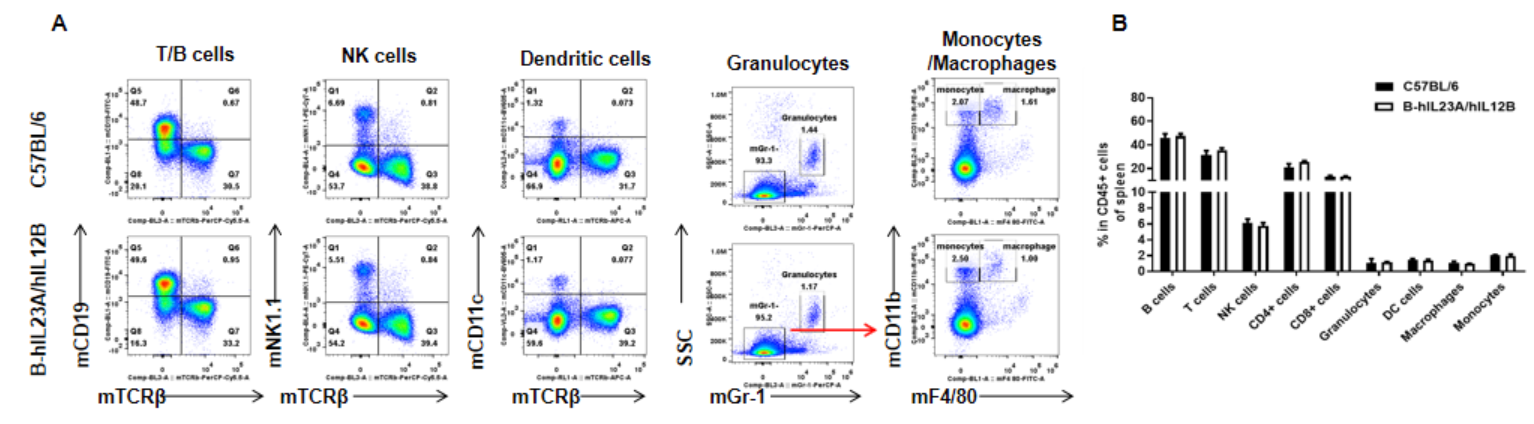
Analysis of spleen leukocyte subpopulations by FACS. Splenocytes were isolated from female C57BL/6 and B-hIL23A/hIL12B mice. Flow cytometry analysis was performed to assess leukocyte subpopulations. Percentages of T cells, B cells, NK cells, dendritic cells, granulocytes, monocytes, and macrophages in homozygous B-hIL23A/hIL12B mice were similar to those in C57BL/6 mice.
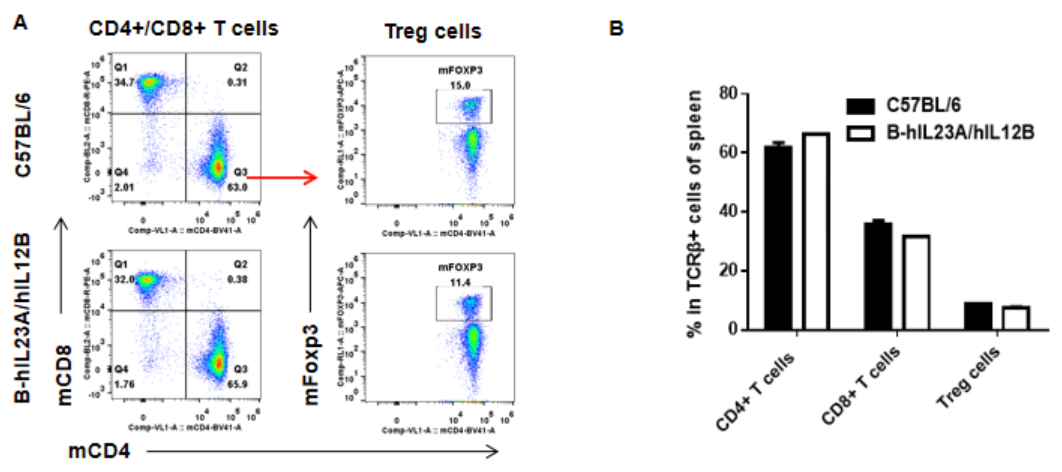
Analysis of spleen T-cell subpopulations by FACS. Splenocytes were isolated from female C57BL/6 and B-hIL23A/hIL12B mice. Percentages of CD4+ T cells, CD8+ T cells, and Treg cells in homozygous B-hIL23A/hIL12B mice were similar to those in C57BL/6 mice.
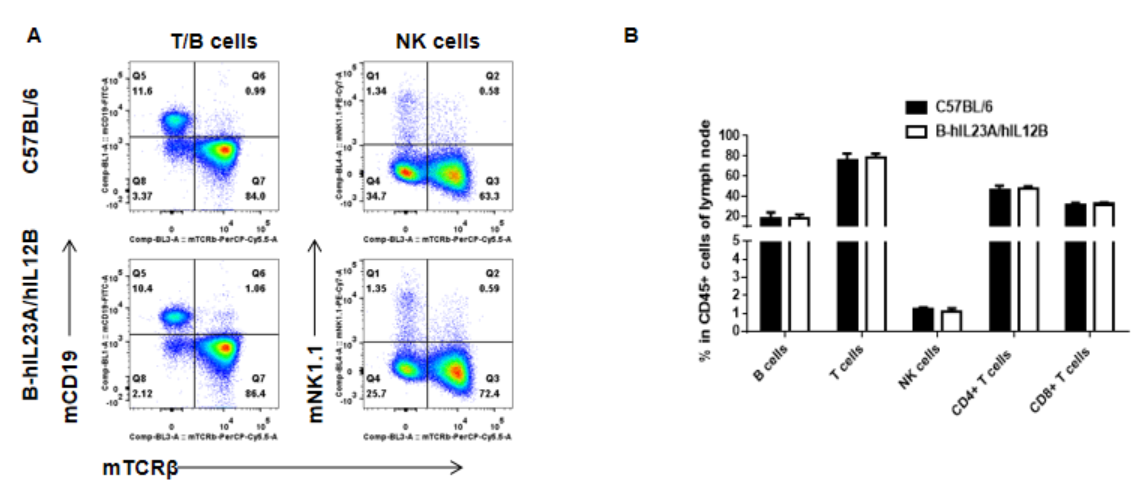
Analysis of leukocyte subpopulations in lymph node by FACS. Lymph nodes were isolated from female C57BL/6 and B-hIL23A/hIL12B mice. Percentages of T cells, B cells, and NK cells in homozygous B-hIL23A/hIL12B mice were similar to those in C57BL/6 mice.
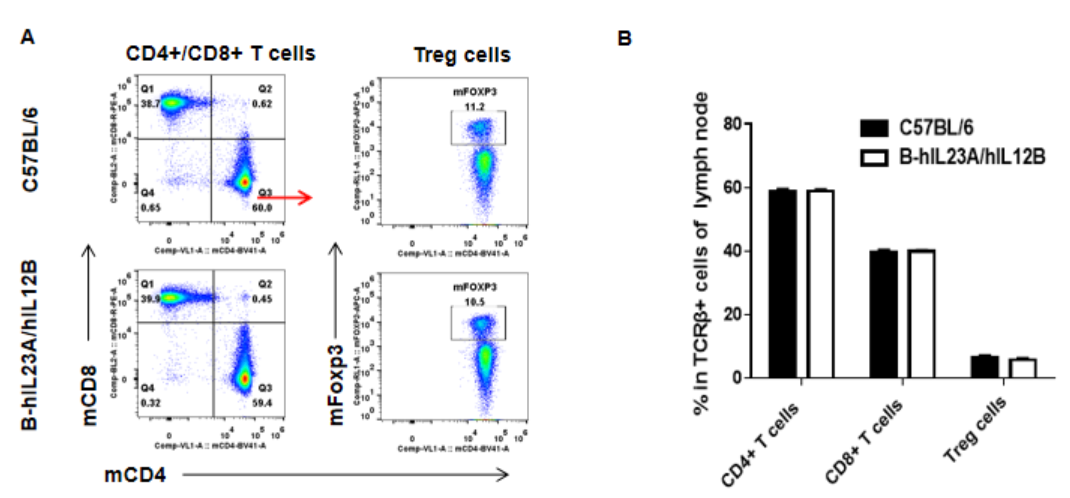
Analysis of T-cell subpopulations in lymph node by FACS. Lymph nodes were isolated from female C57BL/6 and B-hIL23A/hIL12B mice. Percentages of CD4+ T cells, CD8+ T cells, and Treg cells in homozygous B-hIL23A/hIL12B mice were similar to those in C57BL/6 mice.
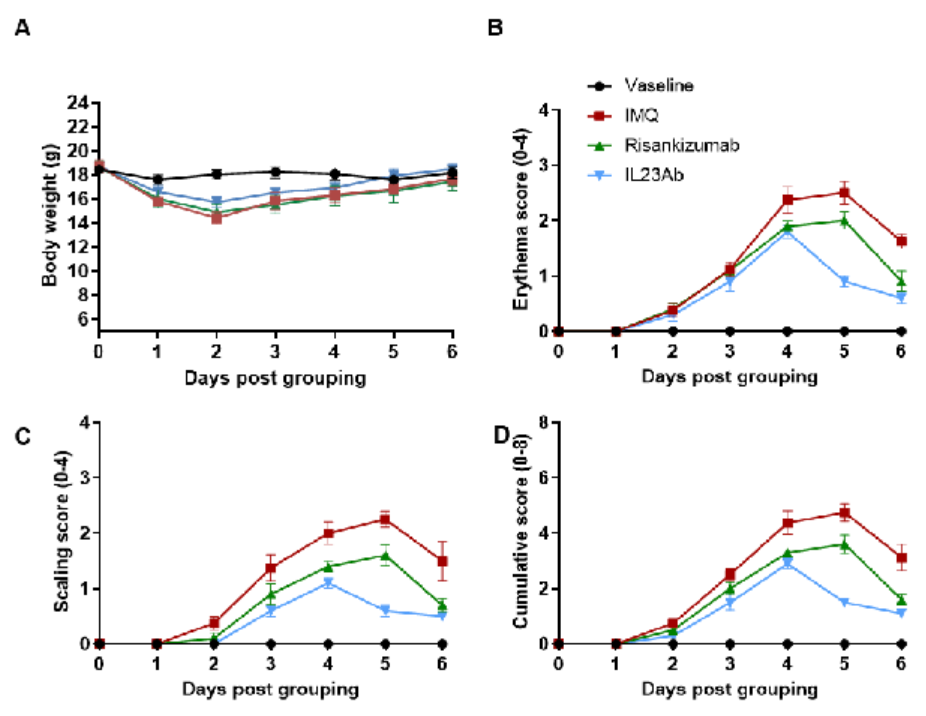
Effects of anti-human IL23A antibody in psoriasis-like skin lesion model of B-hIL23A/hIL12B mice. Body weight changes during treatment were monitored. Erythema and scaling scores of the back were scored daily on a scale from 0 to 4, and cumulative score was calculated as erythema plus scaling. IMQ-induced skin inflammation increased in severity up to day 5. Anti-human IL23A antibody reduced development of psoriasis-like disease in B-hIL23A/hIL12B mice.
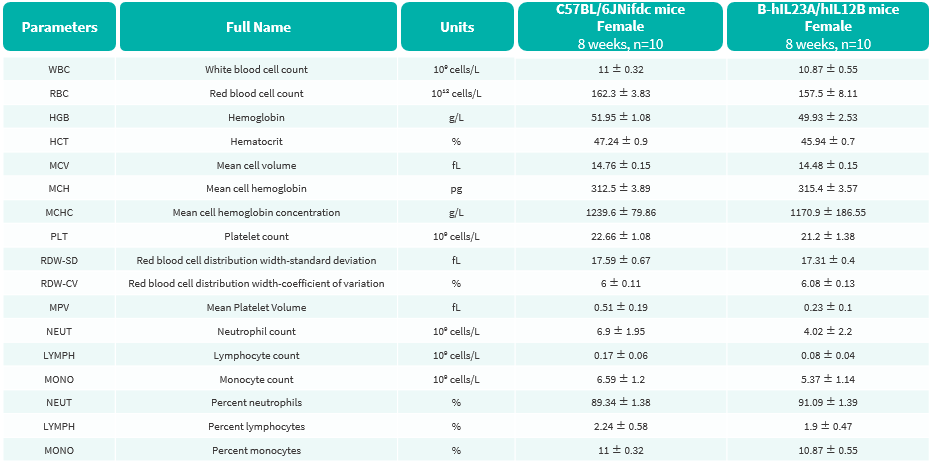
Complete blood count (CBC) of B-hIL23A/hIL12B mice. Hematology parameters were measured as part of physiological characterization.
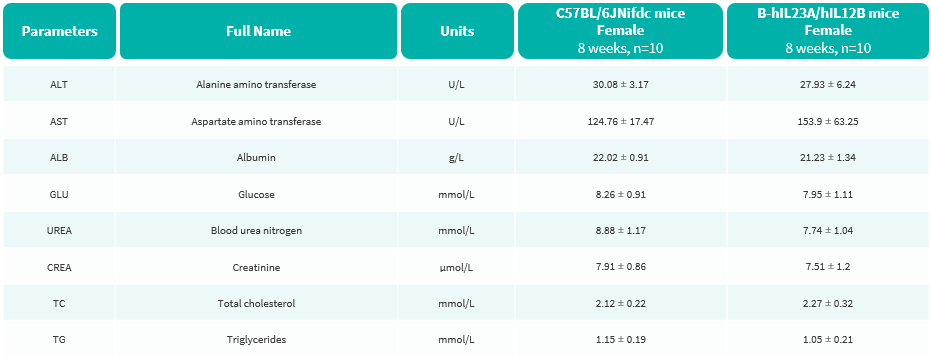
Biochemical test of B-hIL23A/hIL12B mice. Blood biochemical parameters were measured as part of physiological characterization.

Q1: What are B-hIL23A/hIL12B mice?
B-hIL23A/hIL12B mice are IL23A and IL12B dual gene-humanized mice on a C57BL/6 background, developed for IL-23 pathway research and inflammatory disease model studies.
Q2: Why are IL23A and IL12B important?
IL23A encodes the IL-23 p19 subunit, and IL12B encodes the shared p40 subunit of IL-23 and IL-12. Together, IL23A and IL12B are important for Th17-related inflammation and psoriasis-like disease biology.
Q3: How was human IL23A/IL12B expression validated?
Human IL23A and IL12B mRNA were validated by RT-PCR, and human IL23 protein was validated by ELISA in LPS-stimulated bone marrow-derived dendritic cells.
Q4: Can B-hIL23A/hIL12B mice be used for anti-human IL23A antibody efficacy studies?
Yes. Anti-human IL23A antibody reduced IMQ-induced psoriasis-like disease development in B-hIL23A/hIL12B mice, including erythema, scaling, and cumulative disease score readouts.
Q5: What are the main applications of B-hIL23A/hIL12B mice?
Applications include anti-human IL23A antibody efficacy evaluation, IL-23/IL-12B pathway research, psoriasis-like skin lesion models, Th17-related autoimmune inflammation studies, and cytokine-targeted biologic pharmacology.