B-hCD3EDG/hBCMA mice

C57BL/6-Cd3etm1(CD3E)Bcgen Cd3dtm1(CD3D)BcgenCd3gtm1(CD3G)Bcgen Tnfrsf17tm2(TNFRSF17)Bcgen/Bcgen • 112602

B-hCD3EDG/hBAFFR mice
B-hCD3EDG/hBCMA/hCD38 ad mice

B-hCD3EDG/hBCMA mice

Catalog Number: 112602
Strain Name: C57BL/6-Cd3etm1(CD3E)Bcgen Cd3dtm1(CD3D)BcgenCd3gtm1(CD3G)Bcgen Tnfrsf17tm2(TNFRSF17)Bcgen/Bcgen
Strain Background: C57BL/6
NCBI gene ID: 916,915,917,608 (Human)
Aliases: T3E; TCRE; IMD18; CD3epsilon; T3D; IMD19; CD3DELTA; CD3-DELTA; T3G; IMD17; CD3GAMMA; CD3-GAMMA; BCM; BCMA; CD269; TNFRSF13A
---
Licensing option available
B-hCD3EDG/hBCMA mice

on this page

  • Description
  • Phenotypic analysis

Posters

View All

    Publication

      Description

      Gene Information:

      • CD3: Encoded by CD3E, D, G; part of the Ig superfamily. It forms the essential signaling backbone of the T-cell receptor (TCR) complex.
      • BCMA: Encoded by the TNFRSF17 gene, a critical member of the tumor necrosis factor receptor (TNFR) superfamily.

      Protein Expression:

      • CD3: Constitutive and universal marker for all mature T cells (CD4+, CD8+). Always present on the cell surface.
      • BCMA: It is a B-cell maturation antigen, whose expression is highly in mature plasma cells and nearly all multiple myeloma cells.
      mRNA Expression by RT-PCR

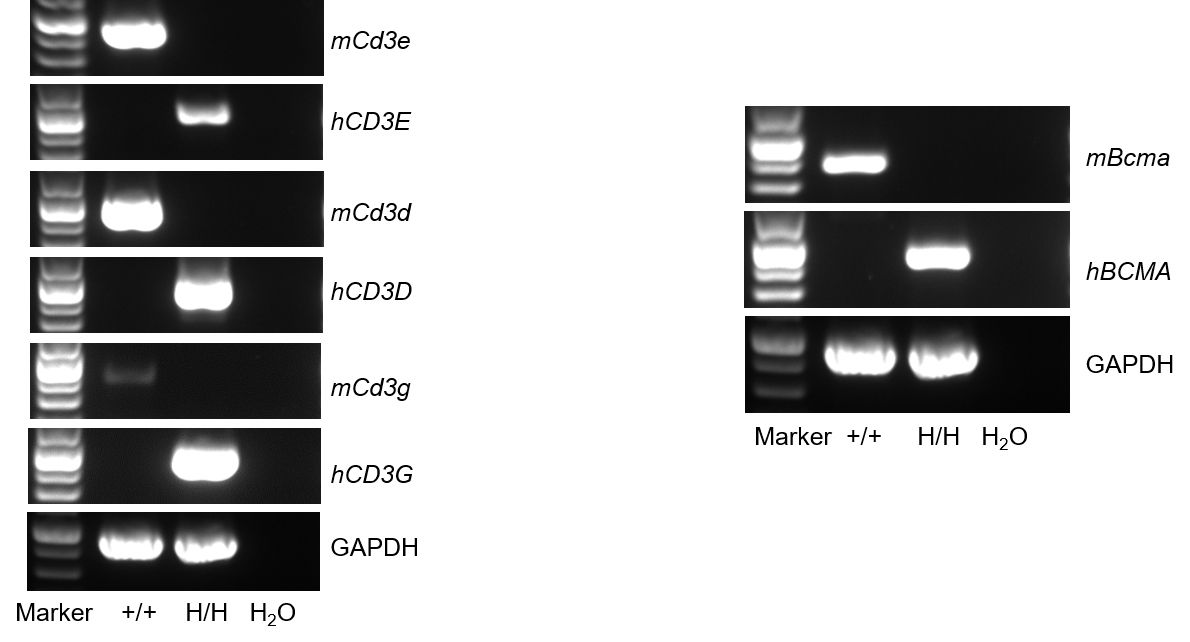
      Strain specific analysis of CD3E, CD3D, CD3G and BCMA gene expression in wild-type mice and B-hCD3EDG/hBCMA mice by RT-PCR. Mouse Cd3e, Cd3d, Cd3g and Bcma mRNA were detectable in splenocytes of wild-type mice (+/+). Human CD3E, CD3D, CD3G and BCMA mRNA were detectable only in homozygous B-hCD3EDG/hBCMA mice (H/H) but not in wild-type mice (+/+). The positive band was confirmed to be correct by sequencing.
      CD3E Protein Expression in Spleen
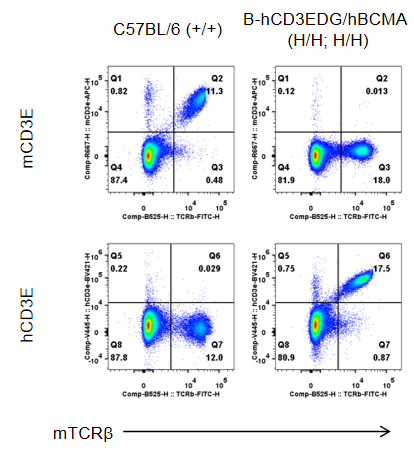
      • Mouse CD3E was detected on T cell populations in wild-type C57BL/6 mice, but not in B-hCD3EDG/hBCMA mice.
      • Human CD3E was detected on T cell populations in B-hCD3EDG/hBCMA mice, but not in wild-type C57BL/6 mice.

      Mouse and human CD3E expression analysis in splenocytes. Splenocytes were collected from wild-type mice and homozygous B-hCD3EDG/hBCMA mice, and analyzed by flow cytometry with anti-mouse CD3E antibody (Biolegend, 100312) and anti-human CD3E antibody (BD Horizon™,  562426).
      BCMA Protein Expression in Spleen
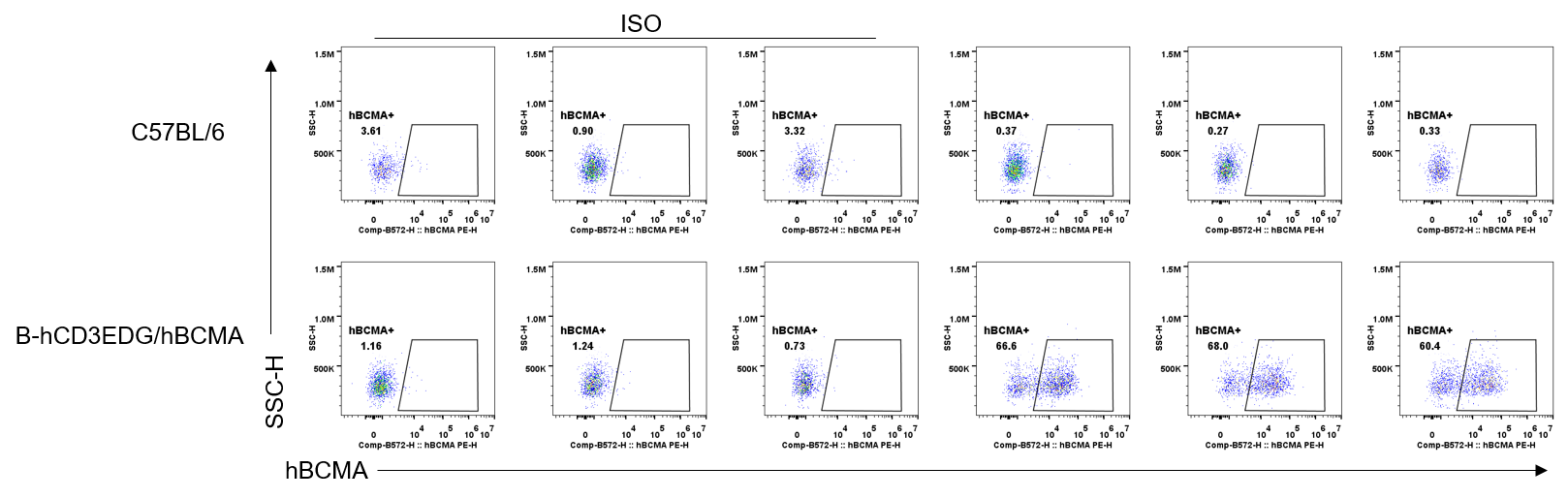
      • Human BCMA was detectable in plasma cells of spleen from B-hCD3EDG/hBCMA mice but not in wild-type C57BL/6 mice.

      Human BCMA expression analysis in splenocytes. Spleen cells were collected from wild-type C57BL/6 mice and homozygous B-hCD3EDG/hBCMA mice. BCMA expression on plasma cells was analyzed by flow cytometry using a human BCMA antibody (Biolegend, 357504). Mice were immunized with OVA antigen three times and treated with γ-secretase inhibitor to enhance membrane BCMA expression.
      Growth Curve

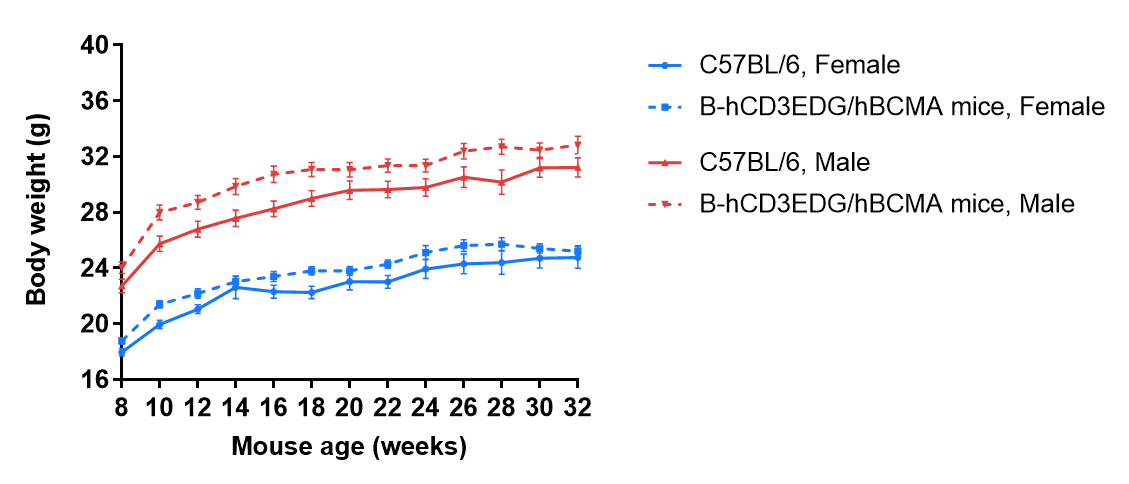
      Growth curve of B-hCD3EDG/hBCMA mice. Eight-week-old mice were separated by sex (15 males and 15 females). Body weight was measured weekly from 8 to 32 weeks of age. Data are presented as mean ± SD. Compared with wild-type controls, B-hCD3EDG/hBCMA mice showed no abnormal changes in body weight. One male C57BL/6 mouse died at 26 weeks of age.
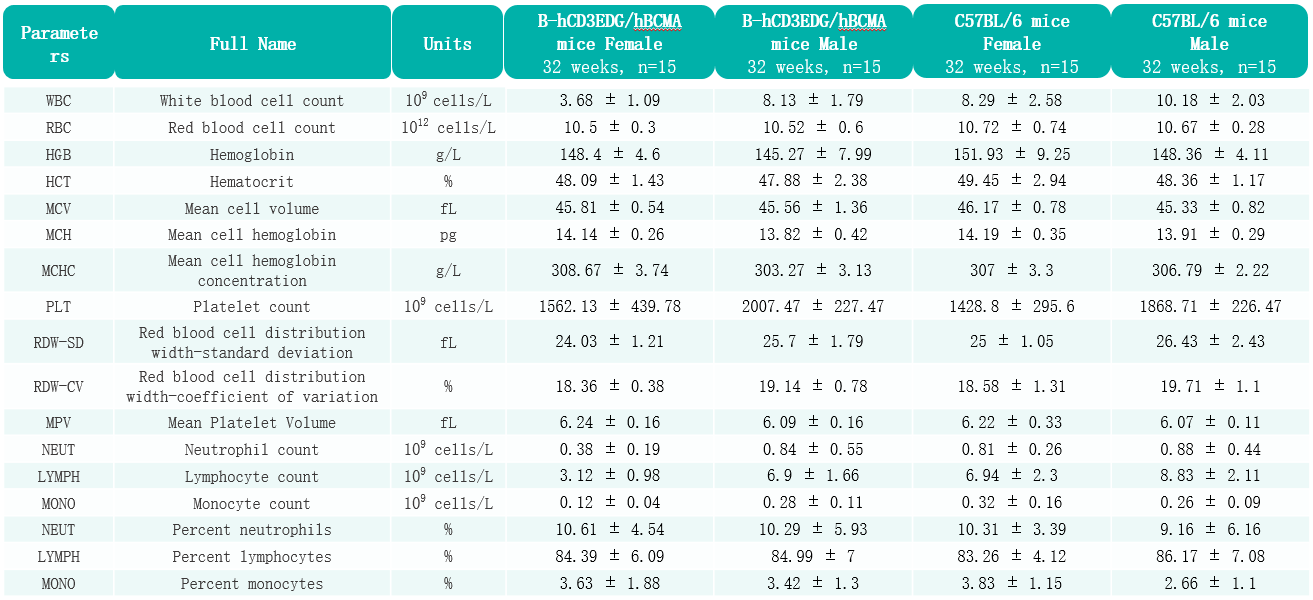
      Hematology Analysis
      • No significant differences were observed compared with wild-type mice.

      Complete blood count (CBC) of B-hCD3EDG/hBCMA mice. Values are expressed as mean ± SD.

      Data for mice at 8, 16, and 24 weeks of age were not shown.
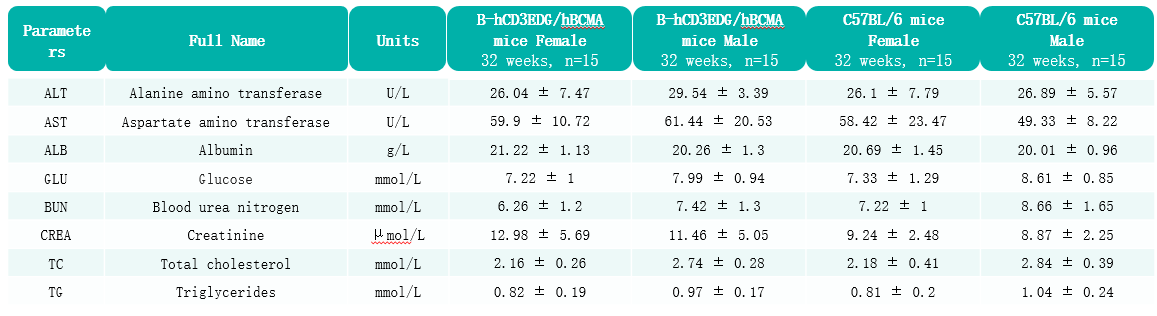
      Blood Biochemical Analysis
      • No significant differences were observed compared with wild-type mice.

      Blood biochemical parameters of B-hCD3EDG/hBCMA mice are shown. Values are expressed as mean ± SD.

      Data for mice at 8, 16, and 24 weeks of age were not shown.
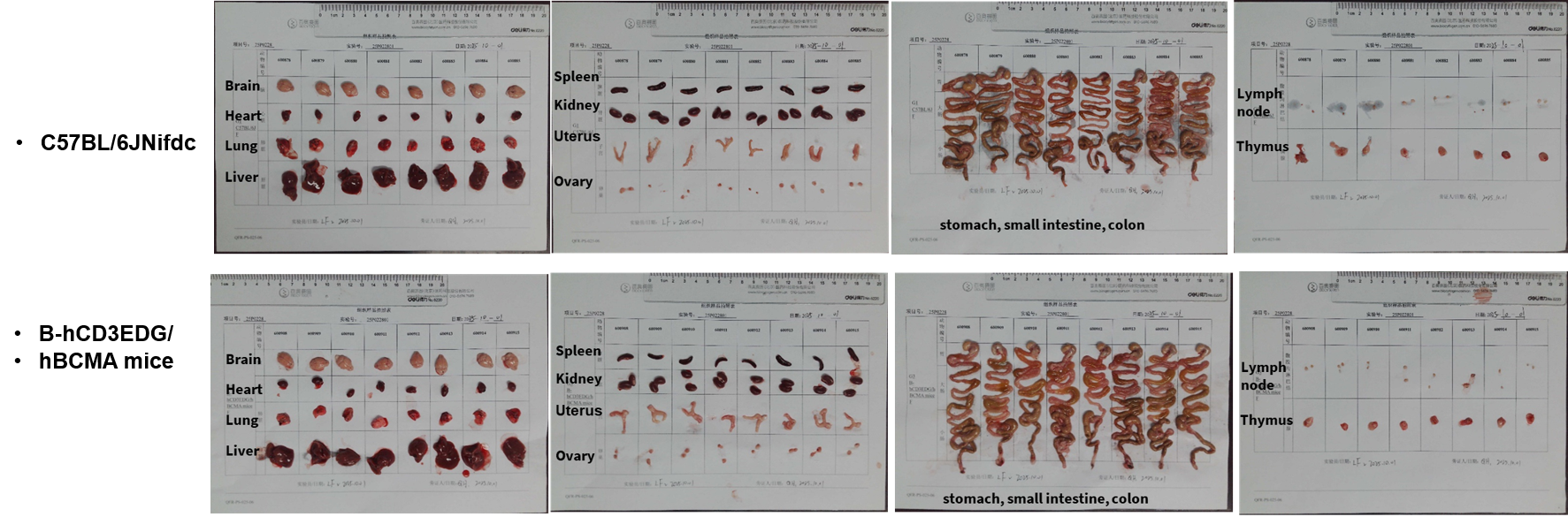
      Gross Organ Anatomy (Female)
      • No abnormalities were observed.

      Organs of female B-hCD3EDG/hBCMA mice (32-week-old, n = 15). Data from only 8 of the mice were presented.
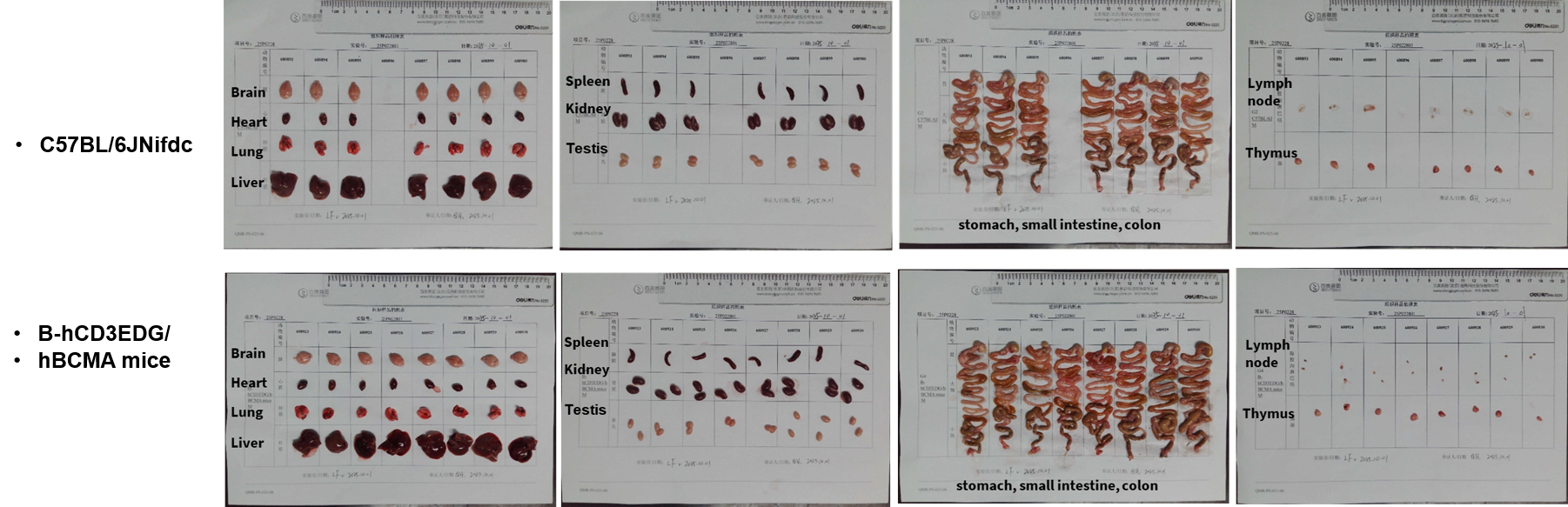
      Gross Organ Anatomy (Male)
      • No abnormalities were observed.

      Organs of male B-hCD3EDG/hBCMA mice (32-week-old, n = 15). Data from only 7 of wild type mice or 8 of B-hCD3EDG/hBCMA mice were presented.
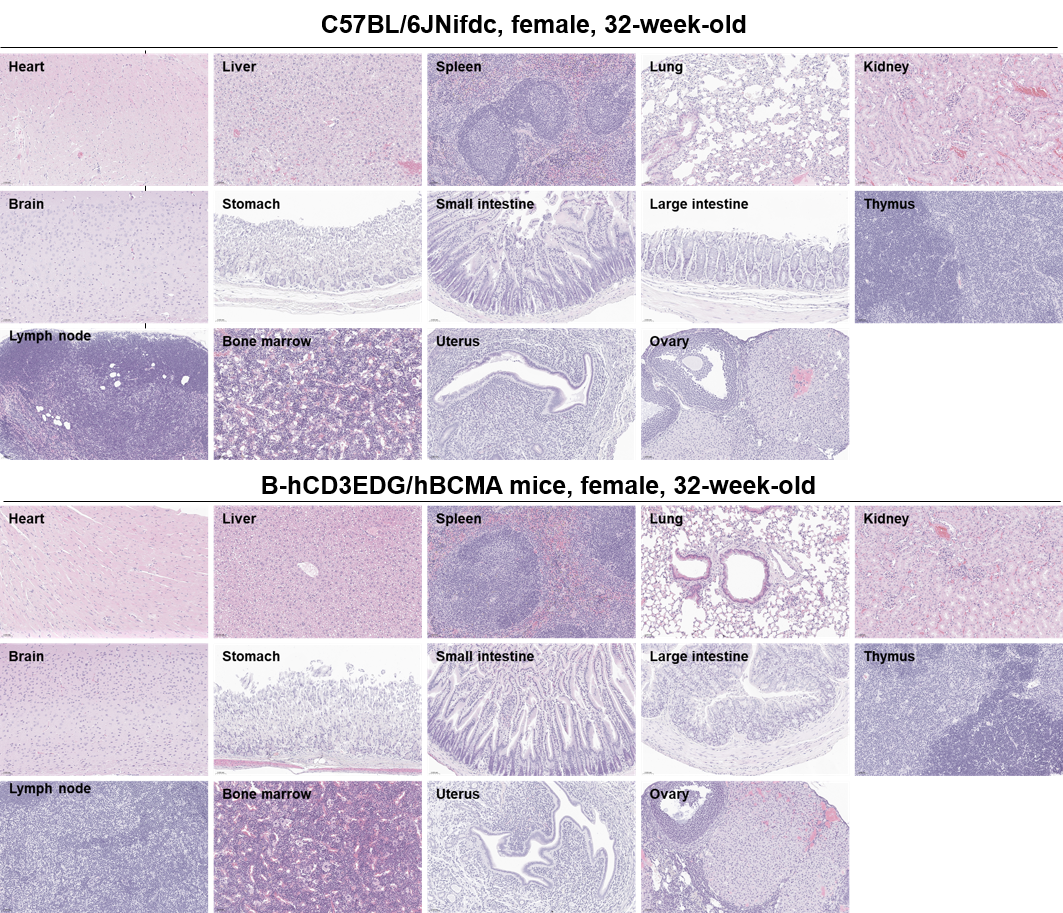
      Histopathological Analysis
      • B-hCD3EDG/hBCMA mice showed no microscopic abnormalities in heart, liver, spleen, lung, kidney, brain, stomach, small and large intestines, thymus, lymph node, bone marrow, or ovary. A dilated uterine gland was observed in one B-hCD3EDG/hBCMA mice and one wild-type mice, indicating it is not associated with the humanized target modification.

      Histopathological analysis of organs in female C57BL/6JNifdc and B-hCD3EDG/hBCMA mice. H&E staining of major organs from 32-week-old female C57BL/6JNifdc and B-hCD3EDG/hBCMA mice (n=3 per group).
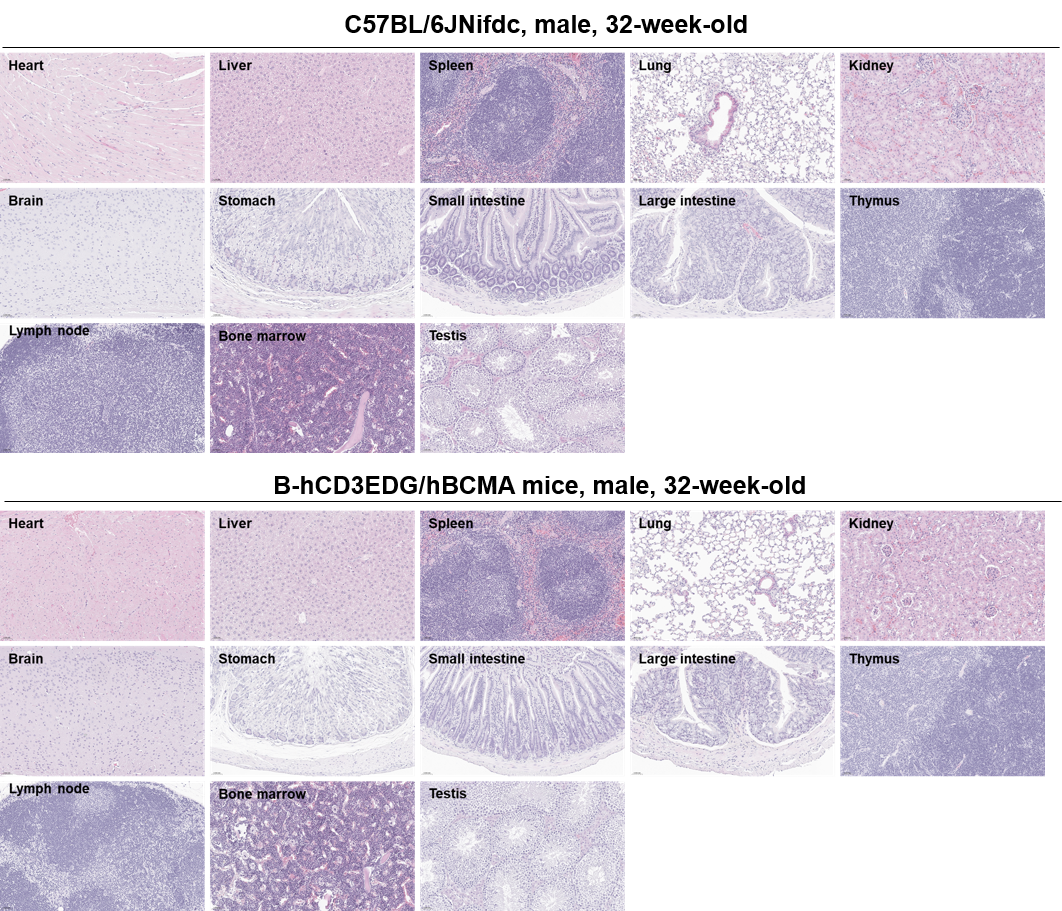
      • B-hCD3EDG/hBCMA mice showed no microscopic abnormalities in heart, liver, spleen, lung, brain, stomach, small and large intestines, thymus, lymph node, bone marrow, or testis. Renal pelvic interstitial inflammatory cell infiltration were observed in one B-hCD3EDG/hBCMA mice and one wild‑type mice, these incidental, likely age‑related changes were not associated with the humanized target modification.

      Histopathological analysis of organs in male C57BL/6JNifdc and B-hCD3EDG/hBCMA mice. H&E staining of major organs from 32-week-old male C57BL/6JNifdc and B-hCD3EDG/hBCMA mice (n=3 per group).
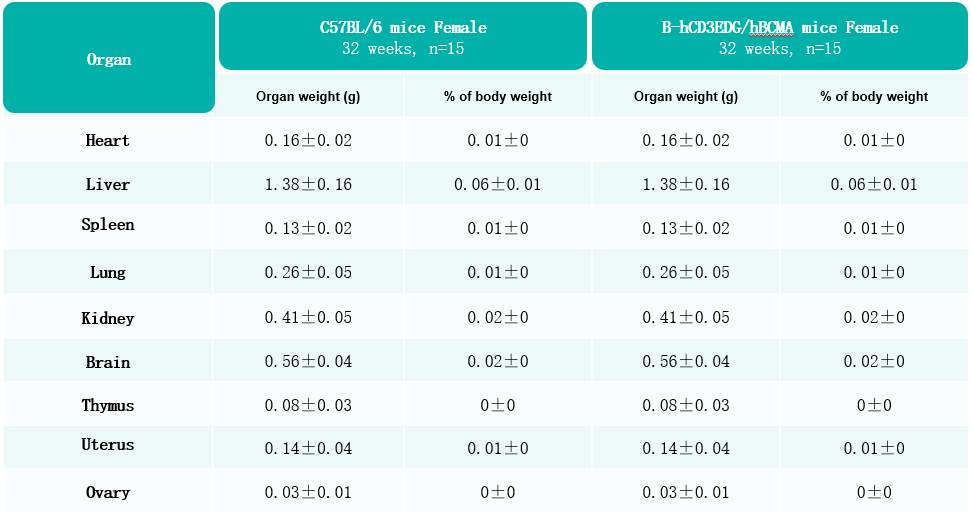
      Organ Weight

      Average weights of major organs in B-hCD3EDG/hBCMA mice.
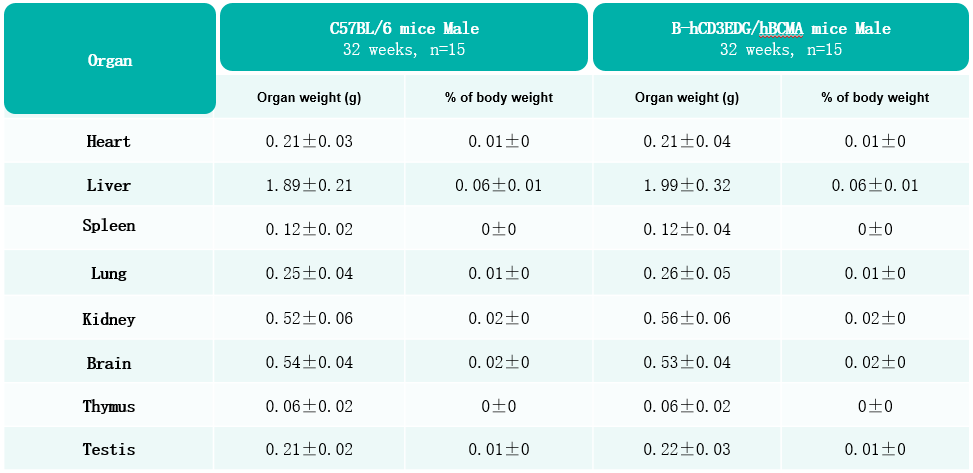
      Average weights of major organs in B-hCD3EDG/hBCMA mice.

      * When publishing results obtained using this animal model, please acknowledge the source as follows: The animal model [B-hCD3EDG/hBCMA mice] (Cat# 112602) was purchased from Biocytogen.