Key Features
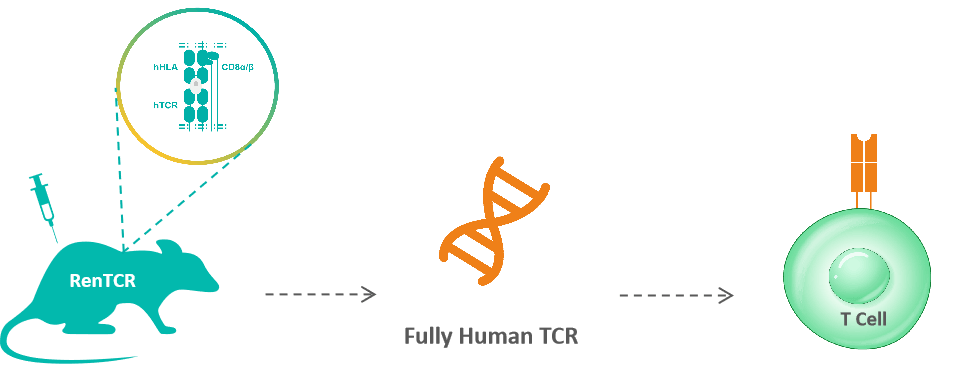
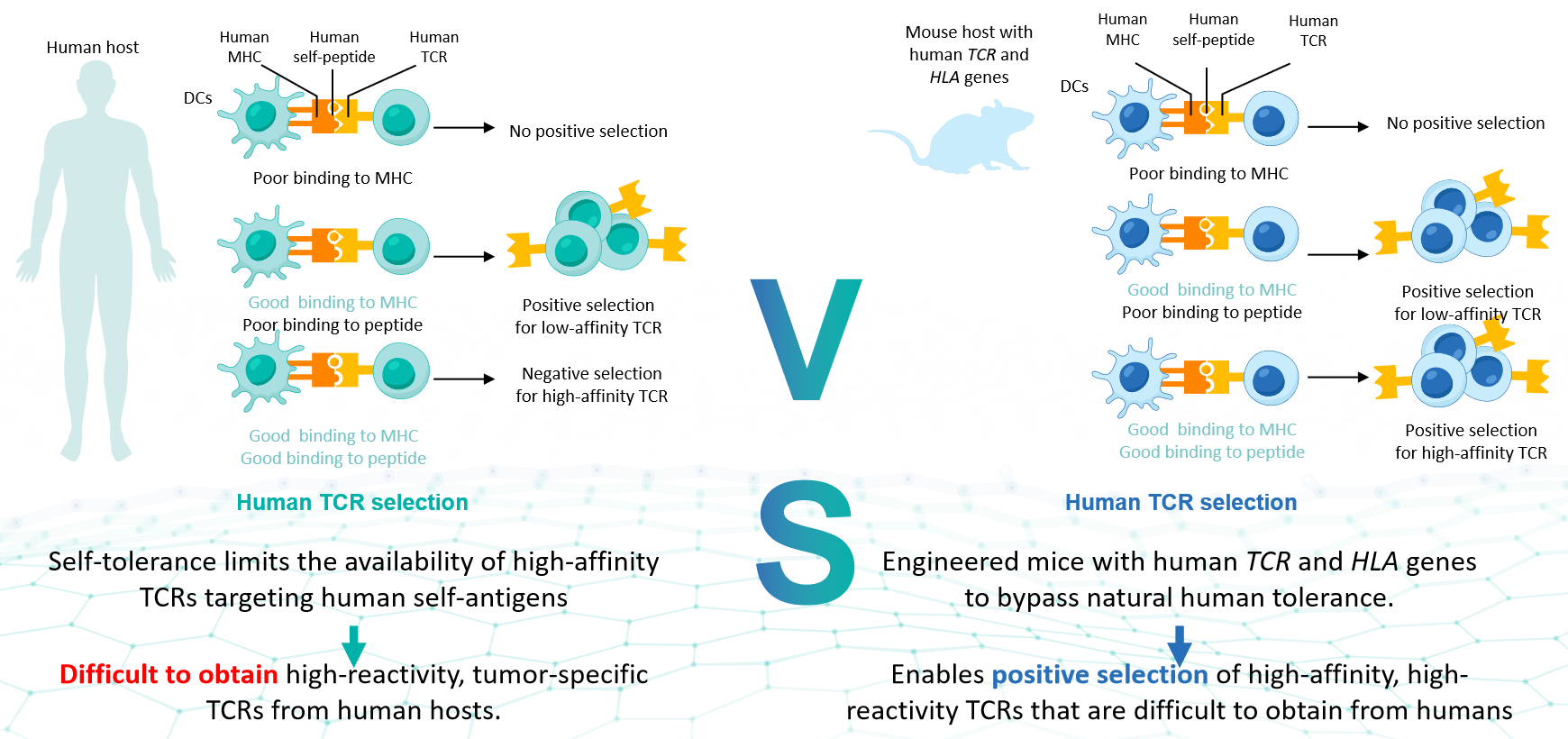
RenTCR™ mice carry human TCRα/β gene loci and human HLA molecules, enabling fully human TCRs to undergo natural selection and immune education in vivo and generate functional TCR repertoires with high specificity, binding activity, and stability. Following immunization, RenTCR™ mice generate robust antigen-specific T-cell responses, enabling efficient discovery of fully human TCR sequences from activated T cells. These TCRs can be further evaluated for in vitro function, affinity, specificity, and in vivo antitumor activity, supporting the development of TCR-T cell therapies and soluble TCR therapeutics.
RenTCR™ Mice Enable Discovery of High-Affinity Fully Human TCRs
RenTCR™ Mouse Models
| Mouse Model |
F0 Chimeric Mouse |
Heterozygous Mouse |
Homozygous Mouse |
Phenotypic Analysis |
| MHC-I |
HLA-A0201 |
|
| HLA-A1101 |
|
| HLA-A2402 |
|
| HLA-A0101 |
|
| HLA-A0301 |
|
| HLA-B0702 |
|
| HLA-B1501 |
|
| HLA-A3303 |
|
| HLA-B2705 |
|
| MHC-II |
HLA-DRB1*0301 |
|
| HLA-DRB1*0401 |
|
| HLA-DRB1*0701 |
|
TCR Repertoire in RenTCR™ Mice
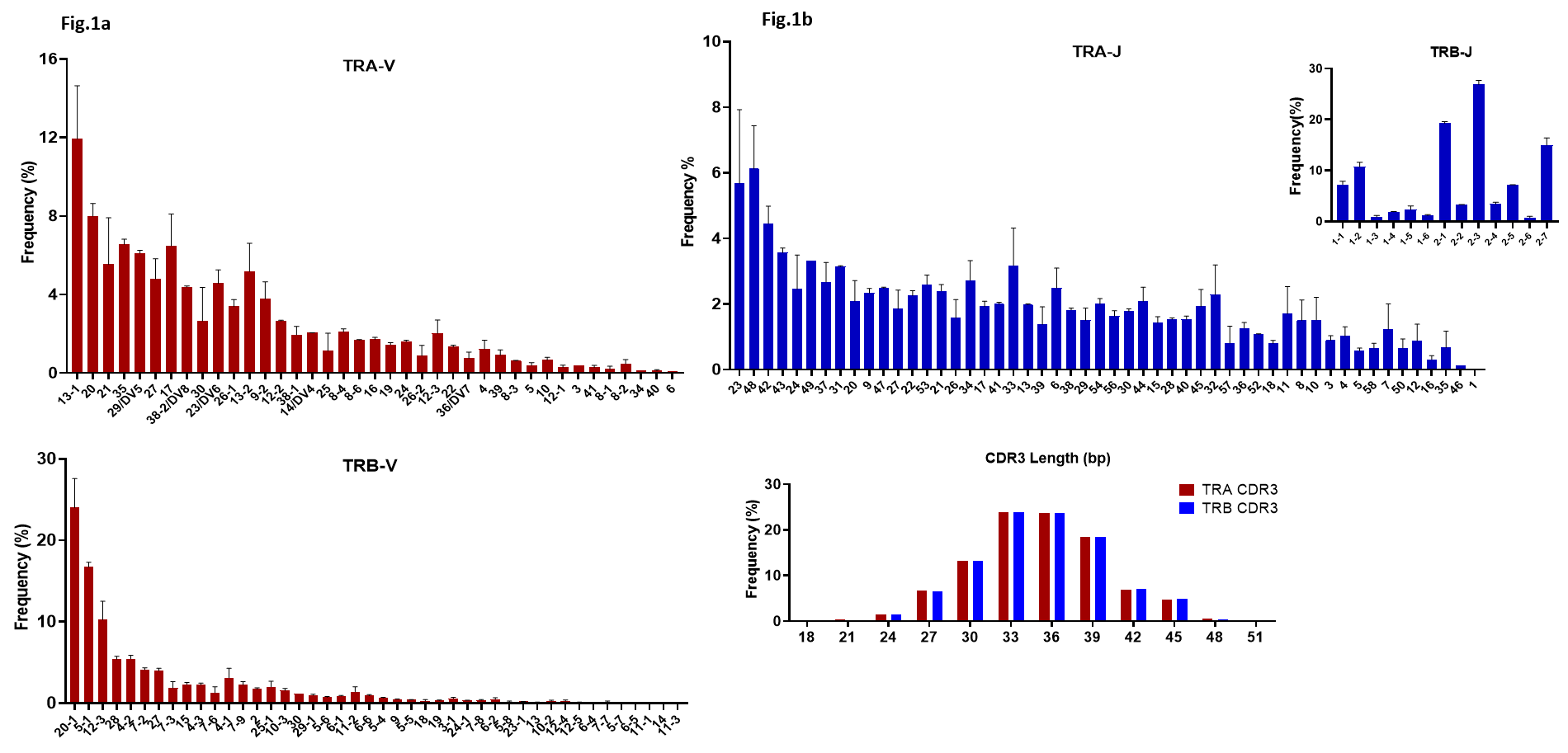
Fig. 1. TCR repertoires in RenTCR™ mice. RNA-seq was used to analyze TCRα and TCRβ repertoire profiles in RenTCR™ mice. (a, b) Frequencies of V and J gene usage in the TCRα and TCRβ repertoires in naïve splenic T cells from RenTCR™ mice (n = 2). Almost all functional genes were detected. Data are shown as mean ± SEM. (c) CDR3 length (bp) in RenTCR™ mice (n = 1). CDR3 lengths and their distribution are consistent with those observed in humans.
Validation Data
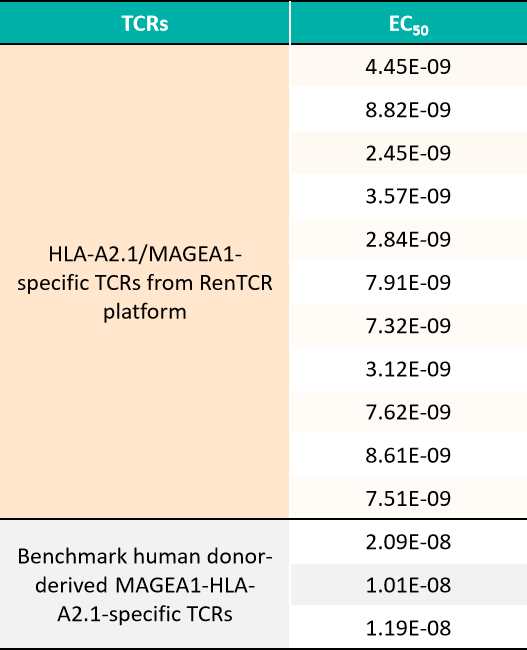
RenTCR™ platform-derived HLA-A2.1/MAGEA1-specific TCRs exhibited higher peptide sensitivity than human donor–derived TCRs
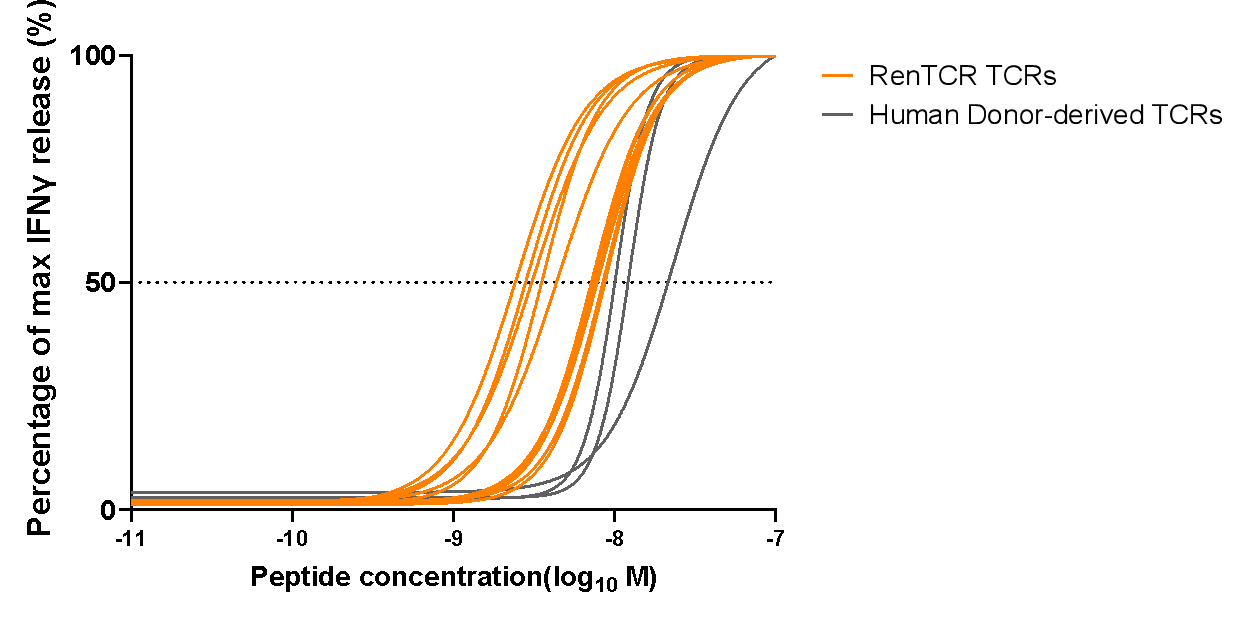
IFN-γ production by TCR-transduced human T cells in response to stimulation with MAGEA1 peptide-loaded T2 cells. Human donor-derived TCRs include those in clinical development or reported in the literature. Data are normalized to maximum IFN-γ release and fitted to a four-parameter logistic model.
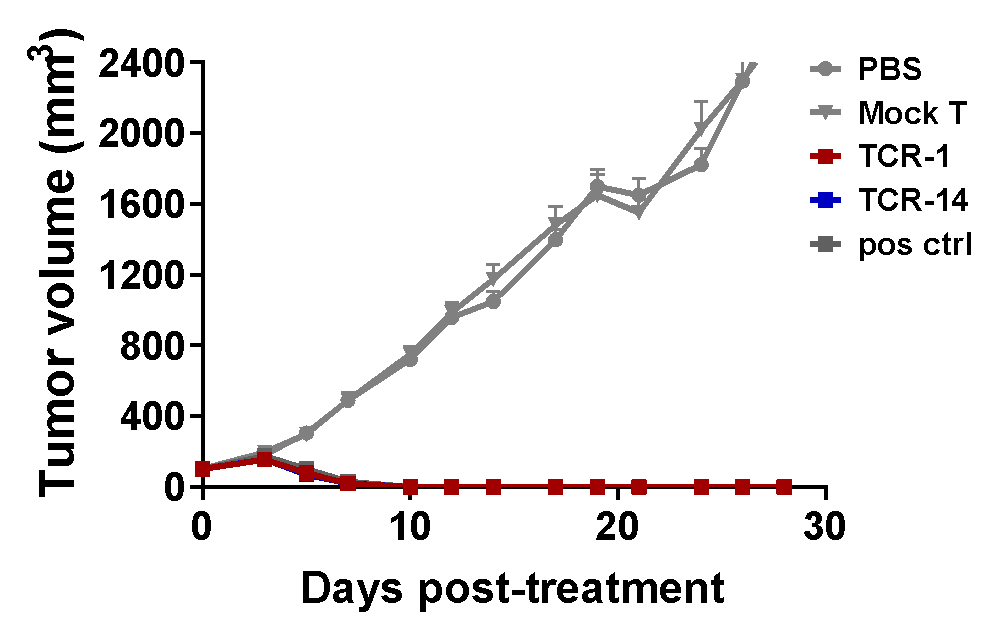
Tumor (A375, human HLA-A*02:01+) growth inhibition
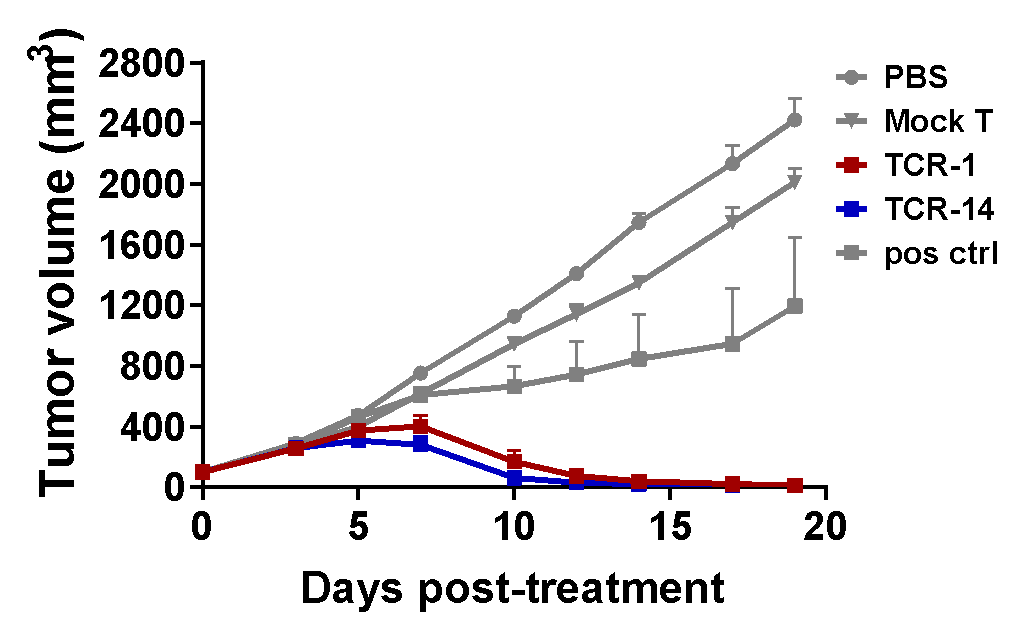
Tumor (SHP-77, human HLA-A*02:01+ ) growth inhibition
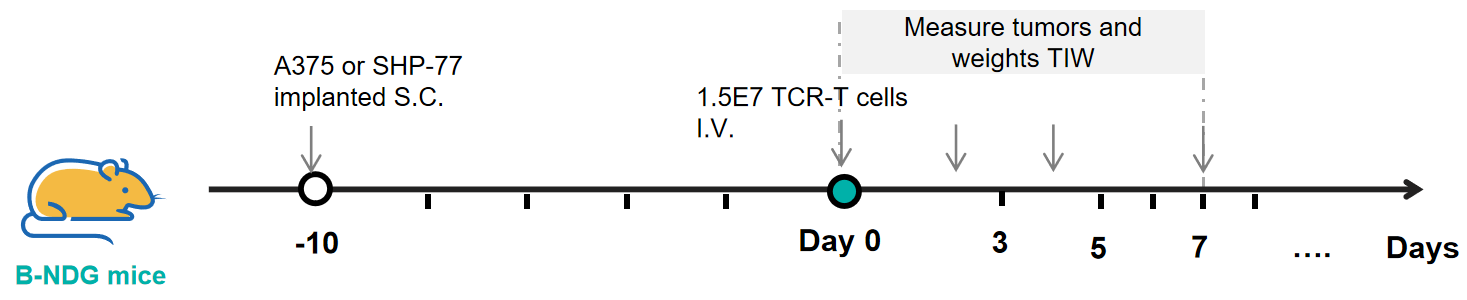
NDG immunodeficient mice were implanted with human HLA-A*02:01+ tumor cell lines A375 and SHP-77, both of which endogenously express MAGE-A4. Once the tumor volume reached 100 mm3, T cells expressing MAGE-A4-specific TCRs or mock T cells were administered (n = 6 mice/group), with T cells transduced with clinical-stage affinity-enhanced TCRs serving as positive controls. S.C.: subcutaneous injection; I.V.: intravenous injection; TIW: three times a week.