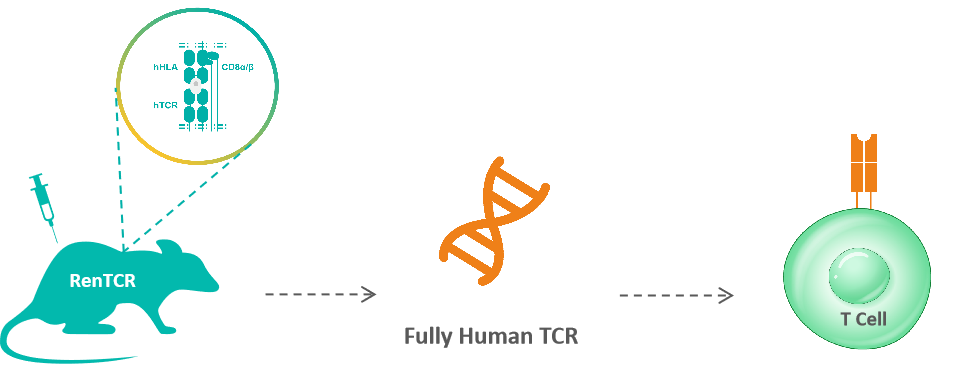
Advantages of the RenTCR™ Platform for Fully Human TCR Discovery
- Streamlined Screening Workflow: The platform enables rapid identification and acquisition of natural TCRs with high specificity and reactivity.
- Superior In Vivo & In Vitro Activity: The platform enables the identification and selection of TCRs with potent antitumor activity in both in vitro and in vivo studies, outperforming human donor-derived TCRs.
- Broad, Ready-to-Use TCR Libraries: The platform facilitates the creation of off-the-shelf TCR libraries with broad HLA haplotype coverage to streamline subsequent development.
- Significant Cost Advantage: The platform reduces costs compared with human donor-based TCR discovery methods.
- Extended Platform Utility: The platform is also applicable for novel target and epitope discovery.
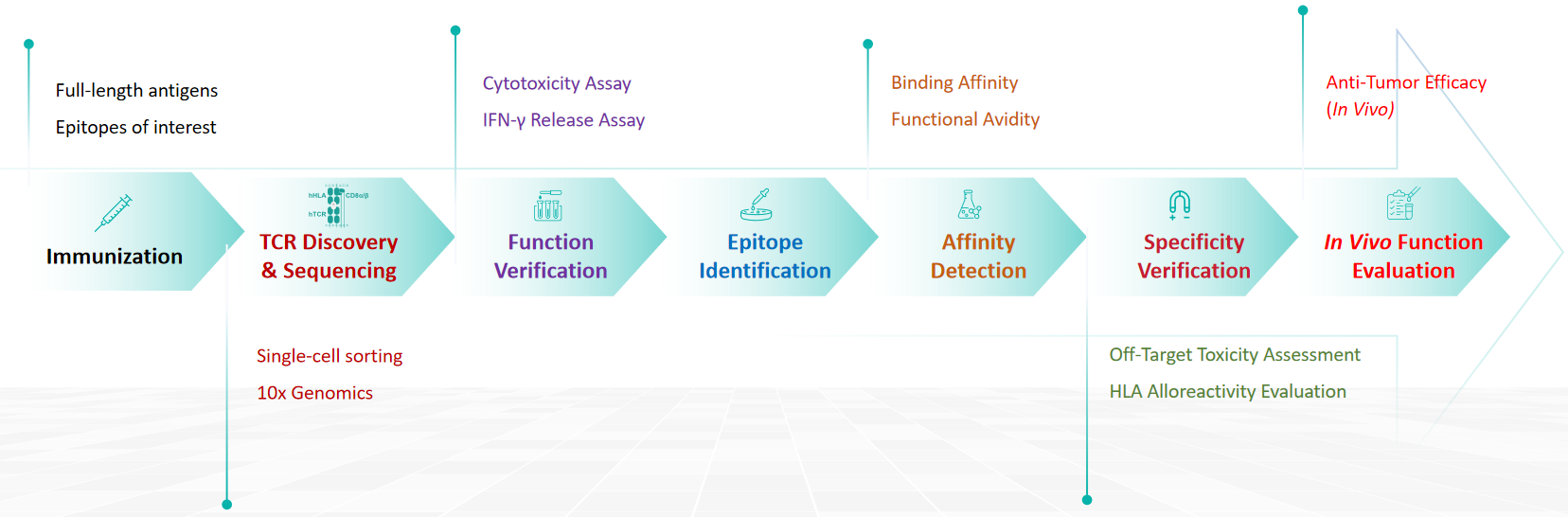
RenTCR™ Platform Workflow for Fully Human TCR Discovery
RenTCR™ platform-derived TCRs exhibit higher peptide sensitivity than human donor-derived TCRs
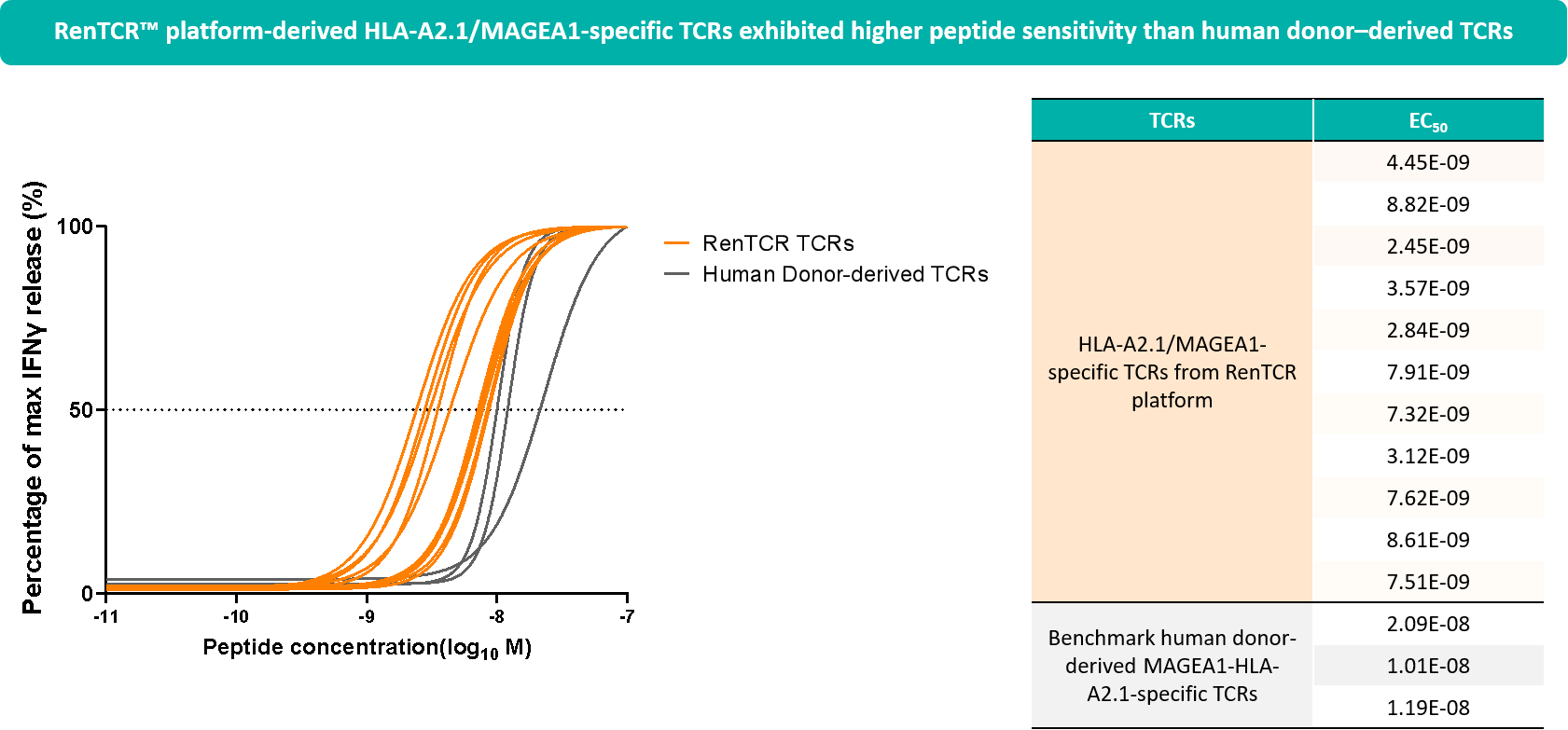
IFN-γ production by TCR-transduced human T cells in response to stimulation with MAGEA1 peptide-loaded T2 cells. Human donor-derived TCRs include those in clinical development or reported in the literature. Data are normalized to maximum IFN-γ release and fitted to a four-parameter logistic model.
HLA-A2.1/MAGE-A4-specific fully human TCRs exhibited greater antitumor activity than clinical-stage affinity-enhanced TCRs
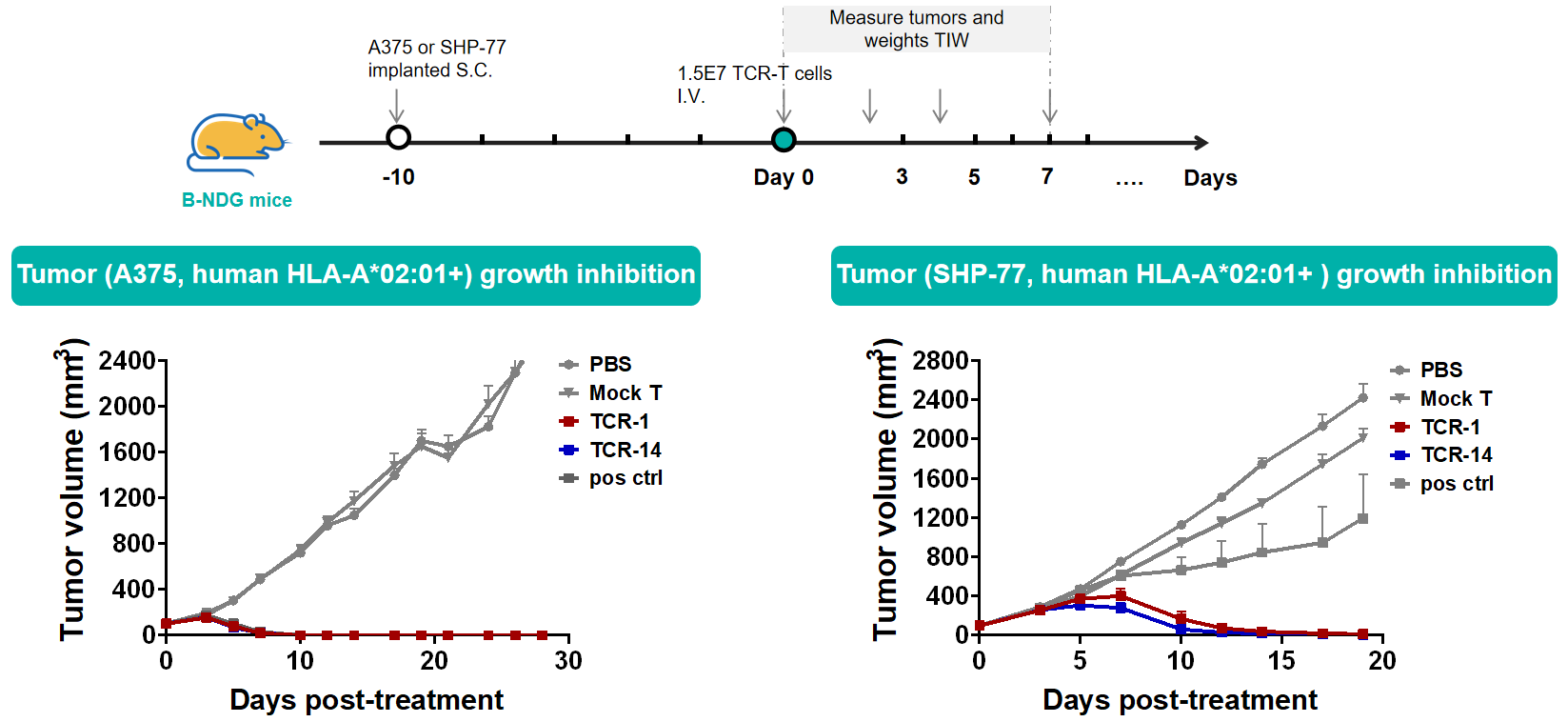
NDG immunodeficient mice were implanted with human HLA-A*02:01+ tumor cell lines A375 and SHP-77, both of which endogenously express MAGE-A4. Once the tumor volume reached 100 mm3, T cells expressing MAGE-A4-specific TCRs or mock T cells were administered (n = 6 mice/group), with T cells transduced with clinical-stage affinity-enhanced TCRs serving as positive controls. S.C.: subcutaneous injection; I.V.: intravenous injection; TIW: three times a week.
Off-the-Shelf TCR Library Powered by the RenTCR™ Platform
| Target |
Type of Antigen |
HLA |
Immunization |
TCR Discovery & Sequencing |
In Vitro Functional Verification |
Epitope Identification |
Specificity Verification |
In Vivo Functional Evaluation |
| MAGEA4/8 |
CTA |
HLA-A2.1 |
|
| MAGEA4 |
CTA |
HLA-A24.2 |
|
| PRAME |
CTA |
HLA-A2.1 |
|
| PRAME |
CTA |
HLA-A24.2 |
|
| NY-ESO-1 |
CTA |
HLA-A2.1 |
|
| MAGEA1 |
CTA |
HLA-A2.1 |
|
| MAGEA10 |
CTA |
HLA-A2.1 |
|
| KRAS G12V |
TSA |
HLA-A11.1 |
|
| KRAS G12D |
TSA |
HLA-A11.1 |
|
| HPV16 E6 |
Virus |
HLA-A24.2 |
|
| HPV16 E7 |
Virus |
HLA-A2.1 |
|
| MAGEC2 |
CTA |
HLA-A24.2 |
|
| COL6A3 |
TAA |
HLA-A2.1 |
|