you may also like
RenSuper Biologics™ Autoimmune Disease Series | Part 2
Inflammatory bowel disease (IBD)—primarily Crohn’s disease (CD) and ulcerative colitis (UC)—is a chronic, relapsing condition and one of the fastest-growing immune-mediated diseases, affecting more than 10 million people worldwide. Despite two decades of biologic therapy, achieving long-term, durable remission remains an ongoing challenge (Hracs, et al. 2025).
Around 40% of patients do not respond initially, 30–50% lose response over time, and others retain persistent inflammation. The field is therefore moving beyond broad inflammatory suppression toward the mechanisms driving disease progression (Kennedy, et al. 2019).
IBD treatment is shifting from broad immunosuppression toward precise targeting of the immune networks that drive intestinal inflammation, immune cell trafficking, and tissue remodeling.
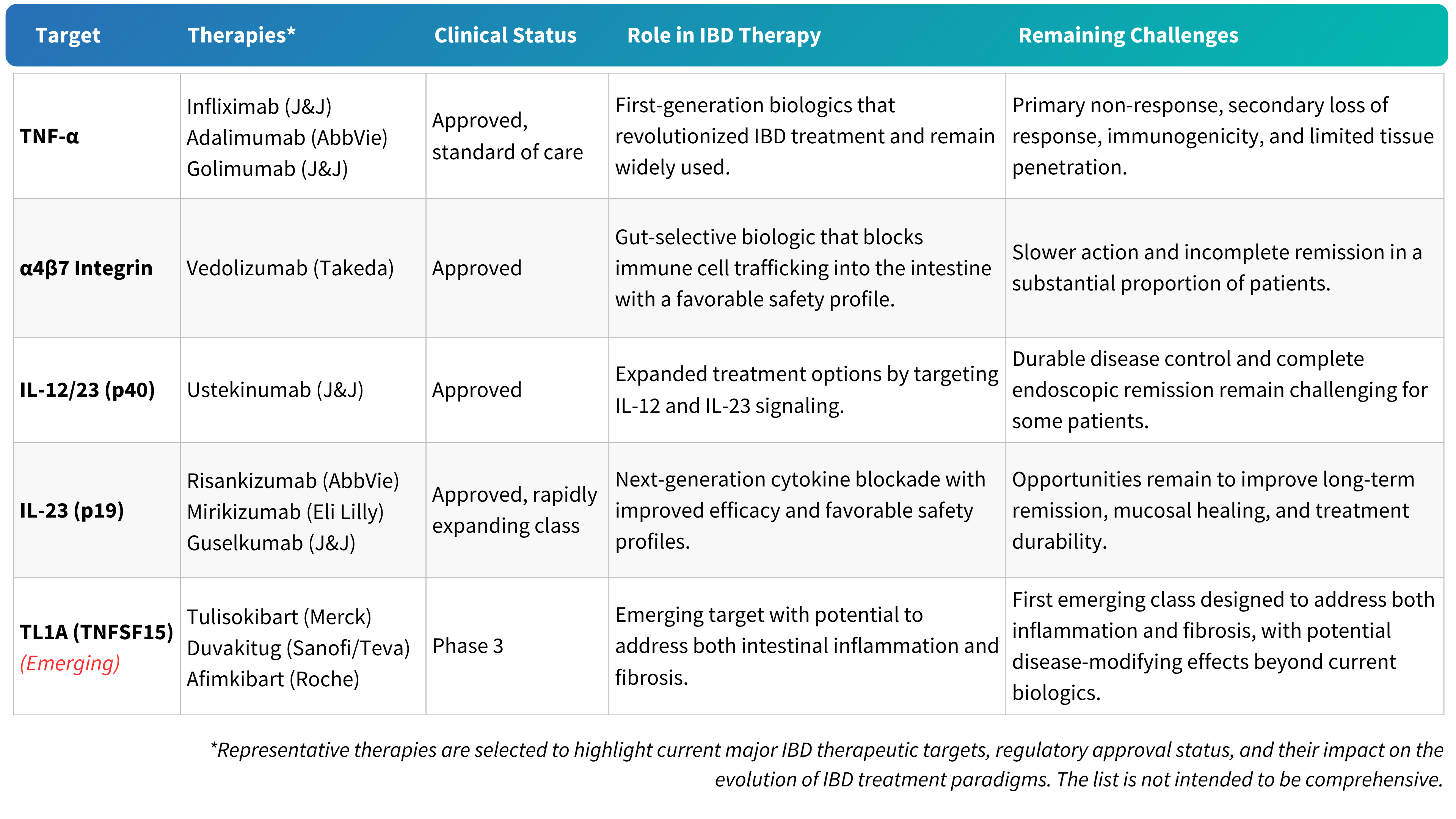
Current biologics reflect this progression: TNF-α inhibitors established the first successful approach to neutralizing a key inflammatory driver. α4β7 integrin blockade selectively limits immune cell trafficking into the gut (Feagan, et al. 2013). More recently, IL-23 inhibitors demonstrated the clinical potential of selectively targeting cytokine pathways that sustain chronic intestinal inflammation (D’Haens, et al. 2022; Ferrante, et al. 2022; D’Haens, et al. 2023).
However, despite these advances, key challenges remain:
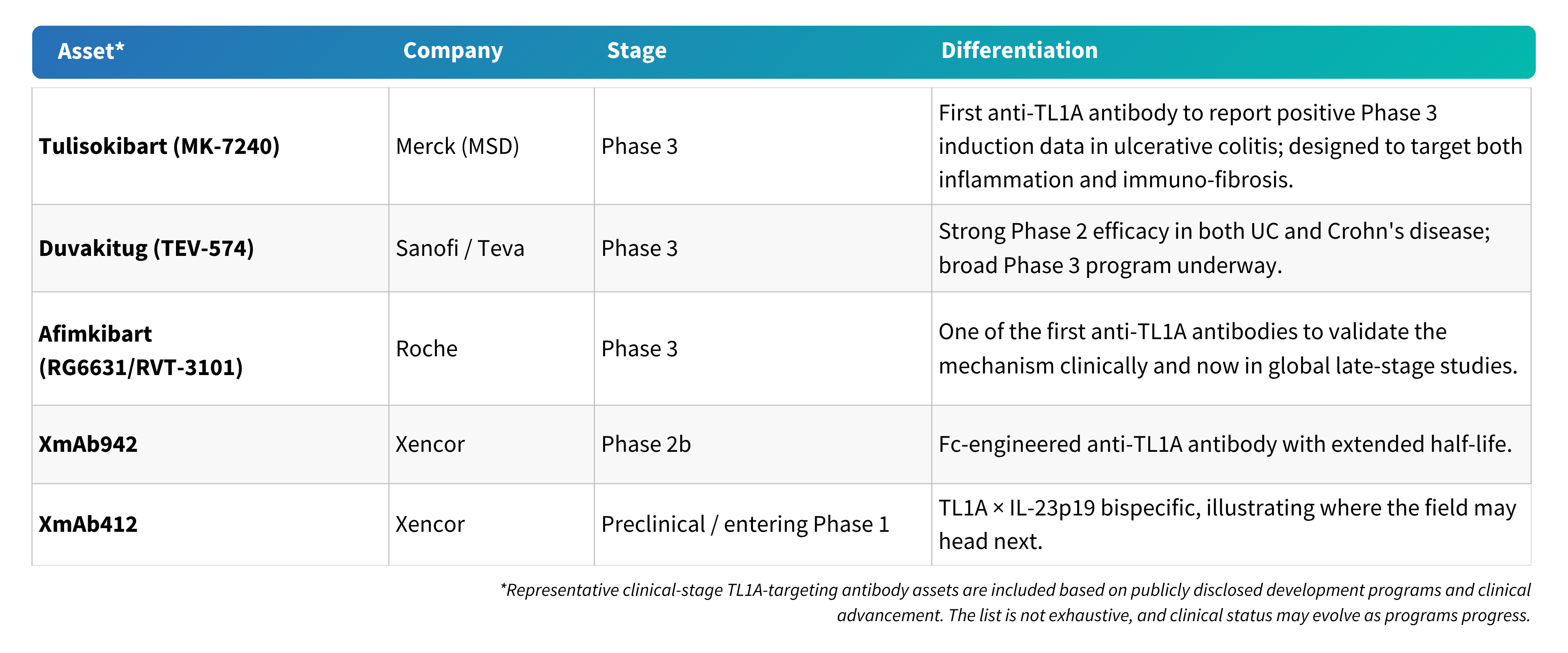
These needs are driving therapies beyond inflammatory suppression. TL1A (TNFSF15), for example, may address both intestinal inflammation and fibrosis (Sands, et al. 2024; Feagan, et al. 2025).
► Current IBD Biologics Landscape:
► Emerging TL1A-Targeting Antibody Landscape:
Biocytogen’s RenSuper Workstation™ combines fully human antibody discovery capabilities with a growing portfolio of 100+ autoimmune disease antibody programs, including IBD-relevant programs, to help partners identify and advance therapeutic antibody candidates faster.
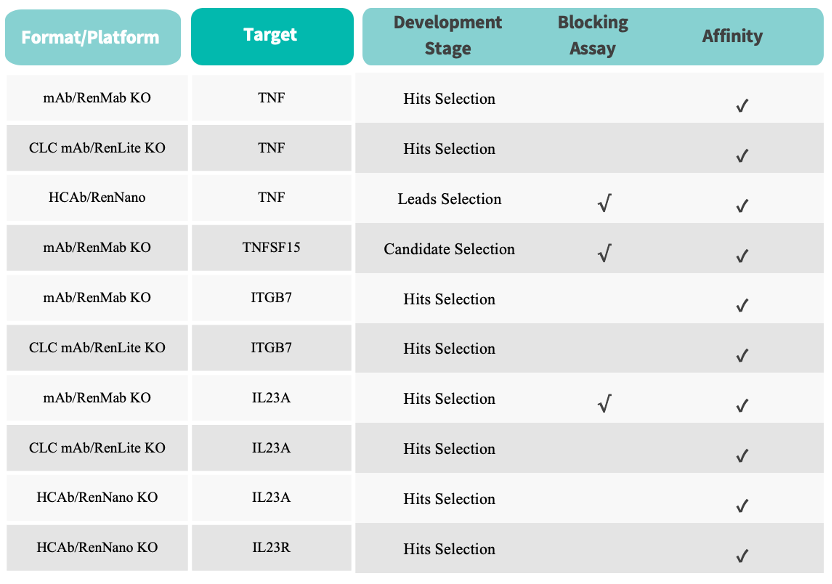
Powered by RenMab®, RenLite®, and RenNano®, our portfolio spans mAbs, common-light-chain antibodies (cLC Abs), and heavy-chain-only antibodies (HCAbs) across established and emerging IBD targets—providing ready-to-advance starting points for differentiated IBD biologics.
We highlight three strategically IBD targets shaping the next generation of therapies, each addressing distinct limitations of current treatment paradigms:
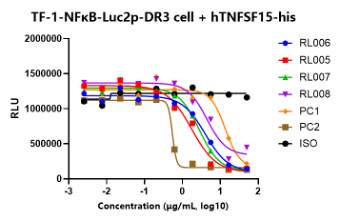
Emerging clinical target with multiple Phase 3 programs in IBD. TL1A plays a role in both intestinal inflammation and fibrosis, offering a differentiated opportunity to address unmet needs beyond inflammatory control—including stricturing disease and incomplete mucosal healing.
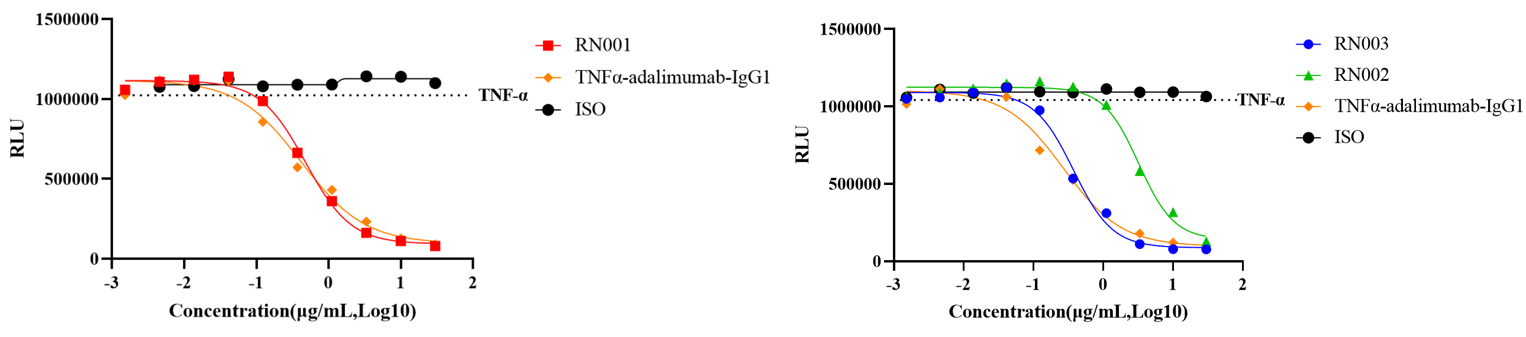
Established standard-of-care target for IBD. Despite multiple approved therapies, primary non-response, immunogenicity-driven loss of efficacy, and limited tissue penetration continue to impact long-term disease control.
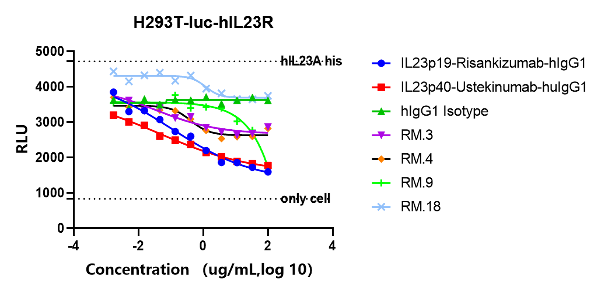
Blocking Assay: Lead IL-23A blocking candidates (RM3-RM18) demonstrate IL-23 neutralization activity, providing a foundation for further affinity and functional optimization.
IBD models are difficult to establish reproducibly because outcomes vary with strain, microbiota, housing, induction protocol, and timing. Biocytogen’s experienced in vivo team uses optimized, well-controlled protocols to deliver robust and consistent models.
Our fit-for-purpose strategy combines mechanistically distinct models with clinical, histologic, and pharmacodynamic readouts—helping distinguish general anti-inflammatory activity from target-specific effects and strengthen translational evidence.
► List of IBD-related targeted humanized mice at Biocytogen:
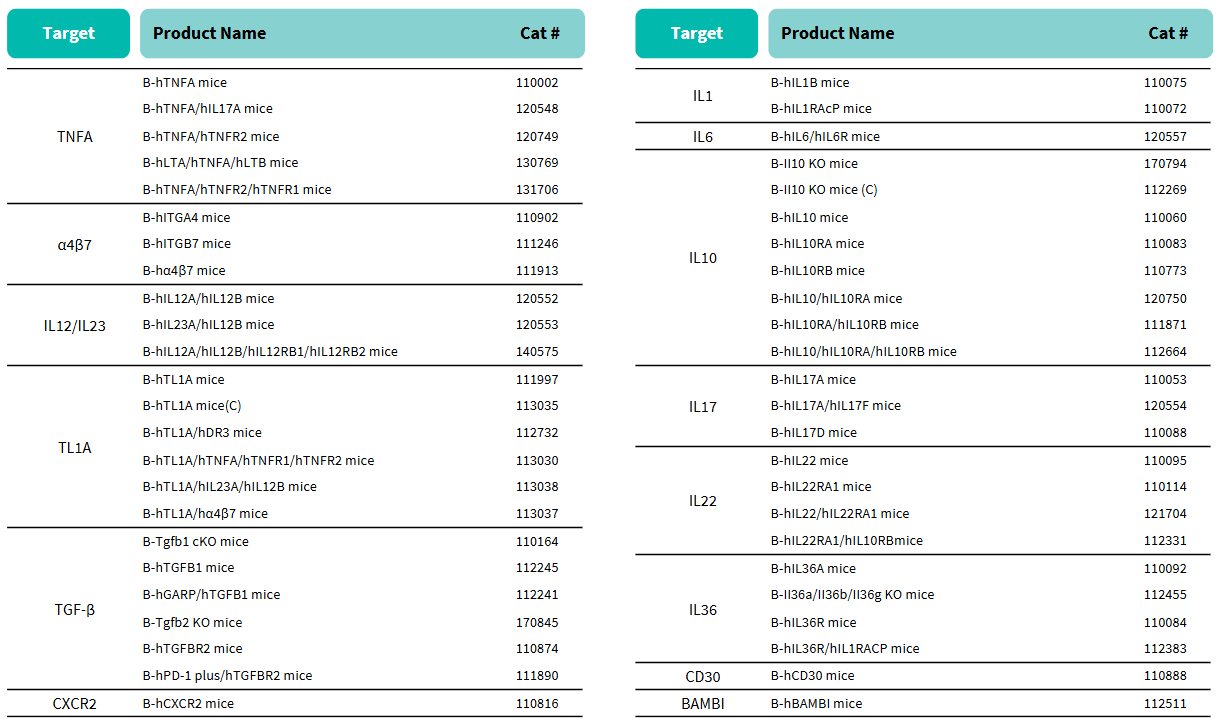
► Explore Biocytogen’s IBD mouse models and validation datasets. [Link]
Biocytogen supports precision IBD drug development from antibody generation through translational validation.
RenMab®, RenLite®, and RenNano® support conventional, bispecific-ready common-light-chain, and heavy-chain-only antibodies. Partners can begin with de novo discovery or existing assets, then evaluate candidates in target-humanized mice and validated DSS, TNBS, or T-cell-transfer, CD-40-induced IBD models using efficacy, histopathology, biomarker, and pharmacodynamic endpoints—all within one integrated workflow.
Up next in our Autoimmune Disease Series, Part 3: Asthma & Type 2 Inflammation- Antibody Solutions From Upstream Alarmins to Downstream Effectors. Stay tuned!
Current IBD biologics primarily target TNF-α, α4β7 integrin, IL-12/23, and IL-23. They reduce inflammation and support induction and maintenance of remission in CD and UC, but primary non-response, loss of response, and incomplete mucosal healing continue to drive next-generation development.
TL1A (TNFSF15) contributes to both intestinal inflammation and fibrosis. Promising clinical efficacy and multiple Phase 3 anti-TL1A programs suggest that inhibiting TL1A could address inflammatory activity and tissue remodeling, potentially improving outcomes beyond conventional anti-inflammatory therapy.
Both target inflammatory pathways, but they regulate different aspects of the immune response. TNF-α inhibitors suppress a central inflammatory cytokine and have anchored biologic therapy for over two decades. IL-23 inhibitors more selectively disrupt a pathway that maintains pathogenic Th17 responses; favorable efficacy and safety making them one of IBD’s fastest-growing biologic classes.
Antibody architecture should match target biology. Conventional mAbs suit many validated targets; cLC Abs facilitate bispecific development; and smaller HCAbs may improve tissue penetration and enable flexible designs, including localized gastrointestinal delivery.
Biocytogen has developed a portfolio of fully human antibody library targeting multiple clinically relevant IBD pathways using its proprietary RenMab®, RenLite®, and RenNano® discovery platforms. These platforms enable the generation of diverse antibody modalities, supporting the discovery of differentiated therapeutics against both established and emerging IBD targets such as TNF-α, IL-23A, and TL1A.
Biocytogen pairs established DSS, TNBS, and adoptive T-cell-transfer colitis models with single- and multi-target humanized mice. This enables human-specific antibodies, combinations, and multispecifics to be tested in relevant immunocompetent settings. Integrated antibody discovery and in vivo pharmacology connect candidate generation with efficacy, histopathology, biomarker, and pharmacodynamic analyses for fit-for-purpose target validation, dose selection, and mechanism-of-action assessment.
► Additional Resources:
► References: