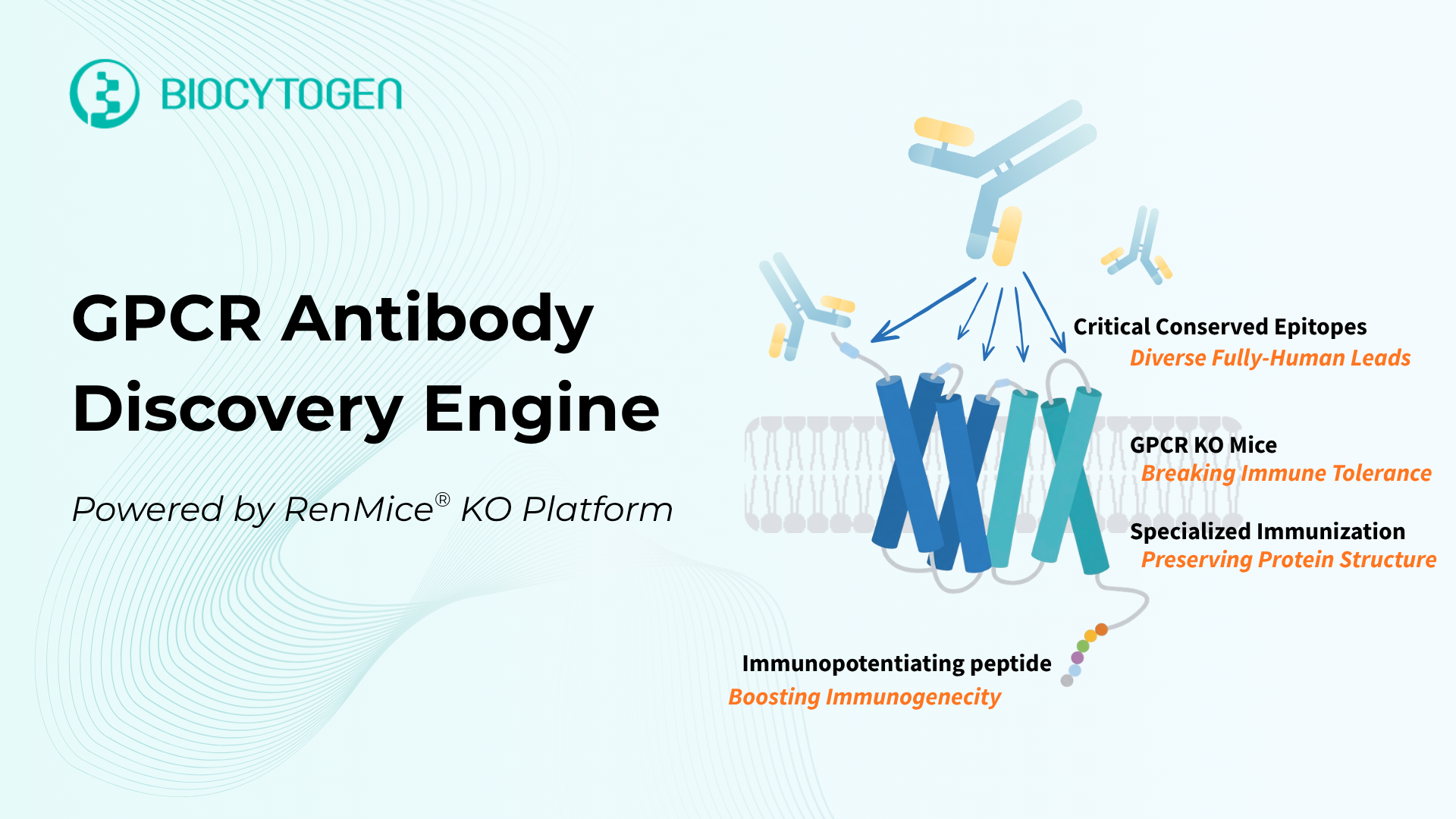
G protein-coupled receptors (GPCRs) represent one of the largest and most vital regulatory protein families in human biology, comprising over 800 distinct types. Because they govern a vast array of physiological processes, they are deeply implicated in human pathology—making them the target for approximately 35% of all FDA-approved drugs.
Yet, a glaring paradox exists in the current therapeutic landscape. Despite this massive market share, antibody therapeutics account for less than 2% of approved GPCR drugs. Most current therapies rely on traditional small molecules and peptides. This gap is largely due to difficulty of accessing structurally complex, highly conserved epitopes that have historically proven nearly impossible to target with large biologics.
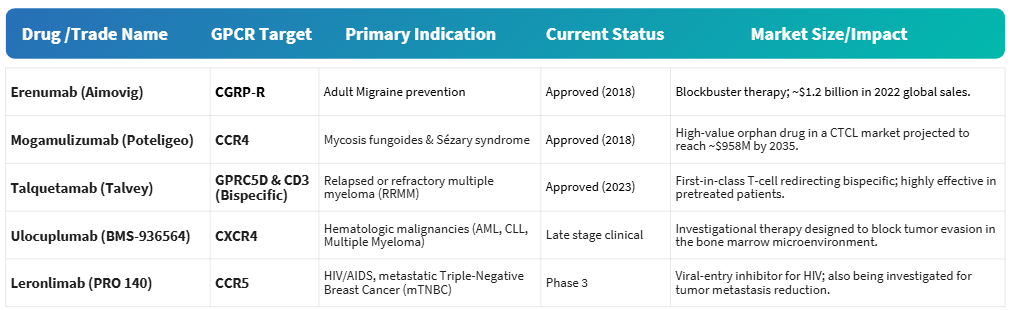
Currently, there are only a handful of approved GPCR-targeted antibodies on the market, with just a select few navigating late-stage clinical trials. Below is a look at these rare, high-value assets that have successfully broken through the bottleneck:
The Innovation Gap: Why GPCR Antibody Discovery Stalls
Although the success of approved therapies such as Aimovig and Talvey demonstrates the profound therapeutic and commercial value of targeting GPCRs, the limited number of such biologics highlights a severe development bottleneck. Efforts to systematically expand this class of therapeutics are frequently impeded by three deeply interconnected biological hurdles:
- Structural Complexity: GPCRs are 7-transmembrane proteins that weave back and forth through the cell membrane. Because their native 3D shape relies entirely on being supported by this lipid bilayer, they are notoriously difficult to purify. Extracting them often causes the protein to collapse, meaning traditional immunization ends up generating antibodies against the wrong shape.
- Limited Accessibility: Because GPCRs are so deeply embedded within the cell membrane, they possess intrinsically minimal extracellular domains. This leaves an incredibly small surface area for a large antibody molecule to anchor on.
- Immune Tolerance: To make matters worse, core functional regions within those tiny extracellular loops are highly conserved across species. Consequently, the immune system in traditional wild-type mice recognizes human GPCR as its own and ignores it. This natural tolerance makes these clinically relevant regions effectively “invisible” to conventional immunization in wild-type mice.
Biocytogen's Advantage: The RenMice® KO Discovery Engine Targeting GPCRs
Biocytogen’s anti-GPCR discovery platform is built to systematically dismantle historical biological barriers. Rather than fighting against natural immune tolerance and limited target accessibility, our platform re-engineers the approach to successfully unlock GPCR targeting.
Key Innovation of RenMice® KO Discovery Engine:
- Unlocking the Entire Domain via Target Knockout: To overcome immune tolerance and limited accessibility, Biocytogen utilizes target gene-knockout models (the RenMice® HiTS Platform). By removing the endogenous mouse GPCR genes, our models lack a "self" reference for the target. This forces the immune system to treat highly conserved human epitopes as entirely foreign, inducing a robust immune response. By breaking this immune barrier, the platform turns the intrinsically minimal extracellular domains of GPCRs into recognizable, highly immunogenic epitopes.
- Preserving Native Conformations & Boosting Expression: To scientifically ensure druggability, Biocytogen employs immunization strategies that preserve antigens (in this case, GPCRs) in their intact, native conformation. Rather than relying on purified or structurally compromised recombinant proteins, we utilize specialized DNA and cellular immunization protocols. Furthermore, our optimized in vivo DNA transfection technology utilizes specific adjuvants to significantly improve GPCR expression on the cell surface—presenting a higher density of targets to the immune system.
- Enhancing Immunogenicity for High-Quality Antibody Production: Even when immune tolerance is removed, GPCRs are inherently "quiet" targets that struggle to trigger the robust CD4+ "helper" T cell response needed for high-quality antibody production. To overcome this, Biocytogen fuses a highly immunogenic, MHC class II-binding peptide (an immunopotentiating peptide) to the intracellular C-terminal domain of the target GPCR. The strategic intracellular placement ensures the receptor's critical extracellular loops remain unobstructed. Upon antigen processing, this peptide robustly activates CD4+ T cells, driving enhanced B cell maturation and yielding a diverse, high-affinity antibody response against the GPCR's minimal extracellular domains.
- Delivering Diverse, Cross-Reactive Leads: Collectively, our platform maximizes epitope diversity and generates fully human/mouse cross-reactive antibodies to streamline downstream in vivo efficacy validation. For targets with low homology, we utilize specialized target- or ligand & receptor-humanized mouse models to overcome species barriers and guarantee this essential cross-reactivity.
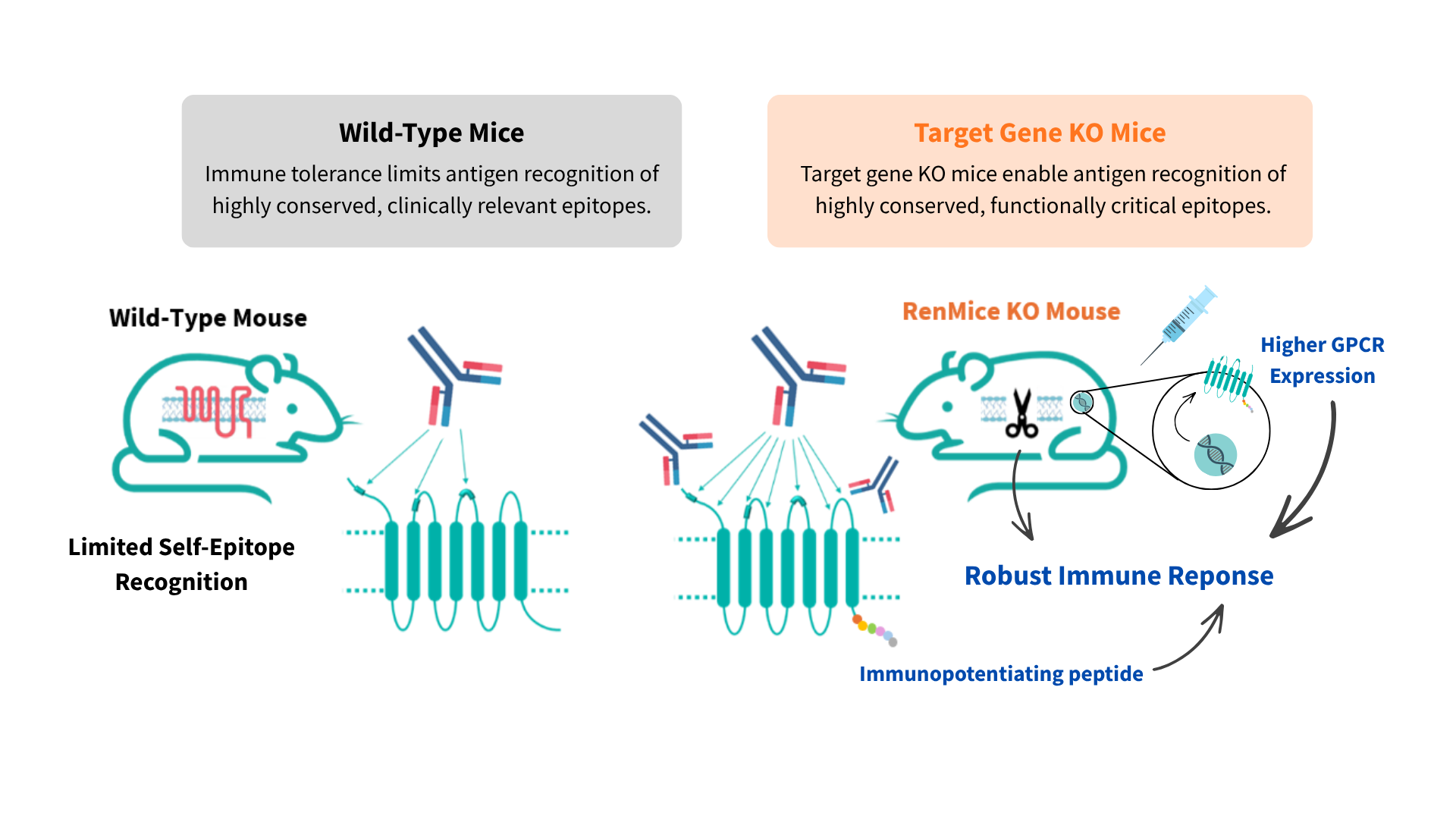
Biocytogen's Innovative RenMice® KO Antibody Discovery Engine for GPCRs.
Biocytogen's Validated Success Across High-Demand GPCR Targets
Our proprietary engine isn't just theoretical—it is actively generating highly competitive leads for some of the most sought-after GPCR targets in the industry. The selected programs below represent massive market opportunities in areas with high unmet clinical needs such as oncology and metabolic diseases.
1. SSTR2 (Somatostatin Receptor 2)
- Primary Indications: Neuroendocrine Tumors (NETs) and Small Cell Lung Cancer (SCLC).
- The Opportunity: SSTR2 is significantly overexpressed in various solid tumors with minimal expression in healthy tissue. Its rapid internalization kinetics upon ligand binding make it a premier target for antibody-drug conjugates (ADCs).
- Where Current Development Falls Short: Historical approaches have largely relied on synthetic peptides. These peptides suffer from short half-lives, rapid clearance, and limited payload delivery. Furthermore, traditional antibody discovery platforms struggle to generate high-affinity, fully human SSTR2 antibodies that replicate the rapid internalization rates seen with natural ligands.
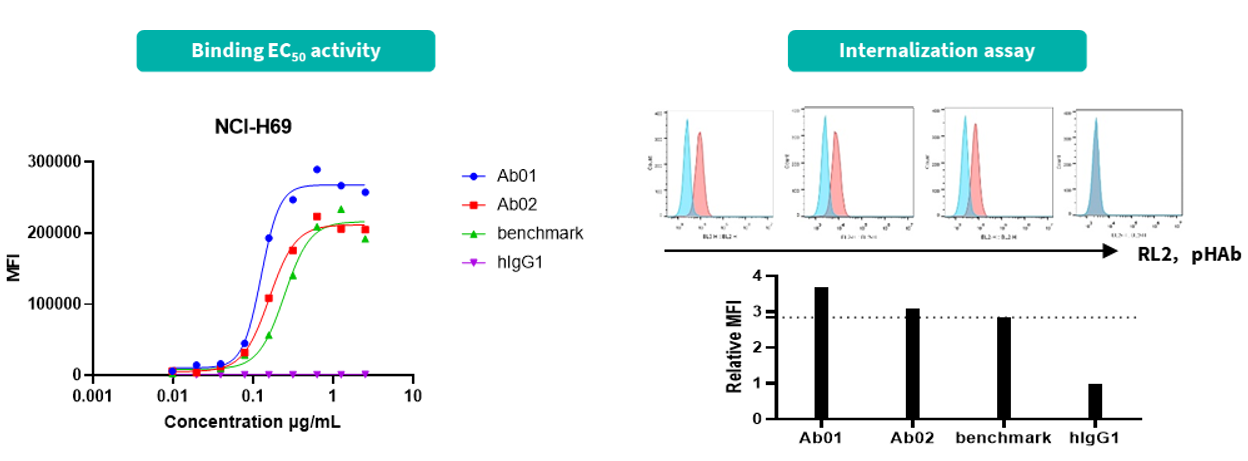
- Validation Results: Our fully human, common light-chain leads (Ab01, Ab02 as examples below) generated from RenLite KO mice exhibit superior SSTR2 binding affinity and internalization efficiency over the benchmark. Furthermore, the streamlined common light-chain format eliminates light-chain mismatching, reducing manufacturing risk and accelerating downstream development.
2. GPRC5D (G protein-coupled receptor class C group 5 member D)
- Primary Indication: Relapsed/Refractory Multiple Myeloma (RRMM).
- The Opportunity: GPRC5D is a highly specific surface antigen overexpressed on malignant plasma cells. Its primary market value lies in its expression independence from BCMA (B-cell Maturation Antigen). In the current treatment landscape, where many patients on BCMA-targeted therapies relapse due to antigen escape, GPRC5D remains a stable, high-priority target. This positions it as the premier focal point for developing next-generation ADCs and trispecifics for patients with limited remaining options.
- Where Current Development Falls Short: First-generation therapies have been hampered by high on-target/off-tumor toxicities—such as severe skin, nail, and taste (dysgeusia) issues. Traditional discovery often lacks the epitope diversity needed to find rare antibodies that internalize efficiently without triggering these off-target side effects.
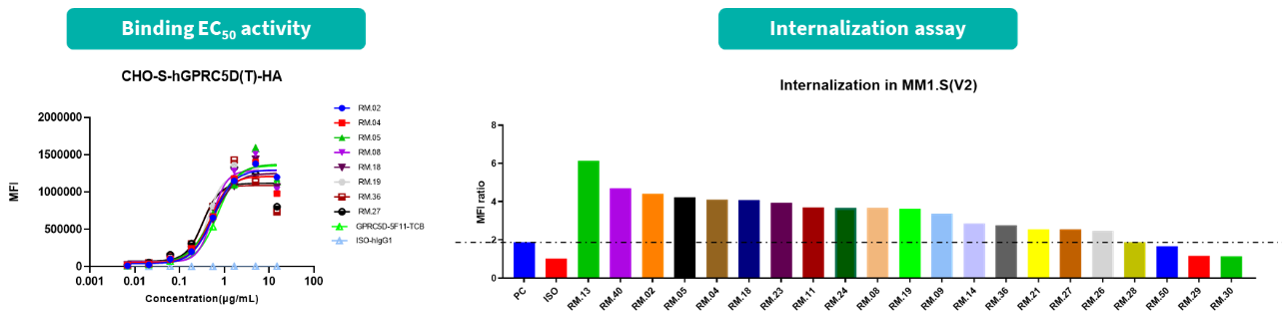
- Validation Results: Our fully human leads derived from RenMab KO mice show high-affinity binding and robust internalization in multiple myeloma cells. The divergence between highly similar binding activity and varied internalization ratios highlights a high degree of epitope diversity across our library—giving developers the exact variety needed to overcome off-target toxicity.
3. GIPR (Gastric Inhibitory Polypeptide Receptor)
- Primary Indications: Obesity and Type 2 Diabetes.
- The Opportunity: As a major player in the body's incretin axis, GIPR regulates nutrient absorption and energy storage. The market for GIPR antagonists is projected to be massive as a combination therapy layered on top of GLP-1 drugs to drive synergistic weight loss.
- Where Current Development Falls Short: Most incretin therapies are peptide-based, often requiring frequent dosing to maintain stable pharmacokinetics. Developing potent, antagonistic antibodies is exceptionally difficult because GIPR is highly conserved across species. In traditional wild-type mice, immune tolerance often results in a "hit desert," yielding either low-potency antibodies or partial agonists rather than pure antagonists required for weight loss.
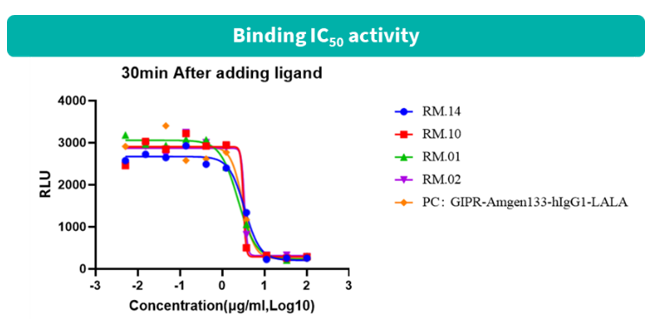
- Validation Result: Our fully human leads derived from RenMab KO mice exhibit potent competitive binding and broad epitope diversity compared to the benchmark. Our platform has generated a library of highly specific antagonists that demonstrate superior receptor-blocking activity compared to industry benchmark, providing a robust foundation for next-generation metabolic solutions.
Unlock the Next Blockbuster GPCR Opportunity with Biocytogen:
We are currently helping our partners unlock the therapeutic potential of hundreds of human GPCRs. By overcoming structural and immunological barriers, the RenMice® KO Discovery Engine opens the gateway to next generation blockbuster biologics for GPCR.
Frequently Asked Questions (FAQs) about GPCR Antibody Discovery:
1. How does Biocytogen’s RenMice® KO Discovery Engine work for GPCR antibody discovery?
Biocytogen’s platform re-engineers the discovery process to tackle the three main hurdles of GPCR targeting: structural complexity, limited accessibility, and immune tolerance. It systematically dismantles these barriers by combining target gene-knockout (KO) RenMice models to break natural immune tolerance, specialized DNA and cellular immunization protocols to preserve native protein structures, and immunopotentiating peptides to supercharge the immune response. This integrated approach successfully turns intrinsically difficult GPCRs into highly immunogenic targets.
2. How does Biocytogen overcome immune tolerance for highly conserved GPCR targets?
Biocytogen overcomes this barrier by utilizing target gene-knockout (KO) models, known as the RenMice® HiTS Platform. By knocking out the endogenous mouse GPCR gene, these models lack a "self" reference for the target. This forces the mouse's immune system to treat highly conserved human epitopes as entirely foreign, triggering a robust immune response where traditional wild-type mice would normally experience immune tolerance.
3. How does Biocytogen ensure GPCRs maintain their native 3D conformation during immunization?
Because GPCRs are 7-transmembrane proteins that easily collapse when extracted from the lipid bilayer, Biocytogen avoids using purified recombinant proteins. Instead, the platform insists on immunizing mice using specialized DNA and cellular immunization protocols. This approach ensures the mouse immune system is exposed to the GPCR targets in their intact, membrane-bound state, driving the generation of antibodies that recognize the receptor's high-fidelity, native, and functional conformation.
4. What technology does Biocytogen use to boost the immunogenicity of "quiet" GPCRs?
Even when immune tolerance is removed, GPCRs possess minimal extracellular domains, which can limit their ability to trigger a strong immune reaction. To boost immunogenicity, Biocytogen fuses a highly immunogenic, MHC class II-binding peptide (an immunopotentiating peptide) to the intracellular C-terminal domain of the target GPCR. Because it is hidden inside the cell, it doesn't block the critical extracellular loops. When the immune system processes the receptor, this peptide powerfully activates CD4+ T cells, which in turn supercharge B cells to produce a diverse, high-affinity antibody response against those tiny, hard-to-reach domains.
5. Are the GPCR antibodies generated by Biocytogen fully human?
Yes, Biocytogen’s RenMice® KO Discovery Engine is engineered to deliver fully human antibodies. These clinically optimized leads provide potent blocking capabilities, diverse internalization profiles, and inherent multi-species cross-reactivity to streamline downstream preclinical validation.
6. Does Biocytogen partner with pharmaceutical companies for novel GPCR targets?
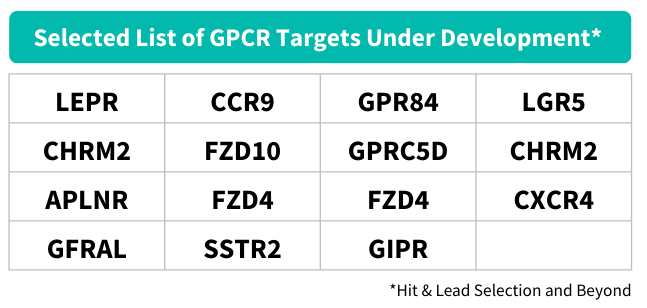
Yes, Biocytogen is actively collaborating with global partners to unlock the therapeutic potential of hundreds of human GPCRs. In addition to their validated assets, we have a deep pipeline of GPCR targets under development, including LEPR, CCR9, GPR84, LGR5, CHRM2, FZD10, APLNR, FZD4, CXCR4, GFRAL and more. Check here to learn more: Biocytogen GPCR Platform.